
bout de papier, Vol. 10, No. 1 (1993) — Winter 1993 // Hiver 1993, pp. 33–37
Story and photos by Albert and Jennifer Galpin
Planning was the key to the success of our overland trip from Riyadh to London. After 3 years in Saudi Arabia, we (Albert, Jennifer and Kristianne, our then 14 month-old daughter) decided that we would brave the overland route from Riyadh to London.
We pondered the various routes that we could take. One way would have been to drive from Saudi Arabia through Jordan, take the ferry to Nuweiba in the Sinai, travel overland to Alexandria, and then go by ferry to Brindisi, Italy. We also considered driving through the Sinai Desert to Israel and then proceeding by ferry to Europe. Being intrepid Canadians, we decided that if we were going to drive to London, then drive we would.
Our planning was complicated by the war in Yugoslavia. As a result, we were forced to drive through Bulgaria and Romania, which to our knowledge, no one driving directly from Saudi Arabia has ever done before. In general, colleagues thought we were mad to attempt such a trip. We heard horror stories about the red tape at the Jordanian and Syrian borders; the Kurdish problem in Turkey; the thieves and road bandits in Romania; the lack of food in Romania; the low quality fuel in Romania (when you can find any); the poor roads in Romania; and pretty generally Romania itself.
Our route would cover approximately 8,000 kilometres, driving through thirteen countries including Saudi Arabia, Jordan, Syria, Turkey, Bulgaria, Romania, Hungary, Austria, Germany, Holland, Belgium, France and England. We allocated 22 days for the drive to London and made two rules: (i) never drive at night; and (ii) take a two-day break after each day of driving. We only broke the first rule once – in Romania of all places. Our one-day driving limit was much more difficult to maintain because of the difficult road and border conditions in Turkey, Bulgaria, and Romania. In hindsight, we should have given ourselves four full weeks.
For those who like detail, the first priority concerned where to obtain visas. Neither Bulgaria nor Romania have resident missions in Riyadh, which meant we had to obtain visas elsewhere; in this case, in Kuwait City. Visas for Jordan, Syria, and Turkey were obtained in Riyadh, with the Turkish Embassy spontaneously providing very helpful ideas on routes and hotel accommodation.
The second priority concerned our car. A “Green Card” is required for all transit travel in the Middle East and in some parts of Europe. This is essentially a document that proves you have appropriate automobile insurance. The difficult task at hand was to find an insurer willing to take on the perceived risks of such a trip. After much searching, strangely enough, it was a Canadian firm that took up the challenge, making an easy $650 for a one-month policy. In addition, a “Carnet du Passage” is also required to drive through the Middle East and parts of Europe, proving that the vehicle is registered and will be removed from the country following transit.
The third priority, accommodation, meant that in the Middle East and Eastern Europe, we took the easy route and stayed at major hotels. In Western Europe we stayed at small pensions off the major highways.
The fourth priority concerned where we should go. Good, up-to-date road maps of the Middle East and Eastern Europe were difficult to obtain locally. In the end, (another kudo for Canada) the Canadian Automobile Association provided excellent road maps of Europe up to, but not quite all of, the Balkans. We did find a relatively good map in Cyrillic for the Balkans, and by comparing the Cyrillic with an atlas, we managed to find our way through Bulgaria – ’OK now, turn right at C3PO”! We never did find decent maps for Jordan or Syria.
The fifth priority was non-harassment. Thus, we carried approximately US $200 in one dollar bills. This was especially useful in the Middle East and Eastern Europe where “tipping” is required for any kind of service. Although we hate to admit this, another useful commodity was to have packs of Marlboro and Kent cigarettes on hand: Marlboro in Turkey and the Middle East; and Kent (for some unknown reason) in Eastern Europe. Everyone to their own tastes!
Our first night was spent in Hail, Saudi Arabia (pronounced “Hell”), so Jennifer could say she had been through Hell to get home! We planned to spend the second day in Tabouk, (of Lawrence of Arabia fame), but arrived there around 2 o’clock in the afternoon. Our early arrival in Tabouk was indicative of the superb Saudi highways. We had driven approximately 1,700 kilometres (20 percent of our total distance) in just two days.
The scenery between Tabouk and the Jordanian border is some of the most beautiful in Saudi Arabia. High mountains, striped with red, green and yellow bands, form the boundary between the desert and the pastoral hills of the Holy Land. Between Jordan and Syria, the pastoral scenery changed to agricultural; and from Syria to Turkey, this shifted to mountain ridges.
People, language and culture all seemed dictated by their particular geography. Our surprise at these differences was perhaps indicative of the artificial borders that divide us in North America.
As we were leaving Saudi Arabia, one of the most memorable moments of the trip was listening to an Israeli FM radio station just as we descended from the Saudi Western Mountains and turned toward the waters of the Gulf of Aqaba shimmering in the afternoon sun. At this point, the Gulf of Aqaba is only five kilometres wide, and Saudi Arabia, Israel, Egypt and Jordan are all visible at the same time.
Although we were looking forward to leaving Saudi Arabia, we were struck by the reception at the Saudi border and the relative efficiency of the Saudis. What took twenty minutes at the Saudi border, took two-and-a-half hours when passing into Jordan and again when entering into Syria. An enormous amount of red tape required endless stamping of paper, waiting for people to show up and stamp paper, and then having still other people claim that we did not have the right stamp, and so on. However, Jordanian and Syrian bureaucrats were models of Swiss efficiency when compared with Romanian officials! In any event, the American dollar bills and Marlboros certainly came in handy each time things began to slow down….
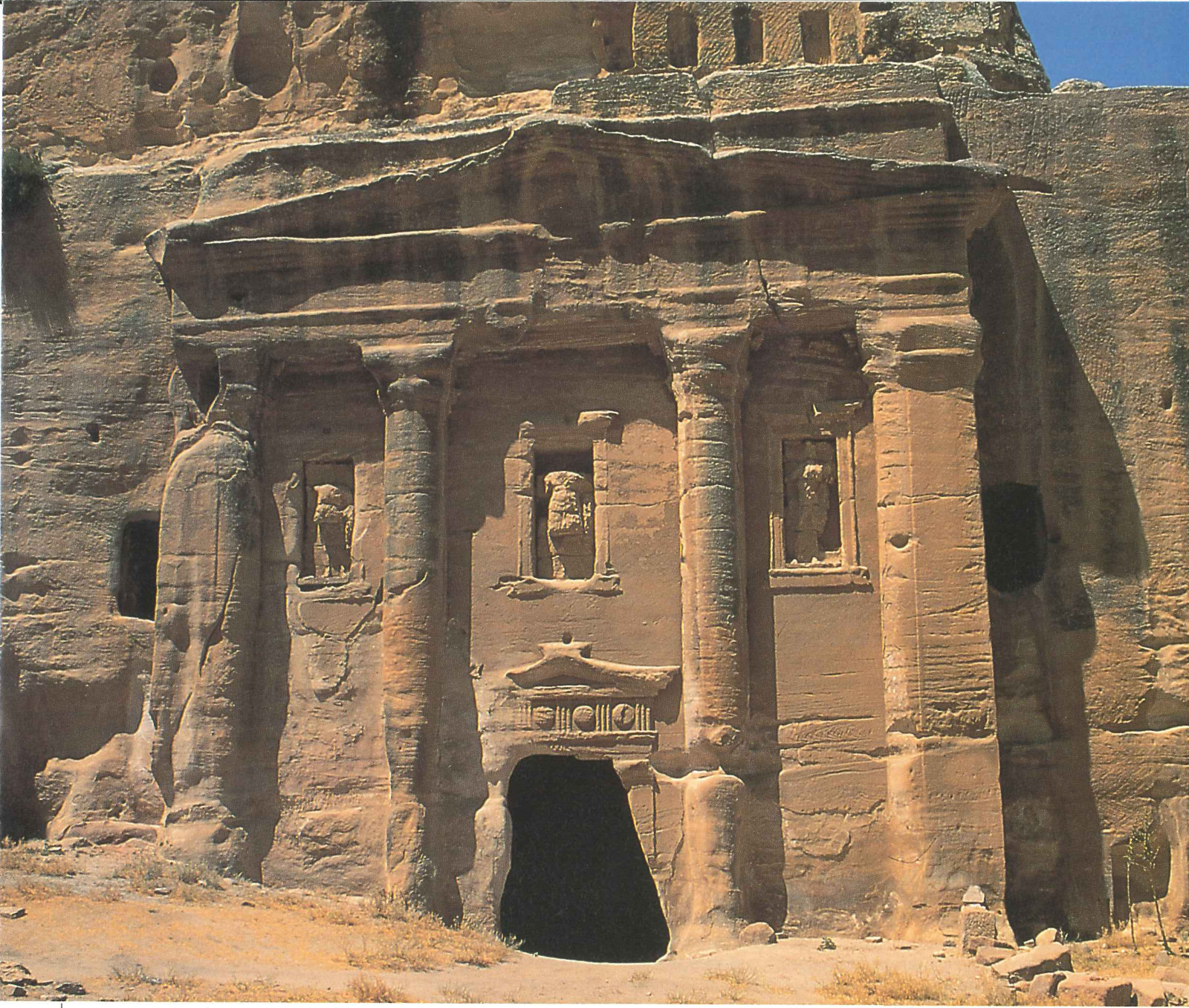
We spent two days at Petra, a Nabatean city. (Movie fans may remember seeing scenes of Petra in the last Indiana Jones film.) Petra is truly one of the great sites in the world, comparable to the Pyramids, Persepolis and Mohenjodaro. It is remarkably well preserved because of its isolation, with a broad spectrum of architecture dating from the Greeks and Romans, and even the Stone Age. Petra was the junction between two of the ancient world’s most important trade routes. The silk and spice routes that linked China, India and Southern Arabia with Rome and the Mediterranean world passed less than twenty kilometres east of Petra. The city was first developed by the Nabateans in the 7th-5th centuries BC before becoming a Greek, and then a Roman, capital city. (However, do not visit Petra during the summer season because of its extreme heat.)
By the seventh day, after stops in Amman and Damascus, we reached the Turkish Mediterranean port of Mersin. From Mersin, we had envisaged a relatively short sprint (450 kilometres) to Kemer, a resort on the Mediterranean where we planned to spend three days relaxing, swimming, and sightseeing. However, what was supposed to be a five-hour drive, took nearly ten because there is no flat land anywhere in Turkey! Nearly all 1,500 kilometres through which we passed in Turkey contained some of the most beautiful mountain ranges we had seen, filled with fresh-smelling pines overlooking the Mediterranean coast. While the scenery was beautiful, the roads were very narrow, always winding steeply up and down.
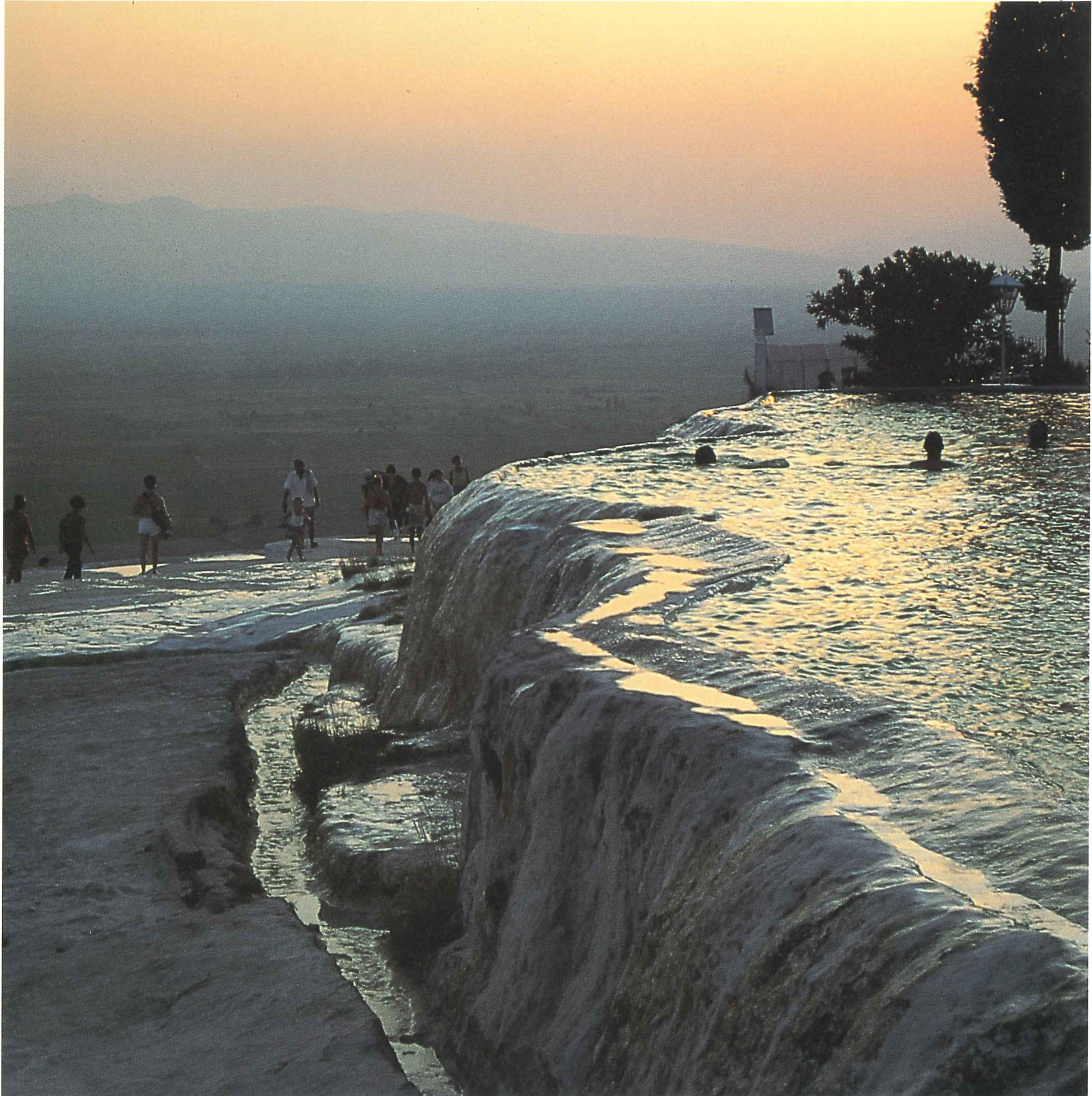
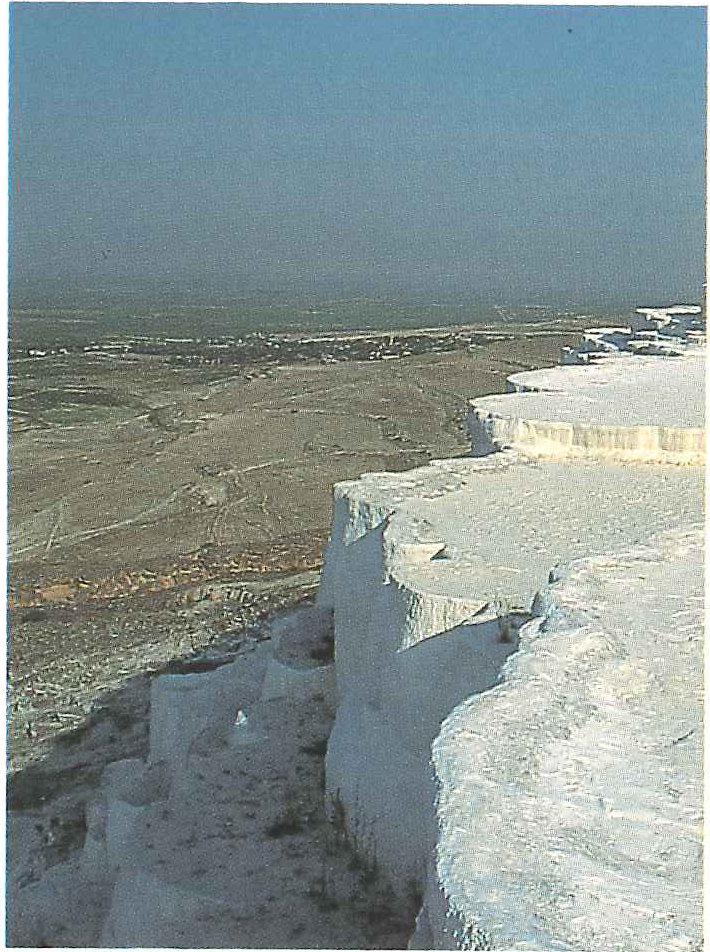
On the eleventh day, we headed north to Pamukkale which is renowned for its sheer white cliffs of mineral salts. These were formed from hot mineral springs which, over time, cascaded down the hills leaving massive deposits of pure white calcium. For thousands of years, people have sought solace in the healing powers of the mineral baths located in Pamukkale. For a more modern touch, local swimming pools are filled with these warm soothing mineral waters. However, there is a drawback as the water does bleach your sun tan!
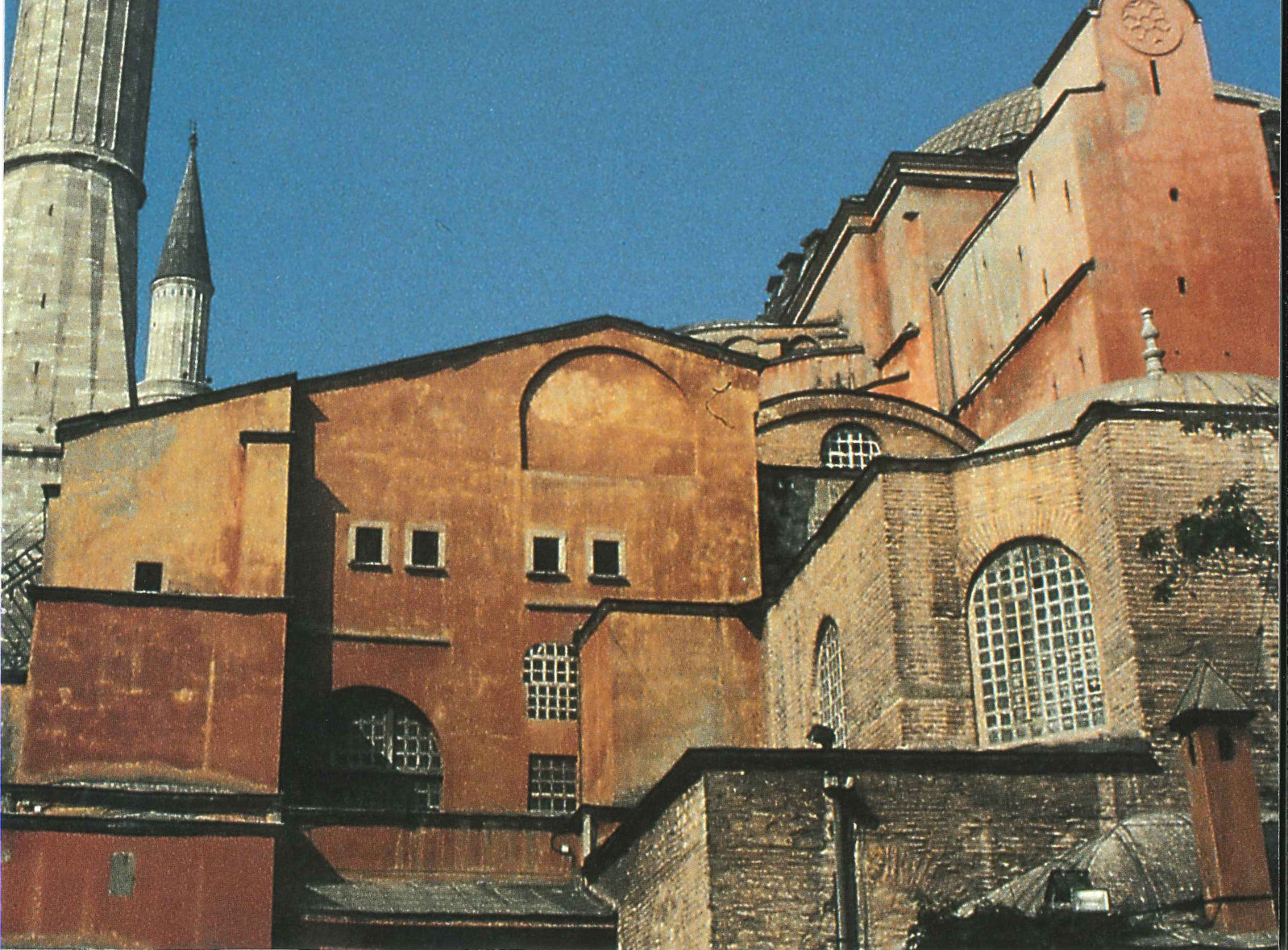
Istanbul was an important milestone for us as we crossed the legendary Bosporus from Asia into Europe. It is an absolutely spectacular city which compares visually with Hong Kong or Rio de Janeiro. We stayed at a wonderful hotel located in the shadow of the Blue Mosque near the Golden Horn. It was absolutely perfect — a very small place with big brass beds — called the “Yesil Ev” (Green House) which had been a Pasha’s mansion. Its location was ideal as we could leave the prison of our car and walk to all the main sites, including Topkapi Palace, Saint Sophia’s Cathedral, the Blue Mosque and the Covered Bazaar.
The drive from Istanbul to Bucharest was one of our longest in terms of time. For miles and miles before reaching the Turkish/ Bulgarian border, and still miles and miles after crossing the border, we saw thousands of hectares of sun flowers — a magnificent sight, with rolling fields of golden yellow as far as the eye could see. During this portion of the trip we started to feel that we were leaving the Middle East behind. The climate became more moderate; the vegetation changed from Mediterranean to the temperate hardwood forests of Central and Eastern Europe. Bulgaria had a faintly reminiscent Middle Eastern/Mediterranean atmosphere.
We were able to make good time on the excellent Bulgarian roads. It was a fascinating period to be in a country that had only recently been a closed society and a staunch, hardline supporter of the former Soviet Union. Despite its new openness, access to western technology is limited (if electric car windows can be termed western “technology”). While waiting for an accident to be cleared up, a few village children came to peer in the windows of our car (still carrying its green Saudi diplomatic plates and heavily black-tinted windows). Because we did not want to awaken Kristianne, we quickly hit the button to make the power windows go up — the look on the children’s faces was priceless. We are certain that not one had ever seen anything like it before. Our little Jetta, with it magic windows, was probably the dinner-time topic in every village house that night!
Traffic came to a grinding halt as we drove onto the narrow two-lane bridge crossing the Danube. Several truck drivers were cooking food on the side of the road and they seemed to be planning for a long night ahead. Because of the war in Yugoslavia, most trans-European truck traffic had to pass through Romania rather than taking the more traditional Yugoslav route. Unfortunately, the Romanian customs authorities were not set up to handle the increased volume of trucks. We waited for two-and-a-half hours before the customs authorities allowed a small troup of private automobiles to move to the front of the line.
The Romanian authorities were very considerate to have allowed us to move ahead; we could have been trapped at the border for days. As we drove over the bridge into Romania, we saw hundreds of trucks lined up in both directions; not moving at all. By the time we cleared customs that day, it was well after dark and we were forced to continue on with the short 70 kilometre drive to Bucharest at night. Our first time driving at night, and it had to be in Romania of all places! The roads were treacherously pitch-dark. We encountered trucks with no lights, tractors with no lights, horse carts with no lights, and automobiles with no lights. It was only as we neared Bucharest that things became marginally better.
Near the city centre things brightened up somewhat. Bucharest was also the only city in which we had to stop a taxi to lead us to ’our hotel (at the bargain rate of five one-dollar bills) because it was simply too dark to make out where we were going. We finally pulled into our hotel at 23:00 hrs after a gruelling fifteen-hour drive. Throughout the city, we saw signs of the violence which had occurred during the overthrow of Romanian President Nicolae Ceausescu in 1990. Bullet holes pocked many of the buildings in the downtown core, including the Intercontinental Hotel where we stayed. In the 1930s,
Bucharest was described as the Paris of Eastern Europe, with its broad tree-lined boulevards, stately mansions, and chic stores. However, Ceausescu put an end to that by razing entire quarters of the city to build his grandiose projects. One of the most spectacular examples is the as-yet-incomplete Presidential Palace containing hundreds of rooms. It is so large the Romanian authorities do not know what to do with it.
After a day of walking around Bucharest, we started off towards Hungary and hoped to make Budapest before nightfall. We had heard horror stories about gasoline shortages, roads with potholes that could swallow a car, and highway bandits (people so desperate they stop your car on the highway at gunpoint and take everything). However, we had a wonderful drive and did not encounter a single problem en route to the Romanian/ Hungarian border.
Time seemed to have stood still throughout the Romanian countryside. The wheat harvest was still cut by hand using scythes; donkey carts plied the roads piled high with hay; while the local population looked tired and worried about an uncertain future. Although quaint and picturesque, the state of the countryside was indicative of extreme poverty.
Interestingly, the gas station attendants were all women, wearing impeccable dresses, carrying stylish handbags, and often wearing hats and white gloves. They were very smart-looking. While the roads were not super highways, they were fine for driving through the beautiful terrain which changed from large flat plains of golden wheat to the spectacular pine forests of the Transylvanian Mountain ranges. We must admit that we did not encounter any “bandits” en route.
The uneventful drive through Romania had lulled us into what was a false sense of security as we neared the Hungarian border. We were not prepared for the last shocker: cars lined up for tens of miles, while the Romanian authorities struggled to meet the influx of thousands of travellers returning from the Mediterranean after their summer holidays. People were sleeping in the fields, their garbage piled everywhere. At the very front of the queue, a young woman told us she had been waiting there for nine hours!
After a long thirteen-hour day, we finally drove into Budapest where we stopped for a three-day respite. It was in Hungary where we felt that we had arrived in the “modern” West; the contrast with Romania was truly unbelievable. Bucharest provides an example of the 1920s; whereas, Budapest is the 1990s (well, at least the 1970s).
From Hungary onward, we began to stay over night in little bed and breakfasts, stopping in Grien, Austria and Bad Wimpfen, Germany, and then visiting relatives in Brussels. We eventually crossed the Channel at Calais and arrived in London where we stayed for a few days with British friends from Saudi Arabia. We then shipped the car to Canada from London and finally flew home to Ottawa.
In all, we drove 8,000 kilometres in 22 days and passed through 13 countries. Slowly, but surely, the terrain had transformed itself from blazing rolling hills of sand sprinkled with camels, to cool green forests and pastures dotted with cows and horses. We had started our trip in a country where gasoline cost 11 cents a litre and ended in England where the cost was more than one dollar a litre. The temperature in Saudi Arabia had been in the high 40s Celsius when we left in late July and then dropped to the mid-teens by the time we reached London. We had left behind a closed and conservative Muslim society to arrive at the relative openness of Europe and Canada.
View the original scanned pages →
Originally published in bout de papier, Vol. 10, No. 1 (1993) — Winter 1993 // Hiver 1993, pp. 33–37. Read the rest of this issue →



