
bout de papier, Vol. 18, No. 4 (2001-2002) — Winter 2001/2002, pp. 13–15
In Tunis, across from the Bab Cartajena, lies St George’s church- Lyard. Until about a hundred years ago, when the walled Medina closed the gates each night to infidels, this area was the ghetto of Jews and foreigners. St George’s is not on any tour or in most guidebooks. If in Tunis, you should visit it. I search for words to induce you, but cannot improve on, “a mansion of rest”, a phrase I borrowed from an epitaph in St George’s.
This epitaph is the inspiration of these few paragraphs, an eclectic reminiscence on the posting cycle and diplomatic duties.
Let’s begin
In this mansion of rest lies Jeposited all that was mortal of James Traill, Esq., who departed this life XVI Oct. MDCCLXXXVII. He had the honour of serving his Brittanick Majesty as Agent and Consul General in the Kingdom of Tunis 22 years”
Can you imagine such an assignment? Yet for his time James’s career was far from exceptional. You might say his term was relatively short, cut down in the prime of life perhaps.
Richard Lawrence must have been James Traill’s predecessor in office. His headstone reads:
Here yeth the body of Richard Lawrence, Esq. His Brittanick Majesty’s Agent and Consul General in this City and Kingdom of Tunis. Born near Truro in the county of Cornwall, 29 October 1698 and departed this life 27 June 1780 in the 82nd year of his age having served three British Sovereigns as Consul in Tunis during the space of 38 years”.
Now that’s a career path! Did Whitehall have a Personnel Department in those days? Could Personnel not find staff for this remote dependancy of the Sublime Porte?
Gravestones in St George’s offer vignettes of the careers of several of our predecessors in the foreign service.
James Dodge, Esq., Chargé d’ affaires of the Republic of the United States of America, departed this life in Tunis Oct. 22, 1806, aged 34 years. The United States of America was not yet twenty when James Dodge died. Dodge must have been one of the first foreign diplomats of the new republic.
Samuel Heaps, born Carlisle, Pennsylvania, 8 October 1781, died 12 October 1853, was for 30 years consul in Tunis for the Republic of the United States of America. Another American with a long career on the Barbary Coast.
But no nineteenth-century American consul was more famous than John Howard Payne, actor, poet and composer of the song “Home Sweet Home”. Nobody knows “Home Sweet Home” anymore but the title is preserved forever by collectors of nineteenth-century girls’ samplers. Ahmed Pasha granted Payne a state funeral when he died.
Jacobo Ronling, whose tombstone I have translated from Latin, using what I remember from my five years of classics oh so many years ago, was consul for the Kingdom of Denmark in Tunis throughout 30 years of the eighteenth century. He led a respected life in the community and died “mourned by the Arabs and Turks and lamented by the Jews”
For some families the post of consul in Tunis became hereditary. Several generations of Tulins, consuls of Sweden, are buried here. Bismark appointed one Tulin, perhaps a second son who could not get the main post, as the consul of Prussia around 1870.
These tidbits inspired me to delve further. What did our predecessors in office do? I find we can empathise with many of the issues our seventeenth- to nineteenth-century ancestors in the service faced.
One constant risk — unfortunately a risk making a come-back — was being held for ransom. In the eighteenth-century Barbary ports kidnapping was a major industry. One seventeenth-century Bey, miffed by an affront, threatened to execute the British consul unless his consular charges paid a very large sum. The charges managed to negotiate a settlement at a sizeable but substantially reduced price.
What we really have to admire in our forefathers, to use the rubric in our appraisals, is their flexibility and adaptability. At least two proved themselves beyond anything our authorities would ever demand. What happened to those who failed, I hesitate to imagine.
Richard Lawrence stayed in post through the reigns of the first three Georges. Lasting this long in an era when heads could still roll at the whim of the monarch has to win him high marks for “flexibility” and “organisational awareness”.
But I challenge anyone to find a more organisationally aware and flexible diplomat than Jacques-Philippe Devoise, Capitaine de Cavalrie. Here is his c.v.:
1774, Vice-consul à Tunis, Jécembre 1776, Chargé d’affaires a.i., 1778, Vice-consul à Lattaquie, 1781, Gérant du Consulat de Tripoli de Syrie, 1786, Vice-consul à Scio, 1791, Commissaire du Roi à Tunis, 1792, Consul général, révoqué le 11 janvier 1796, réintégré le 10 août 1797, confirmé Consul général le 20 mai 1814 et le 29 mai 1815, quitté Tunis en 1819 et meurt à Voiron en 1832”
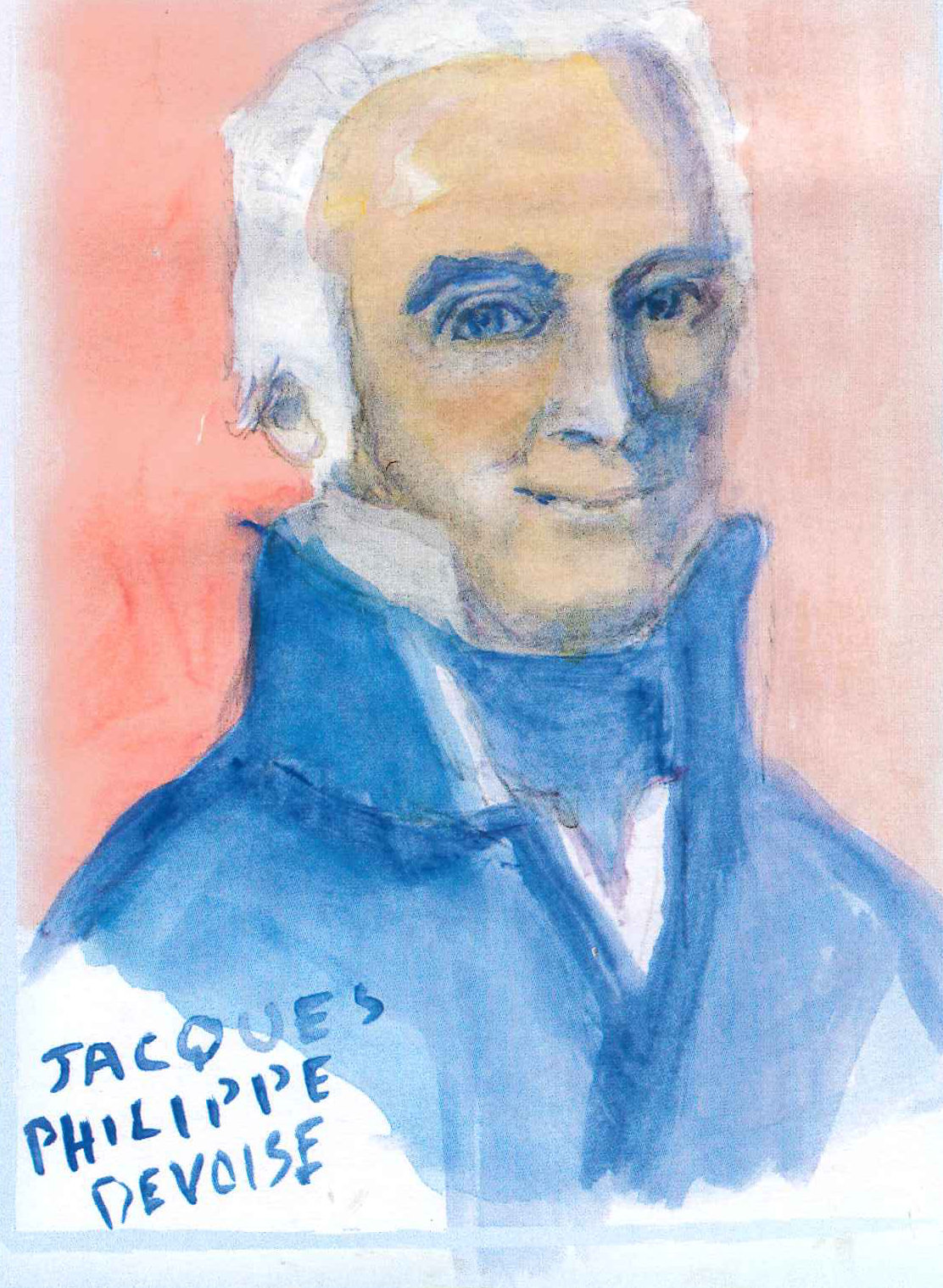
Look at those dates! Devoise begins his consular career in the last year of Louis XV. He continues through the Estates General, the Convention, the regicide, the Committee of Public Safety, the Directory, the Empire, the overthrow of Napoleon twice, the Congress of Vienna, to return to his homeland under Louis XIX. As far as I can see no one ever thought it essential he do an interim home posting.
To take another look at our theme. What did His Majesty’s Consul and others do in the reigns of the first three Georges and the time of Devoise? In the early period, when not being held hostage themselves, ransoming other hostages and paying for the return of ships was an important activity. In Tunis the French consuls held a virtual monopoly on obtaining the release of prisoners, even making sure, upon suitable remuneration, that some prisoners were never returned.
Unlike the neighbouring Barbary ports, Tripoli and Algiers, Tunis did not live on piracy alone. Even then Tunis was more renowned for trade, some of it grey, than extortion. An Italian commentator calls Tunis the Shanghai of the sixteenth century.
As for the next generation of long-serving consuls, we find that their duties seem very contemporary. I quote a memorial at St George’s:
In memory of Thomas Reade Kt, Companion of the Order of the Bath, Knight of the Neapolitan Order of Ferdinand and Merit of King Francis I of the Two Sicilies and of the Greek Order of the Saviour who died 29 June 1849 aged 66 having held for 23 years the Office of Brittanic Agent and Consul General in this Regency; nobly employing in the cause of humanity his personal influence with Hamet Pasha Bey, he prevailed upon His Highness to abolish slavery and give freedom to every slave in his Dominions”.
Now that is a successful initiative! If our Human Rights Division could make a similar boast now, it would merit much more than a PAFSO award. An Order of Canada at high rank, I would hope.
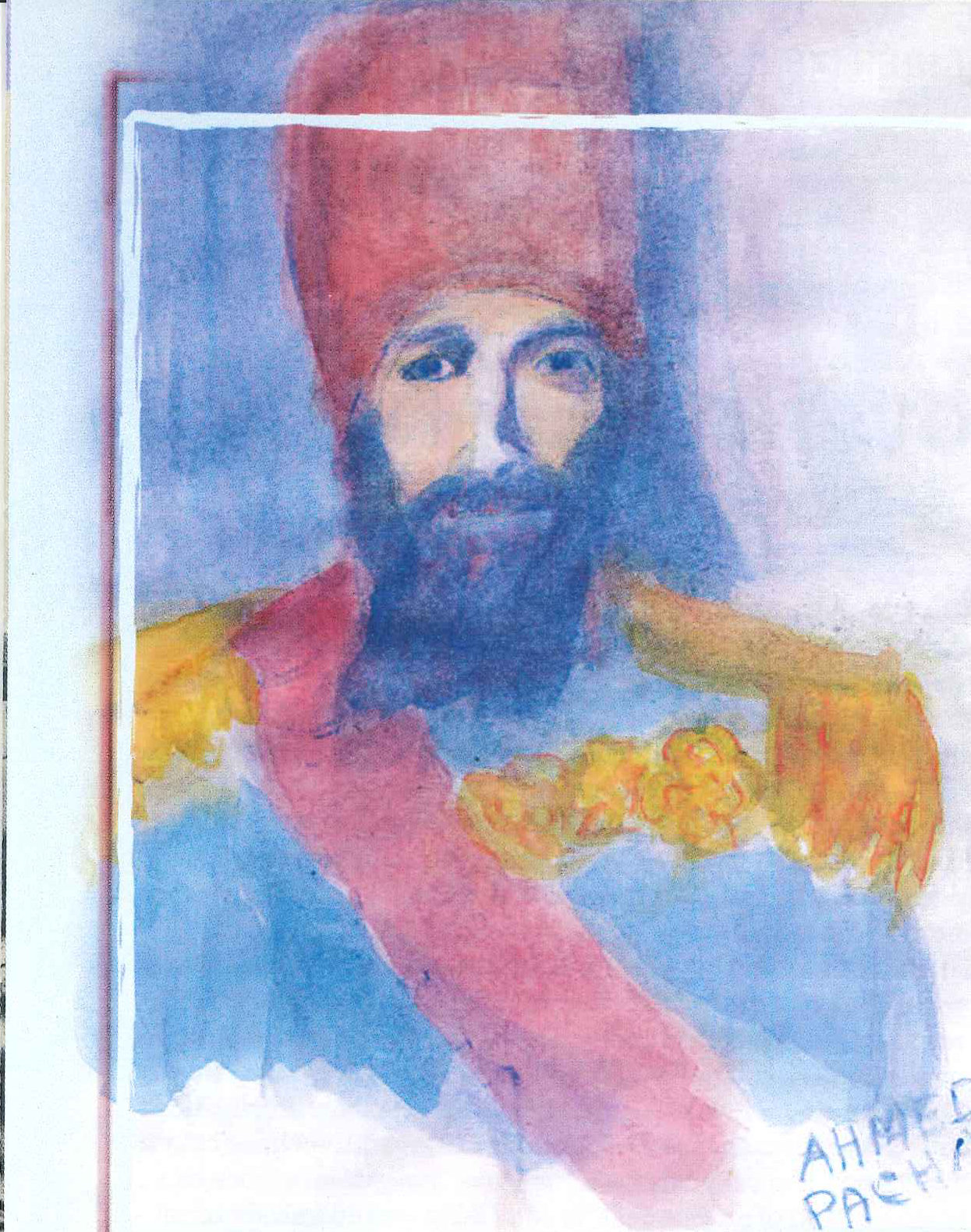
Hamet or Ahmed Pasha, like his contemporary in Cairo, Mohamed Ali, was the first possessor of the Kingdom of Tunis to try to modernise traditions that suffocated this part of the Mediterranean.
Among his acts were the modernisation of the armies, the purchase of steam ships, the beginnings of industrialisation and the beginnings of railways. To finance this, Tunis went to the European financial market. The result, a rescheduling under a nineteenth-century body of consuls that looks a lot like the Paris Club but that intervened far more directly in the internal affairs of the regency, taking 50 percent of the revenue.
For modern Canadian diplomats, Ahmed Pasha’s amour-propre led to an incident that feels very contemporary.
In 1846 Ahmed Pasha, (the translation is from a French document, the original in Arabic) “voulant rendre au Sultan des Français la visite faite a Tunis par les princes d’Orléans consulta sur l’opportunité de ce projet ses hommes d’états et caids”.
Their answer, “Les Français sont maintenant nos voisins en Algérie. Leurs princes ont été nos hôtes. Nous approvons donc pleinement votre projet, si toutefois, Votre Altesse est sûr de trouver l’accueil dont il est digne”
Ahmed received the “accueil dont il était digne” in France. However his planned continuation to London didn’t come off. Her Majesty’s government insisted that the Ambassador of Turkey be present at all official meetings. For the Foreign Office lawyers of the day, Ahmed Pasha remained a vassal of the Sultan. Ahmed elected to return home rather than suffer this affront to his dignity.
Consul Reade, who convinced the Bey to abolish slavery, held the care of what was by far the largest expat community in the Regency. In 1850 the Kingdom of Tunis counted 7000 British subjects among its inhabitants, who numbered 800,000 at the most.
St George’s churchyard holds an epitaph to one of the more honourable subjects, from just after Reade’s time. Here it is:
William fletcher born at Aberlady County East Lothian Scotland on 23 December 1827 who died at Goleta near Tunis on 6 May 1876 after 16 years of faithful service to his Highness the Bey as Master of the Arsenal, of a most affectionate disposition and a singular deportment of gentleness, uniting the most estimable qualities of the heart and mind, pious without austerity, virtuous without affectation, modest, unpretentious, just and charitable”
I cannot find out how Fletcher got this job. When the Beys were modernising their military, they had an agreement with France. It seems that the Bey recruited Fletcher and others independently. The military force did have value. The Kingdom of Tunis supplied 12,000 fully-equipped soldiers and a large number of draft animals to the Sultan in the Crimean War.
Not all the British consuls’ subjects were as esteemed as Fletcher. Most were Maltese, islanders whose protection Her Majesty had assumed in 1815. At the time, there were so many immigrés from this island in Tunis that the street where St. George’s stands was called rue des Maltais. It retained this name until the 1970s when the name was changed to that of a hero of Tunisian independence in the 1970s.
The bourgeois (Baldi) of Tunis were possessed of a very strong sense of class. The devout and austere Baldi of Tunis saw the Beys and the political class, descendants of Janissaries and Mamluks, as oriental and exotic. The bourgeois claiming descent from the earliest Arab conquerors and from the exiles of Andulus formed the academic, religious, judicial and commercial elite of the country. The Lowest class of direct subjects of the Bey were the Jews, even though as refugees from the first destruction of the temple by Nebuchadnezzar, they had been in the Kingdom longer than all others in the Kingdom, bar the Berbers.
Both the Turkish government and the citizens looked down on all infidels. Even among these there was rank. At the top were the Genoese, next the French. Other Europeans, few in number, were in the middle. Neapolitans and Sicilians stood lower on the ladder and even they stood on the Maltese, whom Her Brittanic Majesty’s consul protected. The Maltese of Tunis were “cochers, charretiers, gardeurs de chevres ou contrabandiers”. It seems that the latter trade may have been dominant, although part-time for many. In the main, they were illiterate ignorant and as miserable as the mass of Tunisian peasants.
The consul’s role in protecting this mass of mainly undesirable subjects went well beyond what we know now. Turkish princes, following a long tradition that perhaps is Byzantine in origin, did not interest themselves in the private problems of non citizens.
Under the “capitulations” each consul held a court for his own citizens. By the nineteenth century, the consul not only judged disputes relating to his charges but any dispute where they were defendants. This may seem an unpardonable interference with sovereignty to our eyes but when we look on how the law was applied in this period, we can see why the Europeans held to their rights.
Until the reforms of the 1860s, the Kingdom of Tunis was governed by two different Muslim rights, Malekite and Hanafite, depending on the affiliation of the citizen. But even here the decision of the Caid could be subject to capricious and arbitrary intervention. The Bey himself sat in justice one morning a week in the Bardo. The procedure followed? The supplicant stated his case to a military official, the Bach Hamba. The Bach Hamba stated it to the Bey. There does not seem to have been any rule of evidence or much procedure. The Bey delivered a decision on the spot. He averaged from twenty to thirty cases an hour. When the Bey tired, the session was closed.
To end. Our trade is old. I think honourable. We learn there is little new in the work. After all, among the earliest written documents we find are Treaties of Friendship, Commerce and Navigation. But in light of all my research, I have to ask, “Why do we move everybody around so much?”
View the original scanned pages →
Originally published in bout de papier, Vol. 18, No. 4 (2001-2002) — Winter 2001/2002, pp. 13–15. Read the rest of this issue →



