
bout de papier, Vol. 18, No. 4 (2001-2002) — Winter 2001/2002, pp. 9–11
Readers of bout de pacier may not date that Canada’s presence on the Nile dates back rather longer than the establishment of our mission in Cairo, to the presence of Canadian voyageurs on the famous expedition of Field Marshal Kitchener to the Sudan in 1896-98, which culminated in the Battle of Omdurman and which launched the career of the young Winston Churchill. This fascinating moment in history (arguably the first time Canadian military forces served overseas) is documented in a book that is now sadly out of print: Canadians on the Nile, by former FS and International Trade Minister Roy MacLaren.
bout de papier Vol.
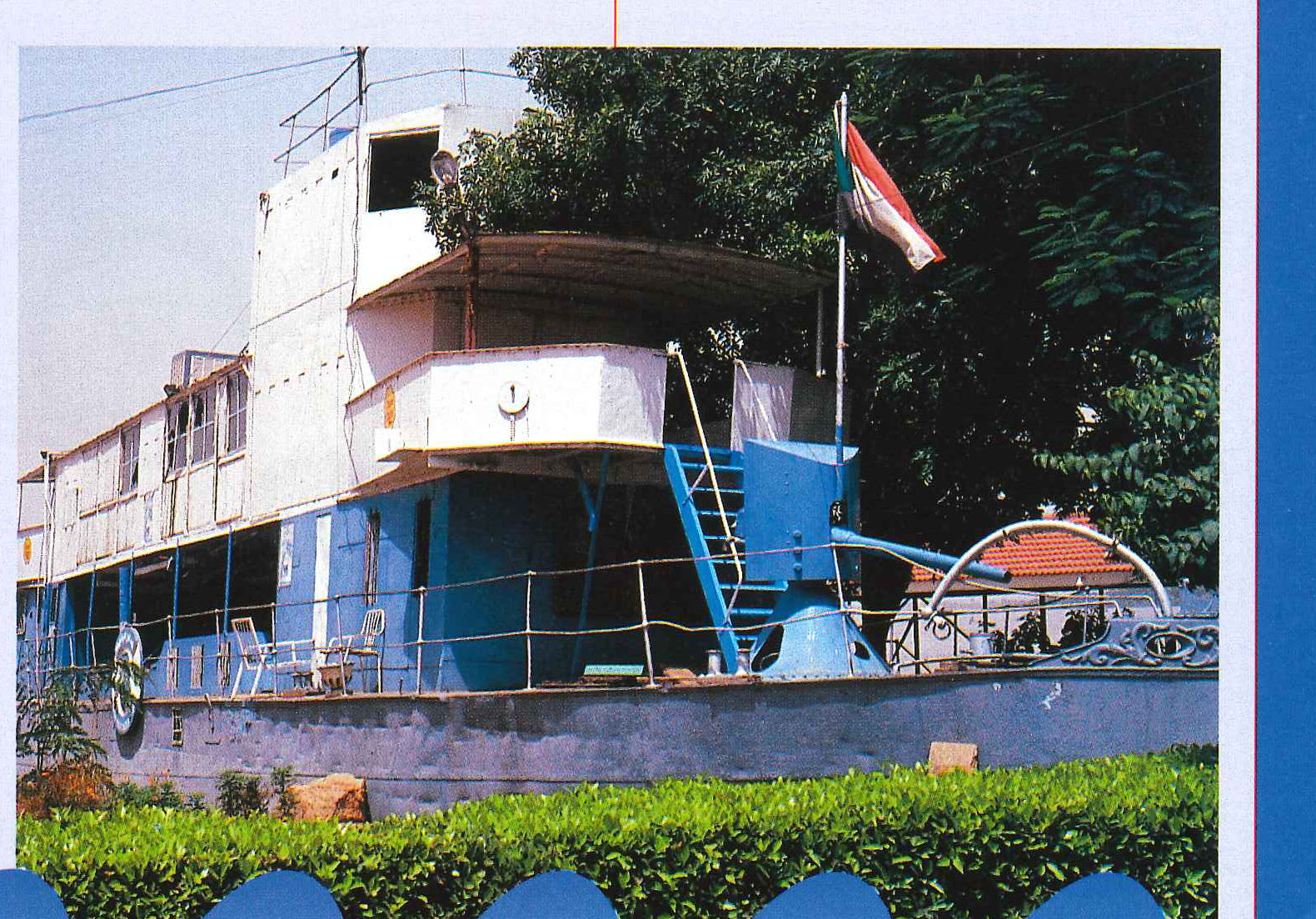
In August 2000 Canada was officially back in Sudan, with our opening of a small representative Office in Khartoum. However, we are now back on the Upper Nile in rather more than just a metaphorical sense. Four blocks to the North of the Office of the Canadian Embassy, which is located within the larger premises of the British Embassy, there sits — on the edge of the Blue Nile — one of the more interesting relics of those near-mythical years of Empire that saw not only the launch of Kitchener’s spectacular career but the equally dramatic martyrdom of Charles Gordon at the hands of the Mahdi. (Aficionados of 1960s Hollywood spectaculars will recall Charlton Heston as Gordon and Laurence Olivier as the enigmatic Mahdi – “I am the expected one”
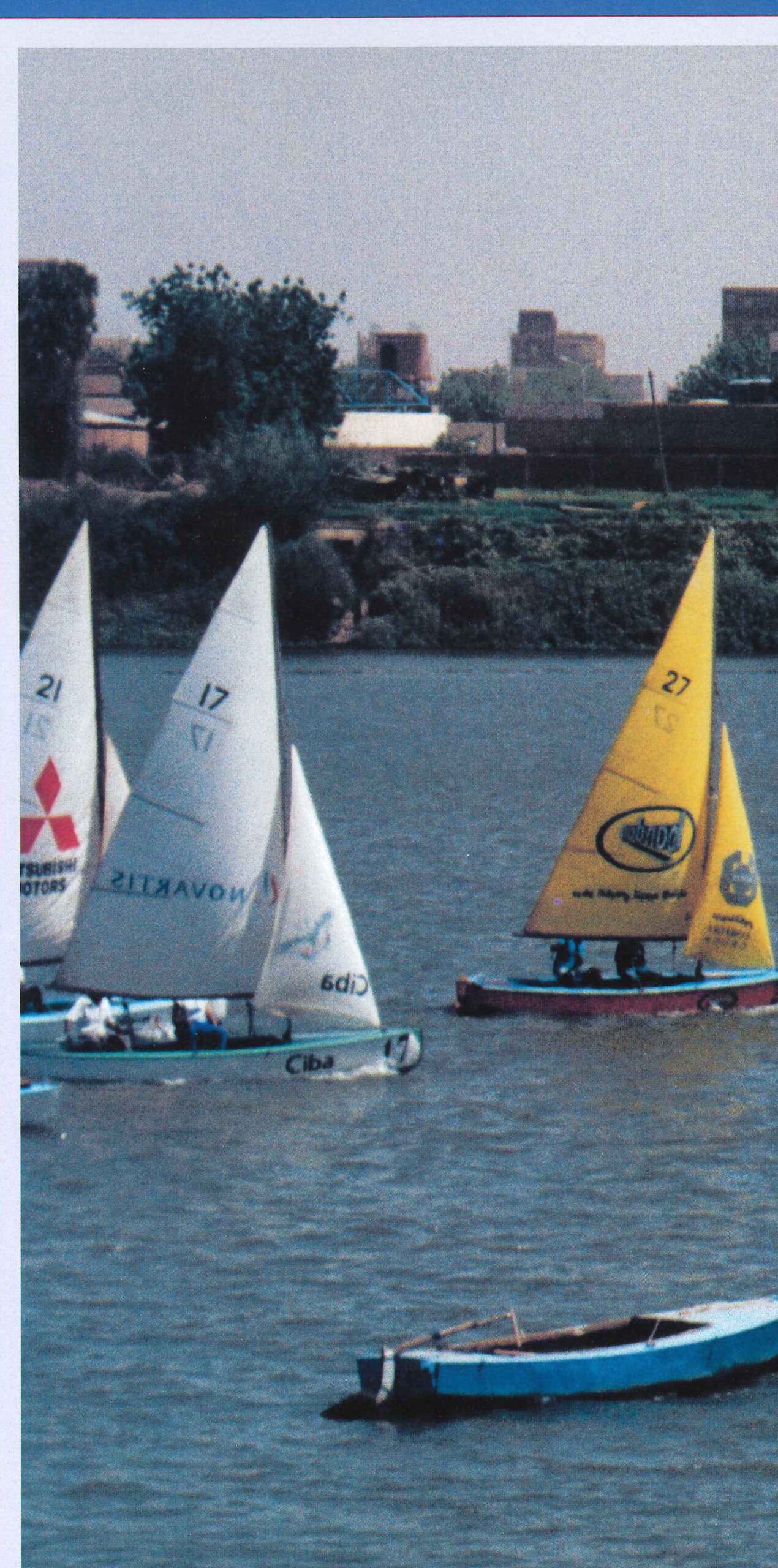
– waging their battle of wits and psyches in “Khartoum”). This relic is none other than Her Majesty’s Gunboat Melik, described by modern military historians as “the Cruise Missile of the Victorian Era”. Brought in pieces from England to Upper Egypt, the Melik and three sister vessels were reassembled and then sailed at high water through the Nile cataracts to reinforce Kitchener’s land forces that had built their own railway across the desert from Wadi Halfa (the railway also still survives: last Christmas I rode the very same rails, date-stamped 1896, to Egypt). At Omdurman, the Melik and her sisters played a crucial role in bombarding the Mahdi’s mud fortifications, contributing in large part to the horrific losses of the dervishes: 10,000 versus British losses of approximately 40. The Melik has seen its ups and downs since 1898, and almost sank at her moorings in 1989. But in that same year, exceptionally high waters on the Blue Nile washed her ashore, where she has remained ever since; she now lists about ten degrees to port but is surrounded by colourful flower beds. But the Melik is not idle in her old age, and here I will explain how Canada not only has a new presence in Khartoum, but is literally back on the Nile. Since 1926, the Melik has served as the clubhouse of the Blue Nile Sailing Club, which is thus the oldest sailing club in Africa. The BNSC is not only almost unique in having an armour clad clubhouse: its entire fleet of sailboats is made of steel. Legend has it that in the twenties the then-commander of a Royal Engineers detachment, despairing of the long somnolent days in Khartoum with nothing to do (plus ça change…), ordered a junior officer to design a sailboat for the use of the officers, to be built out of whatever material might come to hand. Wood being rather scarce in the Sahara desert, he used steel. And three times a week in season – Mondays and Wednesdays at 4:30 p.m., Fridays at 10:00 a.m.; November to May – the Melik’s bell is rung by club secretary William to start racing sessions. On a busy afternoon, as many as twelve or fourteen Khartoum One-Designs, all at least seventy years old, cast off from the moorings below the Melik to compete in closely-fought “round the buoys” races on the kilometre-wide Blue Nile. On Fridays, longer races are held: around Tuti Island, to the confluence with the White Nile, or upstream past the brick factories to beautiful white sandy beaches on the Blue.
Most of the Khartoums are brightly painted in household enamel (no fancy yachting paints here…) and carry the names of sponsors: Pepsi, Blue Nile Dairies and so on. Near-catastrophic gear failures such as broken masts are frequent in the sometimes gusty afternoon winds, but there is little that cannot be repaired with a few old hose clamps and a couple of well-placed nails. Collisions (equally frequent) never result in anything more than scratches to the old steel hulls, and welded flotation compartments in bow and stern ensure that the Khartoums stay afloat. You just need to be aware of crocodiles and a hippo family in the White Nile and trigger-happy guards at the Presidential Palace, should you have the misfortune to go aground on a sandbank in the wrong place.
The boats are surprisingly fast, racing is competitive, and the locals (notably the venerable Faroukh and Mohammed, who have been sailing these waters for fifty years or more) carefully guard their local knowledge of unsuspected currents and wind pockets from innocent “hawaijas” (white foreigners) who think they know a thing or two about sailing. The only chance you have against them is to bamboozle them with arcane interpretations of the rules, for their English racing terminology extends little beyond “Starboard” (to be used when warning of imminent collision in any scenario whatsoever…), “Water” and “Protest!”
In another historical footnote, a direct descendant of the Mahdi is a club member (as is a son of the notorious architect of fundamentalism in this country, Hassan al-Turabi).
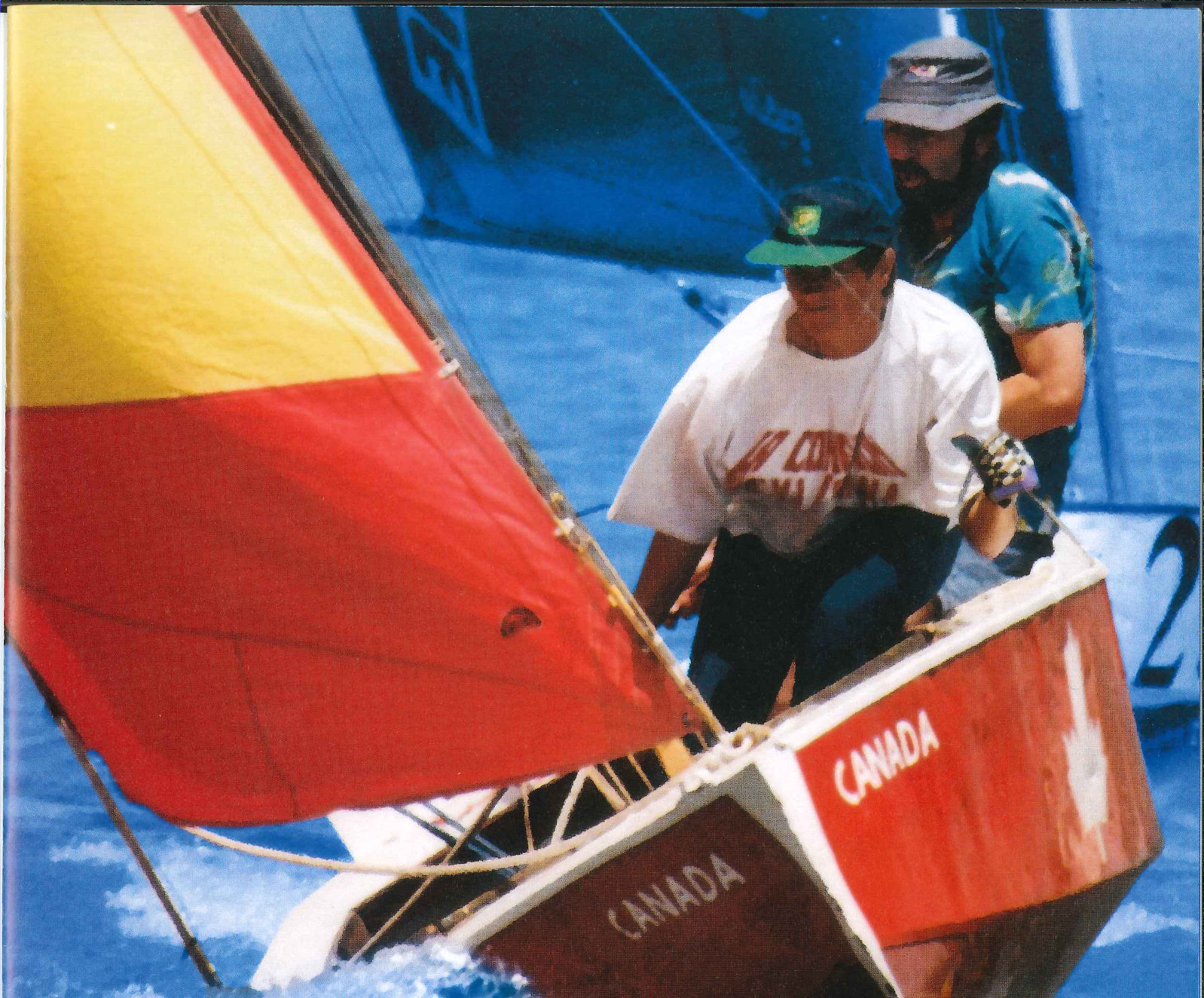
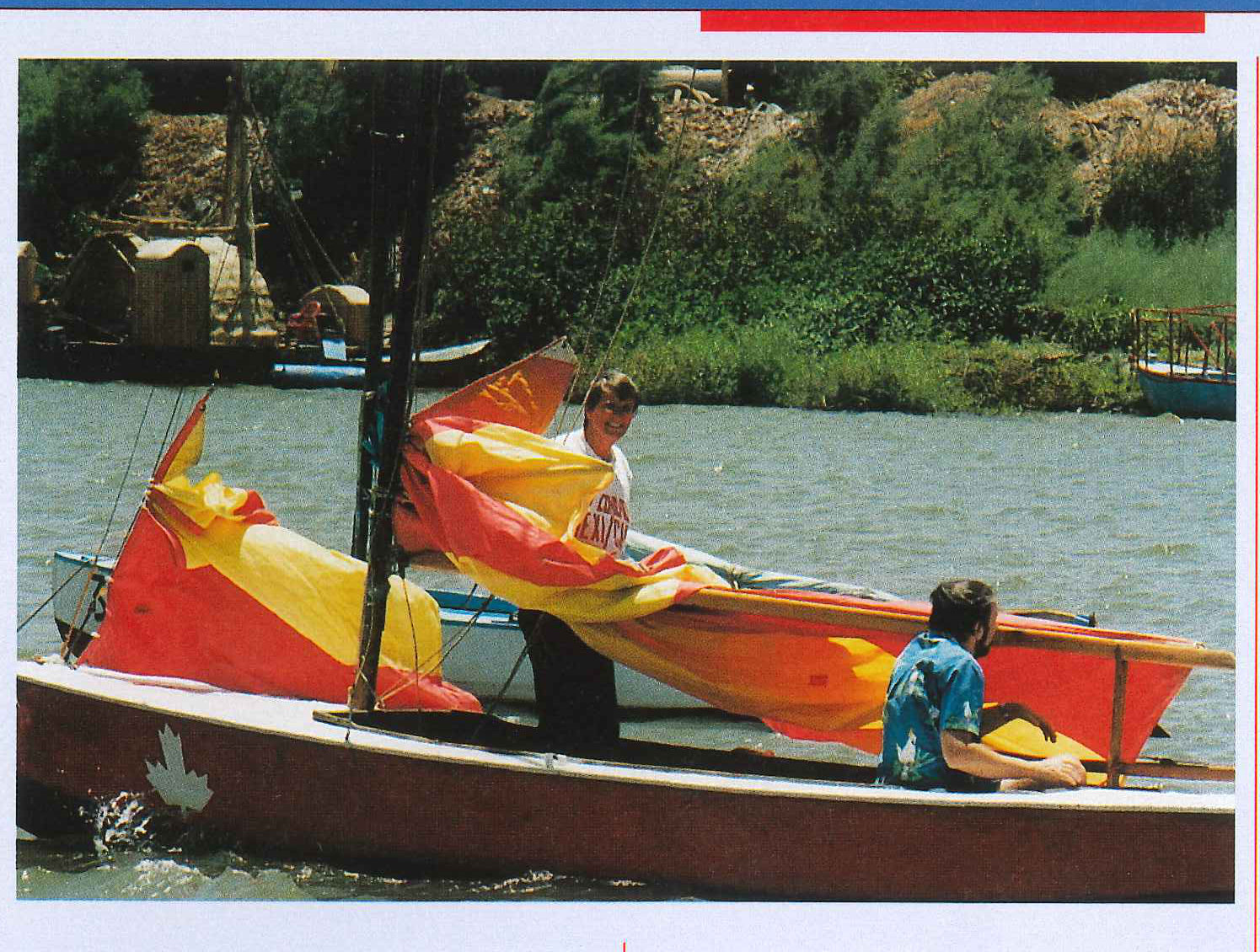
My own Khartoum — painted bright red and named simply “Canada” — has yet to win a race; it thus must be said that our presence on the river remains a modest one. But there are few more enjoyable ways to pass a late winter’s afternoon in this hot, sleepy city than pottering around on the river as the sun sinks over the confluence with the White Nile and the muezzin’s calls to prayer begin all over Khartoum and Omdurman.
The only problem is that after the race there’s not a cold beer to be had.
View the original scanned pages →
Originally published in bout de papier, Vol. 18, No. 4 (2001-2002) — Winter 2001/2002, pp. 9–11. Read the rest of this issue →



