
bout de papier, Vol. 27, No. 1 (2012) — Winter 2012 // Hiver 2012, pp. 9–11
Recently foreign service children born abroad have been in the news because of proposed legislation which would deprive their children of Canadian citizenship, if the latter were also born abroad. It made me think of my own children, four of whom were born out of Canada, each in a different country and in very different circumstances.
Our first child was born in Delhi, though not in the hospital where I had hoped to be, but in a nursing home from which earlier on my husband had been rescued because it was so inadequate. I had no choice, for when I called to say labour had started, J was told there was no bed available in the British hospital. But the nursing home, despite many unpleasant features, did have its strengths. Almost all day my son was rocked by a loving ayah, who would only pause to spit out her betel juice. It was in its own way a good beginning, though not so good was a nurse’s decision to cheer up the other patients by carrying the baby round the wards, and this in the midst of a cholera epidemic. As it turned out I would have ended up there anyway, since the British hospital had to be evacuated due to floods.
Number two was born very uneventfully in Ottawa, where the nurses found it hard to believe this was my second child, since I seemed quite unfamiliar with all the standard procedures.
Baby number three arrived in the most luxurious setting imaginable, a mansion in Paris which had once belonged to Napoleon ITI. Her birth, unlike her brother’s, was foreseen well in advance. Some time before my fashionable doctor had predicted the exact date, and when I expressed admiration for his perspicacity, he explained that this was because he would be going on holiday the following day. Despite his lucrative practice he was obviously not keen to forfeit his fee. The birth was induced to suit his convenience, though not that of her father who had to be out at the airport meeting a visiting Minister, an event which in those days clearly took precedence. My husband was able, however, to share with me some excellent meals accompanied by the appropriate wine. Did I also drink wine as we ate? I can’t remember. What I certainly did enjoy was the Nursing Mother’s beer, which I was encouraged to drink as much of as possible. No one, particularly in France, believed that alcohol would have bad effects on either mother or baby.
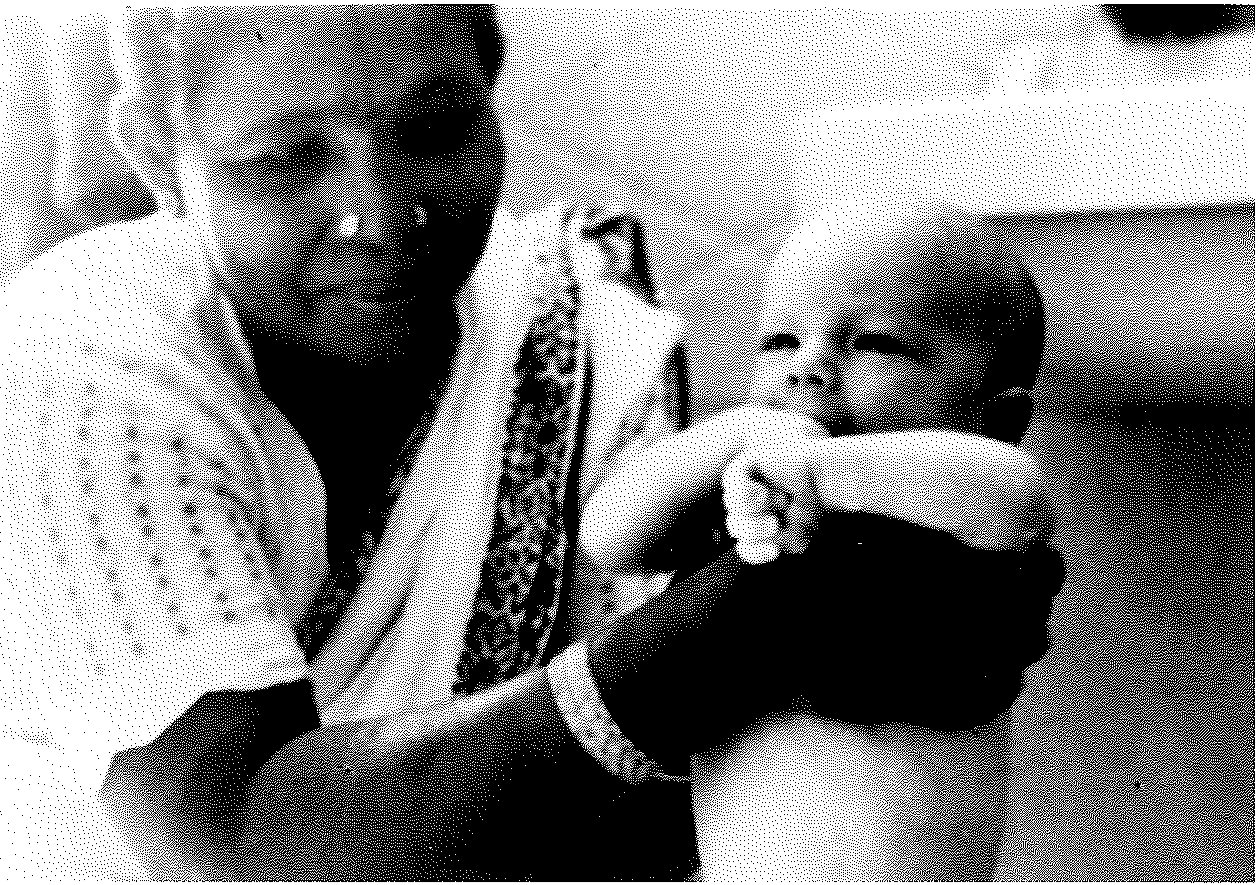
It was the birth of our fourth child which was the most dramatic, not because of the actual birth but of what preceded it. I had arrived in Moscow five months pregnant to discover that most Western women went elsewhere to have their babies. Russian hospitals were rough and engaged in a variety of practices, such as communal labour rooms, which Western women found alarming. A stoic people, the Russians didn’t believe in using painkillers for child birth except in extreme circumstances. Worst of all no visitors were allowed throughout one’s stay and this regulation, apparently designed to protect the babies from infection, could produce an almost paranoid sense of isolation in those who spoke little Russian. Despite all this, however, I had decided to stay in Moscow. Most Russian babies seemed to come into the world fairly successfully and I was unwilling to leave my other children so soon after we had moved to a strange country. In the end however I changed my mind. What did it was the experience of an Australian friend who, for similar reasons, had decided to stay, and for whom things then went very badly. No doubt the medical complications would have been the same anywhere, but what would not have been the same was her fear and isolation as she lay unable to communicate with friends or family.
I left at midday on the first of January having spent much of the previous night at Ambassador Robert and Mrs. Ford’s New Year’s Party, a splendid event at which it was de rigueur for the staff to stay until the most senior guests had gone. Off to Vienna, where I would be with friends, I bade a wistful farewell to my family and boarded the plane, swathed in a voluminous coat. I had not told Aeroflot of my condition and they would have been perfectly within their rights if they had refused to take me. The baby was due in two weeks and all my others had come late. Nonetheless I was worried in case I should go into labour on the plane. It was, therefore, with a sense of relief that at the end of four hours I assumed we must be almost due to land in Vienna. But to my surprise the plane flew on, until finally there came an announcement to the effect that we would be landing in Zurich in a few minutes. There was no mention of Vienna. In a very Russian way Vienna had been wiped out as if it had only existed in the imagination of the passengers, of whom, as it happened, there were very few since New Year’s Day was not a popular date to travel. I huddled in my seat fighting back the tears and trying to console myself by thinking of all those who had given birth in far worse circumstances than mine. One passenger had the nerve to make a fuss and was told that because of the existing weather conditions the landing equipment was inadequate for Vienna. We could only hope the same was not true of Zurich.
By the time the Aeroflot representative arrived there were only four of us left in the airport, an American girl touring Europe, a Russian woman with a small baby and myself. The Russian was my mirror image since she had left Vienna, where her husband worked in their embassy to have her baby in Moscow and was now returning with Ala, who was a week old. We were offered a chit for the airport hotel and assured that we would be flown to Vienna the following morning. The Russian however, adamantly refused to leave the airport and finally an arrangement was made for her to stay in the nursery with her baby. Meanwhile the American and I went off to the hotel, where after a congenial dinner life began to seem a little better. After all if my baby happened to arrive in Zurich she might even enjoy the inestimable advantage of Swiss citizenship.
Early next morning we were hustled out to the airport to board the flight to Vienna. But the hours passed as the snow fell gently on the deserted runways. At lunchtime I was called to reception and asked whether I spoke Russian. My hesitant response that I knew a little was greeted with enthusiasm and I was led off to the nursery to act as an interpreter. There my feeble efforts met with evident admiration on the part of the fluently tri-lingual air hostess, who not surprisingly found it strange that one woman should leave Moscow for Vienna to give birth, while another would do exactly the reverse.
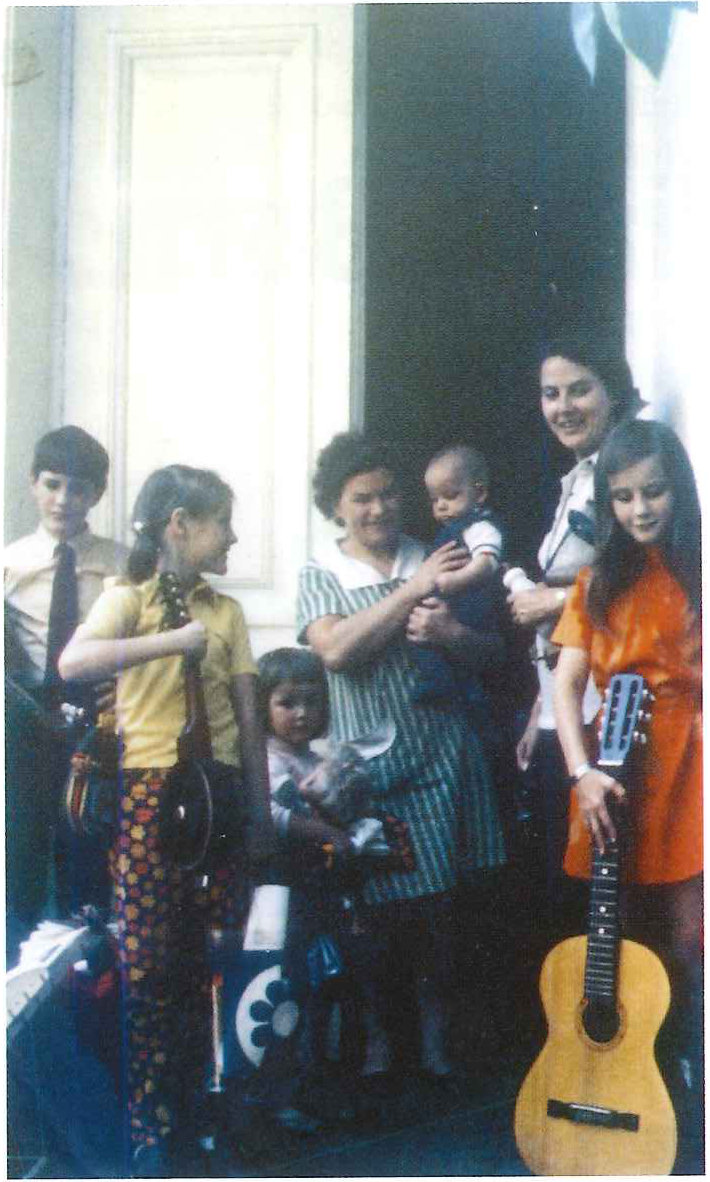
Leaving Moscow
The nurse was anxious that the Russian mother should go to have a meal while she looked after the baby, but nothing would persuade Ala’s mother to abandon her. No doubt just as was wary of the wiles of Russian officials so she too had been indoctrinated about Westerners and their evil intentions. Speaking only Russian and reading only Cyrillic, she must have led a life of total isolation in Vienna with all the paranoia that produced. Why a meal could not have been brought to the nursery later failed to understand. But the solution we arrived at was for all three of us to go to the airport restaurant.
Every time looked up from my food was aware of eyes sliding away from me all round the room.
Zurich airport in January was the gateway to many fashionable ski resorts and a fair number of the jet set had shaken off their New Year hangovers and were on their way to the slopes. So the restaurant was full of smartly dressed people among whom the appearance of two dowdy women, one enormously pregnant and the other carrying a tiny baby, was a mild sensation. For the first time I knew what it must be like to be a celebrity. Every time I looked up from my food I was aware of eyes sliding away from me all round the room.
It was late afternoon when our flight was finally called. I has some qualms about boarding it in case once again we flew over Vienna, but I had little alternative. Aeroflot was notoriously bad about exchanging tickets with other airlines and their representative had disappeared. How surprised my husband would be, I thought, if I reappeared at Sheremetievo airport almost two days after I had left. If that happened then I would stay. But the plane did land in Vienna, our baby was in no hurry to arrive, and I spent a delicious two weeks enjoying the luxuries of the West before the birth of my Wiener Kind.
Pregnant with my last baby, I once again fled Moscow but this time, like many others, to Helsinki. My previous children had all arrived late so I was looking forward to two weeks of shopping at that lifeline for those living in Moscow, Stockmann OY. But this was not to be. I had scarcely arrived in my hotel when I had to leave for the hospital. By then I had three daughters, and was sure this would be a fourth — ultrasound had not yet been invented — so I could hardly believe my luck when told it was a boy. The obstetrician I should have had was off skiing, so my son was delivered in the early hours of the morning by a young intern. In response to my question, “Are you sure it’s a boy?”, she drew herself up and replied rather coldly, “ I may not be fully qualified but I can tell a boy from a girl”.
Despite this assurance, I wanted to make perfectly certain before calling my husband to pass on the good news. So once in my room undid the tight swaddling just to check. Yes, just like the Russians, the Finns believed in swaddling — babies were stacked like little logs on the trolleys — and didn’t go in much for painkillers either. There was no tender coddling here, as in Paris and Vienna, and shortly after birth I was directed down the hall to the communal shower. A room full of naked pale skinned women, most of whom had just given birth but some of whom were still to do so, was not a thing of beauty.
Not surprisingly many foreign service children marry foreigners and so give birth abroad. None of my five children have done so, and as it happens the only one who might have was the daughter born in Ottawa.
Mary Taylor is the wife of a retired foreign service officer and the author of If Only I Had Known and A Black Mark.
Citizenship and the second generation
: Prior to the May 2011 election. a comprehensive Bil, ‘Strengthening the. Value of Canadian Citizenship”, was proceeding through the legisiative
– process. It acknowledged the unfairness of the current situation and would have ensured that a third generation of children of Foreign Service officers was not denied its legitimate claim to being fully. Canadian. The Bill died on the Order Paper with the dissolution of Parliament but it enjoyed all- -party support and, as a government in itiative, remains the most effective solution. Asked about the government’s plans to re-table the Bill, Minister Jason a Kenney’ S office responded that the fall session would be dedicated to the
Issues they ran on in the election campaign, like the get tough on crime —
agenda; the citizenship bill thus would be re-visited in 2012. PAFSO then
wrote to the Prime Minister encouraging him to table the bill as soon as. possible in the winter session. However, the government did not address —
– the issue before recessing in June. We continue with best efforts to get the : a back on the Order Paper, wee with other interested parties to see iis through..
View the original scanned pages →
Originally published in bout de papier, Vol. 27, No. 1 (2012) — Winter 2012 // Hiver 2012, pp. 9–11. Read the rest of this issue →



