
bout de papier, Vol. 25, No. 1 (2010) — Spring 2010 // Printemps 2010, p. 33
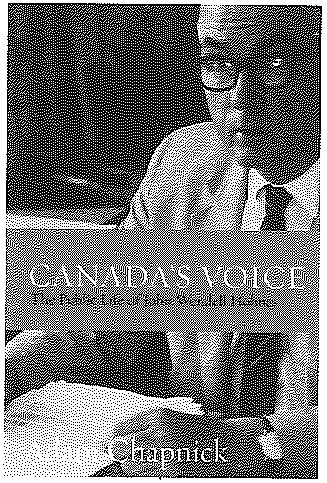
CANADA’S VOICE: THE
PUBLIC LIFE OF JOHN
WENDELL HOLMES, by
Adam Chapnick. Vancouver:
UBC Press, 2009, 361 pp,
$85.00; $32.95 pb
As readers of bout de papier will appreciate, it is a formidable challenge for any biographer to write about someone who wrote so well as John Holmes, as quotations from the subject may eclipse the author’s prose. Moreover, what endeared Holmes to colleagues, students, friends and strangers, and what served him so well as a diplomat, scholarly organizer and commentator, were personal qualities — charm, tact, modesty, genuine interest in others and self-deprecating wit — about which the biographer must rely on the recollections of his associates, as these elusive traits may not always be conveyed in the writings which must be the principal source for such a study. Similarly, the public and private analyses by Holmes tended to be characterized by common sense and pragmatism rather than by originality or boldness, so that it is difficult to depict him in path-breaking terms. Confronted by these challenges, Adam Chapnick has done well.
He has made excellent use of the correspondence, official and personal writings of Holmes, as well as interviews with many who knew him. There is an understandable tendency to exaggerate the distinction of his subject and to speculate where evidence is lacking. This is also a solemn biography. Holmes certainly never took himself quite so seriously as does Chapnick.
Holmes is often described in terms that likely would have made him cringe, from “an indispensable force within the East Block” (p. 69) to “one of the most sought-after commentators on foreign policy of his era” (p. 81), “public representative of all that was Canadian” (p. 130), and “Canadian ambassador to the world” (p. 142). Afterward, he became “one of Canada’s great university teachers” (p. 202) and ultimately “Canada’s leading voice in world affairs” (p. 276). The repetitive hyperbole is unfortunate and unnecessary. The fond and fulsome tributes and eulogies after his death attest to the high regard of many for Holmes, who was certainly, as Keith Spicer aptly recalled, a “good man” as well as possibly a great one.
Chapnick rarely disagrees with Holmes, with the principal exception being the latter’s views on the UN resolutions dealing with Israel and Zionism. Though elsewhere a debunker of the “golden age,” Chapnick embraces the concept here so as to place Holmes in its limelight. Much of Holmes’ influence was linked to his personal rapport with Pearson, though the latter barely mentioned Holmes in his memoirs, an omission that Chapnick justifiably corrects. Pearson relied on Holmes, but it may not be so simple to attribute policies or actions to an adviser.
In any event, Holmes left the Department of External Affairs (DEA) soon after John Diefenbaker became prime minister, though Chapnick carefully separates the political from the personal factors in the end of his diplomatic career. Chapnick presents a convincing portrait of Holmes as weary and less effective or reliable even before he became a victim of the “gay purges” that swept through the federal public service and especially damaged the senior ranks of DEA.
As Chapnick illustrates so effectively, Holmes remained steadfastly loyal to the government and department that dispensed with his services, as one of his major contributions in later life was to act as an informal adviser on international relations and a facilitator between government and scholars. That remarkable role and his myriad contacts served the Canadian Institute of International Affairs (CILIA) well, though they may also have prompted the CIITA to over-extend itself. Chapnick appropriately notes how Holmes was surrounded (and sheltered) by remarkably capable, devoted and effective women, most notably Gayle Fraser, to whom Chapnick pays a deserved tribute.
Holmes was a prolific writer, especially adept as an essayist, so that his published work provides ample evidence of his views, including his reaction to contemporary events, which he shared with Canadian and foreign audiences. As a former practitioner, Holmes tended to be sympathetic with the constraints within which decision makers operated, and he was mindful of the CITA’s non-partisan mandate, so that he rarely spoke openly against a policy or action of the Canadian government. That produced some inconsistencies in analysis and led some critics to cast him as an apologist and others simply as an elitist. His written work demonstrates his devotion to the UN, his sympathy for the Commonwealth, his complex appreciation of Canada’s relations with the United States, and his lack of understanding of NATO. As Chapnick notes, particularly in his early years with the CITA, he sometimes strayed “beyond his expertise,” though his eloquence masked that tendency.
Holmes greatly influenced the research, writing and teaching of Canada’s international relations (though less so economic aspects). He eschewed ideological or theoretical approaches and disdained moralism in favour of the “case study” method, which certainly suited his pragmatism and realistic appreciation of the limits of influence and authority. He brought to the classroom and to his exchanges with scholars a lively appreciation drawn from experience of the rational and irrational factors that can influence policy making and the conduct of external relations. His acumen, tolerance, generosity, attentiveness and consideration for others have had a profound and lasting impact on the study of international relations in Canada.
To Chapnick, John Holmes was “the idealized voice of Canada in the world” (p. 286). This is a comprehensive and sympathetic biography, though its modest subject would have been embarrassed by the attention and the praise.
View the original scanned pages →
Originally published in bout de papier, Vol. 25, No. 1 (2010) — Spring 2010 // Printemps 2010, p. 33. Read the rest of this issue →



