
bout de papier, Vol. 10, No. 3 (1993) — Summer 1993 // Été 1993, pp. 32–34
Story by Fred E. Haack Photos by David Edwards
Juju became a centre piece of my life when I lived in Accra, Ghana, where I was the Counsellor, Political and Economic Affairs, at the Canadian High Commission.
On my first day on the job, I was introduced to the Canadian staff and to the locally engaged employees. I mentioned that we would get to know each other through our work, but that I hoped that they would be my teachers and tell me about Ghana and what it was like to live in the country that was known in colonial times as the “Gold Coast.” I was searching for the African perspective on the events of daily life in order to get a real appreciation of what it meant to be a Ghanaian.
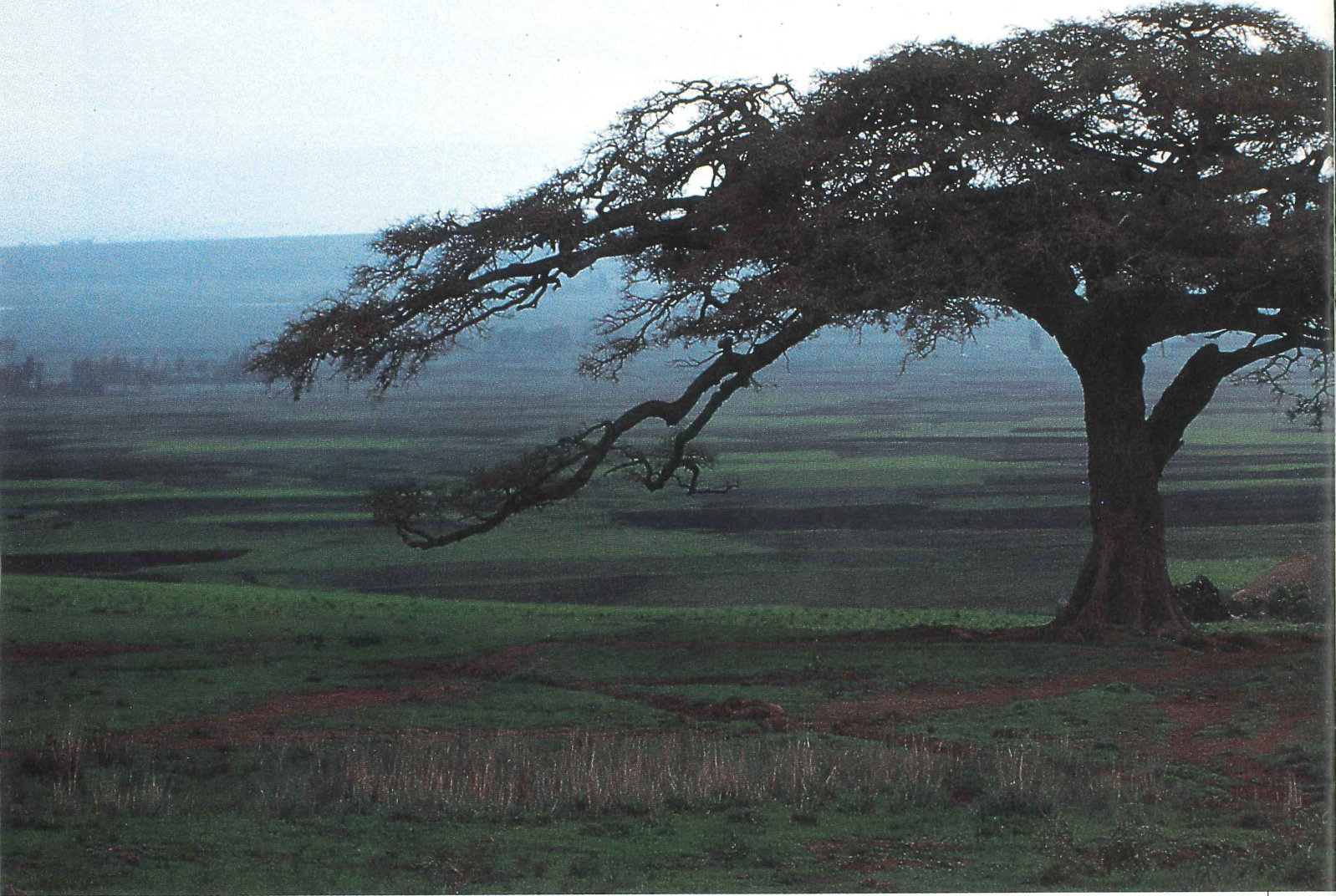
My day at the office usually began by scanning the local newspapers. One day, I noticed a headline story with a picture of an uprooted tree. The journalist explained in the lead column that over the weekend the spirit of the tree had returned and moved the tree.
I got up from my chair, left my office and went down to speak about this newspaper article with the locally-engaged Commercial Officer. “Perhaps the women of the town chopped off some of the branches of the tree, thus altering the balance. Perhaps the rock the trunk and making it move, under the tre acted as a fulcrum, tus marked to Martin. I compared the tree to a playground teeter-totter. When one of the two children gets off the teeter-totter, the empty end flies up. Forces cause things like trees to move.
Martin chuckled in disbelief.
My first response was one of incredulity and smouldering anger. I felt I was not being taken seriously.
Back in my office, I concluded that there was no need to insist that I was right. I was in Africa and I was the one who had told the staff that it was their responsibility to teach me about the local circumstances. The lesson learned: “the spirit moved the tree.” On second thought I pondered: “Really, how far-fetched is Newtonian physics?” I concluded that my belief system had been challenged, but I remained sceptical about Martin’s faith in magic.
About a month later Martin returned my visit to his office. After the usual niceties had been completed he asked, “Are you superstitious?”
“No, I’m not,” I replied. “My grandparents were staunch believers in the supernatural. My parents did things like never walking under ladders and throwing salt over their shoulders to ward off bad luck. On Friday the 13th, my sister never tempts fate. I am the first person in my family to adopt scientific rational thought.”
Martin pressed the conversation. “Do you believe in witches?”
I have thought about it, as I expect most westerners have. Some scholars put forward the idea that witchcraft was a way of dealing psychologically with the all-powerful Christian church of the Middle Ages. In he eastern United States, witches may have been people who could not tolerate a strict Calvinistic dogma yet needed a belief system.
I understand witchcraft as sorcery, a web of beliefs and practices. Its purpose is to manipulate nature for the benefit of the witch or the witch’s client. As a Foreign Service Officer, however, I have to be able to provide a rational explanation of the world around me. I do not believe there are people in this world that can change the laws of nature.
The Commercial Officer continued his interrogation. “What book is the best-seller of all time?”
“The Bible.”
“And do Christians believe the Bible is the word of God?”
“Yes,” I answered belatedly.
“And does the Bible refer to witches?”
“Yes,” I answered, smilingly, as I felt I was being nudged into an intellectual corner.
Sensing he was winning the argument, Martin continued. “Who is the most popular writer in the English language?”
“Shakespeare, of course,” I answered.
“Now did Shakespeare, the greatest writer in the English language, believe in witches?”
“Yes,” I smiled.
“Can I take the liberty to show you not only that witches exist but also that witches fly?”
It was about 10:00 p.m. one evening and I was about to go to bed. The telephone rang and it was Martin. “You remember our conversation about witches? I know it’s very late but, if you would like, I can come over and pick you up in my car and drive to the golf club, a short distance from your place. There’s a vista near the 10th hole where one can have a good view.”
“A good view of what?” I inquired.
“I would like to show you that the witches are flying.”
I agreed to Martin’s proposal.
A short time later I sat in Martin’s car, overlooking a valley that was situated a short distance from the Accra Golf Course.
Martin pointed to a large silk-cotton tree. With little need for imagination, I saw an illuminated light rotating round and round the top branches of the tree. The witches were flying.
Stunned, I mumbled something on the way home, still upset at what I had witnessed. That night I lay in bed not wanting to believe what I had seen. I tossed and turned, highly disturbed, until dawn signalled the beginning of a new day.
For the next few weeks, I spent my evenings in the British Council library examining references dealing with the African supernatural. Then I turned to the Annual Reports of the early missionaries, going back in some cases, over a hundred years. Finally, I found the explanation I was looking for.
The following morning I walked confidently into the Commercial Officer’s office.
“Let me explain how witches fly,” I said. “The silk cotton tree is the tallest tree in the tropical rainforest. During tropical storms, therefore, it becomes the point of contact for lightning. There is a bolt of lightning. The silk cotton tree is stuck and catches fire. The bark burns. There is a chemical change.
Phosporous is created in the ashes. Large birds, like eagles and kites nest in the burned-out branches of the tree. The phosphorous rubs off onto their wings. At night the birds fly, circling the nest in the tree. Moonlight shines on their wings, making them glow. From a distance of about three miles all one sees is this moving light, moving round and round the top of the silk cotton tree, “ I concluded, with pride. As an afterthought I said, “What one sees is a bird flying, not a witch.”
There was a polite silence. Then Martin broke into a wide grin. “The moon set last night was at 8:00 p.m., ’” he replied. You saw the witches at midnight. There was no moon.

View the original scanned pages →
Originally published in bout de papier, Vol. 10, No. 3 (1993) — Summer 1993 // Été 1993, pp. 32–34. Read the rest of this issue →



