
bout de papier, Vol. 13, No. 1 (1996) — Spring 1996 // Printemps 1996, pp. 38–39
by Richard Belliveau
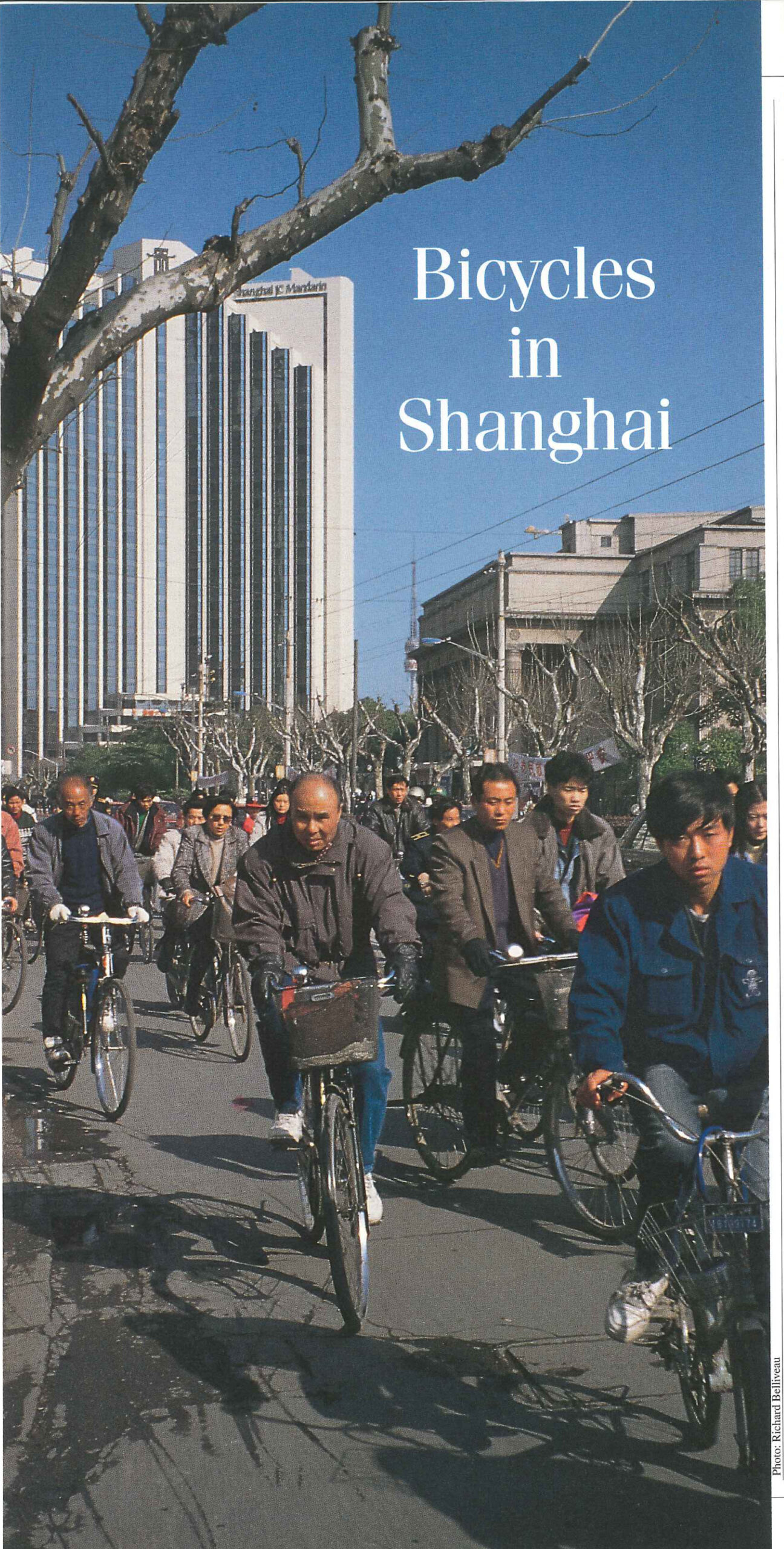
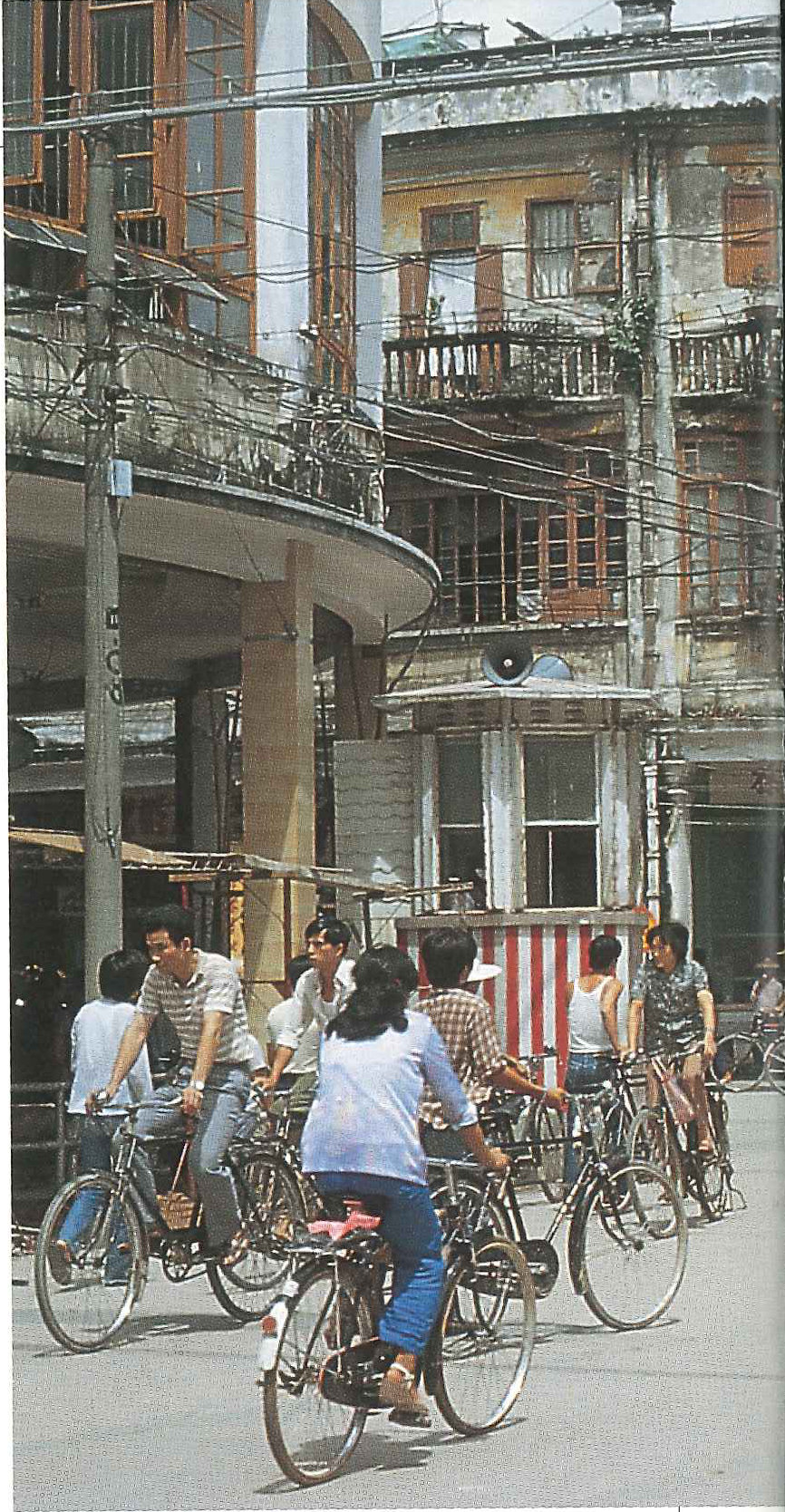
There are 7.5 million registered bicycles in Shanghai and only 300,000 automobiles. Public transport is still by bus. The street layout of the main part of the city is hardly changed from what it was in the 1920s and 1930s. The streets are not all straight and many don’t necessarily go where you think they might go. Buses, cars and bicycles compete for the same space on the streets.
As is evident from the numbers, bicycles constitute the principal mode of transportation for Shanghai’s adults. Children are not permitted to ride bicycles; you have to be over sixteen for that privilege.
Given the bicycle’s central role, you would think we could deduce something about the character of the people of Shanghai from the way they ride bicycles. If so, let us look at how they handle their bikes.
Things people do on bicycles:
a) Cyclists move in the direction and at the speed of least resistance. Frequently such directions have nothing to do with the bicycle lanes, oncoming cars, traffic lights, pedestrians or intersections. A recipe for danger.
b) Streams of bicycles flow like sand through the fingers into any space available.
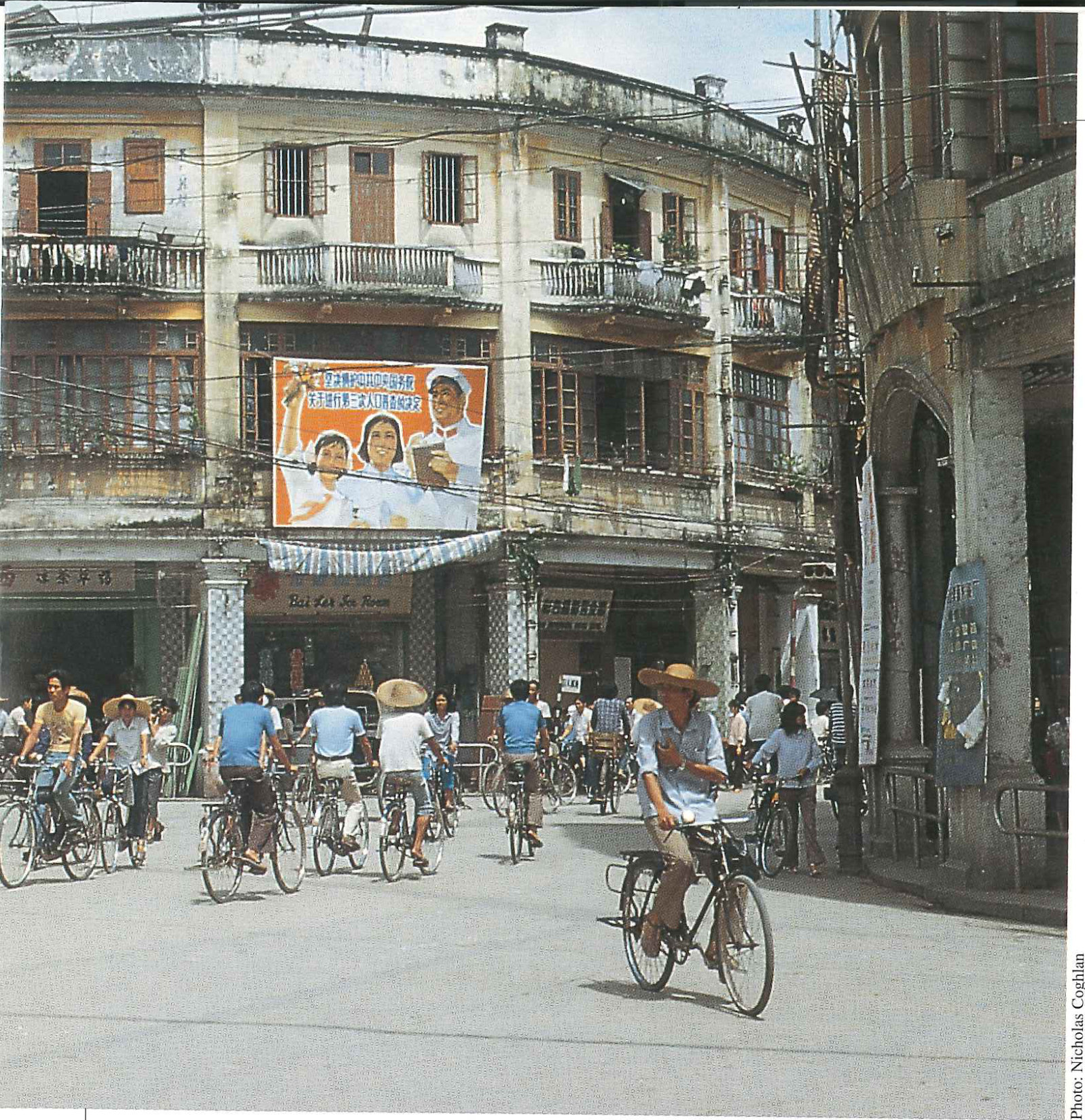
A friend of mine was hit by a bike as he was stepping out of a taxi onto the sidewalk. The woman driving the bike had tried to go through that little space on the inside rather than going around. She blamed him.
c) Cyclists never look around them to see what is coming. They look only in the direction they are going and hope nothing will hit them. After all, if you can’t see it, perhaps it does not exist. Certainly you do not have to take responsibility for it. By and large — but not always – they are not hit by onrushing buses.
d) Cyclists shoot out of side streets, alleys, lanes and compounds without looking to see if there is oncoming traffic and without reducing speed. They shoot right into a traffic lane with the dazed look of a spacecraft pilot who has just leaped through a time warp.
e) Cyclists ride hypnotically. I suppose you would too if you spent two hours a day commuting on a bicycle.
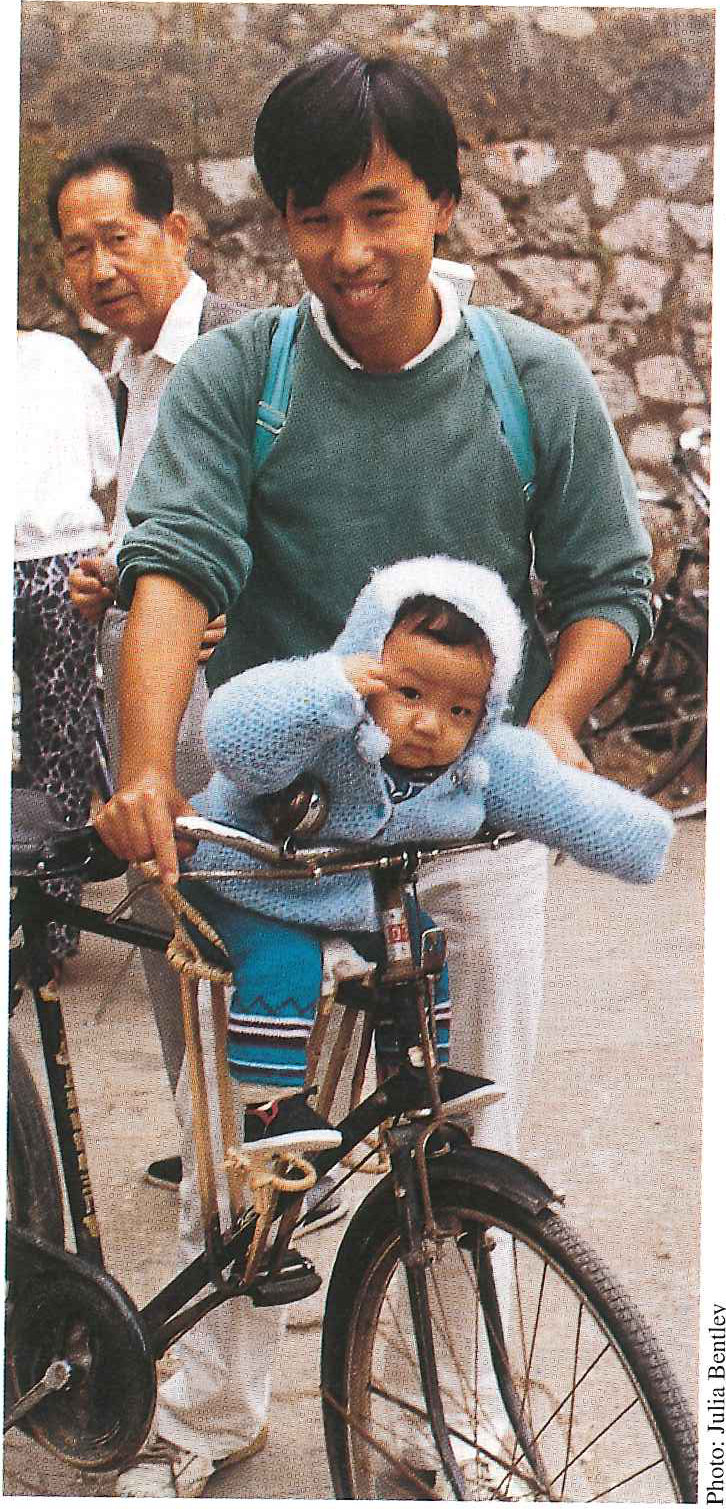
f) Many cyclists are not fully in control of their bikes. This is especially worrisome when they are carrying their only-permitted child on the bicycle with them. g) Cyclists do not signal their movements in traffic (see a, b, c and d above, probably also e and f, come to think of it). h) This one I can’t figure out. When cyclists cross paths with another moving vehicle (either motor-powered or man-powered) they always try to cross in front of the oncoming vehicle rather than slip behind. This makes no sense in terms of smooth traffic movement because it frequently ends in a standoff with both vehicles having to stop. Maybe it has something to do with face.
i) Such rules of the road as exist are largely unknown or ignored, unless there are people to enforce them, like the army of retired old folk who have been pressed into service to help control bicycle traffic armed only with yellow jackets, a little red flag, their old bodies and courage. Old folk like telling people what to do.
I am convinced the only reason more people have not been slaughtered on the roads of Shanghai is that, because of congestion, the speed of the traffic is never fast enough to incur real carnage. The opening last December of the city’s first ring road should change this for motor vehicles at least because bicycles are not allowed on the ring road. That does not mean they would not like to be. There are policemen posted at every on-ramp on the ring road to prevent pedestrians and cyclists from using the highway. In fact, the ring road is already dangerous. It was reported in the press that there were over 1,900 accidents during the first two months of the road’s operation, many of them due to “mechanical problems, such as tires falling off or braking systems malfunctioning.”
Shanghai is at the forefront of China’s economic and technical modernization program. With new mass transit systems that are being built and increasing mechanization, bicycles will undoubtedly be phased out as the preferred means of transport. After all, a bicycle is just a half-way point between a horse and an automobile. Taxi drivers in Shanghai already drive pretty much as if they learned on bicycles, which is very scary when one comes shooting out of a laneway without looking or slowing down.
If the habits learned from riding bicycles are applied to running the new industrial and automated society, Shanghai is in for a rocky ride. Although the people probably won’t see it coming.
View the original scanned pages →
Originally published in bout de papier, Vol. 13, No. 1 (1996) — Spring 1996 // Printemps 1996, pp. 38–39. Read the rest of this issue →



