
bout de papier, Vol. 18, No. 1 (2001) — Spring 2001 // Printemps 2001, pp. 5–7
Lloyd Axworthy was Canada’s Minister of Foreign Affairs from January 1996 to October 2000. One of the most important causes he championed over the years has been that of human security. It’s this agenda that Axworthy worked relentlessly to promote as the primary focus of Canada’s foreign policy in the post-Cold War world. This broad agenda includes everything from human rights, landmine awareness and raising awareness about war-affected children, to the creation of the new International Criminal Court. Axworthy maintains that human security is multifaceted, including an effort to construct a global society where the safety of the individual is at the centre of international priorities and a motivating force for international action. It’s an issue where international humanitarian standards and the rule of law are advanced. It’s a global issue where those who violate certain standards are, ideally, held fully accountable and where global, regional and bilateral institutions — present and future — are designed to enhance and enforce these standards.
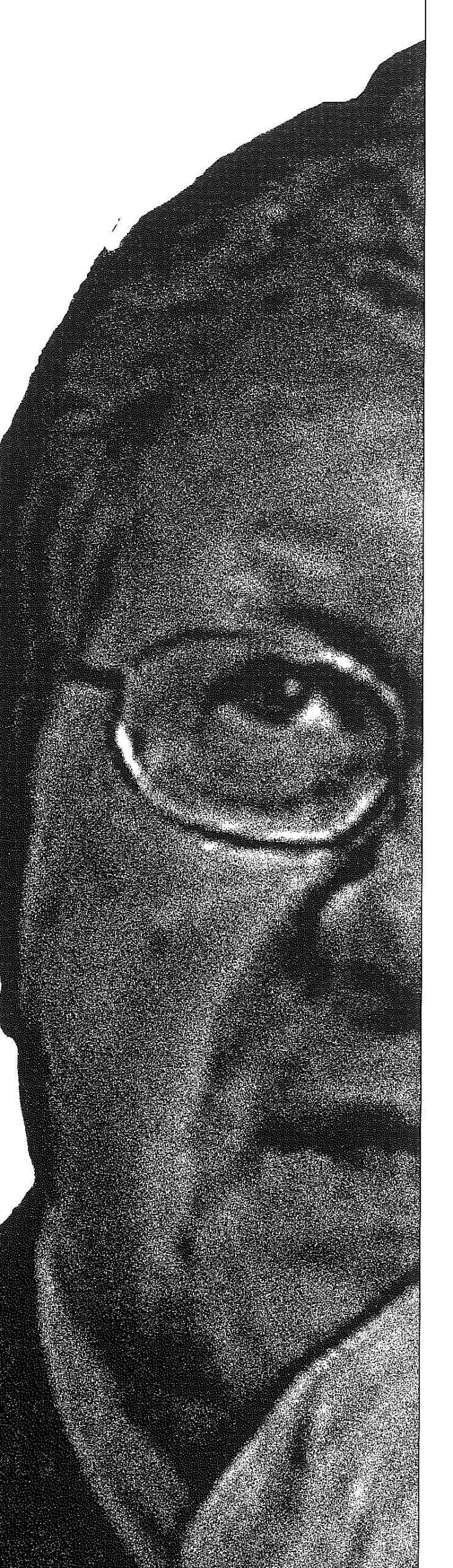
Lloyd Axworthy was born on December 21, 1939, in North Battleford, Saskatchewan. During his first five years, he barely saw his father, who was fighting in the Second World War. In the 1950s, he took a keen interest in the Korean War, the Cold War and the Suez Crisis, issues he went on to debate in school, in model United Nations, and in Manitoba’s Youth Parliament. In 1961, he obtained a B.A. in political science from the University of Manitoba. He then went on to complete both an M.A. (1963) and a Ph.D. (1972) in political science from New Jersey’s Princeton University. First elected to Parliament in 1979, he held a number of senior posts, including serving as Minister of Employment and Immigration and Minister of Transport. In 1990, Axworthy became the Liberal Party Critic for external affairs and, in 1991, Vice-Chairman of the House of Commons Standing Committee on External Affairs and International Trade. He was both Minister of Human Resources Development and of Western Economic Diversification from 1993 to 1996. He was appointed Minister of Foreign Affairs in 1996. His ambition, he once said, was to become prime minister; failing that, he said he wanted to follow in the footsteps of Lester B. Pearson, who, in 1956, gave the world the concept of UN peacekeeping missions.
What led Axworthy to pursue a human security agenda? He tried to explain it in an interview with Anne Petrie of CBC Newsworld’s The Moral Divide. One factor, he explained, was his religious background. Christianity was not simply a spiritual experience but a form of social activism, a way of expressing faith. It was this belief system which Axworthy said attracted him to politics. “I do not want to make it sound like I was on some sort of a crusade … but I liked the idea of using the political system to makes changes and do things….
“The one thing that my faith did for me was that it allowed me to take those kinds of policy directions. … There was a certain standard, a set of values, a certain position that you could draw out of your faith and know that that was the right thing to do.”
Axworthy pointed out that religious beliefs are private, but “what you believe in is a part of your makeup as a public person.” His own led him to a concern for human security — the idea that the risk to individuals is as important as the risk to nation-states. Canada, he argued, had a special role to play on the international stage in promoting its values and rights.
“It is important that we go through this quite substantial revolution where Canadians have to come to grips with a lot of issues about their role and their responsibilities internationally. Are we responsible for the executions that take place in Rwanda? Should we be prepared to step in and do something, to go into a country, to send our peacekeepers there? Those are tough questions and if you don’t have some basis for saying that we are all God’s children and that there is a fundamental universal jurisdiction that we all have to honour, if you simply rely on power politics and realpolitik and the competition of national interests, then you are going to get the conservatives or the reactionaries who say ’Don’t do that. It is none of our business.’ Well, I can’t do that as a practicing Christian because it doesn’t matter to me if a child is a Tutsi child from Rwanda or a child from a reserve in Manitoba. They still deserve the same respect, and the same care and concern,” he explained.
Traditional interests in national security and diplomatic relations have undergone a radical change, Axworthy asserted. “Now, foreign ministers deal with the issues of human security, terrorism, drug-trafficking and public health, among others. I am particularly interested in disarmament, threats of violence to societies, humanitarian intervention in conflict situations and protection of children.” As foreign minister, he campaigned successfully to get Canada another mandate on the UN Security Council (1999- 2000), for UN system reforms, and for Security Council resolutions and action that would advance world peace and, above all, try to enhance the protection of women and children in armed conflict.
One of his first initiatives promoting peace was the establishment of the Canadian Peacekeeping Fund and the Canadian Peacebuilding Program in 1996. The aim was to contribute to conflict prevention and post-conflict social and economic reconstruction. In 1998, Axworthy was at the head of a group of like-minded states that pushed successfully for the creation of the International Criminal Court. Its purpose is to prosecute individuals accused of genocide, war crimes and crimes against humanity. It will come into existence as soon as 60 states ratify the 1998 Rome Statute creating it. It has been signed by 139 countries and 29, including Canada, have ratified it.
Another achievement was the International Conference on War-Affected Children, which was held in Winnipeg in September 2000, the first such gathering. The Conference followed several Canadian initiatives at the UN and in other forums, such as the G-8, on behalf of specific goals: better protection for civilians (particularly women and children) in armed conflict; more efficient peacekeeping operations; and the more humane use of sanctions. Axworthy’s last endeavor before leaving office was the creation of the International Commission on Intervention and State Sovereignty, which was launched in September 2000 and will report to the UN General Assembly. Next fall, Axworthy will chair an advisory board which will serve as the Commission’s reference body.
In 1998, he was nominated for the Nobel Peace Prize after the adoption the year before of the Ottawa Convention, which bans the production, use, stockpiling and transfer of anti-personnel mines. With Jody Williams, head of the International Campaign to Ban Landmines, he was the Convention’s main advocate. In December 2000, Axworthy received the Senator Patrick Leahy Humanitarian Award from the Vietnam Veterans of America Foundation for his leadership in “the global effort to outlaw the use of child-soldiers, to bring war criminals to justice and to end the human tragedy of landmines.”
Axworthy came up with a new idea — partnerships between civil society and progressive governments — that allows Canada to use its potential to best advantage in international affairs, says journalist and political commentator Richard Gwyn. He calls Axworthy Canada’s most noteworthy foreign minister since Pearson. And it was the idea of partnerships that helped in the banning of the use of landmines.
“Public service is a much maligned occupation,” Axworthy recently told The Toronto Star. “I think probably it’s the nature of the job to be criticized. But it’s also an incredible opportunity to do things. Close to three decades of having the chance to do that is pretty special.”
His decision to resign was partially based on the demands 28 years of public service and eight elections placed on his family, Axworthy told CBC’s Petrie, “I realized that I was making a mistake … that I was so busy trying to help others that I wasn’t being as good a husband or father as I should have been.
As of January 1, 2001, Lloyd Axworthy became the new Director and C.E.O. of the Liu Centre for the Study of Global Issues at the University of British Columbia. “I can help develop the ideas further and give them more expression, and also help by doing things directly as a private citizen that I could not do as a minister, i.e., go places and help in a more private way,” Axworthy said. “If we can find a meeting place between the world of policy-making, which I come from, and the world of ideas in the university, then we can do something quite meaningful.”
View the original scanned pages →
Originally published in bout de papier, Vol. 18, No. 1 (2001) — Spring 2001 // Printemps 2001, pp. 5–7. Read the rest of this issue →



