
bout de papier, Vol. 16, No. 4 (1999-2000) — Winter 1999-2000 // Hiver 1999-2000, p. 35
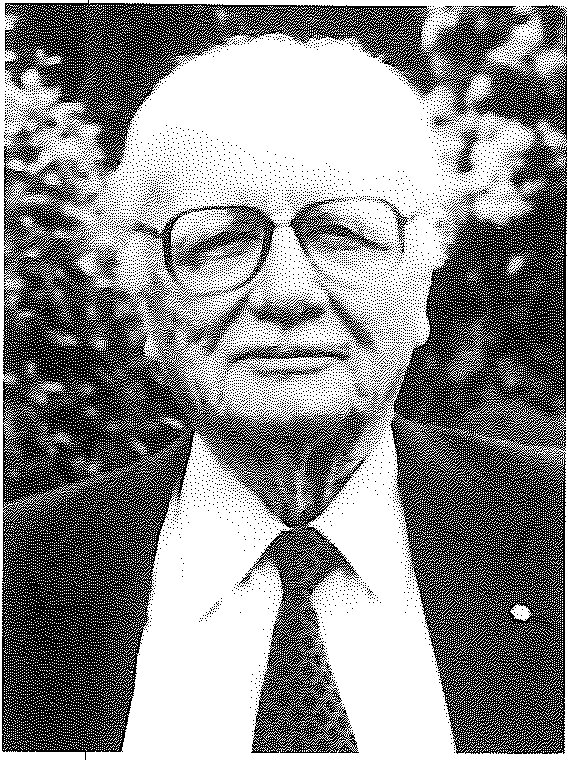
Arthur Irwin, who has died aged 101, was a journalist and diplomat. He was one of those who were turned into Canadian nationalists by the First World War, and he used this awareness to transform Maclean’s magazine into a truly national magazine that would mirror, in his words, “all the drama and turmoil of a nation struggling to be.”
Mr. Irwin became legendary in journalistic circles as a tough editor and brilliant talent scout. As the driving force behind Maclean’s from 1925 to 1950 — first as associate editor, then managing editor and finally editor
– he assembled a staff that would become household names, including Pierre Berton, Ralph Allen, June Callwood, Trent Frayne and Blair Fraser. “He could spot a weak sentence or an unqualified generalization and pounce on it like an owl with a rodent,” Pierre Berton wrote in the forward to Arthur Irwin: A Biography, by David Mackenzie.
When Mr. Irwin joined the Foreign Service at age 55, he wrote stylish reports that read like travel narratives, all the while fearing that nobody in Ottawa was reading them. “Despite all one reads and hears about Australia’s Empty North,” begins one missive, “it is impossible to appreciate how empty — and how isolated — this particular emptiness can be without experiencing it.” During an 11-year diplomatic career, he served as High Commissioner to Australia (1953-6), Ambassador to Brazil (1957-9), and Ambassador to Mexico and Guatemala (1960-4).
William Arthur Irwin was born on May 27, 1898, in Ayr, Ontario, the son of a Methodist minister. He served with the artillery in France, and then attended the University of Manitoba and the University of Toronto, where he received his BA in 1921. His first job was at the Mail and Empire in Toronto as a reporter, where he covered the hotels and rails beat (better known among staffers as “whorehouses and boxcars”), which involved scouting downtown hotels and Union Station for the arrival of newsworthy individuals. Mr. Irwin was soon hired away by the Globe, where he wrote editorials. He resigned around the 1925 general election after he was told he could not write anti-tariff editorials. A few days later he received a congratulatory telegram from Prime Minister Mackenzie King, who offered financial help until the young reporter found another job. Mr. Irwin declined but kept the telegram as a souvenir, joining Maclean’s almost immediately.
In 1950, the federal government asked Mr. Irwin to run the National Film Board, wrongly thought to be overrun with “Reds.”
– As a reward, he was promised a foreign
• posting in External Affairs. At the NFB, he met his second wife, poet P. K. Page, whom he married in 1950. His first wife, Jean, had died in 1948 of asthma. Mr. Irwin was well suited to diplomacy in many ways. For almost 20 years he had been a contributing member of the Canadian Institute of International Affairs and had written extensively on foreign policy issues. He was a good listener and worked hard at establishing a positive relationship with the host country. Through his close friendship with Richard Casey, the Australian foreign minister, Mr. Irwin gained a firsthand look at the evolution of Australian policy towards the developing Suez Crisis in 1956. He passed on Mr. Casey’s thoughts in private letters to Lester Pearson. Never given to small talk, Mr. Irwin recognized his shortcomings on the social side of the job, but his charming wife made up for them. Mr. Irwin later mused with regret that he had started in External Affairs too late in life to get a senior post. He was disappointed when he was assigned to Brazil, wishing to be sent to a more influential capital. Yet, it would become their favourite post, a time recalled by P.K. Page in her 1988 book, Brazilian Journal, as “golden, perfect, complete.” Mr. Irwin made a determined effort to speak Portuguese and the couple’s frequent trips throughout the country included the obligatory tours, inspections and state dinners. Mr. Irwin was appointed a member of the Canadian delegation to the United Nations for two general assemblies in 1959 and 1960, where he witnessed Nikita Khrushchev yelling in Russian and slamming his shoe on his desk. In Mexico, Mr. Irwin became a staunch supporter of Canadian membership in the Organization of American States, although his goal was not realized until 1990. From 1964 until he retired in 1971, Mr. Irwin was editor of the Victoria Times. He gave up driving only a few weeks before his 100th birthday. An officer of the Order of Canada, Mr. Irwin died last August at his Victoria home. He is survived by his wife, two daughters and one son, 14 grandchildren and 14 great-grandchildren.
View the original scanned pages →
Originally published in bout de papier, Vol. 16, No. 4 (1999-2000) — Winter 1999-2000 // Hiver 1999-2000, p. 35. Read the rest of this issue →



