
bout de papier, Vol. 20, No. 2 (2003) — Fall/Winter 2003 // Automne/Hiver 2003, p. 28
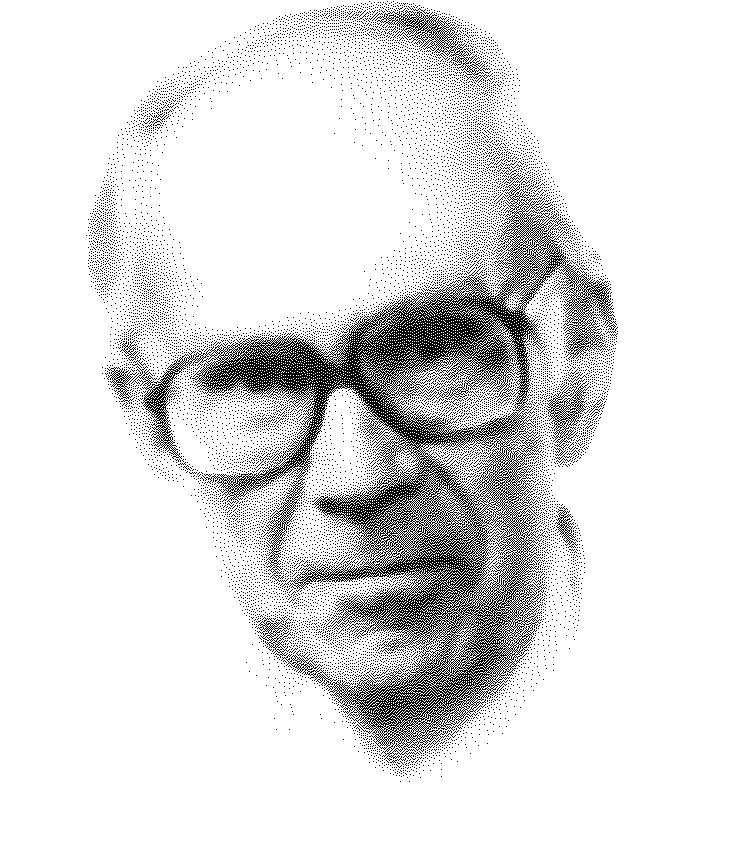
My wite, Ardath, and I met Arthur and Marcelle Blanchette when we were posted to South Africa immediately after our marriage. Arthur was Acting High Commissioner, and he taught me how to be a Third Secretary — not a skill I had acquired in my one previous assignment with the International Commission in Laos. In return, I was able to brief him on Indochina when he was unexpectedly cross-posted as Canadian Commissioner to Cambodia. But the most valuable lesson we learned from both Arthur and Marcelle came when they invited us for Christmas dinner, and we newlyweds saw what a really good marriage looked like. We met their daughter Alix, who was reading both English and French fluently before the age of six. In fact, she was reading Romeo and Juliet to her baby brother, though she told me in confidence that she didn’t think he understood it.
We also saw how active babies could be when we moved into our house and invited the Blanchette family to lunch. Arthur swooshed through the house, moving out of harm’s way anything that could be pulled down, pushed over or smashed before Marcelle put Marc down. Our few months together established a friendship which has lasted nearly half a century.
Arthur joined External Affairs by accident when the Wartime Information Board was assimilated by the Department. However, he then successfully entered the competition for Foreign Service Officers. He had an eclectic career covering four continents, with postings in Mexico, Egypt, South Africa, Cambodia, Portugal and Greece. With his background in Latin American studies, he was then a natural choice to be Ambassador to the Organization of American States. From the OAS, Arthur went on to his last assignment abroad as Ambassador to Tunisia and Libya.
Perhaps Arthur’s most important professional contribution came as Head of the Historical Division. Canadian historians and political scientists had been critical of the Department’s lack of cooperation in their work. Arthur put the production of publications containing official documents on a more professional basis, bringing in qualified academics to help produce them. He moved ahead with the writing of an official history of the Department. (Incidentally when Paul Martin Senior was concerned about how his period in office might be described in the history, Arthur was flown back from Tunis to help resolve any problems. He said that this must be the only foreign office in the world which could have a crisis in its historical division.) He developed a system to give qualified researchers access to Departmental files. Books began to appear which, however critical they might be of Canadian foreign policy, thanked Dr. Blanchette in their prefaces for his assistance.
After retirement Arthur remained active. He had begun editing a series of collections of documents on foreign policy for students while he was still in the Department, and continued afterwards, producing four in all. He represented Canada at the Pan-American Institute of Geography and History. He was on the boards of bout de papier and of the Retired Heads of Mission Association. He advised other officers on their memoirs. He put together a collection of recollections by Canadians who had served as peacekeepers in Indochina. He himself wrote one of the best chapters, with a memorable opening sentence: “I have smoked only once in my life and that was opium, along the banks of the Mekong, in Phnom Penh in 1959.”
Arthur had just completed writing his memoirs. I won’t be giving the plot away if I sav that there were two particular themes.
Because of his hearing, he had wondered whether there were limits as to how far he could go in his career, and he was therefore delighted to be given interesting assignments, including his two postings as Ambassador. On a more personal level, while he was still a graduate student at the University of Ottawa, he was asked to teach a course in Spanish. He was warned that if he was caught having anything to do with his women students outside the classroom he would be fired. But when an intelligent and attractive young woman caught his eye he thought he would take a chance and asked her for coffee off campus. He liked to tell his friends that Marcelle was the first and therefore the only girl he had ever asked out. “Beginner’s luck,” he liked to say.
Arthur was a happy man — happy in his profession, happy in his family life. We will
View the original scanned pages →
Originally published in bout de papier, Vol. 20, No. 2 (2003) — Fall/Winter 2003 // Automne/Hiver 2003, p. 28. Read the rest of this issue →



