
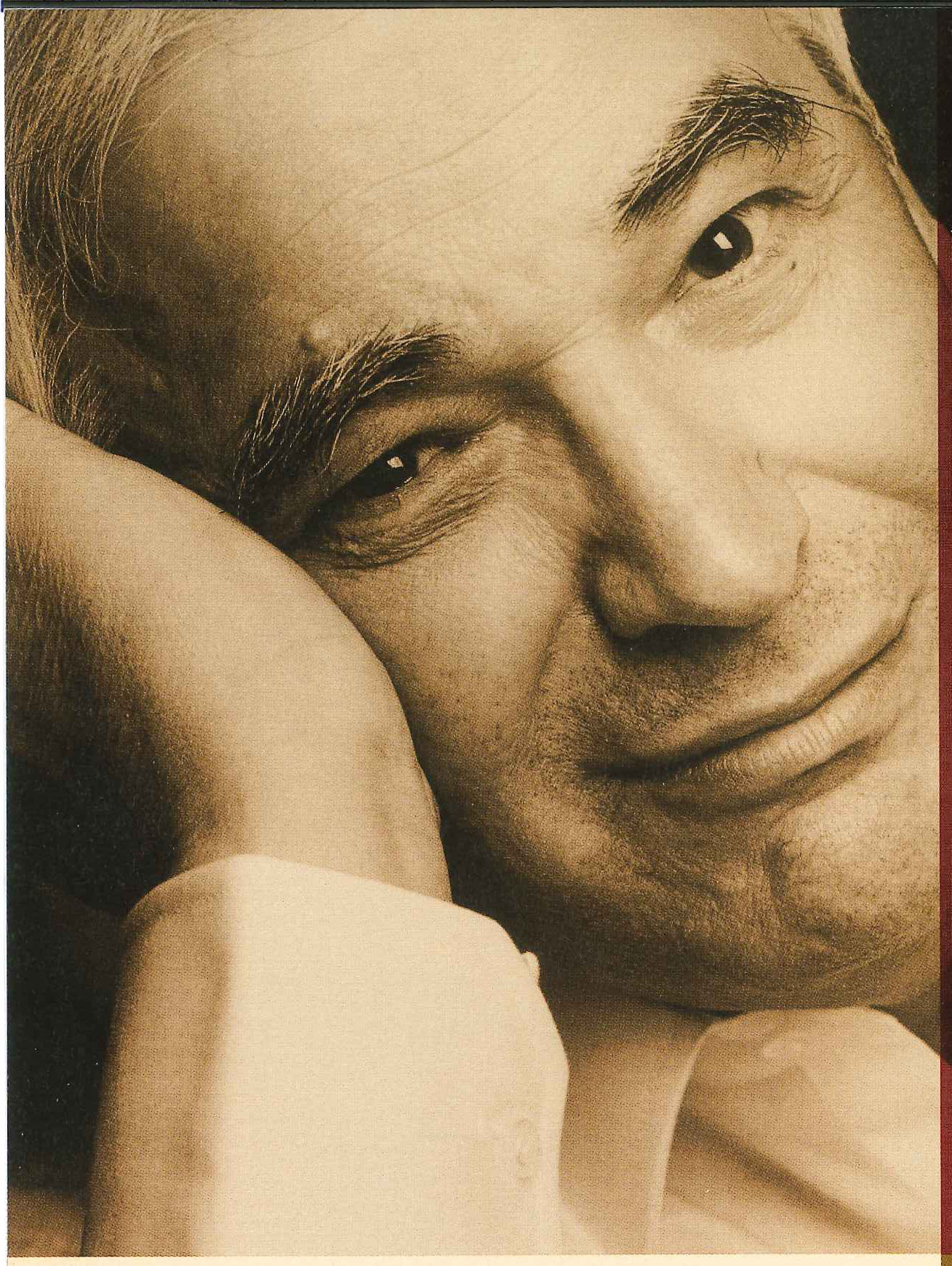
One of the more remarkable books to have been published recently is a memoir by a former diplomat that is unlike any other diplomatic autobiography. For those even vaguely aware of the story it tells, that is unsurprising, as its author travelled a unique and difficult path to reach his honoured place in Canadian public life. Out of Muskoka by James Bartleman recounts in direct and evocative prose a story of quiet – and often uncertain or incomplete triumph over adversity and hostility remote from the experience of most of his former colleagues in the foreign and public services of Canada.
Readers of bout de papier will likely have read extracts from this book dealing with the brutal assault on Mr. Bartleman in South Africa and how that horrific experience ultimately prompted him to write about his life. However, the enduring images in this volume are his recollections of growing up in Port Carling, a few of which are reprinted below with the kind permission of James Bartleman and his publisher, Penumbra Press. For all of the trials and tribulations that it conveys with grim detail and extraordinary wit, this memoir displays above all else humanity and dignity.
The Lieutenant-Governor of Ontario has earned his distinctions and our respect. Out of Muskoka provides further reasons for us to admire his achievements and to begin to appreciate the impact on his career of origins and circumstances that were so unlike those most often associated with diplomats in the public mind. For that educational purpose and for its quality as a depiction of the dire consequences of Canada’s neglect of its Aboriginal population, Out of Muskoka should be widely read.
Our first year in Port Carling was hard; we were different, and treated as strangers. Our parents were closest to the Indians at the Indian Camp, but only a handful of them remained in the fall; the others did not return until the spring. One who did stay was Sam Williams, whose daughter, hospitalized with tuberculosis at the time in the government sanitarium at Gravenhurst, had been my mother’s closest friend as a youngster. Sam radiated a sense of inner peace, impressing me enormously with his innate wisdom. He and my Indian grandfather, who was similar in outlook, were to serve as role models. I was well aware, even at that early age, that if one’s lot in life was likely to be poverty and toil, as mine was, then it was important to value peace of mind and wisdom in order to cope. Sam, unaware of my developing philosophy of life, gave me my first major material possessions: a. 22-calibre rifle and an old rowboat.
The winter of 1946-1947 was bitterly cold. The sky was lit up at night by the northern lights and the stars, clouds of freezing mist hung over the river, and the snow crackled as we walked. After we went to bed, the fire in the wood stove would go out, a dusting of snow would penetrate the cracks in the walls, ice several centimetres thick would build up on the uninsulated windows, and a covering of frost would descend over everything, including the blankets on our beds. We three older children would make our way to our parents’ bed to sleep with them and the baby to keep warm.
Each morning my father would rise early to light the fire. One day, out of kindling, he searched for dry branches along the banks of the river, which a strong current kept ice-free except along the shore. Spotting a dry branch, he ventured out on the ice, but broke through. Despite the minus-35-degree temperature, he pushed on to seize the branch, realizing that the only way to avoid death from hypothermia was to start a fire as soon as possible. His clothes quickly froze and icicles formed on his hair and eyebrows as he returned to the cottage. My mother then took over, lighting a fire and giving him dry clothing. He went to work that morning as if nothing unusual had happened.
My father installed a wood stove purchased by mail order from Simpsons deparment store in Toronto; with the help of my mother, he strung stovepipes horizontally across the downstairs room (which served as living room, kitchen, dining room, and clothes closet) to an opening in an old brick chimney. The theory was that the heat from the stove would pass through the stovepipes to warm the room. As far as I could tell, however, this elaborate arrangement simply made it difficult to keep the fire going and rendered the periodic cleaning of soot and creosote from the pipes that much more difficult and dirty.
My brother was given the job of lighting the fire each morning, but was soon relieved of his duty when my parents discovered that he was tearing boards off the back of the house for firewood. Fearing that the house might gradually disappear, like the Cheshire cat in Alice’s Adventures in Wonderland, they thrust me into his place. From the age of eight until I left home at the age of seventeen, it was my responsibility to prepare dry kindling for my father to light fires, to help him cut wood in the bush and haul it home by sleigh with the aid of our malamute huskies, and to ensure that the family woodbox was always kept full. I loved my woodcutting duties, welcoming the chance to spend time alone outdoors every evening, away from the hothouse atmosphere of the one room that confined the six Bartlemans and their household pets.
Our house, the only one in the village lacking electricity, was lit by kerosene lamps. We derived quiet, ignoble, satisfaction whenever the power failed and our neighbours, scrambling to find lanterns and candles, found themselves reduced to our level. Toilet facilities consisted of an outdoor privy constructed out of three doors nailed together, with an often-missing fourth door for an entrance, located in a grove of sumach trees some fifty feet behind the house. We children considered it hilarious to see visitors try all four doors before gaining entrance to the odorous inner sanctum. An old copy of Eaton’s catalogue, which in later years my brother Bob dubbed the Poor Boy’s Playboy Magazine, provided paper. Visits to the outhouse were less entertaining in winter, when we had to struggle through snow up to our bums (the path was never shovelled). We never lingered, given that we would usually find ourselves sitting, as if in Dogpatch in the comic strip, amid snow blown in through the open door.
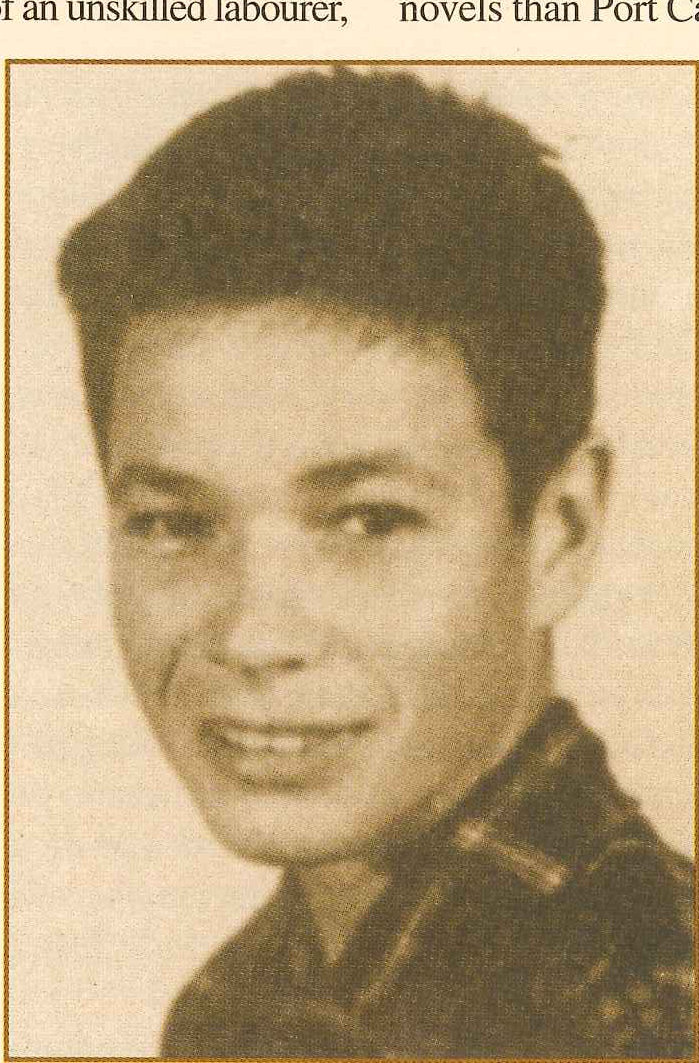
In those early years, Bob and I had to endure racial taunts from older boys, who called us “dirty half-breeds?” We had to fight a lot and did not always win. Bob, older and more recognizably Indian than I, had to bear the burden of the name-calling and bullying, but was never intimidated. One Saturday afternoon in the spring of 1947 we were set upon by a group of teenagers twice our size; they called my brother a “black bastard” and told both of us in a message laced with invective that Indians and half-breeds were unwelcome in the village and that the time was overdue for the Bartlemans to return from whence they had come, wherever that was.
Bob and I fought fire with fire, providing our opinion on the ancestry of their mothers before fleeing to what we thought would be the refuge of our home, the aroused bullies on our heels. To our surprise, the teenagers did not stop at the property line, but chased us up the path to our front door, which they kicked and yanked in an effort to get at us. We were dismayed to find that neither of our parents was at home. It looked as if we were in for a thorough beating, since the flimsy screen door, fastened only with a lightweight lock, would not resist for long.
I cowered in one corner of the room, but Bob did not hesitate; he grabbed the rifle Sam Williams had given me, loaded it in front of our attackers, and pulled back the hammer as he thrust the barrel into their astonished faces. He would have fired had our tormentors managed to open the door, and they knew it. They backed away, calling Bob a “crazy Indian” and vowing to exact their revenge in the schoolyard.
Another time I was chopping a fishing hole in the ice when a child from a nearby house came out to repeat in a mindless refrain, “Halfbreed! Half-breed! Dirty half-breed!” The next thing I knew I was at his front door, having chased him in a blind rage, axe in hand, all the way to his home.
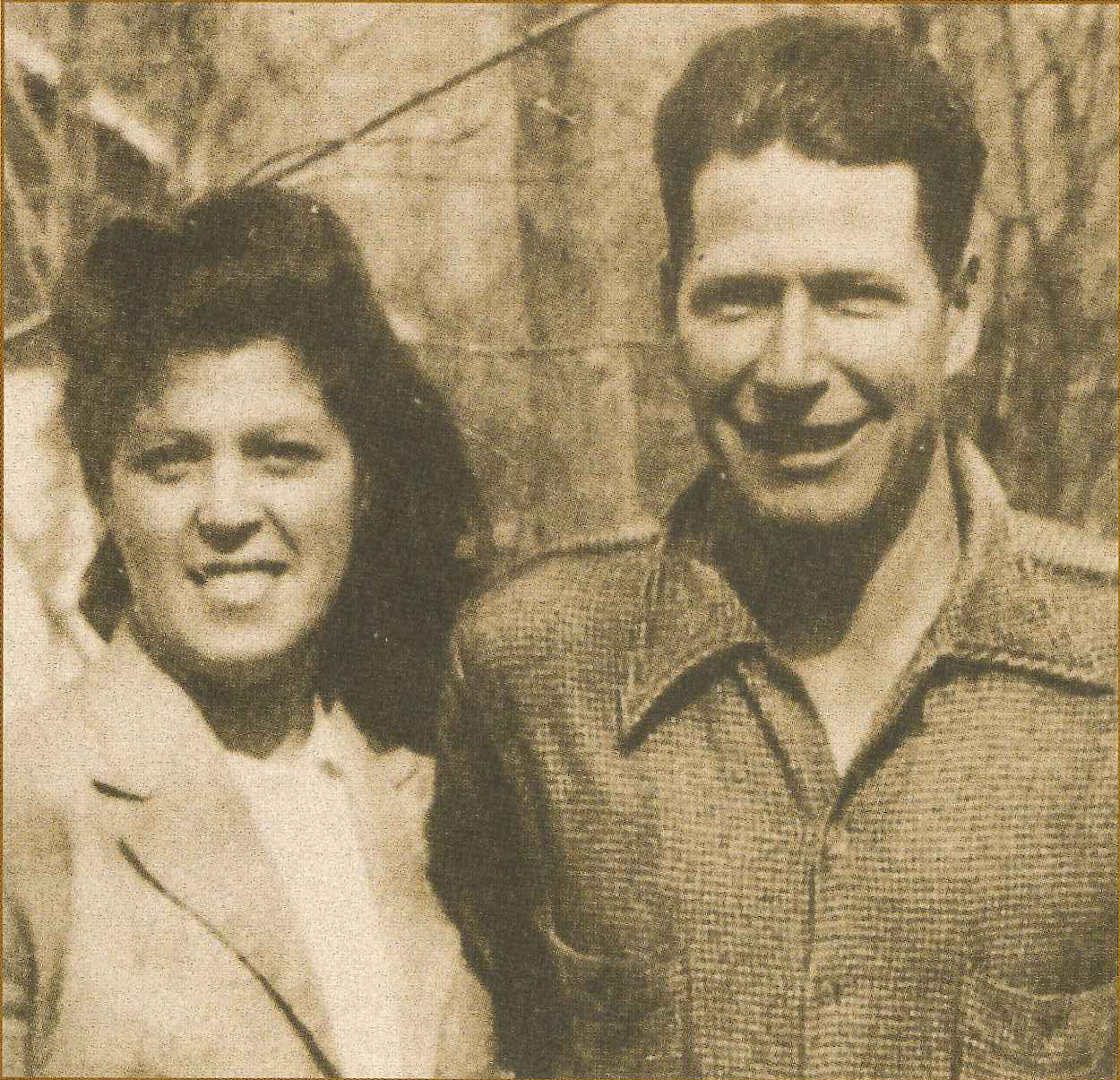
Even my mother was not spared. Late one afternoon she was waiting on the veranda as usual when Bob and I returned home from school. Suddenly a large raw-boned kid about sixteen years old started braying from the sidewalk, “Filthy Squaw! Filthy Squaw! Go back to your filthy reserve! You’re not wanted here!” I could see how hurt my mother was but she said nothing either to us or to my father. She wanted desperately to fit in to village life and was afraid of causing trouble. Within the year, she paid the price for her exposure to racism, for the abuse she had sustained as a child at home on the reserve, and for her desperate struggle to make ends meet on the wages of an unskilled labourer, by suffering a severe nervous breakdown, the consequences of which she would endure the rest of her life. She sought refuge in her children, determined that we would not lack the love she had been deprived of as a child; we reciprocated with the fierce protective instinct of the very young.
The attitude of the people of Port Carling to the Indians who appeared every summer at their traditional campsite was probably neither better nor worse than that displayed by mainstream Canadian society to Native Canadians throughout most of the country’s history. There could be instances of compassion. In the late fall of 1927, my Indian grandparents, my mother (then just four), and her brother of nine months, Dalton Lywood, were living at the Indian Camp long after the other Indians had returned to Mnjikaning for the winter. Dalton contracted pneumonia and died. Although my grandparents had no connection with the Anglican church, the priest in Port Carling took matters in hand and arranged a dignified funeral, with six little white boys serving as pall-bearers. Dalton was then hurriedly buried before the ground froze at the Port Carling cemetery, in a pauper’s grave among those of the white pioneers, in a coffin provided as a gift by carpenters from the village.
No one, however, wanted to be reminded that Port Carling had once been Obogawanung. Some white men fantasized that the Indian Camp was a centre of sin and debauchery, and occasionally ventured down to try to seduce Indian girls; the Indian men would administer severe drubbings and throw the interlopers out of the camp. Contacts between Indians and villagers were few; indifference, suspicion, distrust, and a tinge of fear predominated, for the divide was great. Port Carling was a model Anglo-Canadian community, the Indian Camp was an unwanted intrusion of the Third World into this paradise.
Neither Margaret Laurence nor Robertson Davies would have been able to find a more archetypical small Canadian town for their novels than Port Carling, with maple-lined streets named after the early pioneers, a memorial hall, three well-attended Protestant churches whose bells rang before and after Sunday services, a carefully tended cemetery, a softball diamond, a Canadian Legion Hall, a municipal park, a covered skating rink with natural ice, a library, schools, grocery stores, a boat works that produced small inboard runabouts, and the Lions Club and the Imperial Order of the Daughters of the Empire. Margaret Atwood would have been happy with the potential mystique of its northern location, where the Precambrian Shield meets Old Ontario, on the Indian River at the hub of three magnificent lakes. For the convenience of the summer residents, there was also a restaurant open every July and August, as well as summer performances by the “Straw Hat Players,” featuring the best of live theatre, with up-and-coming stars such as Robert Goulet and Donald Sutherland.
The Indians had no potential literary champion. Their houses were small cabins without electricity that they described as shacks. In 1946 one water tap and a line of outdoor privies on a hill served the fifty to sixty people who lived in the community. The York, Schilling, Anderson, Snake, Williams, Douglas, St. Germain, Laforce, Rennie, and Roads families are those I remember best (their names reflecting intermarriage dating back 300 years with French coureurs des bois, or the cultural influence of the British and American pioneers who crowded them off their lands in the nineteenth century). Relatives from the extended Simcoe family were the most numerous, occupying five shacks in a section informally known as “Simcoe Corners.” These shacks were basically for summer use, although a few people, including my grandfather and Sam Williams, occasionally spent a winter there.
In contrast to Port Carling, the Indian Camp was an oasis of peace — most of the time. The ground was carpeted with pine needles and the air was filled with the perfume of giant white pines.
The cabins exuded the fragrance of sweetgrass, fresh birchbark, and strips of white ash that were used for making baskets. The Chippewa language is, by its very nature, soft, and conversations were in muted tones. Saturday nights, with their roaring parties, were enlivened by brawls between young Chippewas (always including one of my uncles) and Mohawks, as some vague memory of ancient wars between the two peoples surfaced.
A high proportion of the men from Mnjikaning were volunteers in the First and Second World Wars; they were involved in some of the heaviest fighting, and numbers of them were killed and wounded. My Indian great-grandfather, who died on returning to the reserve, and my white great-uncle, who was killed in northern France, were family heroes.
I would sit for hours at a time with a distant cousin, Bill Simcoe, on a bench at the public docks, and listen to him describe life in the trenches in France as a sniper and forward artillery observer, radioing-in coordinates in Chippewa to another member of the reserve to confuse the enemy. The scenes he painted of mindless carnage and destruction on another continent in another age seemed so remote from his quiet life as a trapper that they sounded like science fiction. His ever-present crutches, and the flapping pant leg covering the limb he lost at the hip in 1916, indicated otherwise. I also heard accounts of fighting in France, Belgium, and Holland from Ivan Douglass, wounded in northwestern Germany in 1945. Ivan once showed me his shrapnel scars, saying that young people had a responsibility to eliminate the causes of war. He strongly criticized those who sought to glorify conflict, saying such people obviously could never have fought in a war.
Bill Simcoe refused to wear an artificial leg, and it never would have crossed his mind to don a life vest while fishing. He was a superb paddler; in the spring, when the water was high from the snowmelt, he would plunge his canoe through an open sluice gate at the Port Carling dam and run the rapids of the Indian River. Ivan Douglas and his wife, Peggy, an Algonquin from the Golden Lake reserve near Renfrew, Ontario, were close friends of my parents, who would visit them often at their home at Mnjikaning. Ivan was elected Chief of the reserve, but he died at an early age at the Sunnybrook Hospital for Veterans in Toronto after much suffering from his war wounds. Peggy passed away shortly thereafter.
Many years later, when I accompanied Prime Minister Chrétien to Europe on the fiftieth anniversary of the Normandy landings, I told him about the sacrifice that so many Native Canadians had made in defence of Canada in the world wars. The prime minister’s speech, broadcast live across Canada from the Bény-sur-Mer Commonwealth War Cemetery, where the Canadian war dead from Juno Beach and the battle for Caen are buried, accordingly made prominent reference to the wartime contribution of Canada’s Native community in general and to that of Mnjikaning in particular. He singled out Ivan Douglas and Sanford Stinson, another reserve resident and a childhood friend of my mother, killed while fighting as a member of the Sherbrooke Fusiliers in Normandy in July 1944.
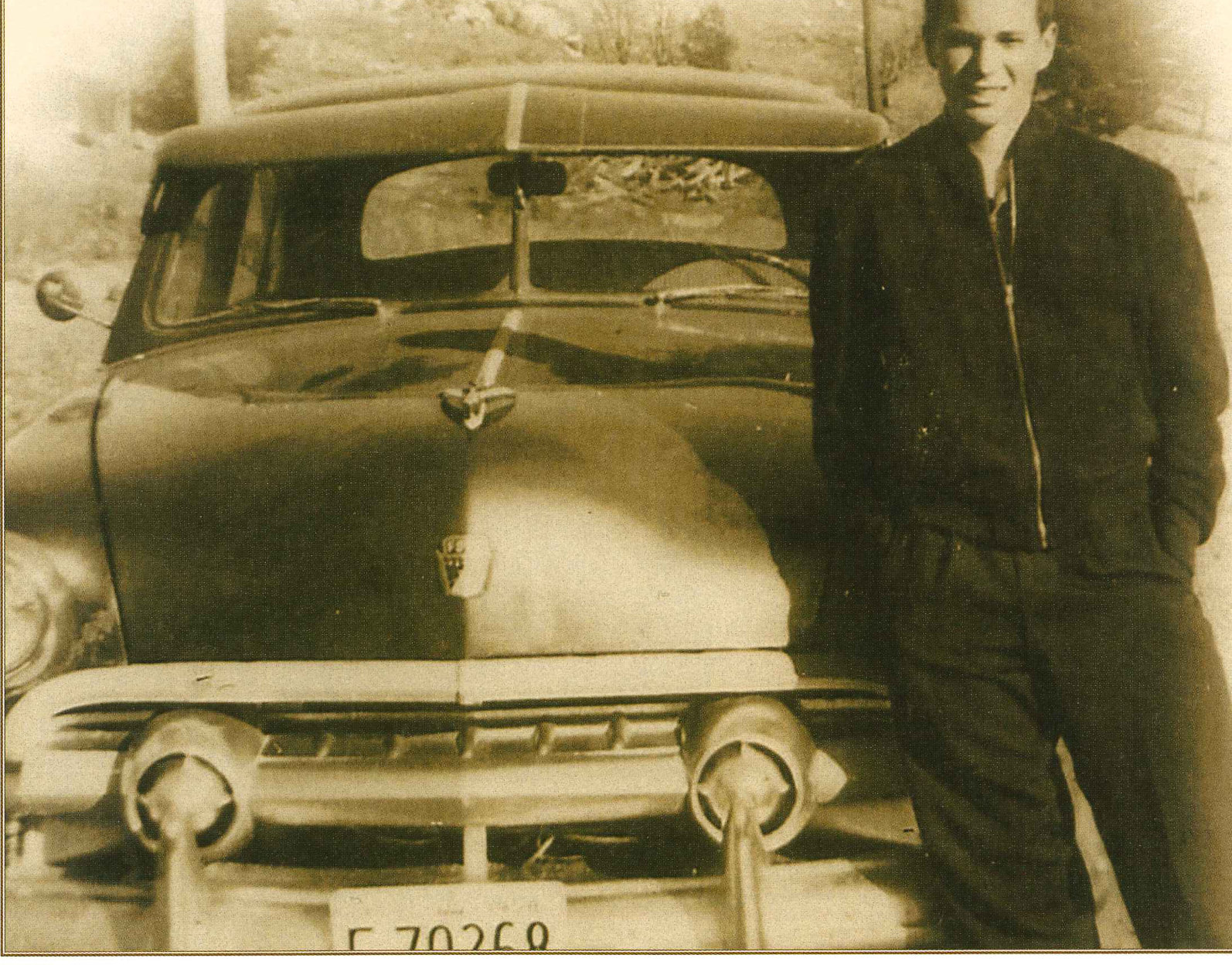
At the age of fifteen I was hired by a tree surgeon and landscaper as his assistant for the summer months. Although afraid of heights, I forced myself to scale trees to prune dead branches and learned how to lay cement and flagstone walkways. I also obtained a weekend job, which I kept for many years, working for the local municipality helping to burn brush, dynamite rocks and stumps, and dig ditches. I became, in effect, the valiant if unofficial deputy to the village foreman. He was always in good humour and had a ready supply of jokes.
His judgment was another matter. He once borrowed the work boat of a friend and took it out on Lake Rosseau without checking the gas supply. A vicious storm came up, the boat ran out of gas and was washed up on the rocks. It took a party of villagers and one boy (me) two days working in the rain to free it. Another time, he and I were working at the bottom of a hill behind the municipal building. The hand-brake on his truck, which he had parked on the top of the hill, failed, and it careened toward us out of control. I ran for my life and got out of the way. The foreman ran in the other direction and tried to stop the truck by sticking his leg in the way of the front wheel. He was sent reeling back, bruised and lucky to be alive.
The foreman was an excellent hunter, and he usually managed to bag a deer each fall on one of the islands on Lake Rosseau. One year he invited me to join him and his good friends, the village postmaster and a local farmer, for a day of hunting on Tobin Island, one of the larger islands on the lake. We were not dissuaded by a lack of licences; the season hadn’t started and hunting was forbidden in this region anyway. Neither were we discouraged by the absence of vocal chords in Flash, the foreman’s hunting dog. The foreman proposed doing the necessary barking and howling himself, if and when Flash caught the scent of a deer.
At the island, we disembarked at the dock of a summer resident who had long since closed his cottage for the season. The foreman knew from prior reconnaissance that there were deer on the island, trapped since the previous winter and waiting for the water to freeze to escape to the mainland. He aligned us 100 metres apart along a so-called “runway” — the path normally taken by the deer – and circled around behind us with Flash on a leash to drive them toward us.
About an hour later I heard the foreman howling and barking. I readied my 12-gauge shotgun, loaded with number-one shot — more than adequate to bring down big game. The sound of human barking came closer and closer. I was filled with excitement. How proud my parents would be when I came home with a deer I had shot myself! Suddenly the foreman came into view, his howling now taking on a note of desperation. He and Falsh, held tightly on a leash, came right up to me.
“Why didn’t you shoot? We drove it right by you?”
My three hunting partners have long since passed away, but my sense of disgrace remains to this day. We returned to the mainland in silence. It was at this time that I began to suspect that I might need glasses. I decided I wasn’t cut out to be a hunter, and persuaded myself that hunting was morally wrong in principle and cruel to boot. Bob didn’t wait for me to change my mind; without asking me, he traded my shotgun for a used wristwatch, which he gave to me, and a pistol, which he kept. I never went hunting again, but I wonder whether I would have adopted my newfound principles had I returned home a hero, with a winter’s supply of venison.
View the original scanned pages →
Originally published in bout de papier, Vol. 19, No. 3 (2002-2003) — Fall/Winter 2002/2003 // Automne/Hiver 2002/2003, pp. 10–15. Read the rest of this issue →



