
bout de papier, Vol. 13, No. 1 (1996) — Spring 1996 // Printemps 1996, pp. 34–37
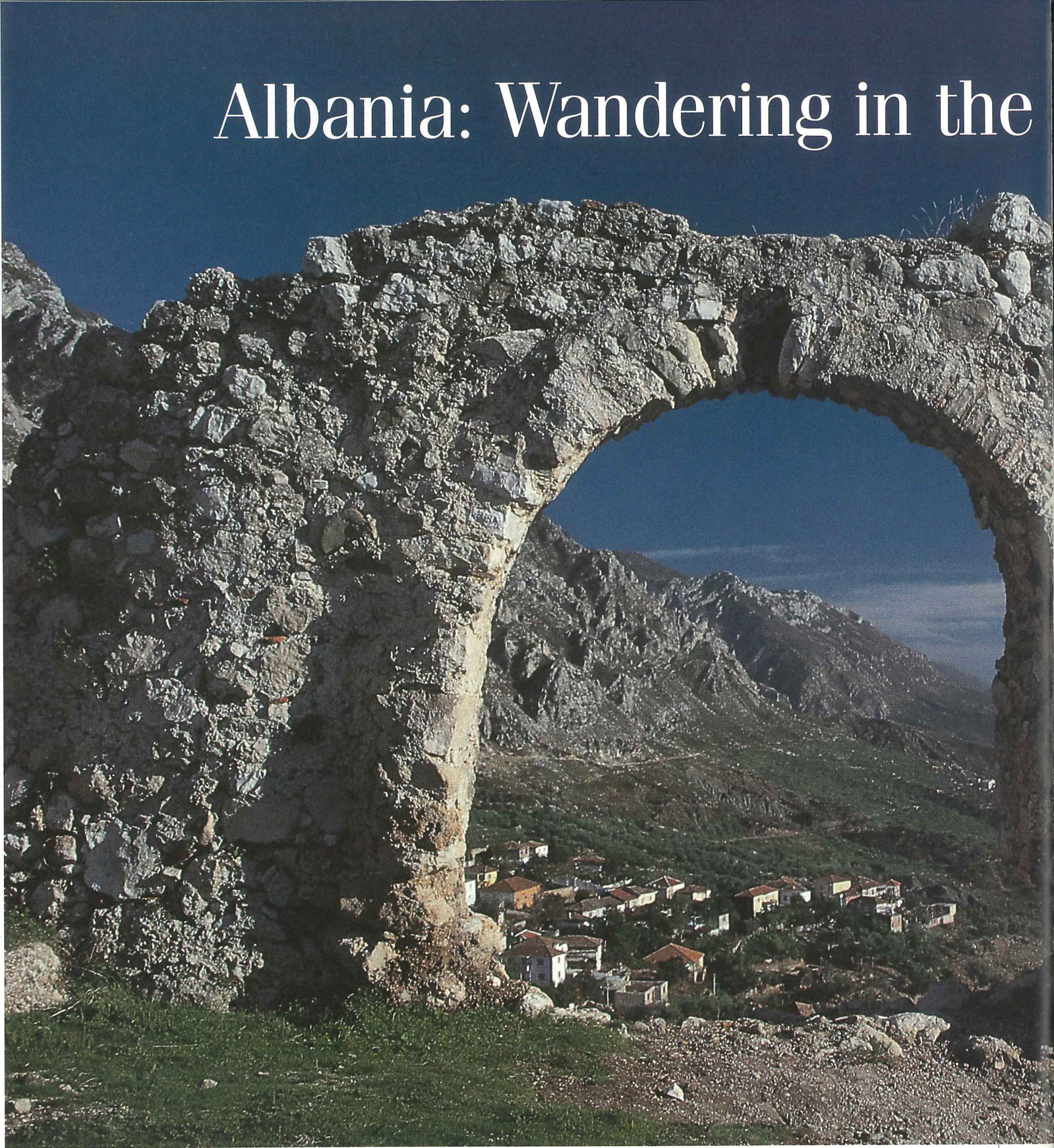
photos and story by David M. Edwards
For almost fifty years Albania was one of the most insular and harshly administered societies on earth. Aligned first with the USSR, then with China and finally isolated from the rest of the world, Albania toed the hardest line among orthodox communist states. Only North Korea has paralleled Albania in the extent of the total control exerted over people’s lives. The Albanian government banned religion in 1967, making it the world’s first atheist state. Individual visits by foreigners were forbidden and contact with the outside world strictly limited. This fiercely isolationist policy continued even after communism had ended in the rest of Eastern Europe. Finally, in late 1990 and early 1991, Albania became the last of the Eastern European communist states to collapse. One aspect of the shattering of the old order was the lifting of the previously onerous restrictions on travel. Visas are now easily obtainable at the airport and land frontiers, and one can travel freely throughout the country.
Albania now presents a fascinating view of a society in the aftermath of a radical transformation. The wrenching changes of the early 1990s took place at a high cost. There was an enormous amount of pent-up rage and fury released against the old order. Almost everything related to “the state” was a target. Windows of public buildings were smashed, museums looted, public parks trashed, benches torn up and garbage strewn everywhere. Factories lie in ruins. Little has since been repaired. This is particularly unfortunate as the country is physically attractive, with soaring mountain ranges in the centre and north of the country and beautiful coastal areas along the Adriatic.
The destruction of the old order has not been succeeded by a functioning market system. Infrastructure is decrepit and unemployment is massive (I heard figures up to 60 percent). Ten percent of the population has emigrated in the past five years. Almost all the young or middle-aged Albanian men I met wanted to leave the country. Salaries for those with jobs average $50 to $75 per month. People constantly made disparaging references to their country (“Albania=Rwanda”) and were surprised that I would choose to visit the country on holiday. But most agreed that Albanians had “good hearts.”
Albanians are eager to meet foreigners. They talk about the earlier communist period in very negative terms, often resorting to obscenities. A few less colourful examples include: “…they were the darkest days in Albanian history,” “ …our entire country was a prison,” “ …we were afraid to talk even within our families.” Albanians justify the trashing of the country as a justifiable catharsis against the previous evil. One said to me apologetically but also with a tinge of pride “People smashed things. They did not kill other people.”
Gradually the country is pulling itself together. This makes solo low-budget travel feasible for the adventurous traveller. More private rooms are available as an alternative to the remaining overpriced and crumbling state hotels. Bar/cafés and restaurants are opening throughout the country and private minibuses and vehicles now ply the roads. Costs are very low by European standards and the country is far off the tourist circuit. I only met one Western traveller during my stay in the country. While Albanians are fond of highlighting the security risks, most people are friendly and helpful. I was more often overwhelmed by generosity and support. Travel in the Republika e Shkiperia, (“the Land of the Eagle”) is a challenge, but the rewards are more than worth the effort.
I flew into Albania via Alitalia from Rome. Following a short hop across the Adriatic, the plane began its descent into the small Rinas airport, circling in front of a long mountain range. The terrain was rugged and dry. The vast majority of other passengers were expatriate Albanians returning home, with a sprinkling of Italian missionaries.
On my way into Tirana I was stuck in a traffic jam for over two hours. A mere five years ago Albania was a carless society! I saw women cutting hay with scythes, horses pulling ploughs and hundreds of derelict bunkers built along the side of the road. Over half a million bunkers were built in the late 1970s and early 1980s at the height of Albania’s isolation. They were constructed under the orders of strongman Enver Hoxha to stave off a capitalist invasion. Virtually all of them lie broken down and abandoned.
Tirana, the capital, is a bustling city of 300,000 people that gives little evidence of its isolated past. It is here where the effects of the changes are most obvious. Consumer goods are widely available and there are many good restaurants and cafes. People dress stylishly and the streets are full of vehicles. many stolen from elsewhere in Europe. There are also bizarre juxtapositions of the old and new orders. In the centre of the city are the imposing buildings of Skanderberg Square overlooked by a gigantic socialist mural. In the square are dozens of money changers with calculators, assorted hustlers and a bumper car game playing loud tinny technotronic music.
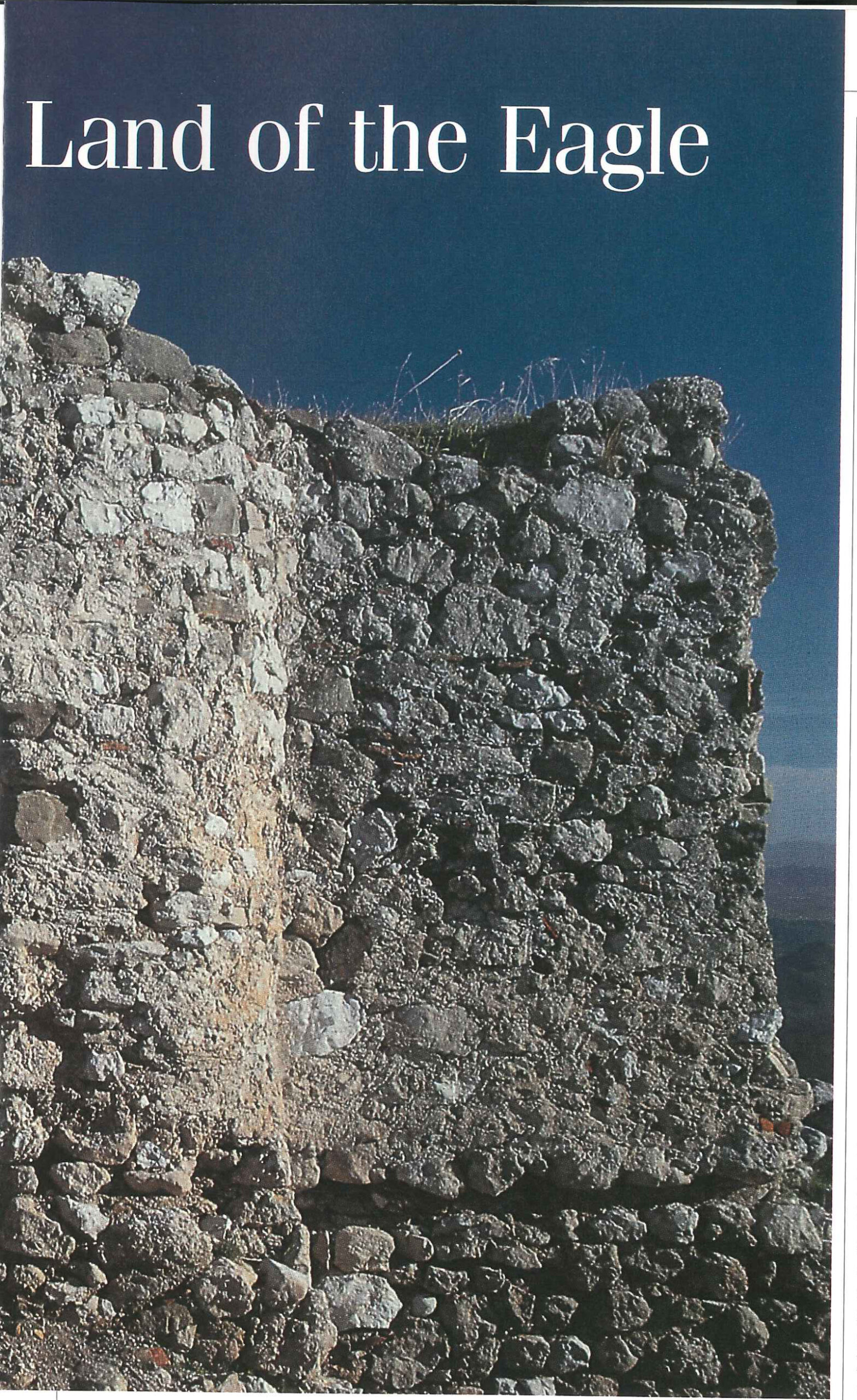
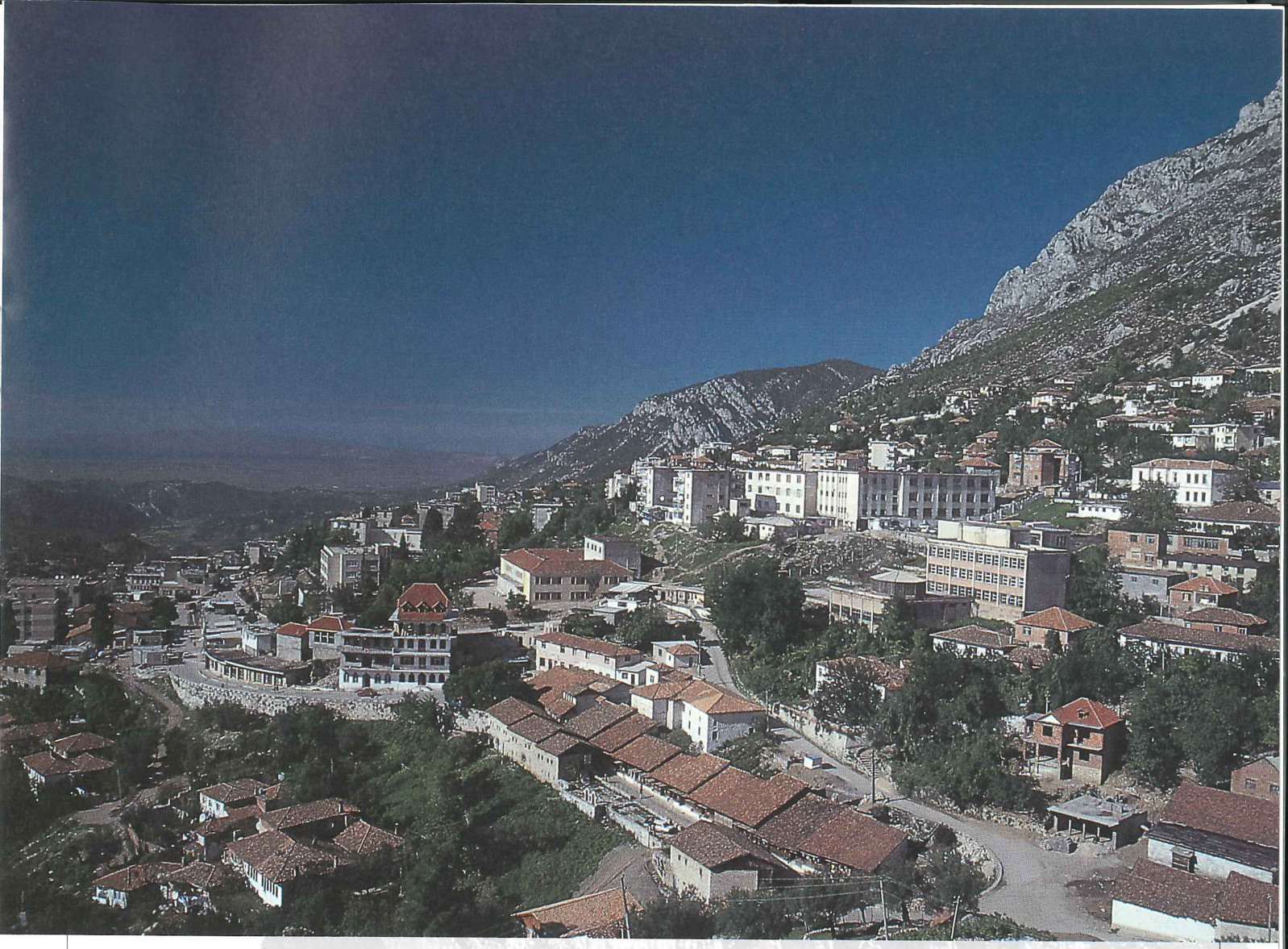
Tirana is a good base for exploring the centre of the country. I spent time along the coast around the port city of Durres, and on another occasion went up to the mountain citadel village of Kruja, set at 600 metres with a sweeping panoramic view over the Adriatic. The citadel at Kruja is stunning, dating from the 1400s. Sadly, parts of the famous monument are now being disassembled and used as stones for new houses.
I was particularly interested in venturing up to Albania’s “Wild North,” the most backward, but arguably most beautiful region of the country next to the border of former Yugoslavia. My guidebook noted some special conditions. “It has been reported from the north of the country, that a number of Albanian nationals are caught up in blood feuds.”
I took a local bus from Tirana to Shkodra, the largest town in the north of the country. The distance is about 110 kilometres but it took over three hours because of road conditions. The derelict state run hotel had broken windows, so I walked around the town until I found a small Albanian-style lodge that charged only $2 per night. Shkodra’s main drawing card is the charming street of Bulevardi 13 Dhjetori. This was one location in Albania that felt like other parts of Europe — a pleasant pedestrian mall with restaurants, small pubs and cafes. On the outskirts of town are the brooding ruins of Shkodra’s fortress.
Early the next morning I awoke before dawn to catch the minibus that was heading to Komani, where I was to catch the ferry up to Fierza. Albania’s northernmost district of Tropoja in the Albanian Alps is now cut off from direct land access. Two huge dams, built at Komani and Fierza on the Drini river, supply most of Albania with power. The route for vehicles and passengers going to Tropoja district is via a ferry that operates along the waterway created by the building of the dams.
The passengers inside the minibus were a rough and sometimes unruly group. There was a lot of yelling and arguments even before the bus began its journey. It did not seem an auspicious start. The bus journey took us through the town and then along a flat stretch for about half an hour before we began ascending in elevation. We then continued on through increasingly wild and barren hills and mountains. The bus was full of chainsmokers, and the driver was perhaps the most aggressive smoker of all. There was considerable interest in my nationality, with the name “Canadese” bandied about with considerable laughter. The driver tried to communicate with me in sign language. He made a few jokes about driving the bus off the edge of the cliffs and a series of dismissive hand gestures that I assumed were critical of Albania.
Two hours later we approached the Komani dam. Access was controlled by a roadblock. After a few minutes we were allowed to pass. The bus climbed up the edge of a mountain and then passed through a long dark tunnel that was in rough shape with deep puddles and smelled of stale exhaust fumes. We emerged on the other side to find nothing but a small concrete slab between the mountain and the river, which served as a parking area, and a very basic restaurant. The dam was a couple of hundred metres back and hills on either side provided a canyon effect along the lake.
Why the bus had arrived at this tiny location almost three hours before the boat was scheduled to arrive left me puzzled. I went into the hut and sat on one of the wooden benches. It was still quite chilly and I ordered a Turkish coffee. Several Albanians were starting their day with boisterous arguments and glasses of local brandy. As I was adjusting my backpack, I heard a loud crack that sounded like gunfire. About thirty seconds later I heard another shot. I went out to see a group of about forty Albanian men huddled together next to the waters edge. Suddenly one of them pulled a handgun out of his pocket, aimed it in the air at a 45 degree angle and pulled the trigger. Then another pulled a gun out of his belt and did the same thing. Within a couple of minutes yet another pulled out his gun and fired three shots in the air, then emptied the shells out of the gun chamber. This seemed to end the display of macho bravado and the handguns were put back into their appropriate holsters and pockets.
Finally, the “Traket,” a passenger and car ferry boat, came into view. By this time the small parking area was jammed with vehicles. Perhaps 100 men were on the front of the embarkation platform of the boat as it approached the landing pier. Just before landing, they started leaping off the boat and ran frantically for the buses. This initial burst of urgency seemed misplaced. None of the vehicles on the boat were able to unload as the parking area was full. Things soon settled into chaos with the vehicles on the boat honking their horns, vehicles in the jammed parking area honking their horns, and yelling and arguments from a fair percentage of the drivers and passengers. At last the boat captain joined the cacophony by blasting his foghorn in the narrow canyon. This continued for the better part of an hour. Eventually vehicles started leaving, the passengers got on and, after loading on the last of the vehicles heading north, we were on our way.
But what a trip! For more than two hours the boat went along the narrow river course of the flooded Drini, at times through narrow gorges with limestone outcrops hundreds of meters high, or slightly wider areas reminiscent of a Norwegian fjord. At other points were wide and expansive views of the Albanian Alps to the north, and small farms clinging precariously on hill slopes. The river was a rich azure colour. We landed at the town of Fierza, within sight of the other large dam on the Drini. The landing site was larger and the disembarkation process considerably less chaotic than at Komani. There was a group of minibuses waiting to take us to the main town of Bajram Curri and capital of the northern Tropoja district, under an hour away.
Tropoja is noticeably poorer than other parts of Albania. I wrote down my impression of Bajram Curri on the evening I arrived. “Sunset shadows grow longer over 2500 metre rocky peaks. Below are crumbling apartment blocks sporting threadbare laundry and satellite dishes. In the foreground are piles of garbage and idle Albanian men chatting around an aging, probably stolen Mercedes Benz. In the slight distance, sheep wander around the ubiquitous derelict concrete bunkers.”
The border of Yugoslavia, both Kosovo and Montenegro provinces, lies just a few kilometres away. Its proximity has led to smuggling and some incidents of violence. There were some soldiers in the town, a rare sight in the rest of the country. I met some individuals on a project funded by the European Union to monitor incidents along the border and to determine the effectiveness of the enforcement of the UN embargo against former Yugoslavia.
The following day I continued up a gravel side road for 35 kilometres up into the mountains, past a small settlement called Dragobi and finally reached the small, idyllic village of Valbona. All the houses were constructed of stone. The village was surrounded by towering rocky peaks reminiscent of the Dolomites in northern Italy. I hiked with a young Albanian for a few kilometres along a dry riverbed in the direction of the small settlement of Thethi. Away from population centres, there was almost no litter or other pollution. The pristine Albania that must have existed earlier could at last be savoured. In its current state, the valley is an isolated paradise.
Later I went from Tirana to Lake Ohrid, shared by Albania and Macedonia. Ohrid is the deepest lake in Europe. It is famous for its delicious trout called “koran” in Albanian. Pogradec is the main settlement on the Albanian side of the lake. It has a stunning setting, but the beach is polluted, the park benches torn up and garbage strewn about. If one looked beyond the immediate environs of the town one could see the beauty of Lake Ohrid itself.
Walking across the border into Macedonia was like stepping into another world. I was back in Europe. Ohrid town is a well organized and comfortable tourist destination. There are many monasteries and churches to explore. There are also many hotels, campsites, boutiques and restaurants. Although it remains completely safe to visit, the cataclysm taking place a couple of hundred kilometres to the north has scared off most foreign visitors.
But the appeal of the creature comforts did not make up for the loss of the personal contact that had made Albania so special. So I walked back into the charming, if decrepit, chaos of the Land of the Eagle, savouring my last couple of days staying with private families in Pogradec and Tirana.
I arranged to have the same taxi driver who had taken me from Rinas airport to Tirana take me out for my departure. He had decried the conditions in Albania when I arrived, suggesting that I should get right back on the airplane and leave.
“Albania not s**t country?” he asked as I was leaving.
“Albanian people have good hearts.” I replied
View the original scanned pages →
Originally published in bout de papier, Vol. 13, No. 1 (1996) — Spring 1996 // Printemps 1996, pp. 34–37. Read the rest of this issue →



