
bout de papier, Vol. 11, No. 1 (1994) — Spring 1994 // Printemps 1994, pp. 14–16
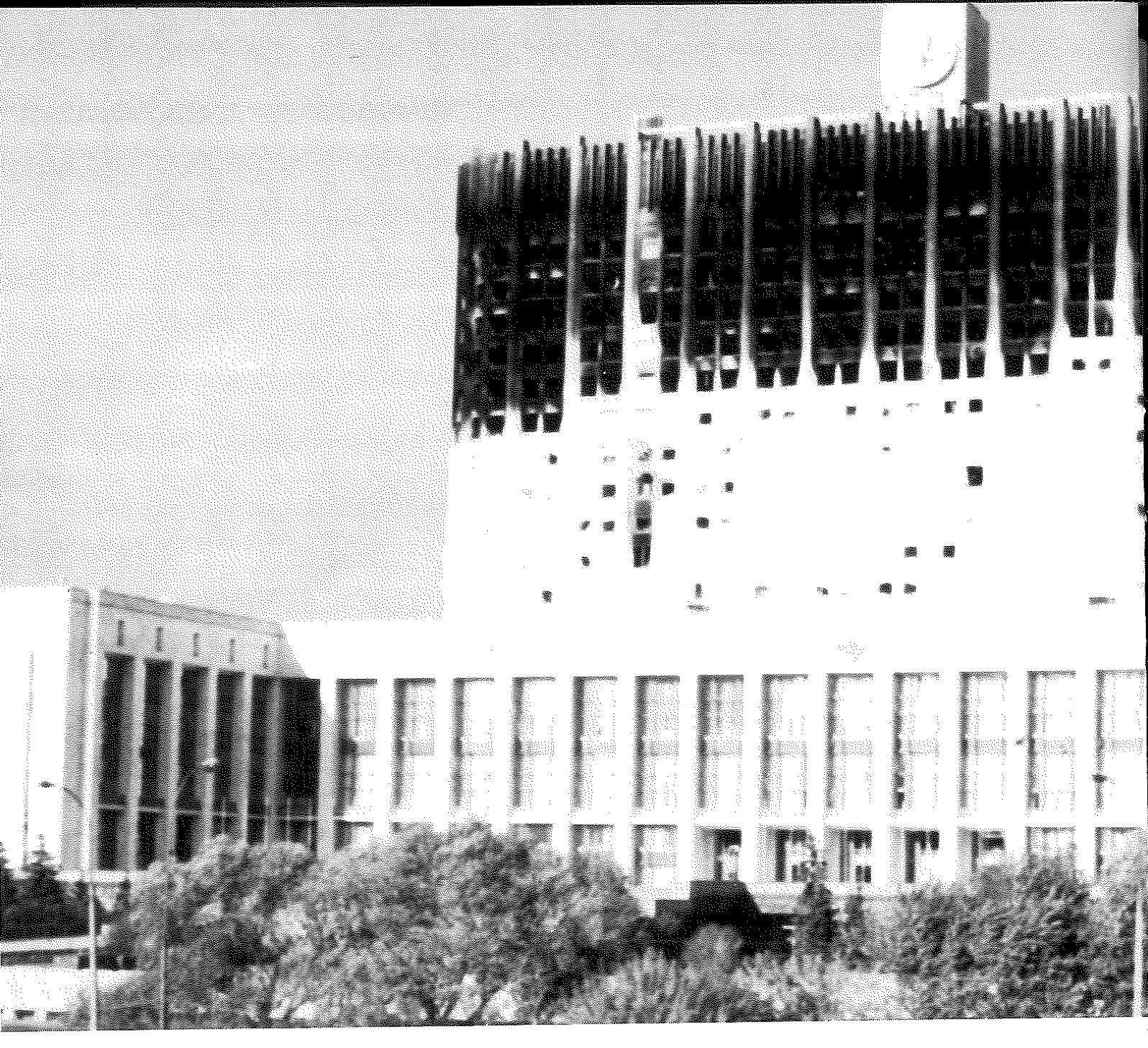
We live on Kutuzovski Prospekt. It is a much travelled street nine lanes wide, bringing travellers from the west of Moscow into the heart of the city, past the White House on to Prospekt Kalinina, and then to the Kremlin. We live a few blocks from the White House. We have front-row window seats for the events of a week of Red October.
September 21, 1993. Yeltsin dissolves Parliament. We are at home that evening, preparing to dine with friends. We receive a call from one of the Embassy’s political officers — a major announcement from Yeltsin will be made within the next hour. We gather around the television. Nothing — until one of the Russian channels breaks from its regular programming and Yeltsin begins to deliver an address. Major frustration – Russian words come at us a mile a minute and nobody can understand. We learn soon enough what has occurred through phone calls and news analysis on the European channels.
We are driven to work each morning in a black Zhiguli with a red velveteen interior. We happened upon this driver and car through his wife, a taxi dispatcher with a good knowledge of English and an entrepreneurial spirit. “Why should we hire a taxi, when she could fix us up with a car and driver at a very reasonable price?” Our driver speaks but a few words of English. When we need to communicate, we do this through his wife.
Wednesday morning, September 22. We drive past the White House. The crowd of two or three thousand that had gathered late the night before, following Yeltsin’s announcement, have largely disappeared. A few hundred cold miserable people stand around the odd bonfire with a few old scarlet Soviet flags and the white, yellow and black banners of the National Salvation Front.
Soldiers surround the White House in a loose cordon. There is no sense of siege or danger. Our driver motions for us to look, smiles, and states, “No problem.”
Tuesday, September 28. The Americans close their visa operation for the day. More and more soldiers have gathered over the week. The drive to work, past the White House, becomes less pleasant. Thick lines of soldiers and guns are at each official building and at each street corner. The White House is cut off — no electricity and no water for the opposition.
That night, I attend a reception at the American Consul’s apartment. The street leading to the Embassy is completely sealed by the army. We must walk several blocks down the open roadway. All are concerned with the gathering military strength and the ultimatums being issued from each side. As I leave the reception and make my way to the waiting car, I walk up the same side street, now completely filled with two rows of army trucks and personnel carriers, parked with their lights out and motors running.
Sunday, October 3. Sandra and I walk to the Embassy. The Ambassador to the UN from Kyrgyzstan requires a transit visa so he can leave Monday at 9 o’clock. Sandra is willing to accommodate. It is a nice day for a walk, but there has been much violence in the city. On Saturday night, the large provisional stage which had been set up to celebrate the 500th birthday of the Arbat, one of the city’s truly beautiful streets, was torn apart by bystanders to obtain pipes to beat police and soldiers.
During the two hours we work at the Embassy, another demonstration turns violent. As we walk home, we are re-routed by soldiers to streets covered with broken glass and smashed cars. We have narrowly missed this riot.
On Sunday night, the violence escalates. There is an attempt to take over the television tower. A state of emergency is declared.
We watch television and stay in touch with friends on the phone. Everyone in the city has a different vantage point and different local happenings to report.
Monday, October 4. The first sign that this day would be different occurs just as we begin preparing breakfast. A convoy of armoured personnel carriers comes down Kutuzovski and stops just beyond our building. There are a dozen carriers with soldiers and what appear to be civilians riding haphazardly here and there on the vehicles. They park on each side of the wide boulevard and the soldiers and civilians cross and recross the street to confer with each other, taking care not to be run down by passing civilian vehicles. In the distance, at the White House, we hear the sound of erratic rifle shots — a sound we had been living with since Sunday evening. I call the duty guard at the Embassy to tell him what we had seen.
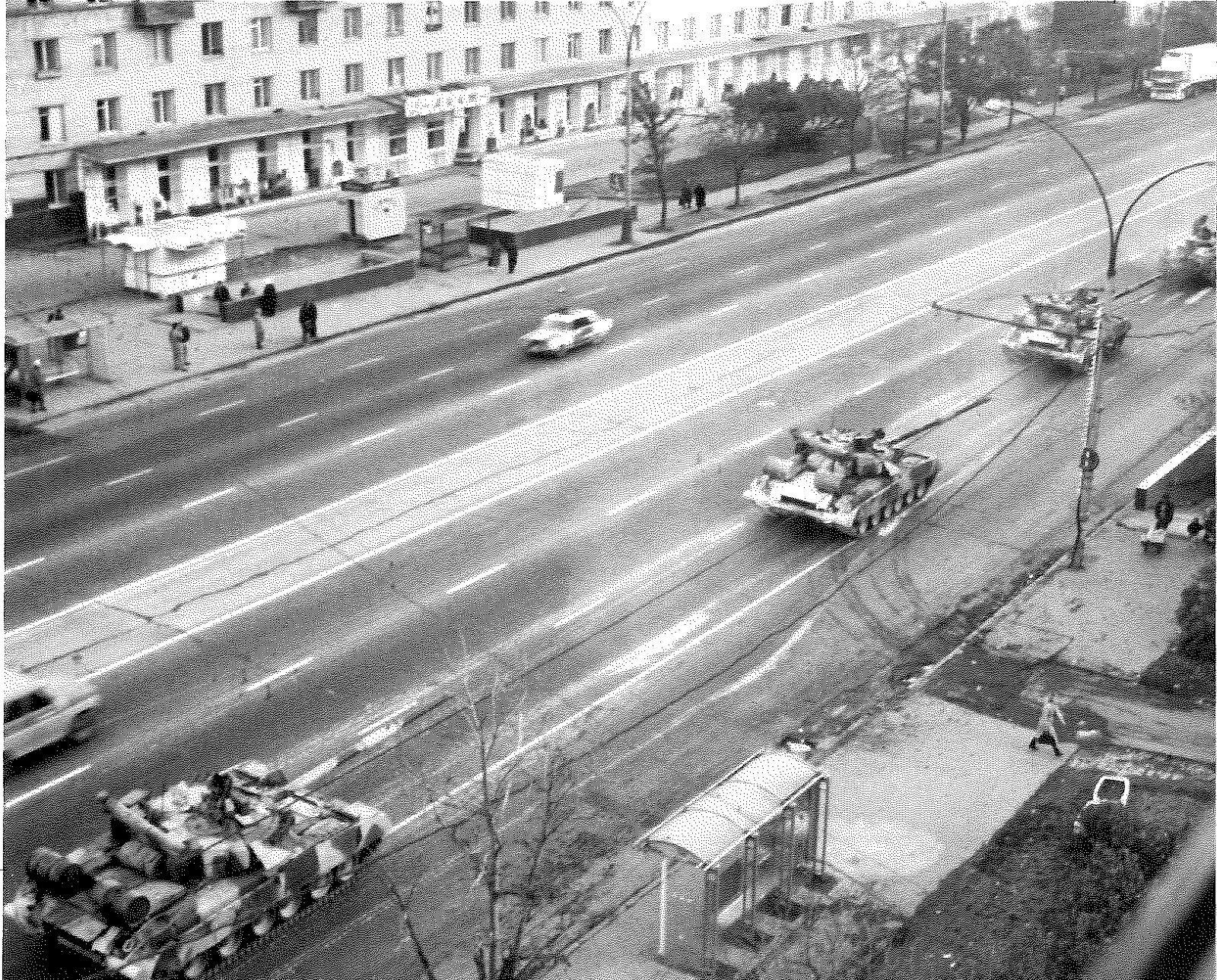
I hang up from my call to the Embassy. A totally new sound comes drifting up from the street. We step out on our balcony. We see, approaching from the west, a long line of tanks. Huge, noisy and startlingly quick, they rumble down Kutuzovski, chewing up the pavement. Sandra gets the camera, I stare with amazement.
In a few short minutes, our street is transformed into a moving flow of military vehicles — two lanes filled with huge trucks and one with tanks — all three lines stopping and starting, jerking their way toward the White House. The street is now blocked off to the west of us. We can see the Militia car and the officers busily turning nonmilitary vehicles away. But, to the east — toward the White House — the street remains open so that the long lines of army trucks and tanks meet a steady flow of buses, cars and trucks laden with goods as they leave the Ring Road and head west. In no time, civilian traffic has crossed over the middle of the street and occupies the east-bound lane the military are not using. I call the Embassy duty guard and report the tanks.
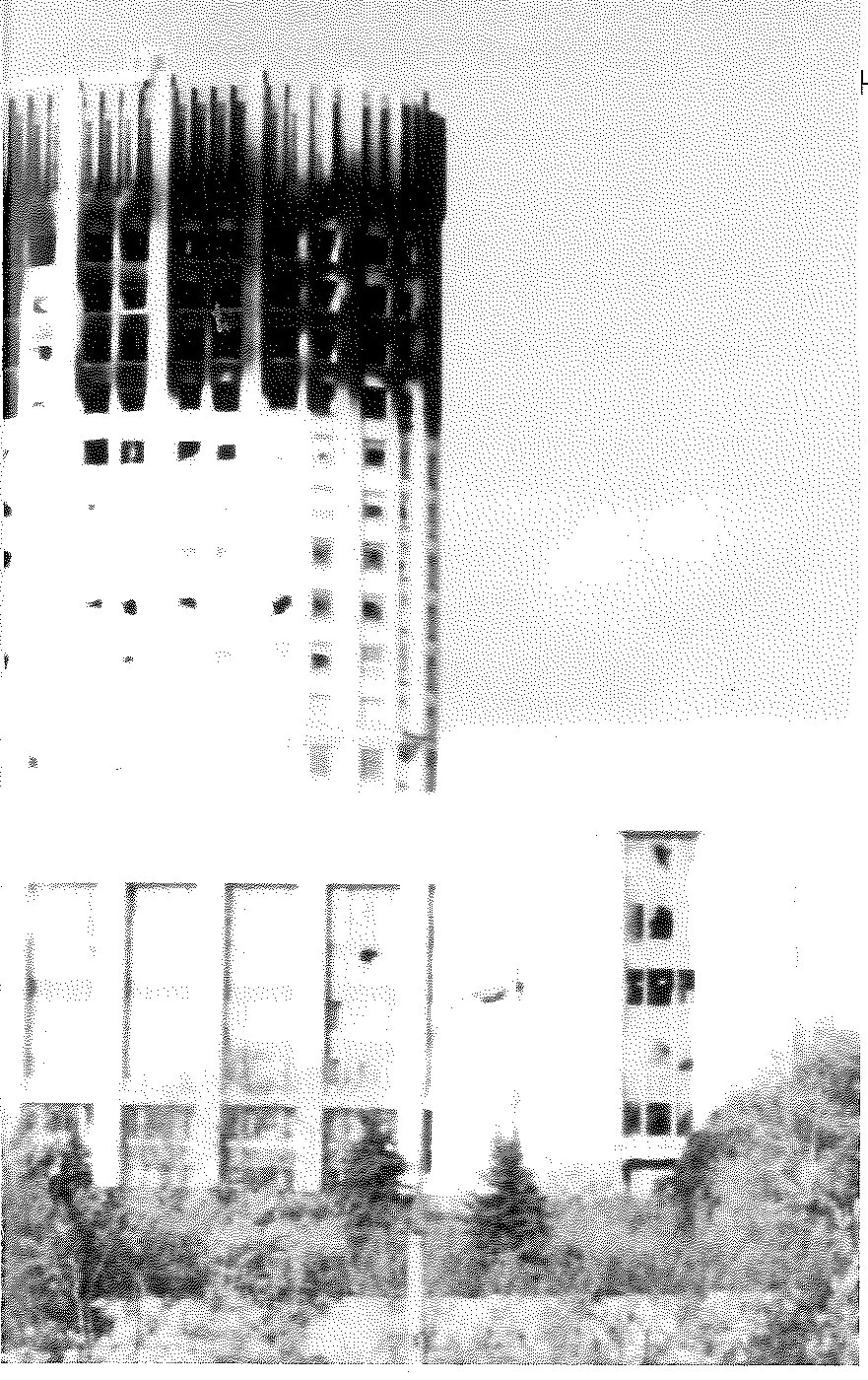
The tanks and trucks continue to lurch past our balcony. Sandra takes pictures. People stare curiously at the line of green and camouflaged machines. Some, across the street from us, have obviously been awakened by the clatter outside their windows but Kutuzovski residents were not the first awakened by the tanks. As they noisily made their way through the night toward Moscow, from Naro-Fominsk, some 80 kilometres away, they left in their wake startled villages and roads torn up by the heavy treads. I watch the tank immediately below me October 5, the White House. Advance twenty or thirty yards, peeling the pavement off the road as it spins for traction.
The tanks travel the two blocks to the Moscow River. They have only to cross the Kalininski Bridge. The street is now totally occupied by the army. A few parked cars are dwarfed by the huge military machines. A red Lada emerges from a driveway to our side of the police blockade. Unchecked, and finding no opposing traffic, the driver turns toward the White House and on the wrong side of the road, like a defenceman on a breakaway, streaks past the army. Before anybody can react, a quick left turn into a laneway and the red renegade is gone.
1look up the street and note discussion at the Militia blockade. It is our driver. In minutes, the black Zhiguli with red velveteen interior, using the empty lanes on the other side of the street, travels down Kutuzovski until it is even with our driveway, puts on the right signal light and threads its way across two lanes of trucks and one of tanks. Our driver parks the car on the sidewalk, gets out and joins the curious onlookers watching the passing parade.
The Ambassador calls. We discuss what is happening and he suggests that we should not open the Embassy to visa traffic and immigrants. Perhaps inspired by the actions of our driver, I propose that we open as usual. He agrees. Sandra makes a few calls. We let the staff know it’s business as usual.
The gunfire at the White House has now become a continuous crackle of sound and, rattle our windows is fired. We rush downstairs and get into the back of our car. The driver mutters in Russian, turns and looks at us with anger in his eyes, gestures to the tanks and says “Democracy?”
Our driver stays on the sidewalk, driving west out of town, to get around the line of army vehicles. He is visibly upset, worried, and he manages to let us know that he is not sure whether he can get to the embassy. Yet all goes well — we get onto the next street over, Dorogomilovskaja, traffic flows well, we cross the Borodino Bridge and on our left, we can see the White House under a cloud of smoke. Gunfire is continuous and heavy shelling racks the air.
The lineup in front of the Embassy is much shorter than usual. We are gratified nevertheless to see the local staff — the backbone of the visa system — arriving, concerned but ready for work. The Ambassador proposes that we allow fewer people than usual into the waiting area. At 9 o’clock, we open the doors for business to what is obviously going to be a light day.
By late morning, we are informed of new developments. There are snipers about, particularly in the area of the Arbat, which lies between us and home. The military reports come to us hourly. I work in my office, which looks out over the Ambassador’s garden and watch as the dvornicks carry fertilizer into the garden to the sound of sniper fire and machine guns clattering.
By mid-day, we are informed that, in order to isolate the White House, most of the metro stations in the vicinity of the Embassy are closed. Plans are made to get the locally-engaged staff to a metro station and they are asked to leave early. A van takes them to the nearest open station. At 4 o’clock, the same van takes us and others who live in our area home. Too many snipers are about for people to make their own way. The Embassy’s military personnel urge us to stay away from windows.
At home, we join the rest of the world watching CNN. During the night, the sound of gunfire gradually dies out.
Tuesday, October 5. All is back to normal, except for the occasional gunfight as the odd group of hardliners is routed out or the snipers are dealt with by the army.
That night, I talk with our driver’s wife. We discuss the Monday events. She cries, a mixture of great anger toward the politicians who allowed this to happen and humiliation. It is a private grief and I cannot offer much comfort.
Outside our window, I hear the soft discussion of the soldiers who are part of the supply convoy. Over a dozen huge trucks filled with ammunition and gas have been parked outside our building since Monday evening. The young soldiers quietly move about their vehicles, smoking strong-smelling Russian cigarettes.
Wednesday, October 6. The goose-stepping guards on Guard-post Number One are gone. They have been doing duty in front of the red marble mausoleum since Vladimir Lenin was interred in Moscow’s Red Square in 1924.
Friday night, October 8. Sandra and I are invited to a reception by the Russian Ministry of Foreign Affairs. The events of the week hang over us, yet it is an enchanted evening. Several very talented actors and singers entertain us as we eat dinner. At one point, a lady with a voice to rival Edith Piaf, sings a sad song about Moscow. I do not understand all the words, but from my vantage point, I can observe the effect of the song. The Russians from Foreign Affairs, men I do not know yet but who will become my colleagues over the next two years, big beefy men with tough physiques and tough minds, quietly weep.
Dosvidania CNN
Gord Barnett is the Program Manager — Immigration in Moscow. Sandra Barnett is the Second Secretary – Immigration in Moscow. These pictures will join her collection of pictures from around the world.
View the original scanned pages →
Originally published in bout de papier, Vol. 11, No. 1 (1994) — Spring 1994 // Printemps 1994, pp. 14–16. Read the rest of this issue →



