
bout de papier, Vol. 25, No. 1 (2010) — Spring 2010 // Printemps 2010, pp. 34–37
Although we think of pilgrimages as devotional trips to special places like Santiago de Compostela or Mecca, usually the real destination is the same: the soul. Born in Lahore just before British India’s brutal partition in 1947, in 2006 Bill Bhaneja took advantage of the posting to Pakistan of an old friend (your Editor) to return to the city of his birth. He also wanted to return to the home of his ancestors, Sukkur, half way down Pakistan in Upper Sindh. A former Science Counsellor and Canadian diplomat, our intrepid traveller set aside his worries about personal security. With train tickets and knapsack in hand, he stepped into what he quietly feared might be an “unthinkable abyss.”
What follows is extracted from his journal of that trip. It is the tale of two great leaps of faith in trusting perfect strangers and the soul-satisfying discovery that so many years later and despite great divides, one remains a “son of the soil.” But there also followed a failure of nerve that seems only too understandable in today’s Pakistan. As Bill shows us, journeys of the soul are not only about risks rewarded, but also about regret when fear undermines our faith in others.
Arrival in Sukkur
The tall taxi driver in baggy shalwar trousers and long shirt stood before me. He had a weathered complexion and a thick moustache. On mentioning the two hotels suggested in Islamabad to me, he said both were equally good. I wondered if he was being tactful not wanting to put down the hotels of his hometown. The Forum was in the centre of town close to the main market; the other one, Inter Pak, was quieter, near the daryah, the river. He took my brown duffle bag and put it on his side seat while I climbed into the back of the taxi.
As we drove out of the airport he curiously asked me if it was my first visit to Sukkur. He seemed to be having difficulty placing me regionally. I understood my parents’ language well, but it was rusty. Though I spoke Sindhi hesitatingly, it was understandable. I had tried it in Islamabad with Abida Pervin’s brother Ali and thought it sounded fine (Abida being an icon of Pakistani traditional music). However I would not know the regional origins of my dialect. As I had learnt it listening to my parents, I assumed it came from here — the region of their birthplace. Having grown up largely in Hindi and Punjabi speaking neighbourhoods of Delhi, the other two languages were picked up at school or on the street. At home, our parents spoke in Sindhi while we replied to them in Hindi. Conversing with the driver I was surprised that Sindhi words I had not heard since my childhood were coming to my lips.
Seeing me carrying a duffle bag, he asked if I was a medical rep touring the area. I kept quiet. I was not sure whether to tell him where I came from or about the purpose of my visit. In the post 9/11 climate, one had to be cautious whether in New York or Sukkur. Upper Sindh had a reputation for robberies and abductions for ransom. While growing up in India, I remembered newspapers headlining the stories of innocent Indians held in Pakistani jails for years having been arrested on charges of spying. Similar stories were reported of Pakistani Jasoos caught in old Delhi’s Muslim areas. I had decided that on this trip I would try to avoid being drawn into any political talk. Even the camera I carried with me was a cheap disposable one, in case my expensive Canon might be confiscated by the authorities.
When I had expressed this concern to Stuart [Hughes] in Islamabad, he had consoled me that unlike most Canadians, in Pakistan I had the unique advantage of being an invisible minority. We had both laughed at his insight. He suggested that I take the usual common sense precautions travelling in a foreign land, and to phone him if I ran into any problem…
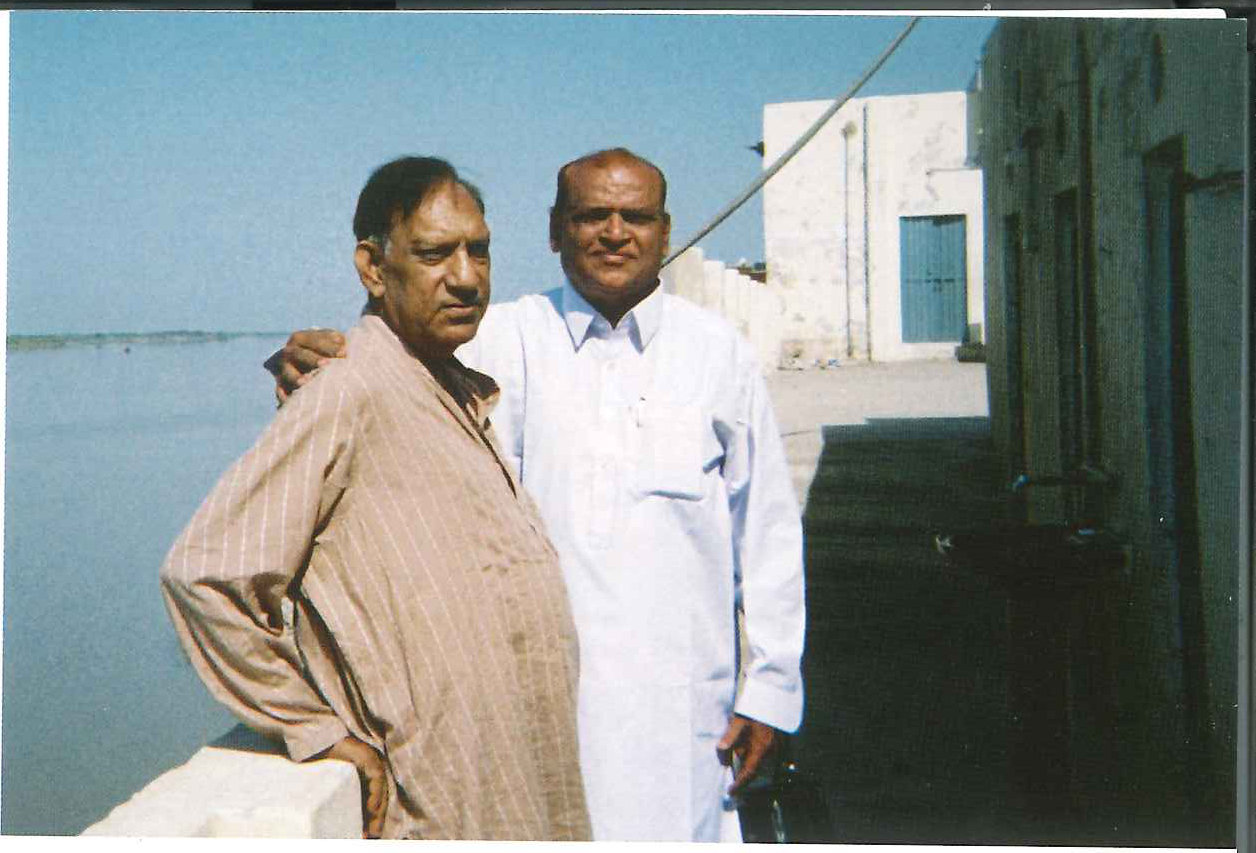
Rohiri — my father’s birthplace
Despite a grey baseball cap protecting my head from the sun, the heat of the day had begun to affect me. It had been long since I walked through such cramped alleys, I felt claustrophobic. It seemed images from my childhood memories of this place had shrunk considerably in scale. I had felt the same way in historic Shikarpur, everything around looked much smaller than I remembered from my visit to the area as a five-year-old. The streets were narrow and packed densely with rows of two to three floors-high houses which were shabby and worn down.
There was a concentration of Hindu families and small shops in this old neighbourhood. As we walked by the shops, my taxi driver Nur Bux read the signage over the entrance of a stall and repeated the Hindu name of the owner neatly written in Arabic Sindhi script on the tin board. Perhaps some Hindu families in my father’s quarter had decided to stay on. It might have been due to good communal relations in the area, or its proximity to Hindu shrines of Sadhu Bela and Vasan Shah temples which served as sanctuary to those who opted to stay during the tumultuous times of Partition.
Like other places we had visited since morning, here too none could remember much about the Hindus from pre-Partition days, especially those who had migrated to India. One of the younger men took us to an Hindu shopkeeper who ran an electrical repair shop. There was an air of authority about this middle-aged man. I was not sure if it came from his age or being a community leader. He wore the traditional loose shirt of beige colour with white stripes and shalwar trousers. Sitting on a wooden stool in his tiny shop, he was busy fixing an electric iron on the raised workbench in front of him. As he saw us, he stood up and came down the steps of the shop. While the younger man deferentially repeated what he had heard about me from the taxi driver, the shop owner studied me with interest. After a moment’s pause, he introduced himself in Sindhi, “T used to be with the Irrigation Department, an electrical engineer. Now retired, I own this shop. Where are you from?”
I replied, “Canada, but originally a Sindhi Hindu from India.” His penetrating eyes scrutinized me. I continued with my story, “My father was born here in Rohiri.” “Vaasho vari Ghitti,” he wryly interrupted, confirming its existence. The word Ghitti in Sindhi stands for a narrow lane. Encouraged I said, “My grandfather’s name was Aildas Bhaneja. He had two sons: Devidas and Sugumal. My father was the younger one, Sugumal. Both lived in the same lane along with their cousin Shri Nandlal. I visited them once when I was five years old for my oldest cousin’s wedding.” Nur Bux intervened bringing the conversation to the present. “Sai,” he addressed the shopkeeper, “this sahib has a lot of time. He has to catch his train from Rohiri Station at 10:30 tonight.” Then he turned and looked at me, “It is getting quite hot. I suggest you pass the rest of the day here, you can walk around to find your family house and then the spend rest of the time in the temple by the river? You will find it interesting.”
The shopkeeper gave a sharp look to the driver, mumbling under his breath that the driver was pulling a fast one on me. He asked me, “Where are you going next?” I replied, “Lahore. I was born there.” With bravado he told the driver in Sindhi, “Okay, you leave him here. We will take care of Sai and show him everything.” While all this was going on, I noticed a small crowd gathering around, curiously examining me, wondering how all this would end. Nur Bux glanced in my direction to check if I was satisfied with what was being proposed.
I felt like a bundle being exchanged in the middle of nowhere. I was apprehensive. How was I to discern who was friend or foe, a Hindu or a Muslim? My unease was about not wanting to end up with the wrong people and later regretting it.
Years earlier my wife and I visited India. Travelling by bus from Ajanta caves to Aurangabad we saw a group of men befriending a young Japanese tourist who was travelling with us. Next morning we found the youth in the hotel lobby in tears having lost all his belongings. His new friends had slipped him a sleeping tablet in a drink and stolen all his valuables. I remember him saying that he never thought that there would be such deceit and thievery in the land of Mahatma Gandhi. That had taught me an important lesson of being careful who you fraternized with when travelling.
The shopkeeper seemed to understand my hesitation, “Don’t worry Sai.” He interjected in a firm voice. “We will drop you at the station to catch Karokaram Express for Lahore. It is always late. You are our guest.”
I knew I had some quick decisions to make. Should I spend a few more hours with Nur Bux who would have driven me around Rohiri, and later leave me on my own at the train station for rest of the day? There was not much left to see, except to end up in the railway waiting room until the train arrived. The only other choice was the one being offered by this total stranger I had just met. But then as far as I was concerned everyone was a stranger in Sindh. Ultimately, it is our faith in ourselves which makes us decide at such moments whether to take the risk — a blind step that could take you into an unthinkable abyss…
Despite my fears, I gave in to the shopkeeper’s invitation. Smiling Nur Bux assured me, “Nothing to worry Sai. You are with your own people.”
The shopkeeper called a boy in the crowd and told him to go with Nur Bux to the river to bring my duffle bag from the taxi. I paid Nur Bux the fare and thanked him for the splendid work he had done in showing me the three towns. The boy disappeared with Nur Bux down the lane to fetch the duffle bag. The small crowd that had gathered around us slowly dispersed, going their different ways.
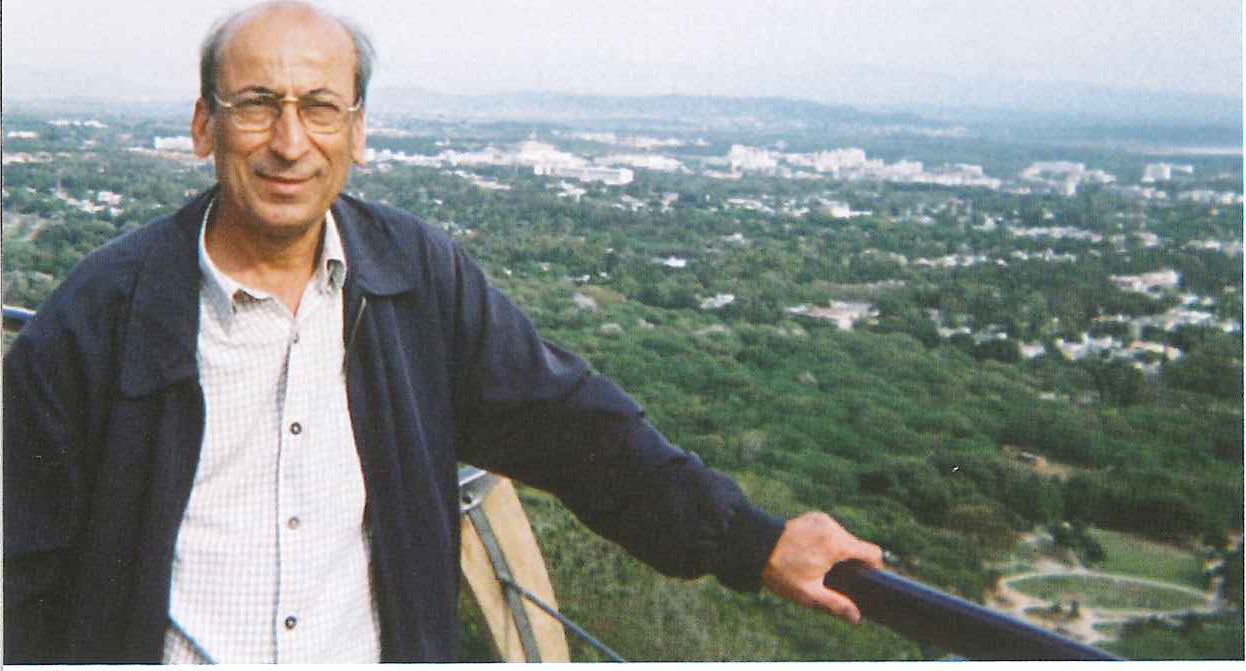
Train to Lahore
I looked at my watch, it was six o’clock in the morning. The jolt with which the train lurched out of the station had awakened me. The sign at the platform read Khanewal. The misty light of dawn penetrated through the train window. The young fellow sleeping on the berth facing me greeted: “Salaam-e-Lekum!” I reciprocated, “Va-lekum Salaam.” The young man of a fair complexion had a handsome round face. A thin crescent shaped beard ran from his ear to ear. He put on his white skull prayer cap. Standing up he called his friends asleep on upper berths to wake up and that it was time for the morning Namaz. From the language and accent, I could figure out that these youths were neither Punjabi nor Sindhi. The way they spoke Urdu, their accent made me think they were the children of Urdu-speaking Muslims who migrated from northern India.
Soon one by one, all five of them were standing in the space between the berths in the cabin. They looked young to me, in their early twenties. Obviously, it was too narrow a space for everyone to pray together, so a couple of them decided to move outside in the corridor. They spread their neatly folded prayer mats on the floor to offer their first Namaz of the day. “Allah O Akbar!” (God is supreme!) In a row of two, their mats side by side, standing up, sitting down, rising folded hands in appellation to Allah, God, they repeated, “Allah O Akbar!” In the rattling noise of a moving train, they went on with the ritual for the Morning Prayer.
The five young men had the same ear to ear beard and wore similar perforated skullcaps. I peeked outside in the corridor to check if this was a normal routine that all Muslims followed ardently. I couldn’t see anyone so devout across the whole coach entreating God so early in the morning. After Namaz, those who had stood outside returned to the cabin, taking their seats, three on one side and two on my side.
One of the youths suddenly stood up to close the door of our cabin. Saying “Bismillah Rahim O Rahman,” he launched into what he called “Baat,” a homily on “Yakin” — the Absolute Belief. This was a completely new experience. Non-stop the youth went on for the next 15 to 20 minutes explaining significance of faith and importance of infallible belief in one’s life. He gave examples from Holy Quran of incidents of piety and sacrifice. There was not much I could comprehend as I had no familiarity with the Muslim scripture. From little debate around, it was the word of the leader who I heard saying that his homily was strictly for contemplation, no discussion. As a fish out of the water, I began to feel uneasy, wanting to escape that confined space. I wondered how the group would react if they knew that I was a Hindu of Indian origins and a former Canadian diplomat.
After their Baat, one of them politely asked me, “You boarded the train last night at Rohiri.”
“Yes.” Keeping my composure, I replied. “Are you going to Lahore?”
I turned the question around, “And you all?” “Pindi.” He grinned.
“You are from Karachi?” innocently asked. “And you, sir?”
“Both Rohiri and Lahore, you may say.” was being evasive.
The youth could see my discomfort. The same caution had overcome me when I had first met Nur Bux and Bhajan Lal. A strange instinct urged me to remain silent. I was afraid that I might be asked to get drawn in their religious chat. So I turned away my face to look outside the window at the changing scenery. Was I afraid, or just being cautious? The train chugged on. None of the youths seemed to be returning to their upper berths. As it was day now, it was obvious that everyone would sit on the lower berths. I was feeling squeezed sitting between my fellow passengers. Noticing an empty seat outside in the corridor, I stood up to offer my seat, suggesting that this would give them more room. They seemed happy as I excused myself carrying my duffle bag into the passage. I heard the glass door quickly shut behind me.
While sitting outside in the corridor seat, I was not happy with my decision to move out of the cabin. Why did I not just stay and converse with them? How could I let an opportunity of engaging these youths in a conversation pass? I generally enjoyed talking to strangers, wanting to learn about other cultures. On top of that, their Urdu accent was that of Delhiwallas that I had always loved; it was the Urdu of poet Mirza Ghalib reminding me of my college days in Delhi. In my vocation as a diplomat, building relationships came naturally to me; and in my post-diplomatic career which now focussed upon promoting a culture of peace, transcending national boundaries and viewing everyone as the children of the same God had been an important goal. Their orthodox dress and behaviour however had made me suspect that they might belong to some religious Madrassa school. In my writings I had said that fear based on distrust usually comes from stereotypes. And here I was falling victim to the same. Was this caution in fact not my overblown fear? I had been able to overcome that fear in spending the day with Nur Bux and Bhajan Lal, both strangers — one Muslim and the other Hindu. However in this case, despite the normal train journey, I wondered at my reluctance to mingle. There had been too many stories of kidnappings and murders in Pakistan that I had read, most recently of Daniel Pearl, the Wall Street Journal correspondent who was killed by his young kidnappers in Karachi. I had been warned by friends and family to keep personal safety ahead in my travels inside Pakistan. Two times I had been lucky with my instincts, this time I was not ready to jump into unknown, my gut feeling keeping me from opening myself up to these youths.
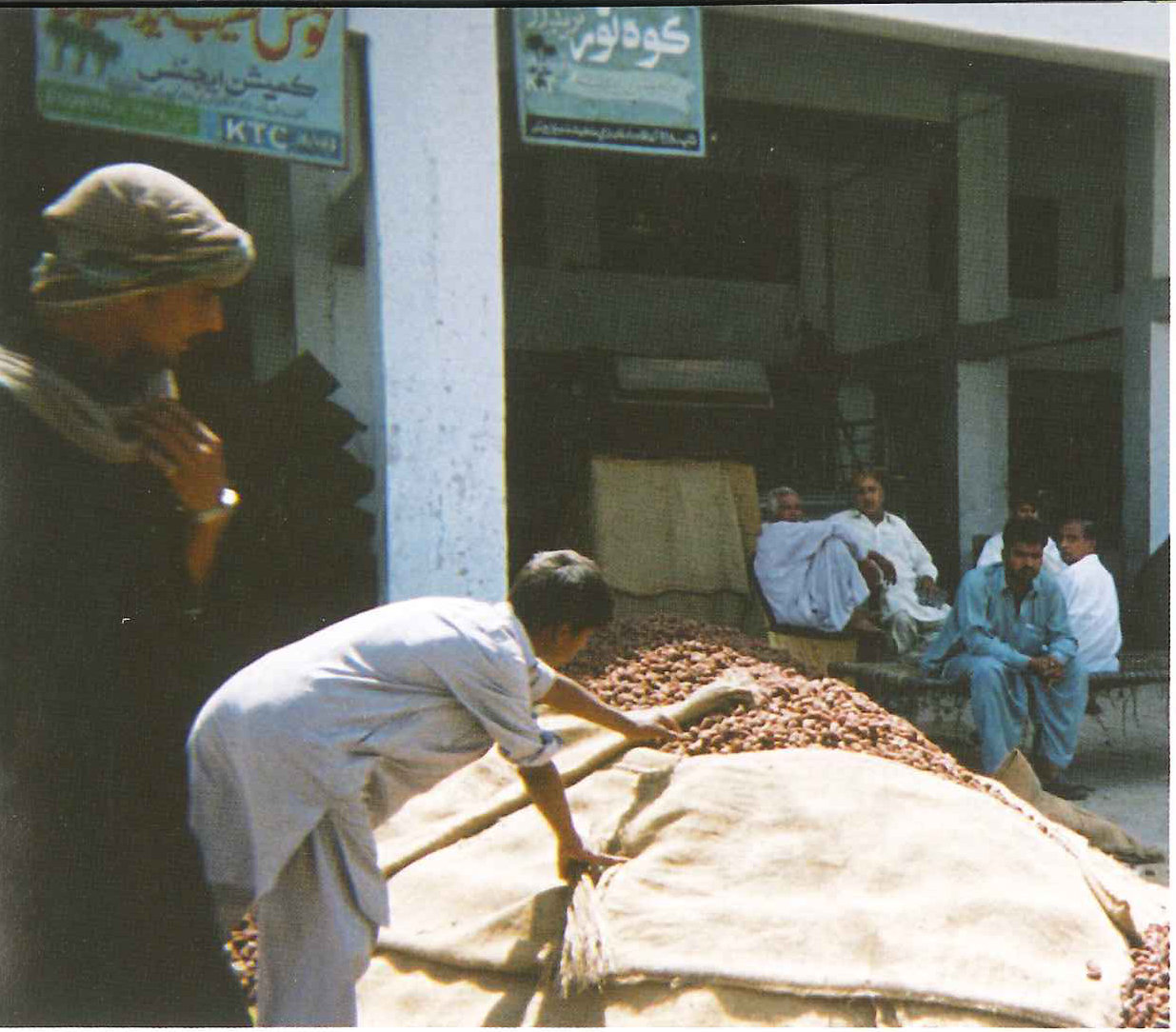
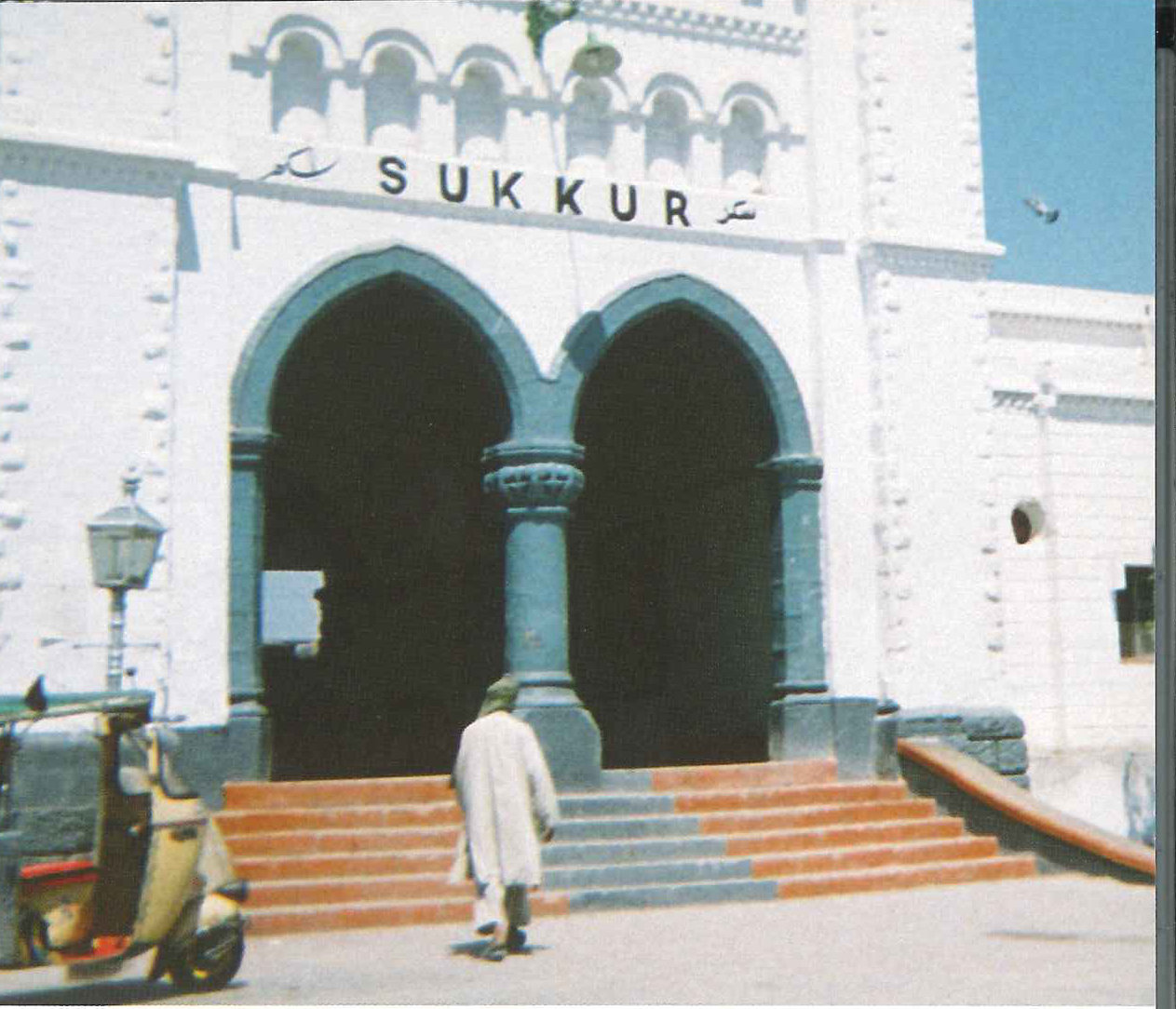
It was a common knowledge that Islamic “terrorists,” Taliban and Lashkar-e-Tabia, were mainly populated by disaffected youth who had their training in Madrassa schools described as “Terrorist Factories” by many. How did one distinguish the followers of dogma from faith? Can dogma be also faith? It was difficult enough to discern this honesty in oneself and in one’s own faith, judging others seemed to me unattainable. This rational but inexplicable distrust of others bothered me. How presumptuous to have cast myself as a hostage?
The underlying question that bothered me for long was who were then “my people”? — Hindus, Muslims, Sindhis, Punjabis, Indians, Pakistanis, Canadians… Had I stayed home in Delhi and married a girl from the same caste and of Sindhi origins, things were still not likely to be different. I would have still been unsure of the stranger with whom I was travelling. The question about my identity and that of my people had always been ambiguous. Without a land-based culture for Hindu Sindhis, the Partition had mercilessly fractured that notion of certainty about my anchor in a place and time, making me forever cautious and quieter. These Muslim young men could have been just devout believers, I didn’t think I would have hesitated in the same way if I had a similar encounter with either Hindu or Christian youths. I wondered if this incapacity for reaching out said a lot about me or was it about human condition in general in the year 2006?
The Karokaram Express chugged along towards Lahore. The morning sunshine penetrating through the fog, its brilliant rays gradually burnt the mist away revealing the ripe bushels of wheat. The train was passing by a small station called Kot Radha Kishan. Radha and Kishan were two names of a revered Hindu God and his consort female deity. I had read in one of the guidebooks on Lahore that there was a square named after Hindu Goddess of wealth and prosperity Laxmi. The square in the old part of the city was called Laxmi Chowk.
On the Indian side of the border, the general view was that in Pakistan all places with Hindu names had been changed to Muslim ones. Kot Radha Kishan. This would be another stereotype broken when I would tell friends and relatives in Canada and India of a town with such a pious name. My destination was still an hour from Kot Radha Kishan.
At Lahore Junction as I stepped down from the train, I saw the youth who had slept across the berth in my cabin waving at me from the train window. Cheerfully he shouted, “Allah Hafiz!!” I was a bit taken aback by his warm good bye. Without any eye contact, I feebly lifted my left hand, mumbling “Khuda Hafiz” in response. Blending hurriedly into the crowd on the platform, I walked towards the exit gate to the city. I wished I had the nerve to have talked to those Muslim youths.
View the original scanned pages →
Originally published in bout de papier, Vol. 25, No. 1 (2010) — Spring 2010 // Printemps 2010, pp. 34–37. Read the rest of this issue →



