
bout de papier, Vol. 12, No. 4 (1995-1996) — Winter 1995–96 // Hiver 1995-1996, pp. 12–14
A Canadian peacekeeper recounts his seven months in the firing line near Sarajevo.
The news that our Regiment, the Royal Canadian Dragoons, was off to the former Yugoslavia for six months was welcome and exciting. The trip would be long: 36 hours from Petawawa to Split, Croatia, then an 8-10 hour trip inland by bus and truck over the rugged terrain of the Dalmatian Mountains to Camp Visoko on the edge of the 20 km exclusion zone around Sarajevo.
Arriving after nightfall, we were tired and disoriented. After a short welcoming speech and a briefing on the rules of the camp, we shouldered our rucksacks and duffle bags and moved off to find our tents. These we found in a huge old concrete warehouse known as the “Big Four”.. The bare concrete building housed row upon row of long, canvas modular tents, home to ip to so soldiers.
Once settled, we made a quick tour of our temporary home. We were amazed at the size of the camp and its tight security. It was encircled by a 10 foot wall topped with many rows of concertina razor wire laced with trip flares. The wall was punctuated with elevated observation posts, armed and protected by sandbags, looking very much like prison guard towers. After the tour, we were issued our weapons and 150 rounds of ammunition and sent off to bed.
I was assigned to B Squadron. We assumed control of an area some 40-50 km2 around the camp and the town of Visoko. The town was in Muslim (BIH) held territory and was about I km from the confrontation line with the Bosnian Serbs (BAA). Our tasks included security of the camp, monitoring the confrontation line between the BIH and BAA forces, escorting UN and UNHCR convoys of food and other supplies, and liaising with local military and civilian authorities.
Within two weeks we had completed the handover with the outgoing unit and had established a regular routine. At first the local soldiers took every opportunity to test us, usually by firing their weapons close enough so that we would react like “newbies”. Even though we quickly became accustomed to these games, they were always a cause for concern since the local soldiers were often drunk.
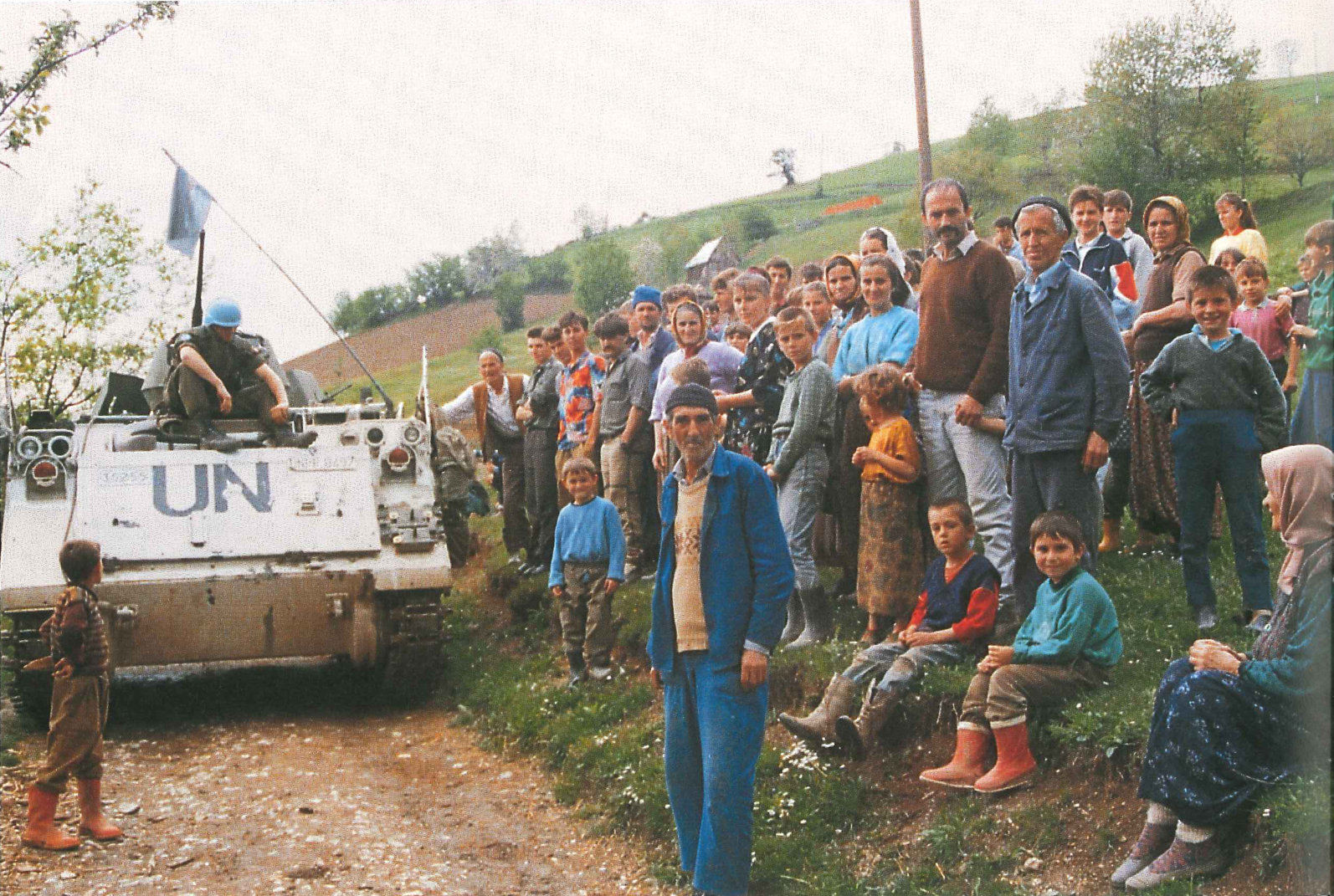
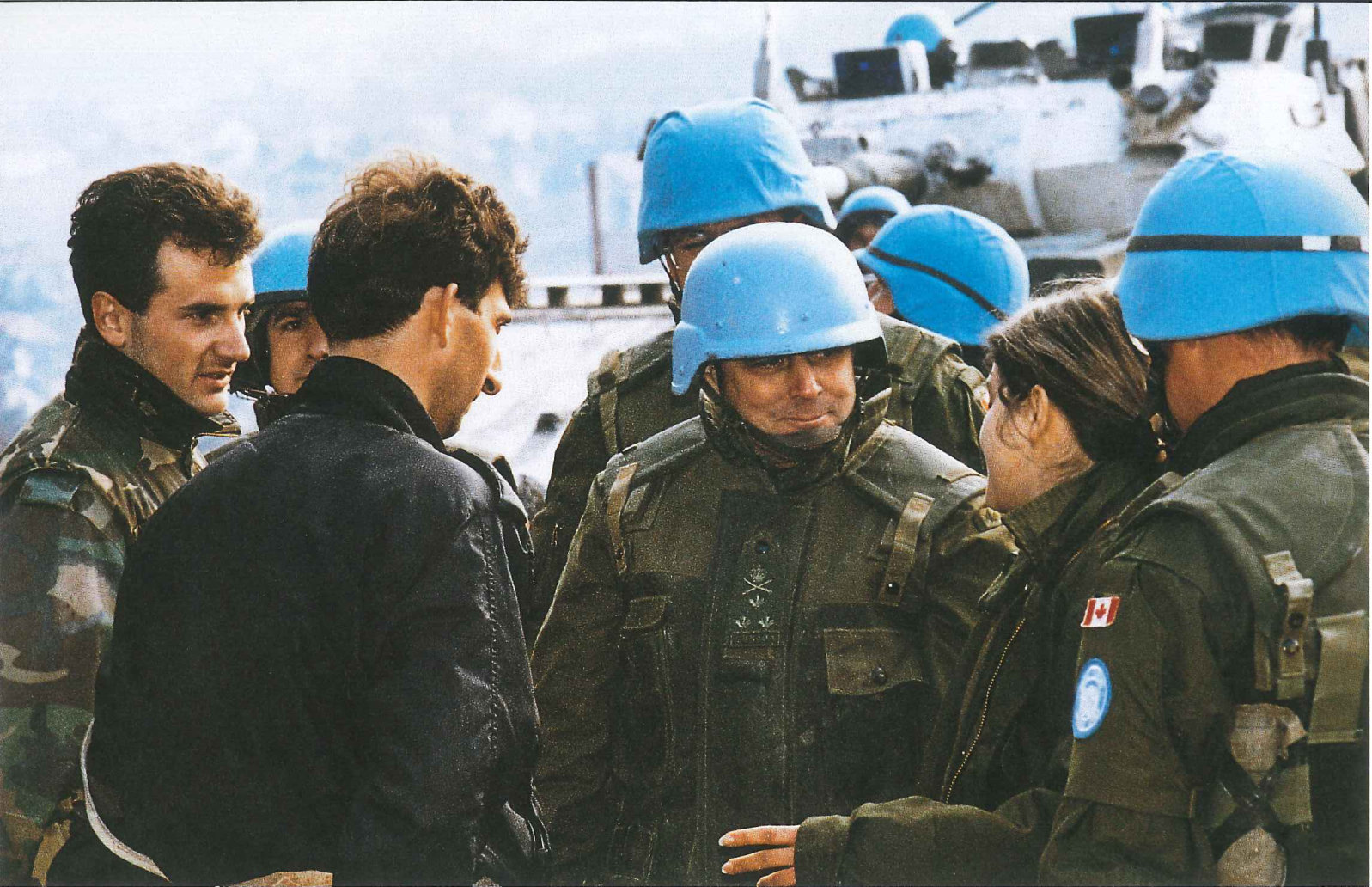
Our days soon revolved around routine tasks, interrupted periodically with sudden excitement. To avoid boredom, tasks were rotated weekly. For me and my squadron, this meant camp security for the first week, monitoring the confrontation line in the second and, in the third, a series of “UN presence” tasks, such as vehicle patrols or placing our soldiers in civilian buildings such as schools or hospitals to prevent shelling. The daily grind easily became tedious, but there was little to do in our spare time, since we were confined to camp. There was a gym, TVs, VCRs, and a library stocked with donations from home, but after awhile these simply became part of the routine.
For the individual soldier, camp security was the toughest duty. Shifts were 12 hours on and 12 hours off with some 24 hour periods off once in awhile. Most of the shift was spent sitting in a well-protected observation post on the camp perimeter with a partner. Anytime there was shooting or shelling the incident had to be reported by radio to the command post. Events of this sort were so frequent that we sent in compiled reports every hour, rather than calling in every time they happened.
Our preferred task was monitoring the confrontation line. At these observation posts (OP), if and when soldiers had spare time, it was away from the watchful eyes of the HQ element. Normally, a sergeant would command an OP and he would have six to nine soldiers with him for a 24 hour period. The main task was to watch both sides, so we could identify who fired and where the round landed. While it might sound simple, it was often difficult to see through the fog and smoke, and the terrain naturally lent itself to easy concealment. We sometimes found it hard to call ourselves peacekeepers while counting the large numbers of rounds fired back and forth (even during the Jimmy Carter Cease Fire Agreement, there was rarely a day without shots).
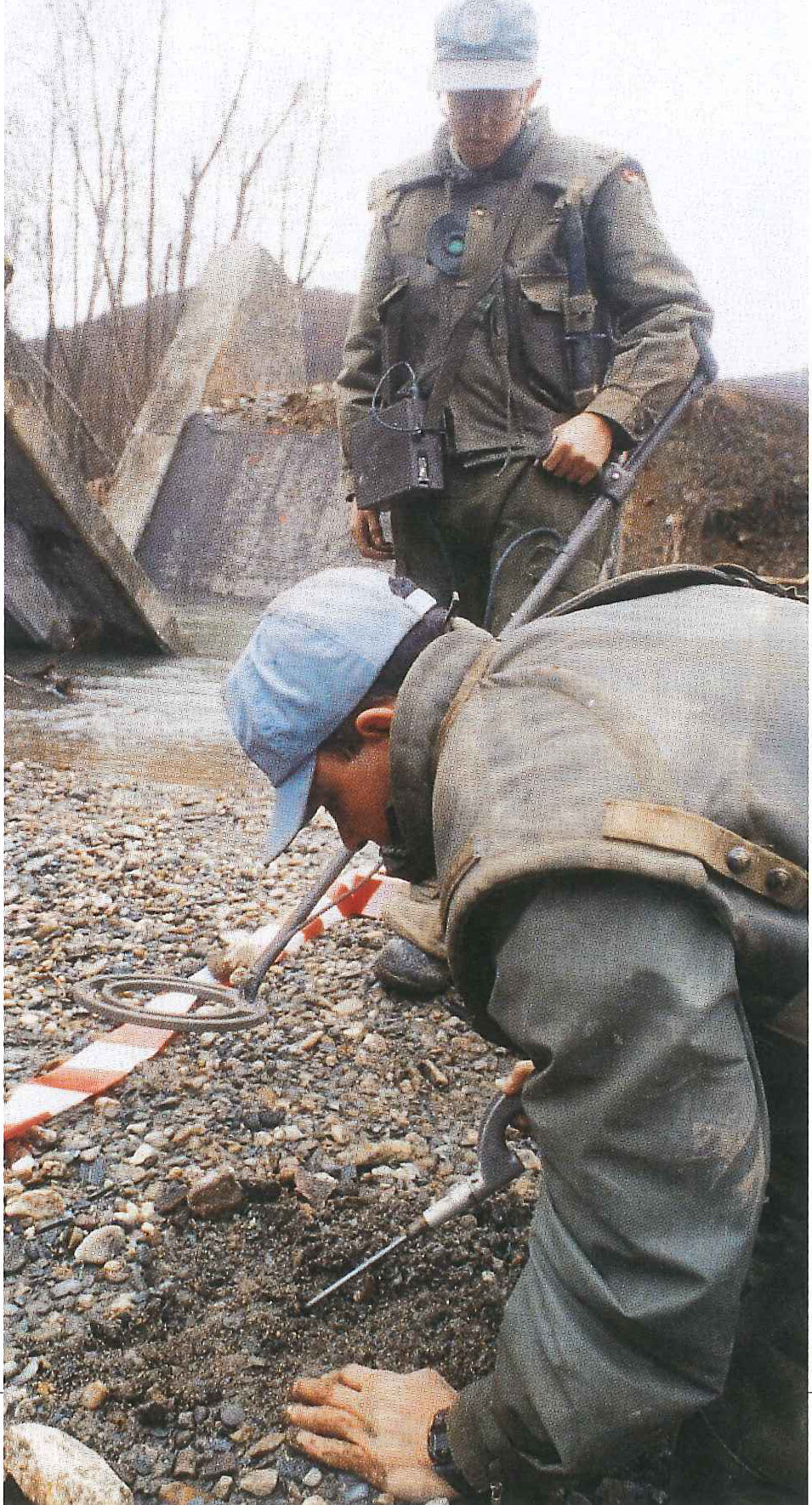
In addition to these standard tasks, our liaison officers often found projects for which we could volunteer. For example, when the war passed through the area of Drin and Bakovici, much of the staff at the local hospitals fled. On arriving, the first Canadian units found dead and dying patients everywhere and many more living in abominable hygiene conditions with urine and feces everywhere. While not in our mandate, Canadian soldiers cleaned up the hospitals and helped care for mentally handicapped patients and others in desperate need until our liaison officers could get the nurses to return. By the time our unit arrived, the hospitals were in comparatively good shape but still needed a great deal of assistance. We cleared the area of mines, chopped firewood, and brought extra food and first aid supplies. Some soldiers even called home to get their families to arrange clothing drives for much needed items like footwear and jackets.
We also helped the schools. One of the tactics used by local soldiers to avoid being shelled was to locate their headquarters in schools. Normally the schools were shelled anyway. We would negotiate with both sides to remove the soldiers from the school and remove the school from the target list. To reinforce the agreement, we would then place our soldiers in the school in a visible location. Kulin Ban School in Visoko was the first school that our unit assisted. We found it in bad shape: it had been shelled and was in no condition for children to attend. Our soldiers helped repair the building as much as possible using the few materials available, using plastic to seal windows and sandbags to rebuild and fortify walls. We arranged for coal to heat the building and our engineers did their best to fix the electricity and plumbing.
Organized around our regular tasks, our work in schools and hospitals kept us busy but was much more rewarding than watching the two sides shoot at one another when we thought they were supposed to be attempting peace.
Christmas was a difficult time for many of our soldiers, especially those with families. The Regiment tried to send home as many married soldiers with children as possible without affecting our operational capabilities. Still, there were about 700 of us in Bosnia for Christmas 1994. We celebrated over three days so that we could rotate all our soldiers off the front line for Christmas dinner: several funny skits and of course a visit from Santa Claus. Many Canadian children sent us postcards and Christmas cards through programmes run by their schools. We replied to as many as we could to show our appreciation for their support, sparking more than a few pen pal relationships.
After seven months, just as things were starting to heat up again, it was time to go home. We left in May 1995, leaving behind many friends, some in the unit that replaced us, some from other peacekeeping contingents from countries like Britain and New Zealand.
I look back now, not even six months later, and I am glad we left when we did. At the same time, I think about the soldiers there now and what they are going through. I see the reports on the news and reports sent back through Army Headquarters. There are times when I wish we were there to help out, and times when I wish we could just bring our soldiers home until there is a peace to keep. But I know that we are excellent soldiers, and we make outstanding peacekeepers. We will stay there as long as there is a need for us.
View the original scanned pages →
Originally published in bout de papier, Vol. 12, No. 4 (1995-1996) — Winter 1995–96 // Hiver 1995-1996, pp. 12–14. Read the rest of this issue →



