
bout de papier, Vol. 12, No. 3 (1995) — Fall 1995 // Automne 1995, pp. 45–48
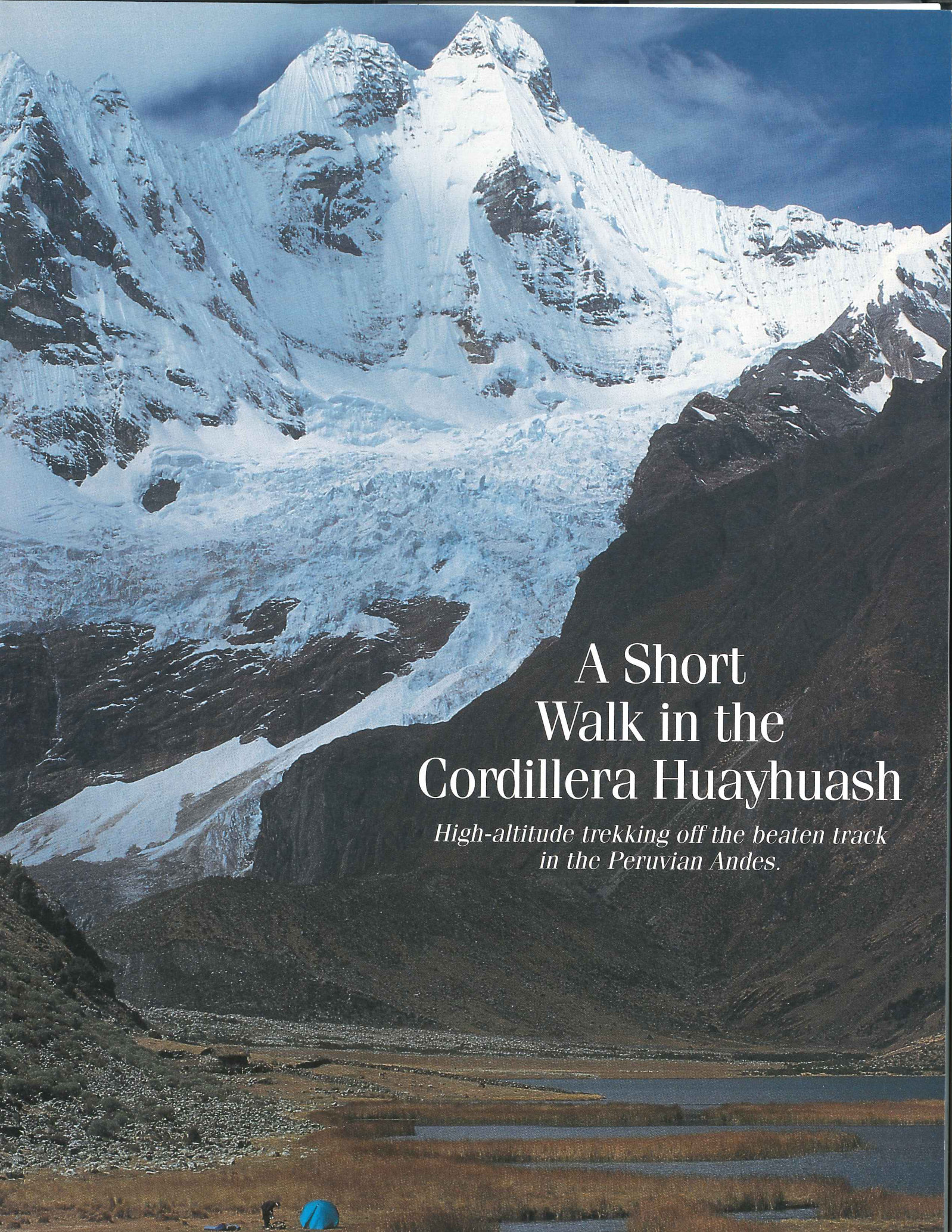
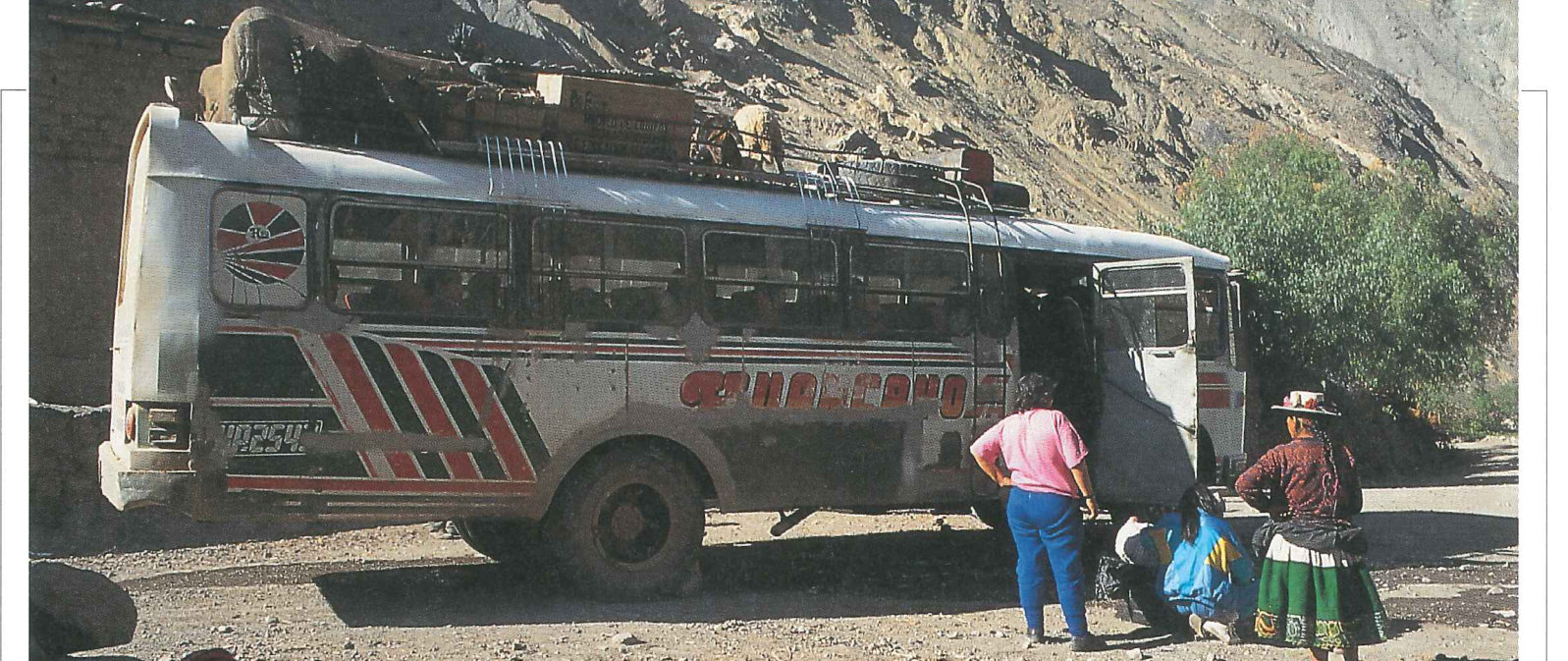
Two hundred and fifty kilometres north of Lima, the Cordillera Huayhuash (pronounced Way-Wash) is a remote corner of the Andes that contains some of the most spectacular peaks on the continent. Long a mecca for European climbers in the Southern winter (when skies are clear), it has been off-limits for some years because of Sendero
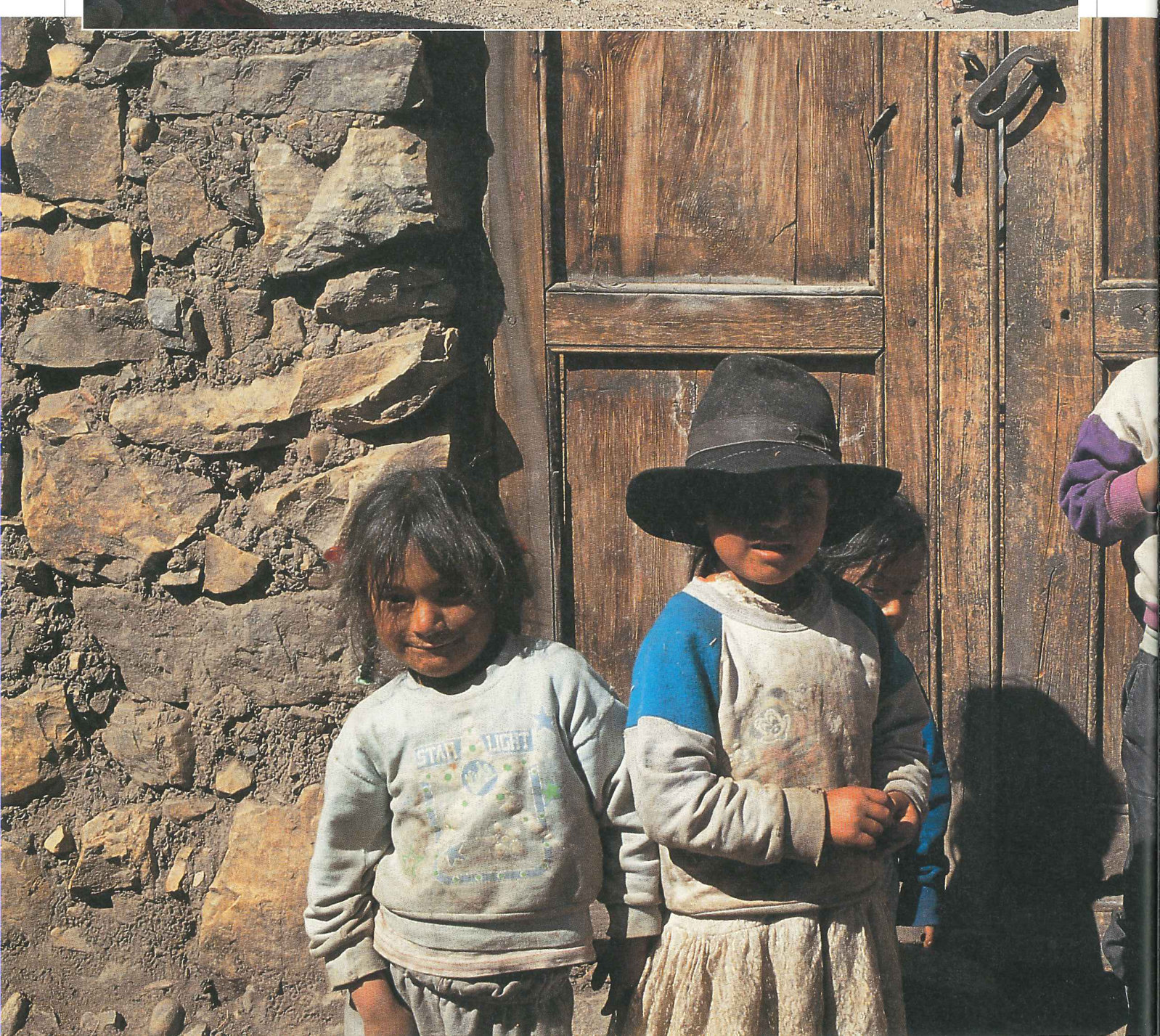
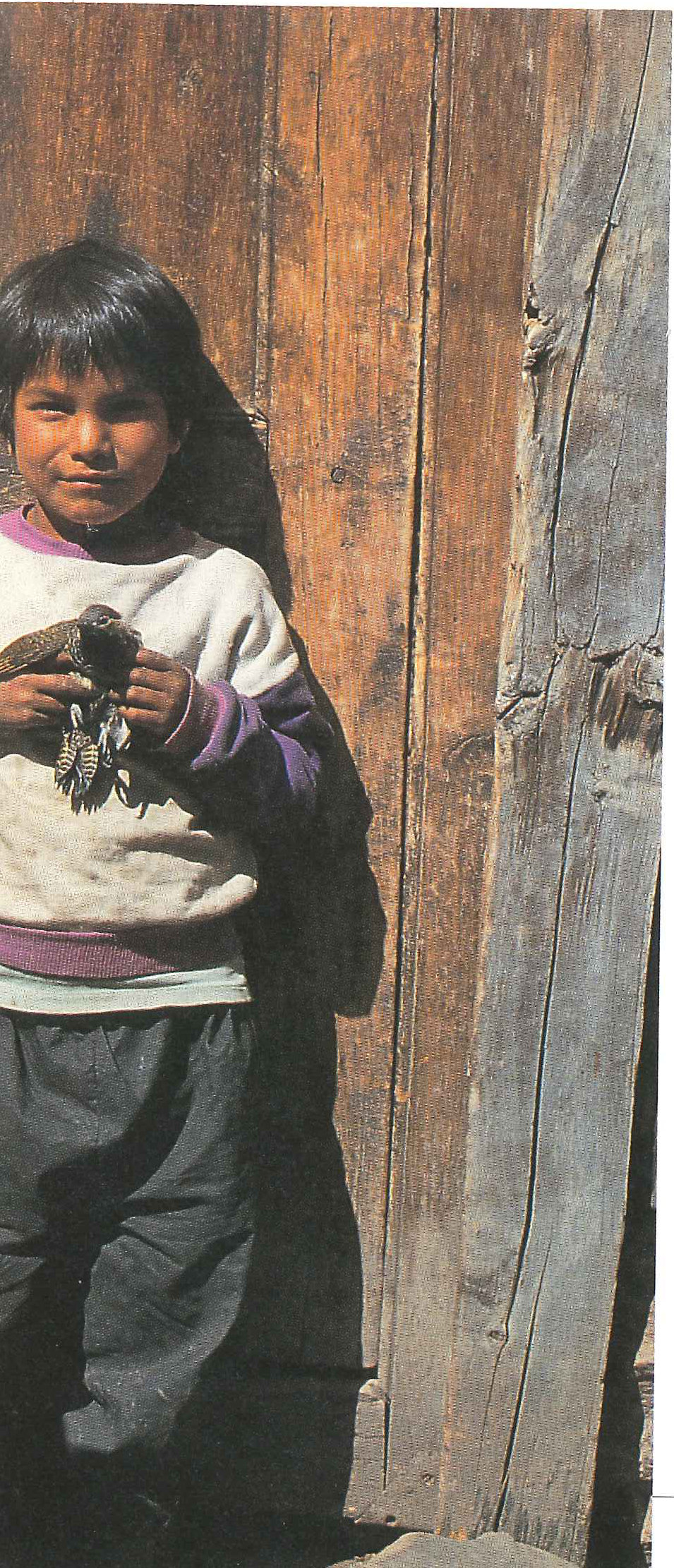
Two small girls and boy with woodpecker — Llamac. declared that this sector of Ancash Department was no longer categorized as a “Red Zone” and that it was therefore once again open to visitors.
My wife Jenny and I knew we had packed too much when we had to hire two taxis just to get from our Lima hotel to the bus station one July morning. The owner of the Pensión San Miguel in the hill town of Chiquián (grandly known as “Gateway to the Huayhuash”) confirmed our doubts when she advised us against taking our packs upstairs — “because the floor isn’t very strong”. But, we thought, we were fit and we’d have no problem with the heavy loads — after all, we’d been jogging most days for the last few months at the high altitude of Mexico City.
Next morning, equipped with a sketchy map, a fifteen-year-old trail description and three contradictory sets of advice from helpful locals, we were off — 600 metres down to the river bed and an eight-hour hike to the village of Llamac, which would be the last “civilization” we’d see for nine days. Resting in Llamac we found, hidden in the small print on the map, an intriguing but less-than-satisfying explanation of the word Huayhuash: “the quechua name for the humpbacked animal whose silhouette the Cordillera resembles”
We needn’t have worried about the Huayhuash being overrun with gringos — we didn’t see another foreigner during our entire trek — but it was nevertheless obvious that white men had been this way before. Ninety per cent of our conversations with locals were variations upon the following:
• ¿De donde vienen?
• Canadá.
• ¿Caramelos?
• No tenemos.
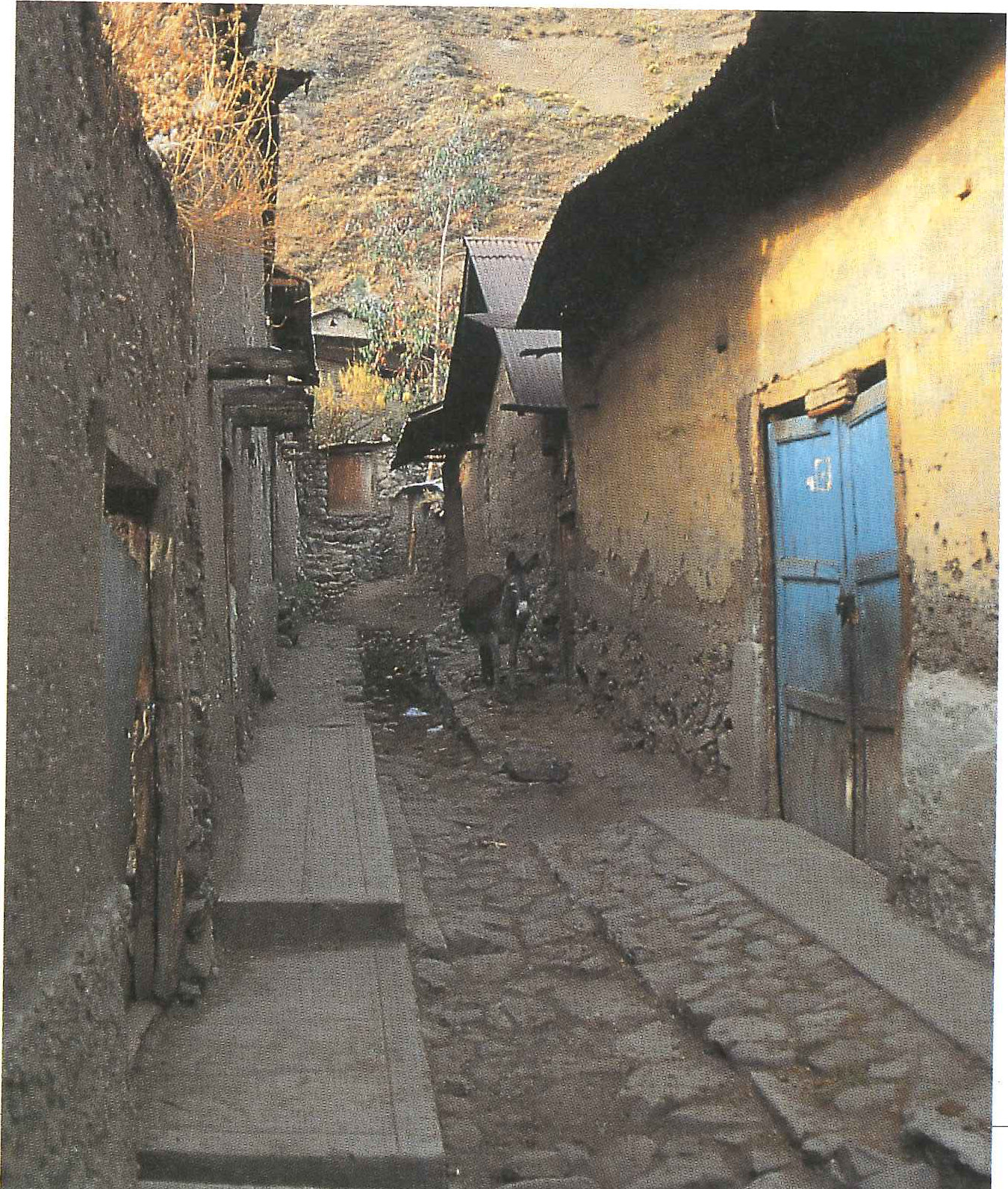
Jenny had been hopeful of buying a last “Cristal” beer in Llamac, but it was not to be. The entire village had locked up its doors and gone to have a volleyball tournament on the field by the river. Virtually every Peruvian we met in three weeks in the country told us, unsolicited and perhaps lest we were scornful of Peru’s failure to qualify for the World Cup, that Peru had the best women’s volleyball team in the world. Such was the enthusiasm of the villagers for the sport that the only people we could find were two small girls (presumably rejects from the under-6 team) and a boy with a tame woodpecker.
At Llamac there began a daily pattern that put our physical fitness severely to the test: steep ascents to passes of at least 4500 metres in altitude followed by equally steep and knee-wrecking descents to our campsites. I could never get used to these ascents: the jogging in Mexico City had been to no avail. An indigenous shepherd woman described one particularly arduous climb of 1300 metres as “triste”, and this was an apt description of our mornings — typically, I would collapse at the top of each pass feeling sick, with a headache and tingling feet and hands (all classic symptoms of altitude sickness). Jenny, annoyingly, suffered from no such problems and, as I lay comatose, would enthuse over the admittedly remarkable views or point out condors and other rare forms of wildlife (but no huayhuashes).
Gradually, as we ate our food supplies and consumed kerosene, the weight of our packs diminished and our leg-muscles hardened. But every day it seemed harder to cram everything in. Jenny ended up hanging so many items to the outside of her pack with bootlaces that I christened her “the walking brothel” (it doesn’t sound as bad in Spanish …).
Typically, we camped on the shores of bright turquoise “cochas” — lakes formed by glacier meltwater — at the foot of astounding snow and ice walls that, as the sun set, would change from dazzling white to orange, pink and, finally, a ghostly grey against the night sky. When, at around 4:30, the sun sank behind the high peaks to the west, the temperature would drop within a few minutes from 10 or 15 celsius to below freezing. On two nights it snowed and we glumly sat in the dark, watching the snow-flakes settle on our meagre portions of soy meat.
Ninety kilometres out, near Mitacocha Lake, we came across a small adobe shack. Today was the date of the World Cup finals in the USA. “Who’s playing?” “, we asked of the friendly family who lived here. Sweden and Germany, we were assured (incorrectly, it turned out), but did we have any batteries for their radio, which had just given out? Unfortunately we didn’t, but we made everybody happy by donating ten matches and buying a couple of litres of fresh milk, some cheese and some potatoes. Antonio – the man of the family — came down later to our campsite and caught a pair of rainbow trout for us. When we settled our account at the end of our stay, Antonio took the change from a dried-up cow’s udder.
The family owned a cat called Pedro and four sheepdogs, one of which, with the odd name of Mauser, bit me in the ankle. I asked how the unpleasant Mauser had got his name, but nobody really seemed to know. Antonio joked nervously that it was probably a corruption of “Mao-Tse-Tung” — not the kind of joke we were keen to hear in Sendero Luminoso territory. One of the other dogs was always asleep, and never seemed to do any work. Antonio said he was very old but the family loved him more than any of the other dogs: once when Antonio and his three brothers had been up on the glacier at 6000 metres retrieving climbing ropes, this dog had saved them all by physically pushing them out of the path of an imminent avalanche that only he (the dog) had sensed.
For the last two days of our expedition, we hurried along. This, we were told, was the heart of Senderista territory, and the fresh graffiti on a ruined building seemed to indicate that the Government’s declaration that the area was now “clear” may have been premature. Finally, after 160 kilometres, back to civilization and a Cristal at the village of Cajatambo. But the warm shower was not to be. Jenny’s scream as the glacial water of the Residencial Miranda hit her could be heard half way around the Cordillera….
Nicholas Coghlan is head of the Mexico Section of the Mexico and South America Relations Division of DFAIT. He remains distrustful of all Peruvian dogs. Tel Junior College vitzerland el Junior College is a small, nal school with a large vision. lents in their final year or semester school for the demands and ie of university and their career.
View the original scanned pages →
Originally published in bout de papier, Vol. 12, No. 3 (1995) — Fall 1995 // Automne 1995, pp. 45–48. Read the rest of this issue →



