
bout de papier, Vol. 11, No. 2 (1994) — Summer 1994 // Été 1994, pp. 20–23
The ever-changing military geography of a stretch of road on the east-coast of Sri Lanka is symbolic of the changes in the country and the fortunes of a Canadian aid project.
The road from Polonnaruwa through
Batticaloa district to the east coast of Sri Lanka is only about 50 km long and for the most part crosses an uninspiring countryside of low scrub forest. In “normal” times it is a section of road for package-tourists to doze through on their cross-country coach trip from Colombo to the resorts of Kalkudah Bay — waking only to disembark at the “Sun & Fun Hotel” (and hoping that the establishment lived up to its name).
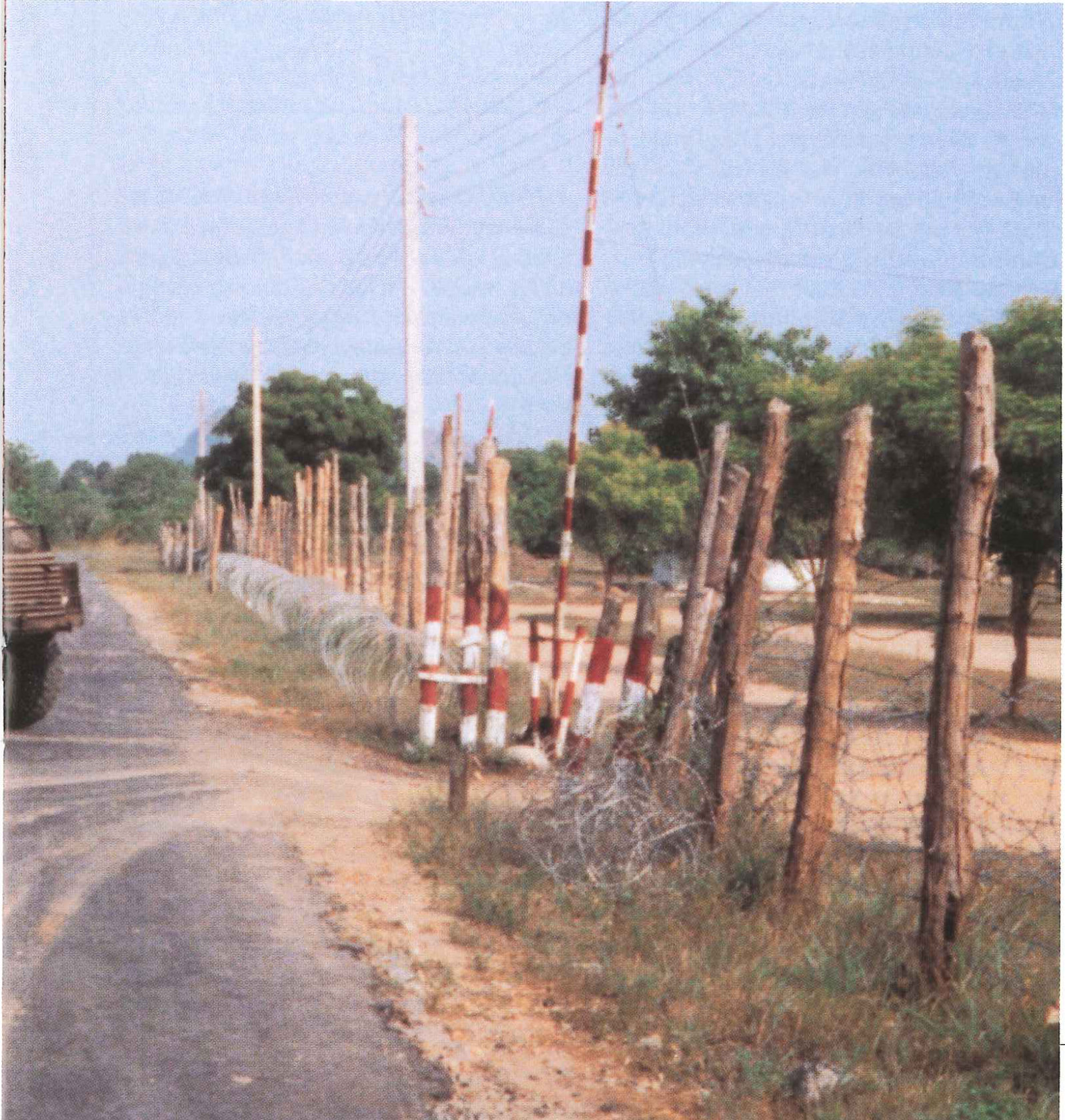
“Normal” times ended in 1985 when Eelam War I reached the East coast. Package tourists are a distant memory, the hotels now looted ruins, and the road is no longer one to sleep through. In the ongoing war between the Sri Lankan army and the LTTE (Liberation Tigers of Tamil Eelam) the route’s strategic importance ensures a depressing but fascinating military scenery of fortified camps, mobile patrols and, most memorable of all, roadblocks.
The Indo-Lankan Accord of July 1987 established a framework for peace between the Sri Lankan government and the (many) Tamil guerrilla movements fighting for an independent Tamil homeland (Eelam). It also established the Indian Peace-Keeping Force (IPKF) which effectively asserted military control over the disputed Northern and Eastern Provinces of Sri Lanka. Soon after the Accord, the Canadian government joined with other donors in committing several million dollars to the reconstruction of the war-ravaged north and east of Sri Lanka. In early 1989 the World University Service of Canada (WUSC) began the detailed planning of the first CIDA bilateral project in response to the Sri Lankan reconstruction initiative.
As the Sri Lanka Field Director for WUSC, I had to travel those 50 km to and from the coast of Batticaloa many times. The ever-changing socio-military geography of this stretch of road will, for me, always remain symbolic of the changing fortunes of our project and of the country.
September 1989 — Oh no! It’s a Gurkha A few miles from the coast, an Indian Army Gurkha Regiment “kept the peace.” The roadblocks and checkpoints either side of the Valaichenai Bridge were always Gurkha-manned and this meant serious delays. The Gurkhas always lived up to their reputation for professionalism, while seldom tempering their military efficiency with a sense of humour. My passport was poured over, permits were double-checked, and the details entered into the ubiquitous register and then, most dreaded of all, the radio-call made to the Duty-Officer.
If I were lucky the Duty-Officer, interpreting his title loosely, was in the Mess with his mates and (eventually) communicated the nod to let me across the bridge. Too often I was out of luck, the officer was indeed on-duty, inevitably bored and (my worst nightmare) a graduate from some Commonwealth Military Training Institution where he was good friends with a Canadian army captain whom I “must know.” The latter scenario meant being “invited” to join the officer for tea and a chat. A chat that quickly overcame the absence of a shared acquaintance for subject matter. However it rarely touched the subject of the security situation – which would have been about the only way I could justify sitting inside a mined, sand-bagged and razor-wired perimeter sipping Indian-Army issued Darjeeling.
Not all roadblocks were manned by “Jawans” (the G. Is or “Grunts” of the Indian Army) as educated as the Gurkhas. This was the case in early October at the Punani railway station roadblock. The soldiers appeared to check my documents quite thoroughly, but when they turned the register around for me to complete myself I began to doubt their command of English. Scanning up the page to see who’d preceded me through that day, I noted that both Minnie Mouse and Sylvester Stallone had been travelling with a British charitable organisation – doubts confirmed!
By March 1989 WUSC had begun planning what was to become the three-year Cdn $3.8m “Project for Rehabilitation through Education and Training”. The project, entirely funded by the Canadian government, intended to provide basic vocational training and income-generation opportunities to up to 4,000 women and youth who had been most affected (for example widows and orphans) by the fighting in Sri Lanka’s Eastern Province.
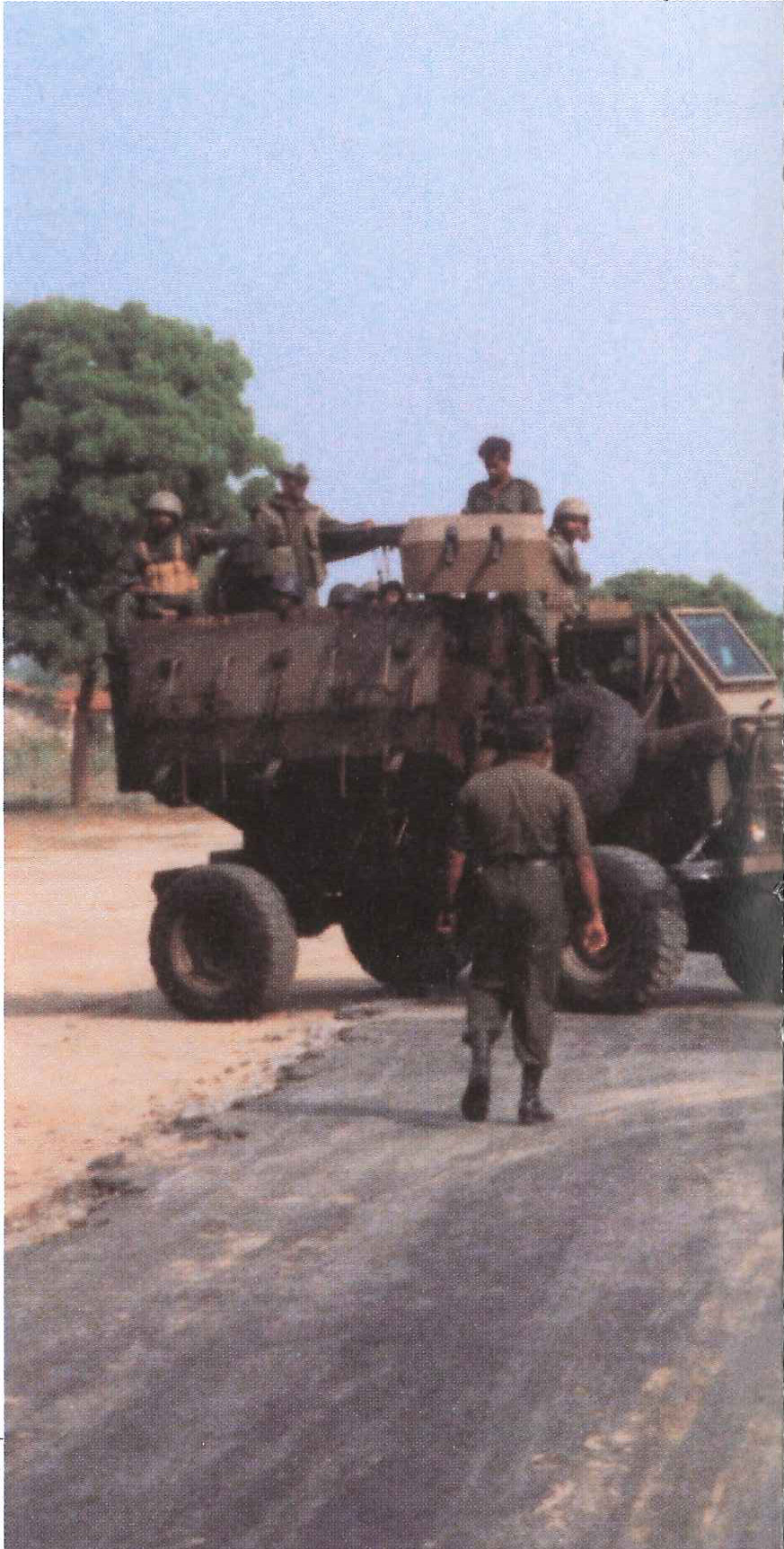
It is a province politically characterised by its potentially explosive mix of Tamil, Sinhalese and Muslim populations, mainly concentrated in small ethnically-homogeneous administrative Divisions. In 1989 the province could also have been described as an area effectively “occupied” by the Indian Peace-Keeping Force. A force that at its height numbered more than 50,000 troops – a greater number than the entire Sri Lankan Army. Such a huge military presence was a fair indication that, after the Tamel Tigers had withdrawn their support to the 1987 Accord, the Force’s title became a misnomer and, at best, the Indian troops were having to “enforce” the peace. The few thousand well-trained, well-armed and fanatically-dedicated Tamel Tigers based in their jungle strongholds were waging a guerilla war on their own terms. A war not only against the Sri Lankan government and the other Tamil militant groups, but also against the Indian Peace-Keeping Forece itself.
Consequently, although “developmental” reasons led WUSC to design a project that worked with existing training structures (secondary schools, vocational training institutes) and with local NGOs, it was pragmatic political reasons that required a project operating primarily at the Divisional level with activities (and staff) being seen to reflect the ethnic balance of the region, and equally practical security reasons that dictated short-term, small-scale activities with limited investment in infrastructure. The result was a programme to establish many small-scale, short-term training courses (such as small motor repair, bus driving, stenography, weaving) and income-generation projects (grants and revolving-loans for such things as agricultural production, brick-making, lagoon- and sea-fishing) throughout the region. Despite the flexibility afforded by the “small sub-project” delivery strategy, the basic premise for the project’s success was that sufficient “peace” would prevail in most of the province, most of the time. This premise began to look decidedly shaky when in July 1989 the Indian Government announced its intention to accede to Sri Lanka’s request to “deinduct” the Indian Forces.
Therefore, it was not with much optimism that, in September 1989, WUSC moved from the planning to implementation stage of the project.
December 1989 – TNA Surprise By far the most frightening kind of roadblock is the invisible one that serves the dual purpose of being an ambush site. Fortunately I only ever encountered one of these. In December 1989, less than 3 km from the coast, and about 100 yds in front of my truck, five armed men ran into the road and pointed their weapons in my general direction. I had no idea a vehicle could stop so fast or that a heart could beat so loudly. Two of the “soldiers” slowly approached the vehicle and after an hour (well it seemed that long) I removed my hand from the steering wheel and wound down the window. Much to my surprise I managed to complain about the absence of a proper roadblock. The leader (all of 19 years old and identified by the Che Guevara style hat) informed me that they were expecting to ambush the “Ceylon Army,” that roadblocks were a bit of a giveaway, and that I shouldn’t be on the road. I apologised.
This motley crew was a platoon of the Tamil National Army (TNA), a hurriedly-formed amalgamation of various Tamil guerrilla groups aligned against the Tamel Tigers. It had received some arms and training from the Indian Peace-Keeping Force and inherited the IPKF’s camps when they started their district-by-district withdrawal from eastern Sri Lanka in October 1989. In the wake of the pullout the Tamel Tigers launched devastating attacks on the TNA, an army which proved to be not the most committed of forces. The cadres I met on the Batticaloa road were among the remnants that had not yet fled to Trincomalee district, where the IPKF remained in control until March 1990.
In October 1989, less than two months into the implementation phase, WUSC suspended all project activities pending the outcome of the TNA-Tamel Tigers fighting.
February 1990 — Welcome to Eelam! The Punani railway station roadblock in April 1990 was a distant cry from that which had seen the likes of Minnie Mouse and Sylvester Stallone six months earlier. For one thing it was now in the hands of the Tamel Tigers. Punani was on the “border” between the areas under Sri Lankan government control and those where the Tamel Tigers ran the show (and were anxious to publicise it). Travelling from the west, for several hundred yards bright professionally painted signs announced that you were approaching the checkpoint. The Tamel Tigers had rebuilt and redecorated the camp. They seemed to take an aesthetic interest in their military architecture, and this made the journey to the coast a little more pleasurable. Bunkers housing high-calibre machine guns somehow did not seem as threatening when covered in manicured grass and flower beds and decorated with borders of white-painted stones.
Public relations were also a bit different, young (i.e. around 15 years old), well-trained cadres in their characteristic “tiger-stripe” camouflage politely checked papers with a slight deal more good cheer than their IPKF and TNA predecessors. The atmosphere was almost relaxed! They were definitely into hearts-and-minds stuff these Tigers. At the Punani camp, over tea (this time Tiger-issue Ceylon), I received the first of many assurances from a senior cadre that the Tamel Tigers fully-supported WUSC activities in vocational training and income-generating. Assurances inevitably followed by recommendations as to particularly needy villages requiring training centres (by coincidence usually in particularly strategic locations), and as to suitable income-generation projects (“boot-polish making” and “uniform-dying” were deemed to have good market potential). It was always slightly surreal discussing the finer points of implementing a vocational training programme with these guerrilla fighters recently in from the bush.
It is hard to imagine stranger bedfellows than the Tamel Tigers and the Government of Sri Lanka. Yet for several months in 1989 and early 1990 there were Colombo-based talks between the two, with the one common denominator being their mutual desire for the Indian Peace-Keeping Force to leave the island. After the Indian forces left Batticaloa district in November 1989 and the subsequent routing of the TNA by the Tamel Tigers, there was a period of relative stability in this part of our project area. For the first time since arriving in Sri Lanka we had access to the interior areas that had always been deemed operational by the Indians. The fact that this stability was achieved under Tamel Tigers military-rule was irrelevant to the project as long as the Tamel Tigers’s presence was sanctioned by Sri Lankan government (who had confined their troops in the area to barracks and had permitted the disarming of the police).
Relative stability meant that between January and June of 1990 WUSC managed to open local offices, recruit staff and finally begin project activities, while paying very careful attention to ensuring (and publicising) a Tamil-Muslim-Sinhalese balance in both staff and sub-projects. By June, five training courses had been started with just over 70 trainees and a further fifteen projects/ courses were being established. However the level of stability was not sufficient to attract any private investment or permit government infrastructure projects in the area. It soon became evident that most of the WUSC trainees had little prospect of related employment. Furthermore, when the last Indian troopship left Trincomalee at the end of March the common ground between the Tamel Tigers and the Government of Sri Lanka went with it, and even the “relative stability” began to appear a very finite commodity.
November 1990 to November 1992 — Fortified Ruins It was not really so much the roadblocks, now in the hands of the Sri Lankan Army, which commanded attention in November 1990, but the deserted ruins behind, around and between them. Soldiers were the only people to be seen. At Punani, Tamil youths in uniform had been replaced by grim-faced Sinhalese youths in uniform. Many had only a few months training before being sent to the battlefront in this “foreign” district. Document- and vehicle-checking were serious business again. I soon felt myself sinking into despair as the reality of what had occurred over the previous six months hit.
It was the first time since May that I had been able to visit Batticaloa. The journey was probably the saddest and most bewildering that I made during my four years in Sri Lanka: sad because the villages where we had been working just six months before were now deserted ruins; bewildering because I knew that most of the destruction was not the result of bombs and mortars but of systematic looting by “civilians” – by the “ordinary people that our project was trying to help.”
For the next two years my journeys to the coast were marked by a steadily increasing number of roadblocks and fortified camps and a steadily decreasing amount of vegetation on either side of the road as the Sri Lankan Army attempted to minimise the chances of their patrols being ambushed by the LITE.
Not unexpectedly, the fragile peace had collapsed on June 11, 1990 when the Tamel Tigers forcibly took over almost all the police stations in Batticaloa district and killed ten Sri Lankan Army soldiers in a land mine explosion in the town of Kalmunai. After briefly laying siege to several Sri Lankan army camps, the Tamel Tigers retreated to the jungles in the face of the superior conventional forces of the Sri Lankan Army. However what was unexpected was what followed this retreat — the massacre of over a hundred Muslim civilians in a mosque just south of Batticaloa town. A horrific series of reprisal and counter reprisal massacres of Tamils and Muslims followed, hundreds of civilians were killed and within weeks tens of thousands fled to “safer” areas. The houses they left were quickly looted down to their bare masonry.
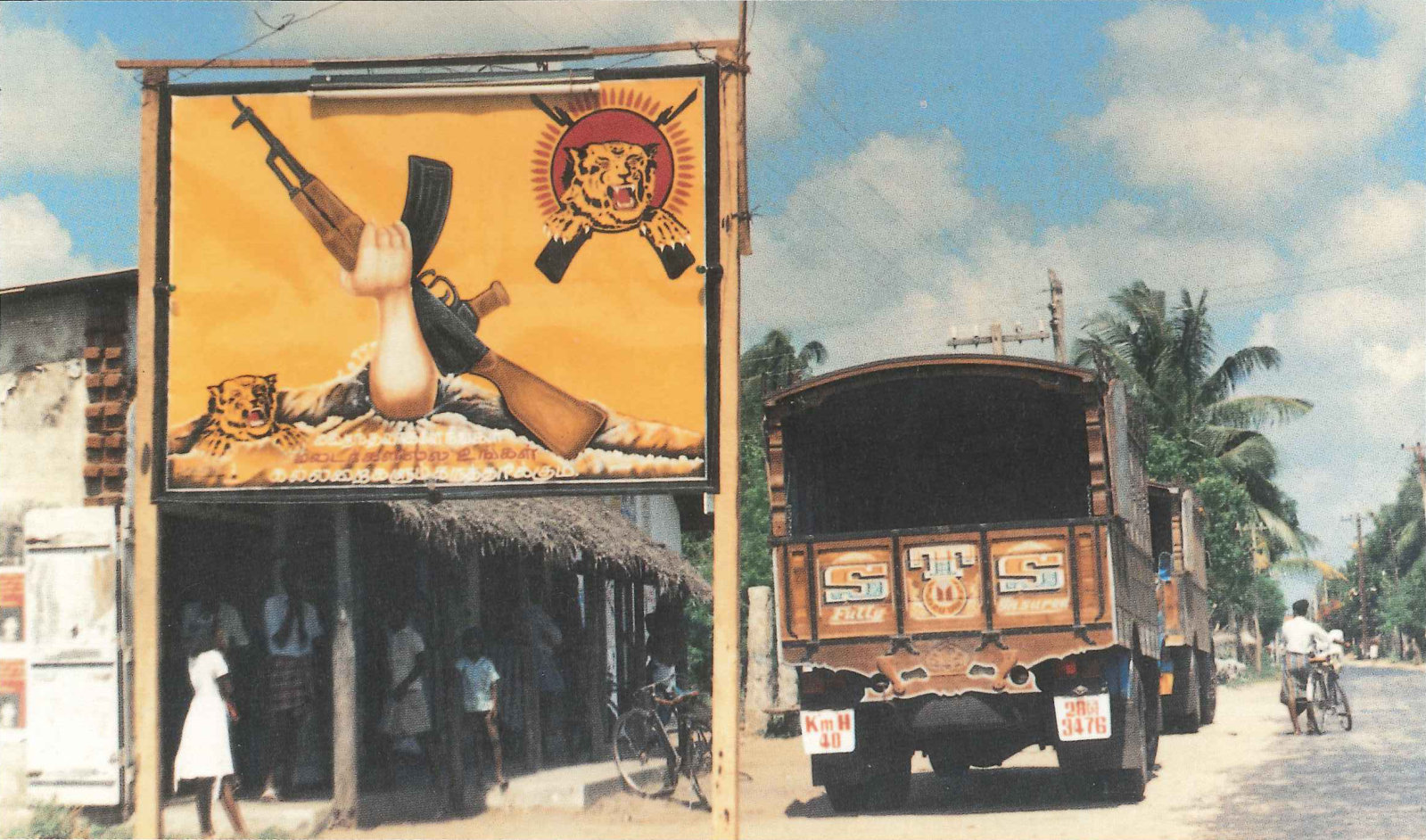
By 1991 the war in the Eastern province had settled into a classic guerrilla confrontation, with the Tamel Tigers holding only a limited amount of territory, moving with seeming impunity in the more remote and jungle areas, carrying out ferociously successful ambushes on foot patrols and occasional hit-and-run raids on army camps. In Batticaloa, the government forces held the main towns and roads during the day, but during the night retreated into their camps and bunkers, hoping vainly that the Tamel Tigers would respect the curfew. In addition, the security situation was further complicated by the mutual fear between Muslims and Tamils that physically and politically polarised the two communities. Thousands of families became internal refugees unable to return to homes and farms deemed too close to settlements of “the other” ethnic group.
In the face of the scale of death and destruction of the first few months of “Eelam War II” (as the press dubbed it), no amount of “flexibility” could keep the WUSC project functioning. Obviously all activities had ceased on June 11th, staff was evacuated and offices closed. During the weeks that followed many trainees disappeared and at least two were killed; in early July, Father Eugene Hebert, an American Jesuit Priest and Director of a Training Institute assisted by the project, disappeared without a trace.
It was not until February 1991 that conditions had improved sufficiently for WUSC to return and start again – for the third time! Although the military situation in the coastal areas was stable, that stability was achieved with thousands of troops annexing schools, libraries, hotels and private residences. As it had been in the time of the IPKF and the Tamel Tigers, the province was yet again under army-occupation. The security situation was far from the “normalcy” the government-controlled press was proclaiming, and it was the security situation that was now the prime determinant of WUSC activities. In an “occupied-territory”, strangers are always subject to suspicion and therefore at risk. Consequently recruitment for new project staff and course instructors was limited to those living in the relevant Division, while trainees were selected from the immediate vicinity of the courses. The location of project activities was limited to areas declared “cleared” by the Sri Lankan Army, while ethnic balance was scrupulously maintained (even if it didn’t make much economic or “developmental” sense such as when the project supported two stenography training courses within three kilometers of each other, one for Muslims and one for Tamils).
December 1992 to ? — No change If this were fiction, I’d definitely end this account with an upbeat section on the “last of the roadblocks”,, and then waffle on about the reopening of the “Sun-as-Fun” as symbolic of the return of peace and prosperity to the east of Sri Lanka. But sadly this is reality. The S&F is still in ruins, and the military camp is still an all-pervasive feature of the road to Batticaloa. The Tamel Tigers are still fighting for Eelam, and the Muslim and Tamil communities of Batticaloa are still deeply distrustful and more than a little scared of each other. While on the prosperity front, private investment in the region is negligible and most of the population still dependent on government “food-stamps”.
However even in reality there is hope, and I am able to end with the hope demonstrated by the way WUS’s Muslim, Tamil and Sinhalese project officers have worked together since the project (finally) got underway in 1991. By the end of 1992 they had succeeded in establishing more than 25 training units that had provided vocational skills to over 800 youths and women. They had supported close to 30 income-generation projects assisting an additional 550 individuals throughout the Eastern province. These figures are indeed testaments to the dedication and bravery of these Sri Lankans who worked across the ethnic boundaries that crisscrossed their project areas, and who encouraged, by example and by their actions, the three communities to work and live together.
View the original scanned pages →
Originally published in bout de papier, Vol. 11, No. 2 (1994) — Summer 1994 // Été 1994, pp. 20–23. Read the rest of this issue →



