bout de papier, Vol. 12, No. 4 (1995-1996) — Winter 1995–96 // Hiver 1995-1996, pp. 22–23
“It’s almost like a giant Scrabble game … It’s arcane. We dance around commas, we argue over ’ands’ and ’ors’. But in the end, we come up with an agreement that reflects the substance, the positive message that we wanted to put through in the Platform.” (K. Buck to CNN reporter May Lee)
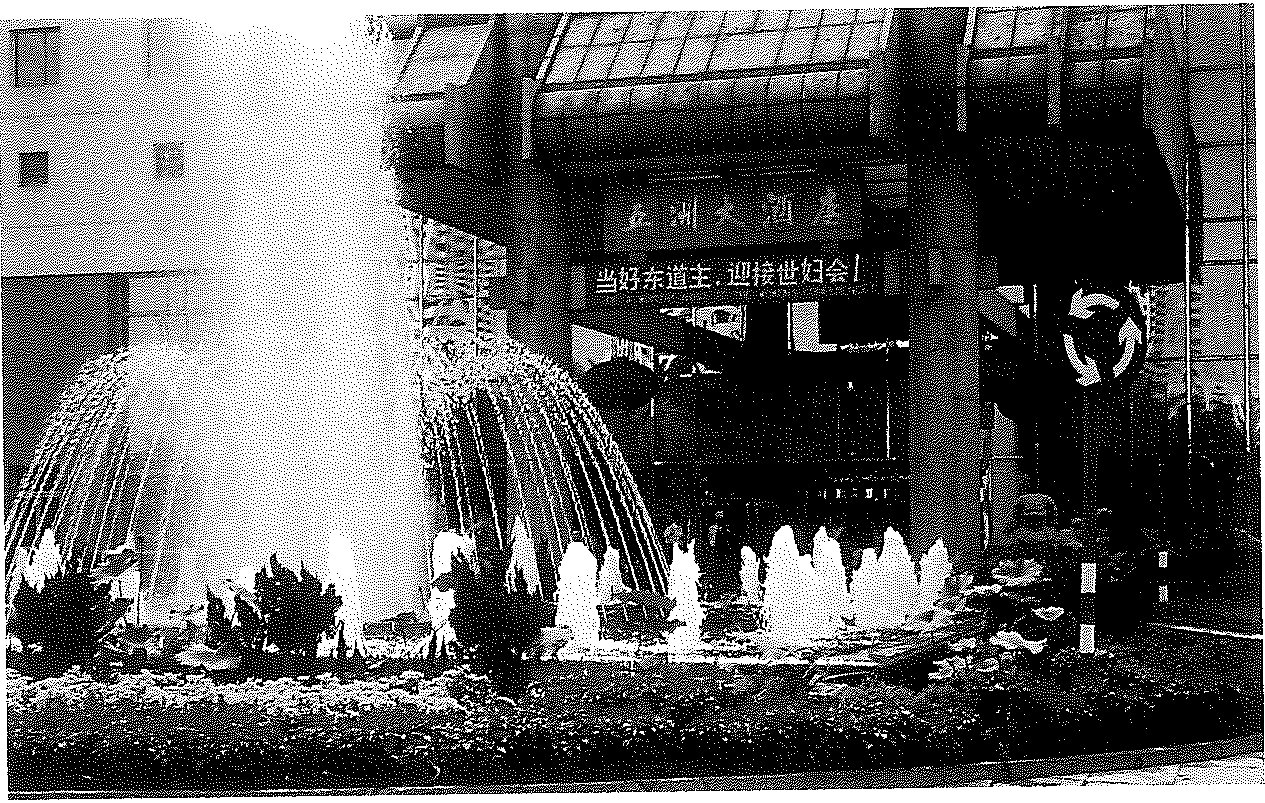
The Fourth UN World Conference on Women took place in Beijing from September 4 to 15, 1995. UN Conference planners saw it as the finale of a series of four such gatherings, spanning 30 years from 1965 in Mexico City, Copenhagen in 1975 and Nairobi in 1985.
Also, Beijing would be the fourth in a series of recent United Nations meetings aimed at addressing key economic and social issues: the World Conference on Human Rights, Vienna, 1993; the International Conference on Population and Development, Cairo, 1994 and the World Summit on Social Development, Copenhagen, 1995.
Each conference resulted in consensus final documents containing strong reaffirmation of the equal status and rights of women, and in some instances, such as Cairo, made significant progress in the definition of women’s sexual and reproductive health rights.
The Setting: Why Beijing?
The question was asked many times. The UN answer is straightforward. The Asian region had not yet hosted a women’s conference and therefore had first right of offer. China, as the sole volunteer, was awarded the honour. What China had perhaps not counted on was the obligation to host a parallel non-governmental forum.
Although China had initially sought to host the conference in order to enhance its international status, the Chinese Delegation did not play an active role in the negotiations surrounding either the Beijing Declaration or the Platform for Action. After repeated international assurances that “China will be a good host” to the conference, the Chinese appeared to assume an anxious “father of the bride” role, primarily concerned that the main event conclude without major incident.
In the final planning stages, the main preoccupation of the Chinese hosts seemed to become the control and management of non-governmental organizations. Much time, energy and international good will was lost as a result of host country attempts to reverse the trend towards full NGO participation.
As Globe & Mail China Bureau reporter Rod Mickleburgh summed it up: “Neither the Chinese nor the thousands of independent-thinking women were used to one another. By Chinese standards, police action was remarkably restrained…. This allowed two undoubted firsts for China: a boisterous demonstration by a large group of lesbians and a moving protest against Chinese rule of Tibet.”
The Conference
The 42 members of the official Canadian Delegation were led by The Hon. Sheila Finestone, Secretary of State (Status of Women).
As usual, the delegation had its own unique dynamic. Sharon Hayes, MP (Reform) left early because she was “Gagged in Beijing”, (the title of her op-ed piece in the September 15th Globe & Mail). At an informal press briefing, she stated that, once in Beijing, she learned ’only six negotiators’ actually had the opportunity to present the positions of the Canadian delegation.
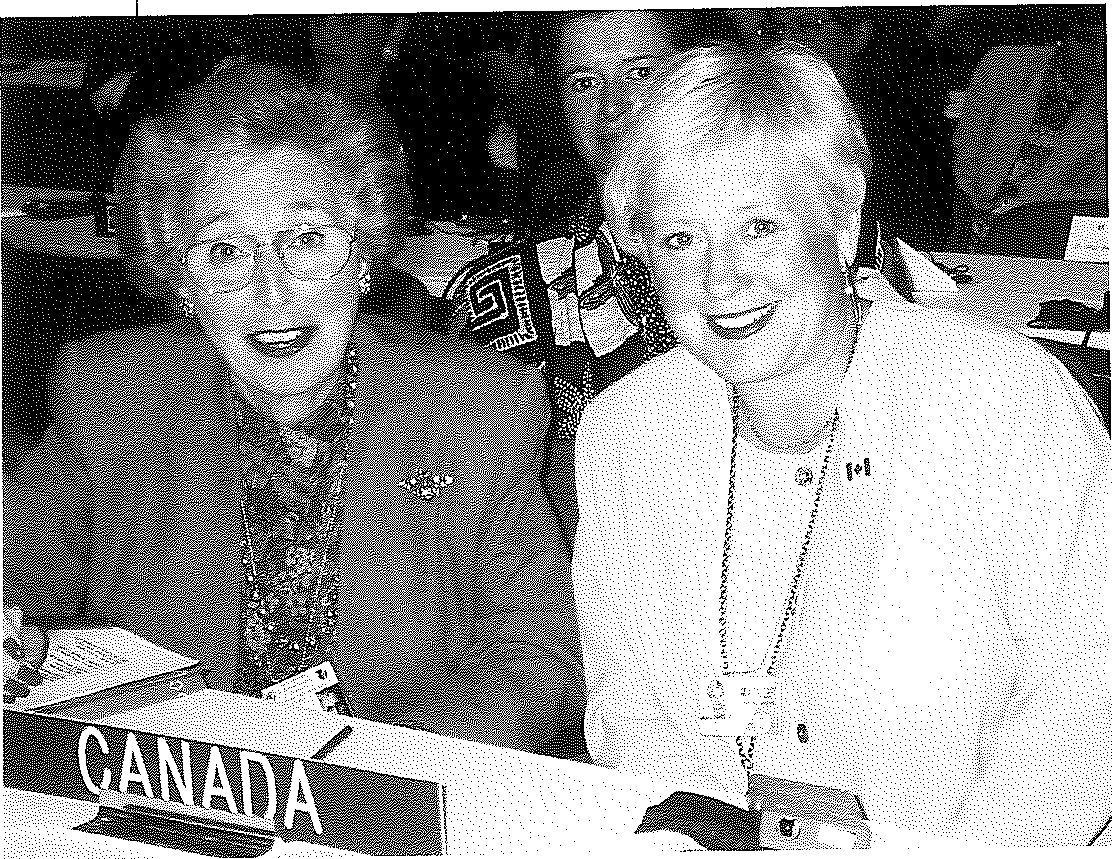
Hedi Fry, MP (Liberal) also created a stir when she attacked actress and fitness guru Jane Fonda during a discussion of the media’s role in educating women about health issues: “I asked her if she also believed the media should be accountable for perpetuating stereotypes that affect women. I said when women see only thin, beautiful women in the media, it leads to more cases of anorexia nervosa and bulimia.” Ms. Fry enjoyed a standing ovation.
Beyond trying to hold the line on previous agreements, did Beijing result in any meaningful advances for women? Yes. The Beijing Declaration and Platform for Action was agreed to by consensus by the more than 180 participating governments.
The Platform makes clear in every chapter that women have a right to equality, that sustainable development demands equality and that no women should have to live her life in fear of violence, coercion or discrimination. Bella Abzug, well-known American feminist: “The Beijing Platform for Action is the strongest statement of consensus on women’s quality, empowerment and justice ever produced by governments.”
Some major achievements include:
• Affirmation that all governments have an obligation to promote and protect the human rights of women and girls regardless of cultural or religious traditions.
• Reaffirmation that violence against women is not a private issue and that states cannot invoke customs, traditions or religion to avoid their obligation to eliminate violence against women.
• Reaffirmation that rape in armed conflict constitutes a war crime, a crime against humanity, and introducing a new concept of rape as genocide under certain circumstances.
• First-time recognition in a UN document of sexual violence and gender-related persecution as grounds for refugee status.
• Recognition of the right, not just ability, of all women to control all aspects of their health, in particular their own fertility, as basic to their own empowerment. This builds on consensus language, strongly supported by Canada, achieved at the 1994 International Conference on Population and Development in Cairo.
• Affirmation that the human rights of women include the right to have control over their own sexuality, free of coercion, discrimination and violence.
One of the most important themes running through the Platform concerns the role of women in economic and social development. Canada introduced language to address the feminization of poverty, the need to assist women and men to balance paid and unpaid work and family responsibilities, and to protect workers’ rights.
Beijing was also the first UN Conference openly to address the issue of sexual orientation. While in the end the term was not retained in the Platform for Action, more than 30 countries spoke up in support of its inclusion. Many countries, including Canada, stated that they interpreted the principle of non-discrimination to include sexual orientation.
The NGO Forum
The Forum took place in Huairou from August 30 to September 8, 1995. The Forum, involving approximately 30,000 non-governmental women, was a massive undertaking. Forum organizers and facilitators were challenged by structural, logistics and weather problems in scheduling plenary and working sessions.
The organizers’ attempts to accommodate more than 800 workshops and events, ranging from “International Goodwill Sunflower Cultural Exchange”, “Women Healing Oceans”, “Natural Family Planning and the Reluctant Husband” to “Senior Judges and their Instruments” quickly became an organizational nightmare. In spite of all obstacles, the NGO Forum produced some thoughtful, innovative proposals concerning issues of importance to women, as well as a Declaration which was presented to the final session of the government conference on September 15.
What does it all add up to?
After ten years of work, (1985-95), UN member countries now have an increasingly well-defined, progressive (and, perhaps, intrusive) framework governing the rights of women — a framework which allows women everywhere to measure their quality of life against internationally-agreed standards.
Beijing was a fitting birthday present to the UN on its fiftieth anniversary.
Words, and the meaning of words, and the translation of words, become very important. Because all of these people have to go back to their own countries and try to implement this platform. So it’s got to be as acceptable to as wide a range of people as possible» (R. Archibald to CNN reporter May Lee)
View the original scanned pages →
Originally published in bout de papier, Vol. 12, No. 4 (1995-1996) — Winter 1995–96 // Hiver 1995-1996, pp. 22–23. Read the rest of this issue →