
bout de papier, Vol. 20, No. 4 (2004) — Spring/Summer 2004 // Printemps/Été 2004, pp. 37–41
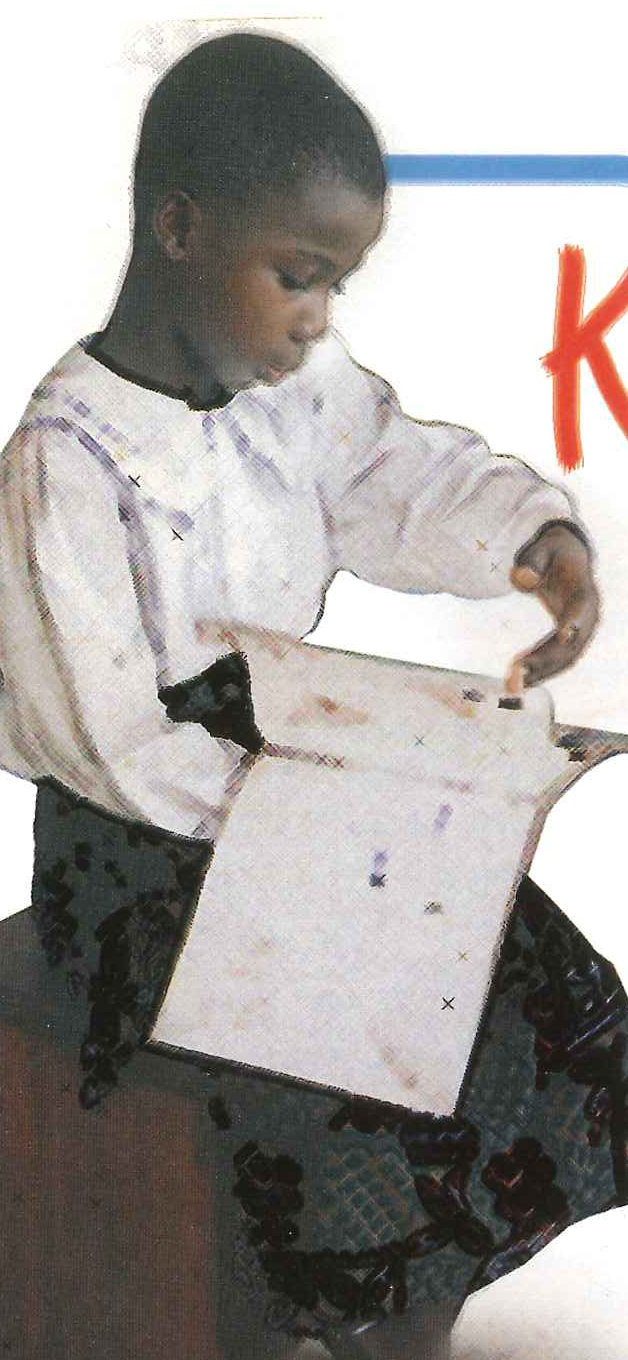
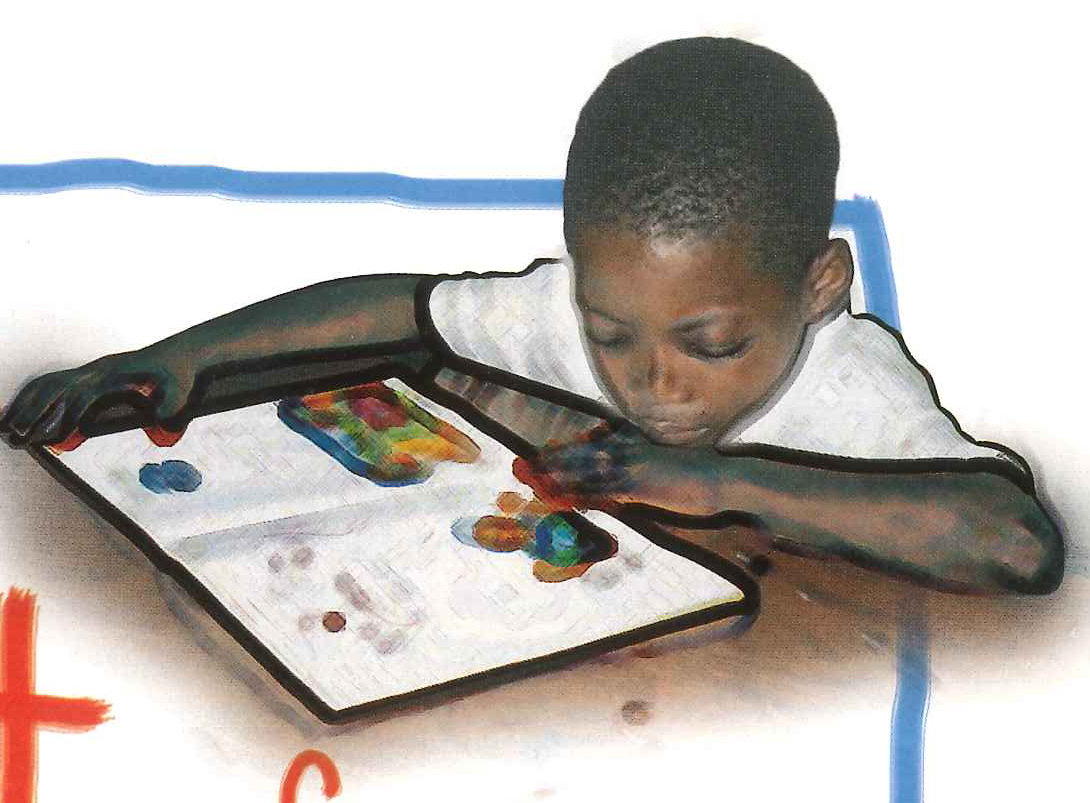
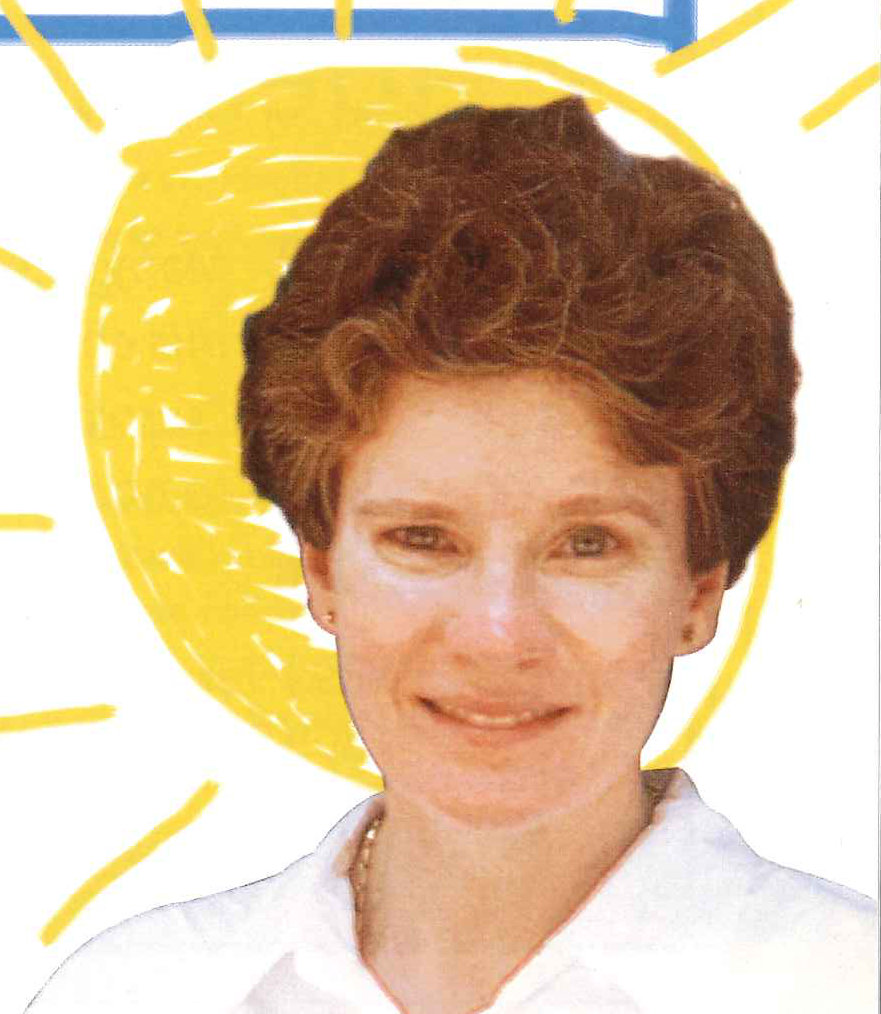
One of the developing world’s most successful literacy projects is unfolding in Ghana, West Africa, thanks to the energy and commitment of Kathy Knowles, a 48-year-old Canadian woman. With a tiny budget and an expansive vision, Kathy has, almost single-handedly, transformed the lives of thousands of Ghanaian children.
T he Osu Children’s Library Fund (OCLF), the organization she founded in 1991, has grown faster and bigger than anyone ever imagined. In just over a decade, they have built, staffed, furnished and stocked with books four large community libraries in the capital, Accra. Elsewhere in the country, they have helped launch over 120 smaller libraries. Each one is unique but they are all based on the same simple philosophy: to offer children, as young as possible, the chance to discover the joy of reading.
Today, these libraries are filled to overflowing with children enthusiastic about books and about reading. With each passing year, the side-effects multiply: their school grades improve as do their chances for employment.
Unlikely beginnings
This far-reaching project started almost by chance. In 1989, Kathy was posted to Ghana with her husband, John, a chartered accountant working for a mining company in Accra. It was a daunting experience for this young woman: it was the first time she had ever traveled outside Canada and she was taking along three young children, aged 3, 5 and 7, with another on the way. She was a nurse by training so after her fourth child was born and the family was well settled in, she began working two mornings a week as a clinic nurse at the Canadian High Commission.
On her days off, Kathy enjoyed spending time with her four children. They all loved story books, so each afternoon she filled a laundry hamper with her children’s favorite books and carried it into the garden of their home. Seemingly oblivious to the pounding sun and scorching temperatures, she gathered her youngsters around her, sat down under the arched branches of a scarlet red flamboyant tree and started to read.
This after-school story time became a much-loved ritual for the Knowles’ family. Before long, the children told some of their friends and they too joined the circle. Word spread and every day, more and more youngsters flocked through the gate. Kathy welcomed them all as she ushered them into her garden and sat them down with the others.
Storybooks are virtually unknown in Ghana so Kathy’s reading circles were a magnet for Ghanaian children. By the end of that first month, 70 youngsters sat mesmerized by her tales. “They would sit on the steps of the verandah or on the lawn, anywhere they could find a spot,” she recalls. “Obviously this was something they didn’t have in their lives and which they loved.”
As numbers continued to swell, Kathy was determined to find a way for still more children to have access to her books. So she emptied their garage, added shelves, small tables and stools, tacked up posters and created a library register. She then wrote to family and friends in Canada asking for donations of new and used children’s books. And on each trip back from their semi-annual leave in Canada, she stuffed books into every spare corner of the family’s luggage.
Kathy called her tiny refitted garage the Osu Avenue Library, after the name of her street. It opened for two hours on Mondays and Thursdays and within three months membership reached 150, with as many more on a waiting list. She hired a university student to read stories to the children and recruited Joanna Felih, her housekeeper, to manage the librarian duties. “Joanna was quick to learn the rudiments of running a library and was so caring with those youngsters. In no time, she became the most perfect librarian.”
The new library was a revelation to these children. They live in a country where a laborer’s wage is little more than $75 a month and where large families often live crowded together in one or two small rooms. Many parents cannot afford the modest school fees so their children grow up unable to read and write, dimming their prospects for ever finding work. The luckjer ones who go to school rarely see a book other than the dog-eared school texts they must share with their classmates.
The tiny Osu Avenue Library ran like clockwork. Not only did it give hundreds of children a chance to expand their horizons, but it also provided Kathy with a whole new focus to her life. But as her project touched the lives of more and more children, she became worried: her husband’s job in Ghana would be ending in two years’ time and they would need to leave their house and the garage. What would happen to the library that had become such a life-line for so many children?
She debated long and hard and finally decided to look for something more permanent, a larger space where she could accommodate more children. The task was tougher than she expected. “I walked up and down the street for weeks looking for somewhere to rent, but there was nothing” she sighed
Purchasing land in Ghana was a complicated process and any building project required a convoluted set of permissions. “I can’t tell you how many times I nearly gave up,” she said. But she soldiered on. She wrote long letters to government officials, but received no reply. She visited their offices and was passed from one person to the next. She bombarded them with phone calls but they didn’t answer. Whenever she felt defeated, she thought about the children she was trying to help. “Stubborn is the word,” she admitted. “I just kept hammering away.”
Her determination paid off. Through a chance meeting, a Ghanaian friend heard her plight and donated a small slice of vacant land on police property. Soon after, she received the necessary permission to erect a ’temporary’ structure on the land.
She then canvassed local businesses and raised the necessary US$1200 to purchase a 40-foot long shipping container which she moved to the donated property. An army of volunteers helped to lay the concrete, raise the roof of the container, cut out windows, enlarge the door and build an awning at the entrance. They painted it inside and out and posted up brightly colored banners. They lined the walls with shelves, then moved in all the books and puzzles and small-scale furniture. Outside, they planted a small garden with a deep pink bougainvillea bush to frame the doorway.
A sparkling new library
Joanna was by now fully experienced in running a library so she became the chief librarian. Kathy hired and trained one of her neighbors, Abigail Elisha (“another perfect gem”), to help her. After months of negotiation, the local government agreed to pay the staff salaries. Finally, on November 13, 1992, the sparkling new Osu Children Library officially opened. In a gesture that makes Kathy blush with embarrassment, the local directors later changed the name to the Kathy Knowles Community Library to honor its founder.
The new library opened six days a week and was an immediate hit. From the start, Kathy set fiercely high standards and expected everyone to respect them. She planted a plastic wash basin, a towel and soap at the doorway so children could wash and dry their hands and remove their shoes before entering. Once when a top government official visited the library, he was taken aback when he too was asked to follow the rules.
Children were also given careful instruction on how to care for the books. “Before any child can use a book, they must learn how to turn the pages carefully without tearing them,” she emphasized. “This is very important in a country where both the dust and humidity limit the life of books.”
A chunk of the running costs of each library are raised by the staff and children themselves. Every year, they organize a sponsored walk, Terry Fox style, which involves dozens of children who run or walk from the zoo to the library. Other funds and most of the books come from Canadian donors. Kathy insists that all children using the library be made aware of the help coming from Canada and that they write letters of thanks which she forwards to all Canadian donors. “This way the children realize that these books did not come from me: they came from a lot of friends 3,000 miles away.”
Every day, there were more and more children who turned up to register as members. As the children buried themselves in books, Kathy became aware that many of their parents, as well as many children who were unable to go to school, had never learned to read or write and yearned for the chance to learn. So she set up free literacy classes in one corner of the library. These have continued to expand and have given new opportunities to many.
Training for librarians
News of the new library spread and before long, teachers and individuals from Accra and beyond came seeking help in setting up their own libraries. So Kathy designed a three-week librarian training course, run by Joanna, which is described in a small booklet “How to Set Up Community Libraries for Children” (available on the web site). On the completion of the course, each participant receives a “librarian certificate” and a box of books and wooden puzzles. If the library is well-run, they receive another box of books. Since 1993, small libraries — they could be a room in a school or simply a group of children sitting under a tree — have sprung up in over 120 communities around the country. Three of them are named after Kathy Knowles; all of them bear her unique imprint.
Return to Canada
In 1993, when the Knowles family returned to Canada after John’s posting ended, many feared Kathy’s projects would collapse. They needn’t have worried. Her well-trained library staff carried on in Ghana and sent her monthly reports. She named two Ghanaian women directors, both school headmistresses, to help raise funds locally and oversee the libraries. Says one, Florence Adjepong: “Kathy always gives people the means to help themselves. That’s why things worked, even though she was thousands of miles away.”
Once back in Canada, the family moved to Winnipeg and Kathy barely paused for breath. Working from the top floor of her Winnipeg home and bolstered by a team of dedicated volunteers, she set up a registered charity, the Osu Children’s Library Fund (OCLF), to raise money in Canada to expand existing projects and launch future ones. Her volunteers receive and sort, clean and pack the mountains of books that accumulate in her dining room and hallway (“We check every book for suitability and to make certain it is clean and in good condition”). Her family also pitches in: her children have done more than their share of repairing and packing books while her husband John “constantly cheers her on from the sidelines” and takes charge of the home front while Kathy is away.
An ambitious new project
Even though Kathy was now miles away from Ghana, it didn’t stop her from hatching an ambitious new project: to build another bigger library in Nima, a poor and densely populated section of Accra. Working from afar, by fax and phone, she once again began her relentless attack on the government to obtain the required permission, then raised the necessary US$25,000 from companies and friends in Ghana and Canada. On her next visit to Ghana, she located a patch of barren land, persuaded officials to hand over a derelict building, then dragooned local businesses and service clubs to help renovate the place, from laying the concrete floors and floor tiles (donated by a friendly supporter) to painting inside and out (another freebie from a paint company). She found a carpenter to make wooden tables and small chairs and shelves, planted paw-paw trees and flowering shrubs around the building and erected a sign which read “Sharing the Joy of Reading”. And on June 8, 1998, in a glittering ceremony attended by high-ranking officials and tribal chiefs, they opened the Nima Maamobi Gale Community Library. It is easily recognizable by two giant flagpoles with Canadian and Ghanaian flags flapping side by side.
Today, the Nima Library is as spotless and colourful as the day it opened and it sparkles with Kathy’s spirit and ingenuity. The shelves are filled with clean, top-quality books neatly arranged on shelves. Boxes of wooden puzzles and educational games are laid out in one corner. Colourful banners and patchwork quilts stitched by the children cover the walls, along with children’s drawings and posters. Throughout the day, its three rooms are packed with eager readers supervised by a staff of seven under the watchful eye of chief librarian Hannah Agyeman, whom Kathy calls “one of the most dedicated human beings I know”.
The outside of the library is equally striking. In stark contrast to the dusty playing field it borders, there is a large garden with flowering bushes, trees and, as a gesture to Canada, a small stone Inuksuk discretely nestled among the plants. At the other end of the building, a large compost provides an excellent teaching tool for the children and staff who are encouraged to “feed” and tend the compost bin which helps nourish the plants.
The demand for admission to the Nima Library is insatiable: today, there is a registration of 10,000 children, with an average daily attendance of well over 300. This means the staff have resorted to staggering the hours in order to accommodate the ever-increasing numbers. “What happens in that place is phenomenal,” says Emma Amoo-Gotfried, one of the two Ghanaian Directors. “The world had given up on most of those kids until they entered that library. Suddenly a whole new world has opened up for them.”
In the seven years since it opened, the library has developed in ways far beyond reading books. A savings and credit group started so women can raise funds to launch small trading businesses. They deposit the equivalent of I cents a week and at year’s end, Knowles and an anonymous donor match their savings. Another Canadian donor provides funds for free lunches for three dozen of the poorest children. There is a stamp club, a wildlife club, a drumming group, a dance troupe and a choir. There is a very popular soccer team and this year, a young library member has started up the first ever women’s soccer team. A deaf teacher has visited to teach sign language and a blind friend has offered lessons in Braille. “We are always looking for ways to create new awareness,” says Kathy.
Setting an example The Nima Library also holds literacy classes where over sixty mothers, grandmothers and school dropouts learn to read and write, most for the first time. I watched a 65-year-old woman who, a month earlier, did not even know how to hold a pencil but now painstakingly spelled out her name in an exercise book, then held it up proudly for me to see. “This literacy program is one of the most far-reaching projects,” says Emma Amoo Gottfried. “It’s magical when you see the transformation of these people who arrived shy and ashamed. Now they are happy and confident and their faces light up when they say ’Now I can read.””
“And what is even more important is that, as in all her ventures, Kathy is setting an example. She is showing what can be done with relatively small resources. People all over the country are learning from her?”
Buoyed by the huge success of the Nima Library, Kathy continued to respond to further requests for libraries in other impoverished corners of Accra. In June 2001, she opened the Mamproby Community Library in the Mamproby district of Accra and in 2003, the Nungua Community Library opened on the outskirts of the capital. In both cases, Kathy acted as contractor — even though she was on another continent — working through e-mail and phone with architects and designers and masons to discuss a myriad of details. “She is a master at getting people to help her out,” says Richard Beattie, a former CIDA officer who once turned his own apartment into a book storage area during a posting to Accra. “You simply can’t say ’no’ to Kathy. Some of us nicknamed her ’The velvet steamroller.””
Kathy’s newest project shows as much imagination as all her others. As she watched the Nima Library grow increasingly overcrowded and saw many of the original children developing broader visions and expanding needs, she decided to erect a two-storey building immediately behind the library. The still-to-be-built Nima Learning Centre will provide space for the increasingly-popular cultural activities – theatre, singing, dancing, drumming — and, on the upper floor, a badly-needed study area and a reference library for the older students who live in such cramped and noisy quarters. The municipality has already donated the land, the sod has been turned and work will begin in the fall of 2004 with the opening planned for late in 2005.
Things have come a long way since that first tiny circle of children sat under the flamboyant tree with Kathy Knowles. All over the country, there are thousands of children whose lives have been changed through their access to books. Robert Fowler, the Personal Representative of the Prime Minister for Africa, visited the Nima Library in December 2002 during a G8 meeting and wrote to Kathy: “It was wonderfully inspiring to see your project replace hopelessness with pride and hopefulness on the faces of so many Ghanaians. What you have achieved through your perseverance, your inspiration and determination in promoting both education and literacy is a model for all of us and, for that, I wish to express my deepest gratitude.”
Editor’s Note:
For further information or to make a
donation, contact.
Kathy Knowles
Osu Children’s Library Fund
188 Montrose Street, Winnipeg, MAN R3M 3M7
Tel.: (204)488-6633 Fax: (204)487-0515
E-mail: [email protected]
Web site: www osuchildrenslibraryfund ca
View the original scanned pages →
Originally published in bout de papier, Vol. 20, No. 4 (2004) — Spring/Summer 2004 // Printemps/Été 2004, pp. 37–41. Read the rest of this issue →



