
bout de papier, Vol. 20, No. 4 (2004) — Spring/Summer 2004 // Printemps/Été 2004, pp. 33–35
Venturing into national territory not fully under the control of the government to which one is accredited as a diplomat is usually a matter to be undertaken with careful forethought, not to say hesitancy, but it can considerably enhance your value on the cocktail circuit, provide colourful material for your memoirs post-retirement and, as long as you couch your reports for Ottawa in a sufficiently studious and non-alarming manner, can actually be of assistance in the development of Canadian foreign policy. The only snag is that you have to survive to tell the tale.
MY FIRST EXPERIENCES OF SLEEPING WITH THE ENEMY (well, not literally…) were in Chiapas, Mexico, immediately before and after the dramatic indigenous revolt, led by a mysterious blue-eyed white man in a black balaclava, that galvanised the world on the very eve of the entry into force of the North American Free Trade Agreement in 1994.
Over the 18 months prior to the revolt, I had travelled repeatedly to Chiapas, which was the most impoverished of Mexico’s states and in most ways littl changed since Graham Green wrote about it in The Lawless Roac in the 1930s. I met with feisty Bisho Samuel Ruiz, later nominated for th Nobel Peace Prize, with huma rights defenders, with leaders ( self-help groups whom we wer assisting through our Canada Fund for Local Initiatives and, of course, with all the usual local dignitaries: the Governor, the chief of Police, mayors and so on. While no-one in our mission in Mexico City predicted the rebellion, it was thus with some smugness that, when Ottawa spluttered its bewilderment at the January 1, 1994, uprising, we were able to list page upon page of detailed and distressing previous post reporting on the plight of Chiapas peasants.
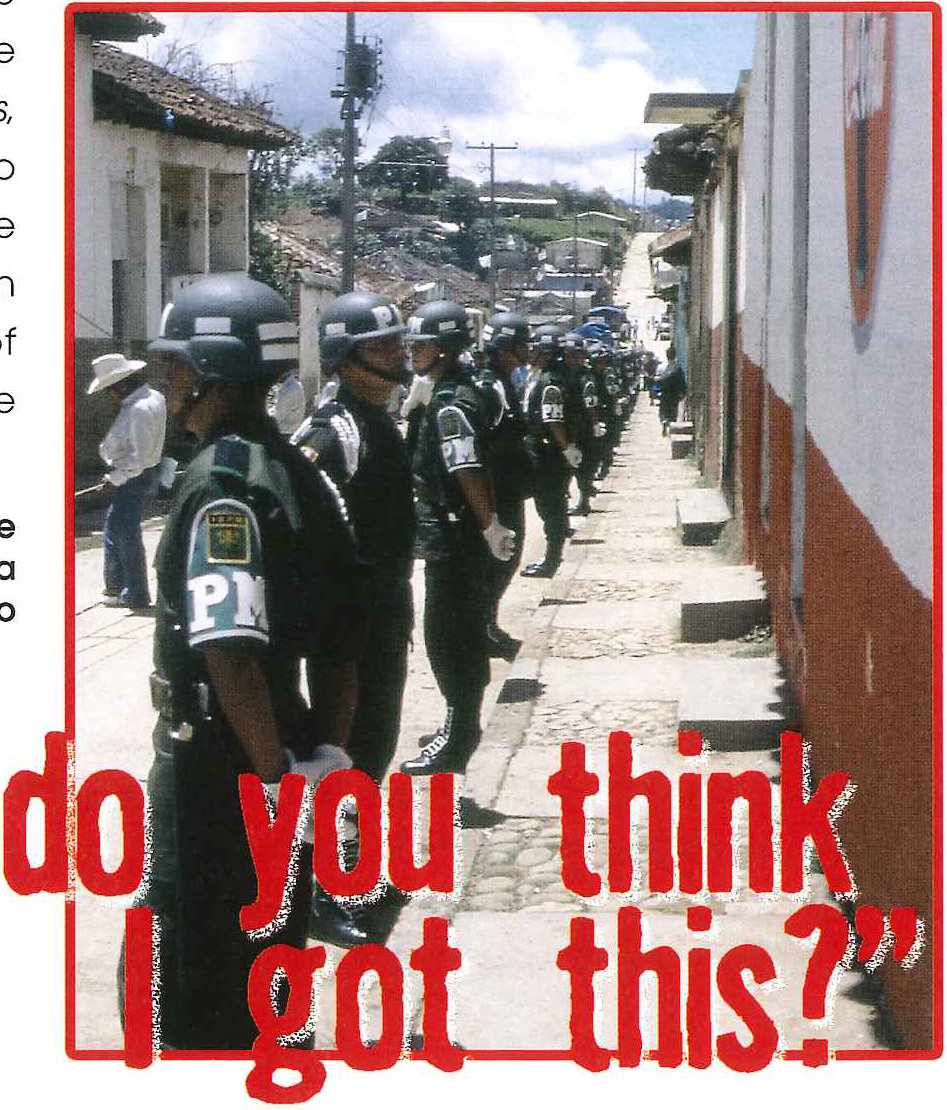
But a few months later I was summoned peremptorily to o meeting with a senior officer attached to one of Mexico’s then numerous and mysterious intelligence agencies. After we had exchanged the usual niceties (I had thought it prudent to meet in a very public place: a central table at VIPS, Mexico City’s answer to Tim Horton’s) he produced with a flourish a dog-eared visiting card bearing my name and slapped it down onto the table, demanding:
“Where do you think I got this?”
Lesson Number One was thus learned: be rather careful to whom you hand out your card in such lands, especially if your contact is a person who has good reason to be very disgruntled with the government to which you are accredited. In this case my card had been taken from the dead body of a Zapatista rebel killed in a shootout.
MANY MORE SIMILAR LESSONS were learned when, for three years, I covered Colombia’s brutal civil war. One interesting moment was when most of the Western diplomatic corps flew by light aircraft into rebel-held territory to witness the first substantive face-to-face meeting between the FARC and the government in years. As we taxied to a halt on the bumpy strip of San Vicente del Caguán, the remote jungle capital of the rebels, to our collective dismay we saw out of the portholes that a huge reception committee had been formed, with an honour guard of a hundred or so fearsome-looking men and women in fatigues, all laden down with heavy weapons. There was an equally intimidating brigade of the media.
As I found myself being pushed, blinking, down the stairway by my colleagues as a Yesterday’s terrorist is of course tomorrow’s freedom fighter and the day after’s President, so by all means keep any photographs that do commemorate events such as these, but do be alert to shiffing moods and circumstances — as was my good friend at the Sudanese MFA’s protocol department who was quick, after 9/11, to remove from his desk a photo of himself sharing coffee, as a then junior officer, with one Osama bin Laden.
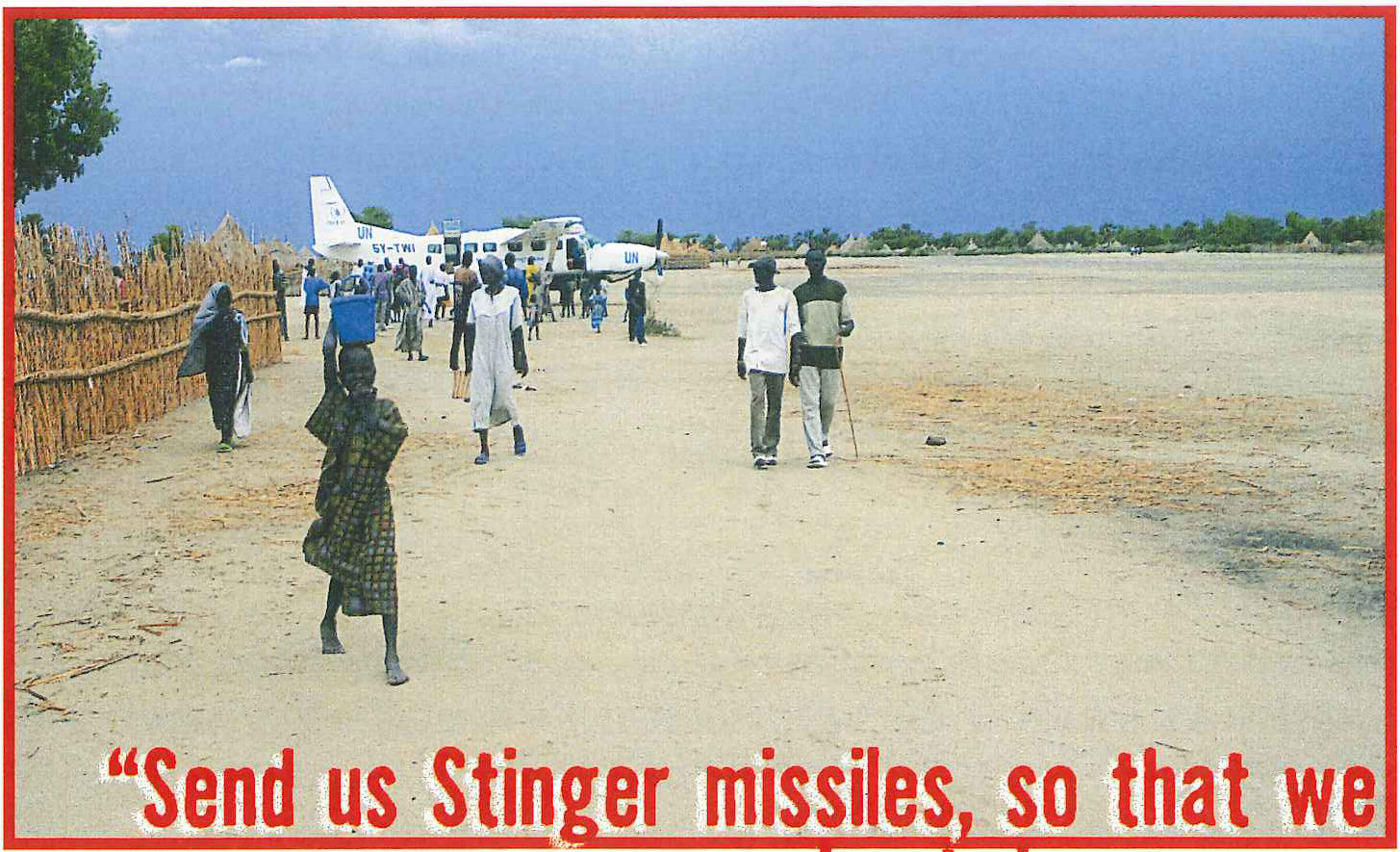
ONE OF THE PARTICULAR PROBLEMS of travelling in south Sudan, which I also covered for three years, was that – unusually — even some positions of our own government were not popular. Thus I well recall being deposited alone on the red-dirt strip at Yambio, deep in the Equatorial forest. The tiny white UN Cessna Caravan was lining up to leave again, and towards me I could see a welcoming posse, armed FARC-style, approaching. They reached me just as the UN plane was lifting off, and eyed me in silence.
“So you represent the government whose oil company is responsible for the genocide of our people?” was how the conversation began.
There is no easy response to such an opening pleasantry. In my experience, it was advisable to let oneself be steamrollered for a while, nodding, accepting without committing, taking notes (above all, take notes – it doesn’t matter what about…). When the momentum starts to kind of sacrificial offering, I remembered the old adage that diplomats should at all costs avoid being photographed with a drink in hand, lest they reinforce the public’s existing perception of them as dipsomaniacs. Adapting that fine rule to these circumstances, I decided on the spot that when meeting armed men responsible for multiple massacres and other atrocities, and in front of the media, it may be wise not to be seen embracing them, kissing them or slapping them on the back Latin-style. Instead, nod politely and noncommittally, smile (but only faintly), avoid any effusive remarks, and above all keep one’s hands firmly behind one’s back, in the style made famous by Prince Philip. After all, you never know at what war crimes tribunal your photograph might later turn up as evidence.
It goes without saying that when meeting with disgruntled rebel leaders it is not wise strenuously to adopt the positions of one’s host government. Nor should one demonstrate great enthusiasm for photographing or even discussing interesting-looking military equipment one may inadvertently come across when being shepherded around by the leadership; in SPLA-held south Sudan, where modern telecommunications technology is a latecomer, even getting out one’s handheld satellite phone to call home can prove most rash, as I learned to my cost. Only if you can persuade your guides to pose macho fashion and brandishing their AKs before the tank in question may you actually be able to snap that old T-64. almost imperceptibly onto the offensive, for example:
“Very well. It’s a difficult situation. What, specifically, would you like us to do?”
Be prepared for disconcerting responses. In this case, a straight-faced:
“Send us Stinger missiles, so that we can shoot down more government planes.”
Whether by skill or sheer good luck, I was able to turn this particular exchange into a discussion on the extent of Western responsibility for Africa’s woes, that then meandered into one on aid politics and which ended in a rewarding two-way dialogue on political accountability, successfully capped with a couple of beers. If all else fails — but this is a last resort — you can always try: “I don’t necessarily agree with my government’s position; but in our system of government, I’m pr paid to put across the positions of slig my elected employers….
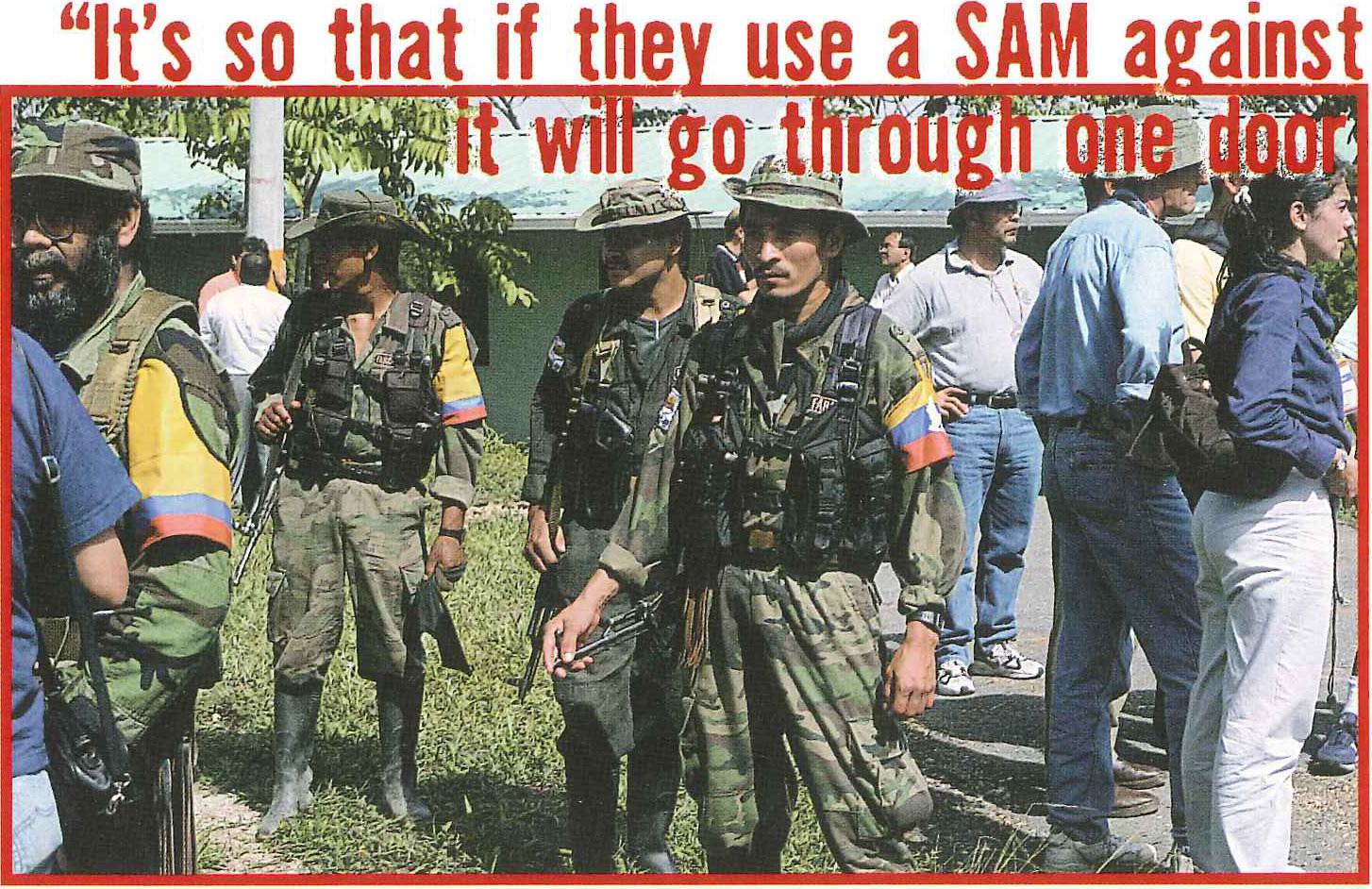
IF VISITING WITH HOSTS WHO HAVE a penchant for kidnapping, such as the ELN and FARC in Colombia, it is as well to make known early on that your government has a policy of not paying ransom, that you carry no ransom insurance and (perhaps an embroidery on the truth, this that your relatives have all been instructed not to pay up, should one be kidnapped
– in a word, demonstrate that you are worthless. Once this distasteful matter is out of the way, then you can usually proceed to have a serious discussion. But it may be diplomatic to acquiesce with minor extortion. One late afternoon on the Putumayo River in Southern Colombia, our dugout was intercepted by a high-speed launch full of the usual cut-throats (FARC, I recall, but it could just as well have been the ELN or the equally illegal and more violent right-wing Paras). They silently went through all the papers of the dozen or so cowering civilians on board, leaving me – quite evidently and conspicuously a gringo, albeit unshaven
– until last. To my great relief my nervously proffered red passport elicited not the slightest interest.
But then their chief silently stabbed his finger at three of us, including me.
“Tú, tú y tú, “ he said rather superfluously. I thought the game was up “500 pesos cada uno.”
Mystified, I paid up readily. Then there was a gruff explanation; the FARC was fining us for not wearing lifejackets.
YOU LEARN ALL SORTS OF UNUSUAL SKILLS behind rebel lines, and you never know when they will come in useful. I can now recognise from about ten miles way the differing engine sounds of an Antonov 12, a de Havilland Buffalo and a C-130 Hercules: an important skill in south Sudan, as at that time the Antonov invariably came with bombs, while the other two brought food supplies.
And one cold dawn high over the Andes, clattering along at the old Huey’s maximum altitude limit and observing opium-spraying over rebel-held territory while the young Colombian gunners fingered their misnamed Mini-guns nervously, I had the temerity to ask the pilot over the intercom whether we could close the doors at least halfway, as it was freezing cold.
Angrily he turned around and yelled over the clatter:
“Idiota! It’s so that if they use a SAM against us, it will go through one door and out of the other!”
Humbled and shocked, I slumped back.
A few seconds later he turned around again, this time with a broad smile.
“Just kidding! Actually, it’s in case we crash; that way the rescuers have a better chance of getting you out….
View the original scanned pages →
Originally published in bout de papier, Vol. 20, No. 4 (2004) — Spring/Summer 2004 // Printemps/Été 2004, pp. 33–35. Read the rest of this issue →



