
bout de papier, Vol. 21, No. 3 (2005) — Summer/Fall 2005 // Été/Automne 2005, pp. 34–43
During my final days in Warsaw in 1989, a Canadian from Montréal came into the embassy unannounced and asked to see me. That was how I came to meet a remarkable man and to visit an unusual town.
Our meeting came at a time of deep uncertainty in Poland. The country had just held its first more-or-less free election in over 50 years. A Solidarnosz-led government, newly installed, was feeling its way along a path never followed before. The Cold War was fading away in Warsaw and Budapest, but the next steps were risky and unpredictable. The collapse of the Berlin Wall, weeks ahead, was still unforeseen.
Warsaw, 16 August 1989.
Chiel Weinbaum stepped into my office, a big, good-looking, light-haired man in his mid-sixties, well-dressed in a dark blue blazer, striped shirt and grey slacks. He walked lightly with an athlete’s or dancer’s grace. We shook hands and he introduced his wife, Bunny. After brief courtesies, he got down to business.
This was Chiel Weinbaum’s third trip to Poland, but he had not before called at the embassy. He had first returned to his birthplace, Zawichost, in 1987 to see what remained of it and the Jewish community. Zawichost had been a substantial place, almost 5000 people, before the war. Half had been Jews — half the town was gone. All the Jews who had lived there were dead but for three people living elsewhere. And he was one of them. To mark that loss, he had proposed to the mayor and others, during his first trip back, that a memorial be erected in the old Jewish cemetery, and that the cemetery itself be enclosed by a suitable fence and cared for as a place of remembrance. The mayor and the voiwod (provincial governor) had agreed to undertake this work, drawing on their municipal budgets. On his second trip, in 1988, he had brought a bronze sculpture he had commissioned in Montréal to top off the monument. Now he wanted me to attend the dedication of the monument on the coming Sunday. The USSR embassy would be represented there; he had also approached the American ambassador and spoken to the representative of Israel.
He offered an explanation before I could ask. The Russians were coming because they had saved many in liberating the death camps in Poland. The Americans were invited because they, too, had liberated death camps and helped to free Europe. The United States and the Soviet Union together had destroyed the Nazi regime: he would never forget that. And he believed in cooperation between them, not war. That made it all the more important that Canada, his own country, be represented. Senior Polish officials would be there. It was an unusual request. In Canada, a tide of remembrance had been flowing among the generation of Jews that had fled Poland after the Holocaust. In recent months, a number of groups had come to mark the 45th anniversaries of the Ghetto and Warsaw Uprisings, and to take part in the unveiling of a memorial at the Umschlagplatz, the rail station and transfer point from which the Jews of Warsaw had been shipped to their deaths in Treblinka. Many had come with great pain and hesitation, having foresworn the places where they had suffered heartbreak in their youth. Yet, growing frail, they had felt obliged to show to themselves and to all the world that they were undefeated and that their loved ones who had died would never be forgotten. Some had come only with family or friends to revisit once, before they died, the homes torn from them and the camps where horrors had happened which they could never forget.
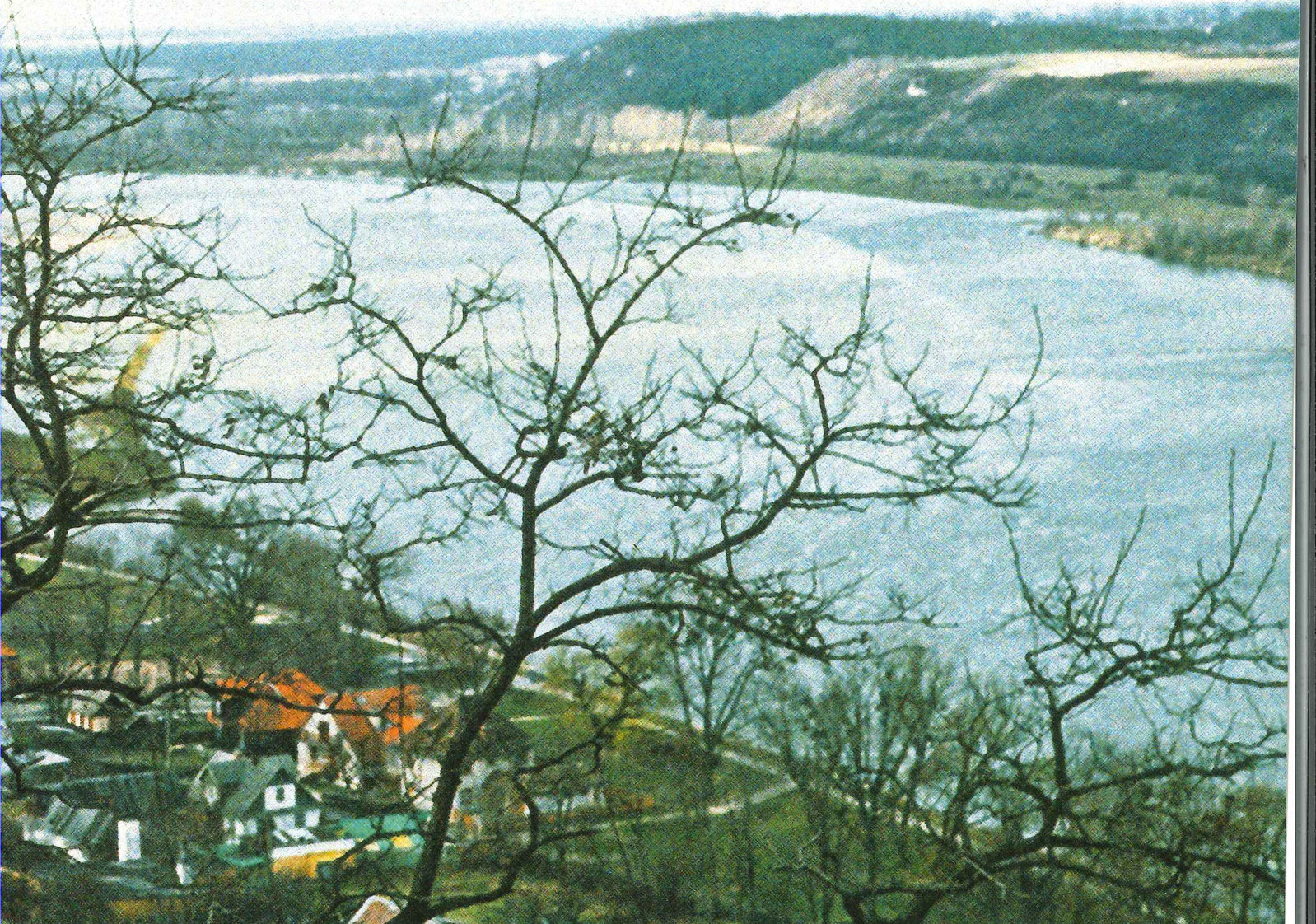
This was a different case and outside my experience. Who had ever heard of a private person coming to Communist Poland – the remnants of martial law still in place – and prevailing upon a local authority to pay for a project that offered no economic return and evoked a bitter past? Poland in the late eighties was not an easy place in which to get things done, privately or officially. If you found your way round the disruptions and strikes, the acute shortages, the tangle of financial and other regulations, you would still need to get past the bland obduracy of Communist officialdom. Chiel Weinbaum, it seemed, had succeeded where others had failed. The story was remarkable and compelling. I said yes, I would come — to an obscure town, little more than a village, more than two hours from Warsaw. No one at the embassy knew much about Zawichost when I asked, except that it was on Poland’s great river, the Wisla (Vistula), and that it was one of the places where the Polish hydrographic service kept track of water levels. I was to learn more.
Refuge: In Another Country
The arrival in 1946 of Canadian immigration officers sent a wave of excitement through the displaced persons camp to which Chiel Weinbaum had been assigned after his escape from the Holocaust. The people there were a mixed group, some fleeing Nazi death camps, others Soviet rule. What they had in common was a dream of safe haven in a distant land. The news spread quickly that the Canadian authorities were looking for lumberjacks, not townspeople, Canada’s traditional preferences and prejudices with respect to immigrants being still alive.
Chiel told a radio interviewer in the 1980s what happened when he was called in. The immigration officer asked whether he had ever worked in the woods. Chiel showed him his arms and said, “I’ve cut down lots of trees and I can cut more!” Give him an axe and saw and he would show the official how it was done. Lean, muscular, and 23 years old, he fit the immigration authorities’ profile. Months later, Chiel came to New York on an immigrant ship, travelled to Canada, and went to his designated place of employment. That was a north woods logging camp near Cameron Falls, an Ontario Hydro dam site just below Lake Nipigon. Another camp. It was a dispiriting start for Chiel after what had gone before. However, Jewish families in the nearest cities provided welcome invitations and assistance. After fulfilling his obligations, Chiel moved to Montréal and in time took up the butcher’s trade in which he made his living. As the years passed, he married and had children. Then he divorced, remarried, and acquired stepchildren as well. He took part in his community as others around him did. He liked singing and dancing, he liked shows and, when an opportunity arose, he enjoyed performing himself. It was, one might say, an ordinary Canadian life.
Yet Chiel Weinbaum came to embrace his country, his province and his city — Canada, Québec and Montréal – and what they stood for, in no ordinary way. He rejoiced in the charters of rights that Canada and Québec adopted in the 1980s, charters which affirmed freedoms and protections for all, regardless of their origins, affiliations or beliefs. He habitually carried in his wallet a crumpled copy of Québec’s Charter of Rights, bearing the signature of Premier René Levesque. Not that he accepted Levesque’s separatist program. It was rather that, for Chiel, his province’s endorsement of humane values transcended political agendas. So he gladly preserved among his papers both the Québec charter and a photo of the time he met Prime Minister Pierre Elliott Trudeau in the company of his local Member of Parliament.
To Zawichost, 20 August 1989.
My son, Tom, back from volunteer service in Brazil, joined me for the trip to Zawichost that Sunday. The river road, following the winds of the Vistula, took us across the rising plain shining green and gold in the morning sun. From time to time we passed through dusty villages and sandy hills.
Zawichost, when we got there, looked much like the other towns along the river — an array of plastered houses strung along a few curving streets. The plain town hall was finished in similar materials. Cars were parked before it and we went inside. The invited guests were already there, except for the Americans and Israelis who had not made it. Chiel Weinbaum came forward and introduced us to the others: Tadeusz Malara, the dapper mayor in horn-rimmed glasses, Boguslaw Zawiec, the tall greying voiwod with polished manners, Eugeniusz Usenko, the Soviet consul, reserved and cautious, together with other officials and friends of Chiel from pre-war days. One couple stood out. They were weather-beaten, dressed in plain country clothes and ill at ease among the officials and professional people gathered there.
Chiel explained that this couple, the Brodas, had taken him in as he desperately looked for shelter after the round-up of Jews in Zawichost in 1942. Michal Starzyk, an eye-witness, draws a picture of drunken German soldiers driving Jews through the streets of Zawichost and on to the train station in Dwikozy, a neighbouring village. Fleeing the Germans, Chiel had found his way to the Broda farm near Dwikozy and had asked them if he, a Jew, could stay and work for them. They had agreed, and he had remained there for the next six months.
In the townhall, the Brodas looked at Chiel, a prosperous figure from a distant land, with a mix of wonderment and respect. Mrs. Broda wept at the memory of those times. Chiel bent and said a few words to them in Polish and then turned to the mayor. It was time to start. We finished our coffee and set off down the street, a straggling line of officials and guests on their way to the cemetery. The Brodas trailed behind.
The Jewish Cemetery
As we went along, we joined a growing crowd. It was astonishing to see hundreds of people ahead of us in this small place and more joining as we walked. It was like a crowd approaching a baseball stadium in a large, prairie town. There were children marching with their parents in their Sunday best and others running about in casual clothes. Some townspeople stopped and, watching, let us pass by. Then the cemetery came into view, formally and solidly enclosed by a fence made of stone pillars and iron grills. During their time here, the Nazis had not only defiled the cemetery but tried to remove every sign of its existence. Trees were cut down, the fence and gravestones smashed, and some of the graves dug up — acts of blind malice in an orgy of destruction. The rubble, including skulls and bones, had been taken away to repair roads and to ballast the temporary railway spur the Germans were building to haul Jews to their deaths.
After the war, the local council kept the cemetery as a place of remembrance and planted trees there to mark the place. Otherwise, it was left untended and unused. By the time Chiel Weinbaum arrived, in 1987, some townspeople had come to see this empty, unused park as a possible site for a new football pitch and sportsground. It was not immediately evident to these individuals — any more than it is to North Americans who dismiss native burial sites — why one should preserve the unmarked graves of people who had disappeared years ago.
As we walked through the gates into a grove of mature Russian poplars, it seemed both a lonely and a populated spot, a strange, hypnotic setting for the ceremony that was to follow. The slanting sun blazed down from a cloudless, purple sky, casting lengthening shadows. A fierce breeze shook the poplars from side to side, countering the heat of the sun. Behind us, we sensed the pulse of Poland’s great river, catspaws scudding across its surface.
A Haunting Memorial
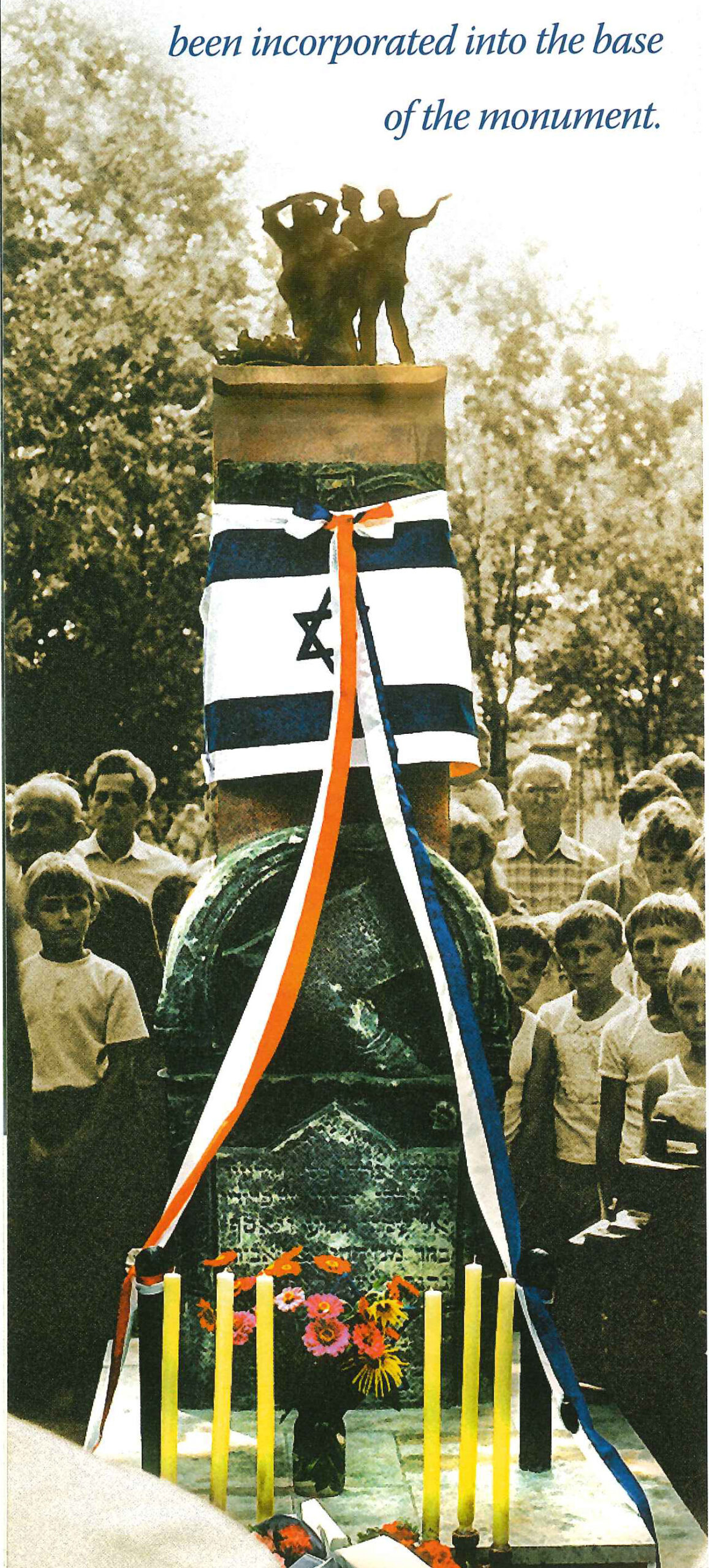
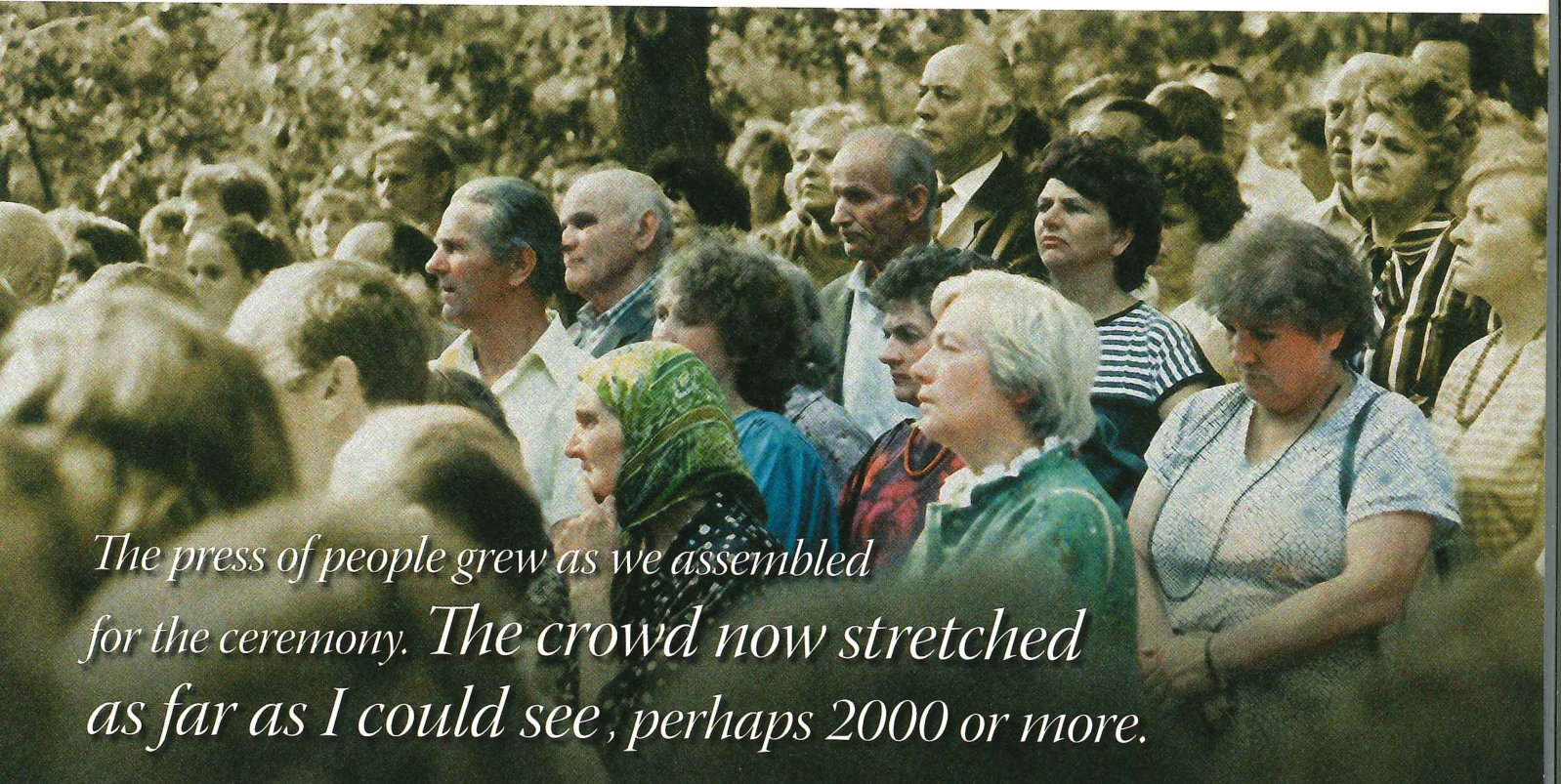
The monument stood at the centre, a pillar of dressed stone, three metres high. A Jewish gravestone, prepared but never used, which had escaped destruction, had been incorporated into the base of the monument. Above it was a plaque inscribed with names and, at the top, a dramatic bronze sculpture by the Montréal artist, Myer Erman, the sculpture which Chiel had commissioned. Flames raged from the bottom of the sculpture around four figures, burning but never consuming a woman, two workmen and a Polish soldier bearing the insignia of the Jewish resistance. Their arms reached upwards in gestures of pain and triumph. A message beyond words. Earlier that day, Chiel and his friends had covered the front of the monument with an Israeli flag and intersecting streamers in red-and-white and blue-and-white, symbolizing Poland and the Jewish people. Below and to the right were a large Canadian flag and several smaller ones. Six large candles stood before the monument and a space had been left for other smaller ones. The press of people grew as we assembled for the ceremony. The crowd now stretched as far as I could see from the front of the monument, perhaps 2000 or more. Those near were very attentive, others stood more casually near the gates to the cemetery, or attended to their children at the back. A group of nuns stood discreetly on one side. I had not expected anything like this. Chiel later explained part of it. Wanting candles for the ceremony, he had gone to the Catholic church and asked if he could buy six large candles to be lit by special guests at the ceremony. The nuns gave him the candles and the priest followed up on his own. During mass on Sunday morning, he suggested to his parishioners that they might wish to join their former neighbour, “Chilek” Weinbaum (using the Polish diminutive) at the cemetery’s re-dedication that afternoon.
Virtually the whole town had come and many, too, from neighbouring villages. (A few of the older people may have recalled the occasion, fifty years earlier, when “Chilek” had slipped into the back of the church during mass to elude German pursuers and the then priest, Father Cholonski, had signalled him to hide behind the altar and thus make his escape.)
The parish priest’s counsel was certainly one reason why they came, but there were others, too. Their consciousness of the terrible past unquestionably played a part. So did the active support which the mayor, the council, and the voiwod had lent to the project. For many, in addition to these, there was “Chilek” himself.
Chilek
Chiel’s contemporaries remembered him as an energetic outgoing boy running about town. He was strong and husky, indeed a bit plump; his friends called him “Chubby Chilek” at the Polish school he attended with his elder sisters. Full of fun, he joked and laughed and loved to sing. On hot days, he and Stanislaw and Stefan Karbasz, the water inspector’s sons, dived and swam under the willows that line the Vistula. Like Chilek himself, they lived in Deep Street (Gleboka Droga), which ran from “Jewish Town” down to the river. There were other friends, too. Waclaw and Janina Kolasa’s dad was the town’s blacksmith and both saw a lot of Chiel. When his family was rounded up by the Germans, Janina kept Chiel’s mother’s photograph safe from destruction. Fifty years later, now Janina Kozien and a practicing doctor, she gave back to Chiel the portrait she had saved for him. And there was Michal Starzyk who lived almost next to the Weinbaums and, years later, became the town’s historian. In letters and in articles written for local newspapers, he recalled that Chiel’s mother, a gifted seamstress and dressmaker, became seriously ill during the thirties when Chiel was in his early teens. That deepened the family’s poverty and made it all the more necessary for the children to do what they could to help. Chiel’s sisters sewed blouses, shirts and aprons to support the family. Chiel himself, who had already been delivering papers for the town’s news agent, took on larger responsibilities. He increasingly helped his father in his trade, buying fish from local fishermen, storing them, and selling them house to house, especially to Jewish families for Shabbat. Sometimes he and his father would drive out to local farms, buy animals, and sell them to local butchers.
When he turned 16 in April 1939 Chiel stood almost six feet tall and he seemed even bigger because of his erect bearing and muscular build. Immediately on finishing primary school, he had sought work with Jan Kolasa, Waclaw and Janina’s father, whose smithy was an all-purpose shop for shoeing, iron-work, and mechanical repairs. Kolasa was glad to teach him the trade. Janina Kozien recalled her father holding Chiel up as a model to other apprentices for his dedication and skill. The skills he learned there probably saved his life. During the war, when captured by the Germans, he was initially sent to work in the aircraft factory in Mielec, and his youth and skills enhanced his chances of survival wherever he was sent in the following years.
Chiel’s entry into a “gentile” trade did not, however, go unnoticed by less friendly neighbours. Janina and Chiel each recalled the occasion when the then-mayor of Zawichost passed Jan Kolasa’s workshop and observed, with crude irony, “I did not know, Jan, that you had opened a school for Jews!” Kolasa told the mayor to mind his own business.
Knowing both friendship and ignorant malice from an early age caused Chiel to value the one as much as he despised the other. Looking back, he remarked that common poverty had probably brought the Weinbaums and their neighbours in “Jewish Town” closer together. There had been no grounds for envy between them as there might have been with a wealthy Jewish family. Life in Zawichost contained these strange ambiguities. Two local Jews, one a decorated colonel in the Royal Polish army and the other a leading scientist and scholar, had been honoured years earlier by having streets named after them. A Jewish soldier was listed on the town’s memorial to those who died fighting for Poland’s independence after World War I. Yet prejudice still held sway in some people’s minds.
1939 was also the year Chiel’s beloved mother died. Having completed his apprenticeship, he was happy to get away and join his elder sister and her husband who ran a bicycle shop in Bereshnikov, a town not far from the border with Ukraine. He hoped to use his newly acquired skills in the cycle shop, but the German attack on Poland in September intervened. Aged sixteen, he made a quick political decision. Bereshnikov was in the part of Poland which was to be occupied by the Russians whereas Zawichost was to become German territory. He hurried back to Zawichost, intending to bring his family to Bereshnikov and the relative safety of Soviet rule. It was not to be. The German forces got to Zawichost before he did. He crossed the river illegally, hiding in the water under the dock until the German patrols had passed. He found his family but it was impossible now to pass back into Soviet territory. The rest of the war was a nightmare struggle to help his family and to stay alive through captures, escapes and imprisonments. That fugitive life took him not only to Mielec but to five concentration camps, ending in Mauthausen, where he was finally set free by the American advance into Austria. The Holocaust annihilated all of Chiel’s family and destroyed the life he had known in Zawichost. All that remained when he came back in 1987 was a circle of friends and their vivid memories of “Chilek,” the handsome, vigorous boy they had known. He could still engage, amuse and move them. They were eager to help him honour his family and the others in Zawichost who had died in the Holocaust.
Zawichost’s Remembrance
Chiel had reflected for many years how he might commemorate his family and the Jewish community in Zawichost. On his first return visit in 1987, he put his ideas to the Mayor of Zawichost, Tadeusz Malara, and the Voiwod of Tarnobzreg, Colonel Boguslaw Zawiec, and he was greatly heartened by their ready support. As he told the Canadian Jewish News in 1988, “[I] welcomed with open arms. Poland is not what it was. I found no anti-semitism, only friendship.” He may have varnished reality a bit, but his words reflected the welcome accorded him.
There is no printed programme or evident plan for the proceedings as we gather in the cemetery. Nevertheless, everything proceeds smoothly, without awkwardness or hesitation. The town’s officials and Chiel alternately take the lead.
There is a great hush as we begin. A number of us don the yarmulkas Chiel has brought with him. A town official introduces the guests of honour and invites each to light one of the six tapers standing before the memorial. We do so in turn, pausing and bowing our heads: the mayor first, then I, the USSR consul, the voiwod, another official, and, finally, Bunny and Chiel Weinbaum. Then come the speeches. Malara, the mayor, gives a detailed account of the important part Jews have played in Poland’s and Zawichost’s history, from the reign of Mieszko I in the tenth century until their annihilation in the Holocaust a thousand years later.
Asked to speak, I recall that fifty years ago Canada entered the war days after Germany’s brutal attack on Poland and fought for six years against a murderous tyranny which targeted Jews across Europe in the Holocaust and killed many Poles in Poland. It is profoundly fitting, I say, to raise a monument here to the people of Zawichost who died in the greatest crime history has known. I pay tribute to those who raised the monument and to all taking part: the townspeople who are here, the officials and, especially, the Brodas and the Weinbaums. May such crimes never be repeated. The Soviet consul speaks in a similar vein. Then, the tall, distinguished voiwod gives an elegant address. Drawing on a line from a well-known Polish air, “You shall yet return,” he pays tribute to Chiel Weinbaum’s courage and loyalty. Despite bitter experiences, he has come back to remember and honour those who died and to help his town do the same.
These words lead up to Chiel’s own address. He speaks fluently, emotionally and directly to his townspeople. He recalls a happy childhood, close friends, the Karbaszes and others. He speaks of Nazi rule, the concentration camps, those who were lost in the Holocaust, and the other peoples of Europe who suffered under, and fought against, Nazi tyranny.
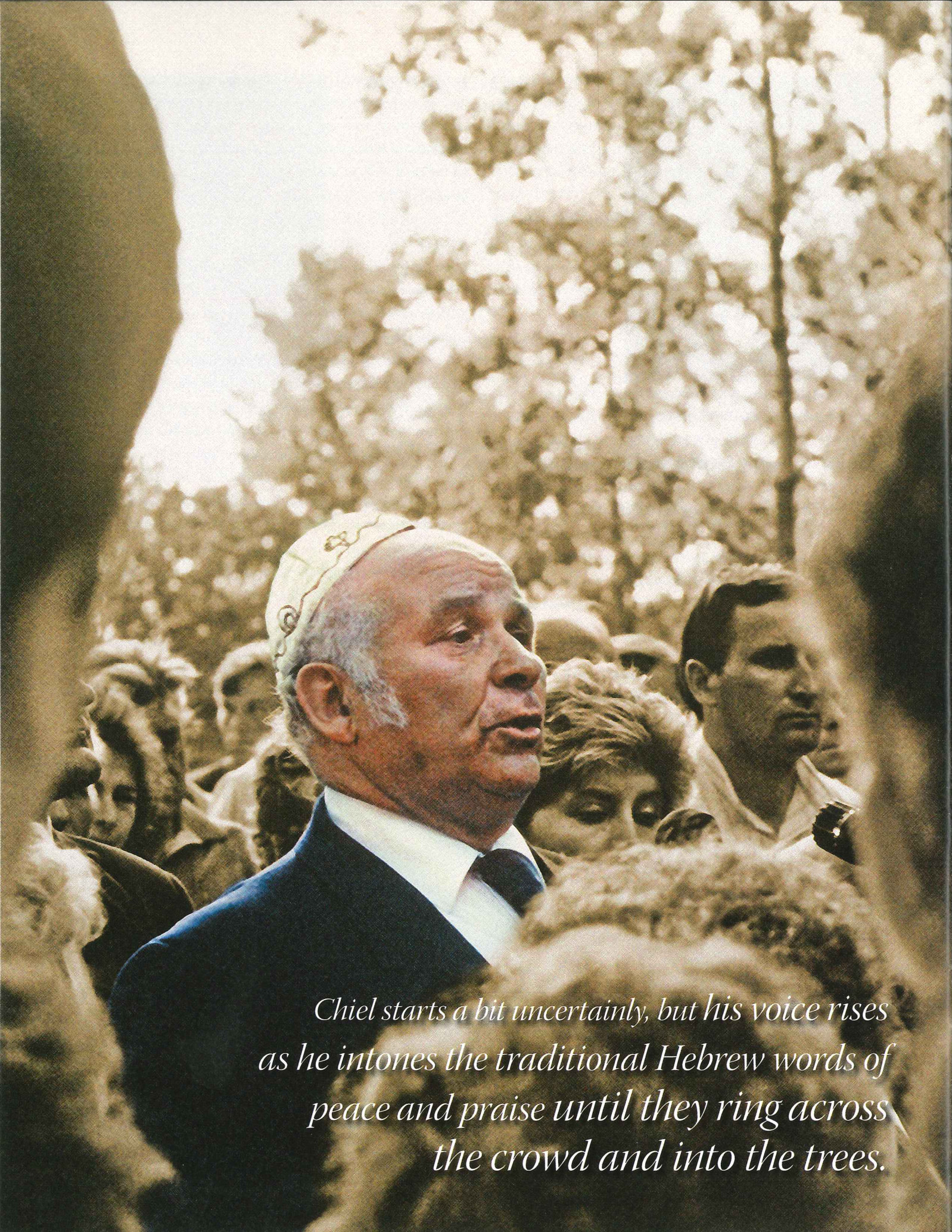
As he concludes, the master of ceremonies announces that Chiel will now say Kaddish, the Jewish prayer for the dead. Chiel starts a bit uncertainly, but his voice rises as he intones the traditional Hebrew words of peace and praise until they ring across the crowd and into the trees. All stand in rapt attention. Many fold their arms and bow their heads. Some dab at their eyes.
When Chiel finishes, we are called to observe two minutes of silence. As we stand in respect, the only sound is that of the poplars, on every side, shaking in the wind. Then Chiel asks for help in unveiling the memorial. We pull the cords and the Israeli flag and the streamers fall away revealing the brass commemorative plaque and the gravestone below. There had been applause for the introductions and speeches, but now it is long and sustained. Chiel introduces the next part of the programme. He sings Hatikva, the Israeli national anthem, in his resonant baritone, to honour the Jewish people; a few voices join in the elegiac final chorus, “ÿTsi-on, / Yerushaly-y-im.” Then the Canadians sing “O Canada” led by Tom and Chiel in tenor and baritone. When Chiel sounds the first bar of March Dabrowski, the song of the Polish legions and Poland’s national anthem, the whole crowd joins in enthusiastically. Chiel completes the cycle by striking up a traditional air, which elicits laughter and fun.
The crowd therefore listens all the more intently to his final words. He thanks them soberly for coming and for supporting the project and, most of all, for remembering those who have no others to remember them. We have spent two intense hours here and Chiel’s former townspeople have stayed to the end. Now they start to disperse, a striking cross-section of local society. Sunburnt, weather-beaten farmers in plain trousers and shirts, townspeople in contemporary dress, officials in suits and ties, all contrasting with the women’s colourful summer dresses and the traditional black gowns of an earlier generation. The people of Zawichost have honoured Chiel, mourned Zawichost’s epochal losses in the Holocaust, and recognized the grim past.
Chiel’s Legacy: “Hate breeds hate”
Chiel was shocked and angered, in 1996, when he learned that the monument he had lovingly raised with his friends in Zawichost had been vandalized. The magnificent bronze sculpture at the top and the brass plate beneath were ripped away and stolen. Chiel feared this outrage might reflect renewed anti-semitism in Zawichost. The perpetrators were never found, nor can their motives now be known. Theft for resale may well have been their main intent, in trying times. But who would deliberately damage so handsome and sensitive a memorial, even in trying times? His friends in Poland and the mayor and council of Zawichost were dismayed by this act of vandalism which cast a shadow over all they had done. They resolved to repair the damage as best they could. Chiel’s friend, Michal Starzyk, took the lead. A gifted self-taught illustrator as well as writer, he designed a brass sculpture of a Star of David and a stone plaque showing a Menorah to replace the missing items. The mayor and council had the new designs made and the repairs were completed in 1997. The result is a fitting and respectful memorial, even if it fails to match the poignancy and grace of the original design. By the time it was repaired, Chiel was no longer as vigorous as he had been and he did not get to see it again. Yet it was done, in particular, for him. Chiel Weinbaum was an ordinary man who embraced life in no ordinary way. Although burdened by grim memories and grievous losses, he joined himself to those who reject evil, who work to repair relations between people, who affirm the possibility of friendship and kindness. “Hate breeds hate,” he would often say: he would do his best to avoid it.
Chiel liked people, but it went beyond that. He gave other people his trust and respect and won theirs in return. “Respect” was the word the people of Zawichost used when they wrote and spoke about him. He received back amply what he amply gave.
His friends in Zawichost kept in touch with him until his death in September, 2000. They mourned his loss and remembered the difference he made to them and to Zawichost. Because of Chiel Weinbaum – and his friends – a sombre memorial stands beneath dark-leaved poplars in a quiet cemetery in southern Poland, near a great river. A monument to centuries of Jewish life in Zawichost, to the victims of the Holocaust, to Chiel’s family. And to Chiel, with his generosity of spirit.
Postscript
28 Jun 2005 06:10:29 – 0400
Subject: RE: Zawichost
To: Eric,
Attached you will find three pictures that
I took yesterday in Zawichost of the cemetery and monument.
As you will see the monument still stands and the cemetery is
maintained (to a degree — i.e., the grass is cut)
We were “ in the neighbourhood” and decided to make the
detour to see if the monument was still standing. We stopped
at the City Hall and quickly got directions and had no trouble
finding the cemetery. (The only problem we encountered was
that it was a very hot day and every mosquito in Poland seems
to have taken refuge in the shade of the cemetery.)
I thought you would enjoy this postscript to your article.
Ralph
R.J. Lysyshyn, Ambassador
The Embassy of Canada, Warsaw, Poland
Chiel’s Home: Zawichost Before the War
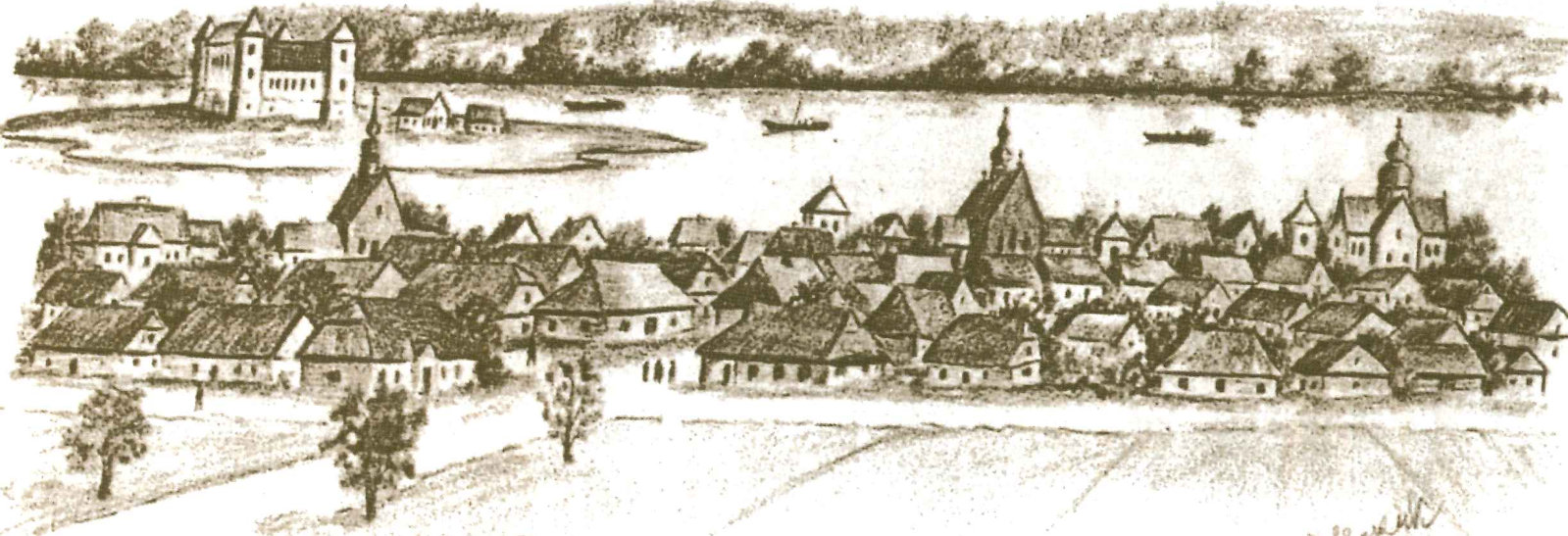
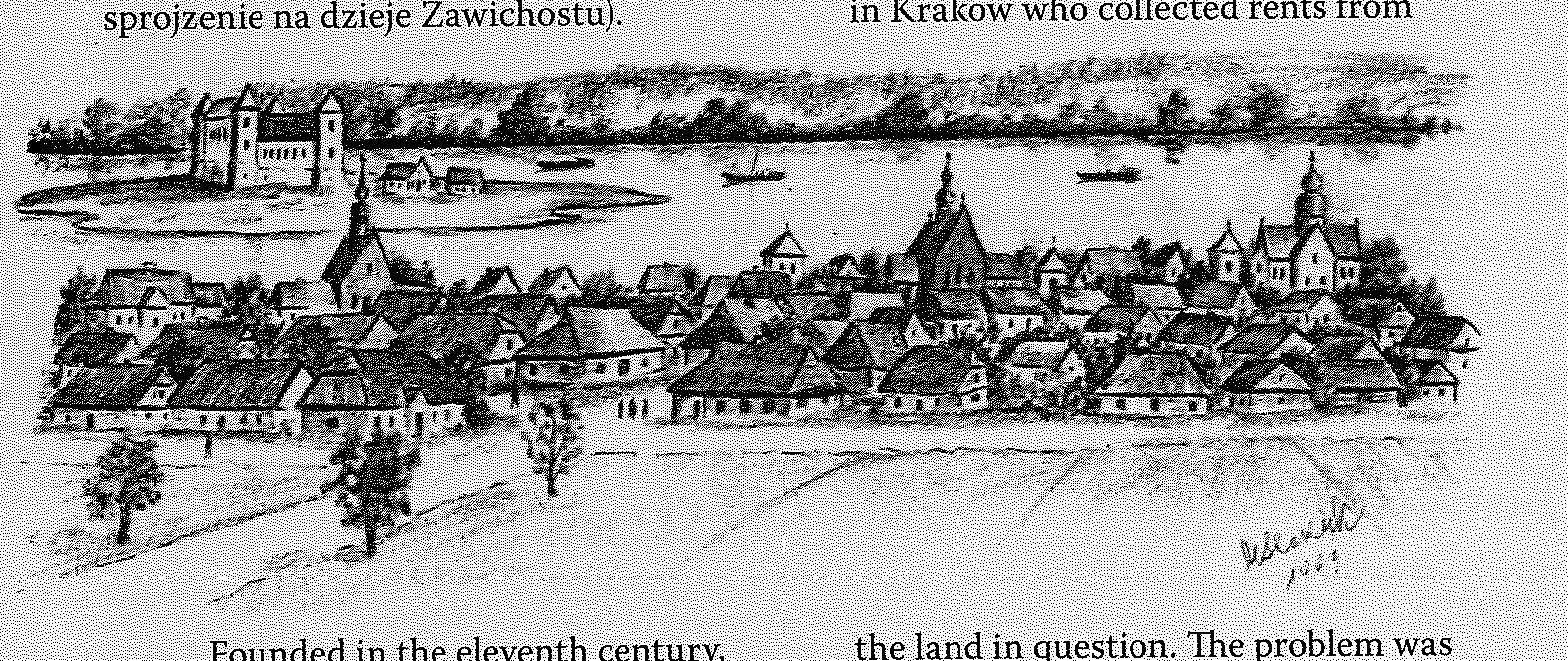
Though an obscure place now, Zawichost turned out to have a long and eventful history. The town’s historian, Michal Starzyk, provides a lively account of its past in My Take on Zawichost’s History (Moje
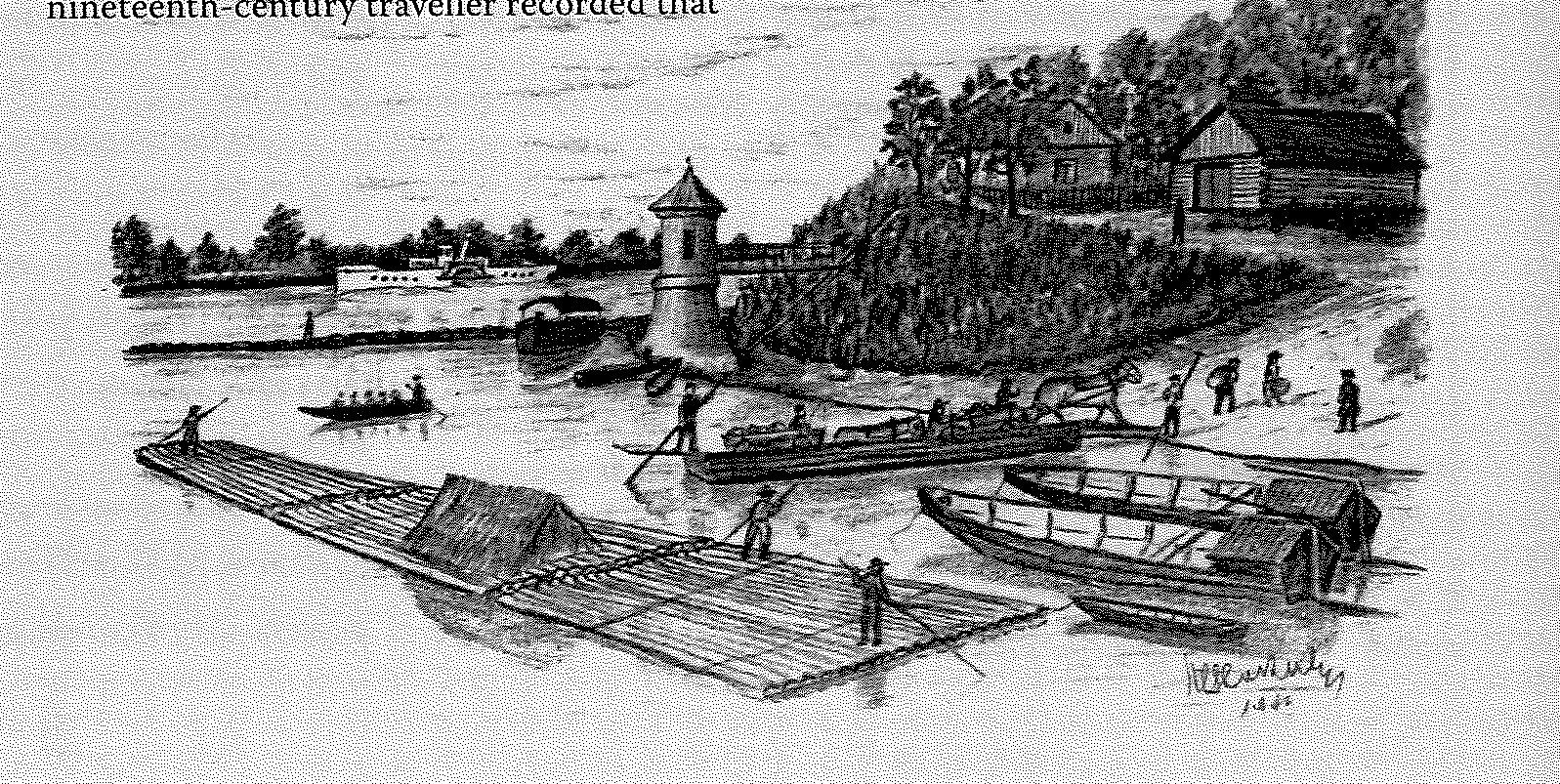
Zawichost grew to be a place of local importance in later years, at times rivalling the regional centre of Sandomierz. Its strategic position at a crossing-point on the Vistula was central to its life, with a toll house, ferry service and fishery dating from its early days. As it grew, the products of the local farms and mines also became important.
As a crossing point, Zawichost was particularly exposed to the marauding forces — Volhynian, Tartar, and Lithuanian
– which roamed the Polish plain. From 1200 to 1502, it averaged a major raid every forty years. The greatest disruption came in 1657 when the royal Swedish army tore down the castle and levelled the town, the population falling from 1200 to 200. Zawichost gradually built itself up again during the following century. Michal Starzyk draws a charming and curious picture of how far it had come by 1824. He cites a census of that year which lists 23 bars in the district, three with orchestras and one with a billiard table! Ten were run by Jews. The Jews of Zawichost had, indeed, become an integral part of the story centuries earlier. Jewish merchants must have visited Zawichost before 1683, but in that year King John Sobieski granted a charter authorizing Jews to settle in what was dubbed the “New Town.” This authorization of permanent Jewish settlement was initially opposed by the Clarist Sisters at St. Andrew’s Convent quickly resolved, possibly by a payment to compensate them for their losses. The “New Town” which sprang up soon became part of Zawichost itself, first as “Prosperow” (after Prosper Zaluski, the man behind the project) and then as “Zydowskie Miasto” or “Jewish Town,” a name heard today, even in the absence of Jews.
Zawichost grew intermittently during the latter part of the nineteenth century and into the twentieth, and the Jewish community increasingly started ventures and made investments that added to its size and wealth. One well-to-do businessman helped to finance better wells and an improved water supply system. According to Starzyk, relations between Christians and Jews were an uncertain mix of cooperation and resentment. A “the Christians here, as everywhere, complain that the Jews are taking away their trade.” In the twentieth century, a bakery added “Christian” to its name in an effort to draw custom from its Jewish competitors.
Yet the changing pattern of settlement before World War Il tells a story which has parallels in North America. Poor Polish peasants moving into town usually settled in the “Jewish Town;” housing was cheaper there. Meanwhile, Jewish business and professional people were moving out, building or buying homes among Catholic neighbours in the more spacious “Polish Town.” The Jewish community’s growing involvement in the town’s civic life is perhaps best attested by the list of those who served on the town council in the early 1930s. Of the town’s nine councillors, four were Jews (Binsztock, Cytrynbaum, Kirszenbaum and Orensztayn). By then Zawichost’s population was nearly 5000 and more than half were Jews. The proportion of Jews on the council was, in effect, a straightforward electoral result which roughly mirrored the town’s demography
– perhaps for the first time. Socially and politically, these seem to have been the most harmonious years Zawichost was to know before the Holocaust tore it in two, killing half of its people. That town, with growing interaction between the communities, was the town in which Chiel grew up.
View the original scanned pages →
Originally published in bout de papier, Vol. 21, No. 3 (2005) — Summer/Fall 2005 // Été/Automne 2005, pp. 34–43. Read the rest of this issue →



