
bout de papier, Vol. 21, No. 4 (2005) — Winter 2005 // Hiver 2005, pp. 29–33
Picture this. You are in remote Borneo, climbing Southeast Asia’s highest mountain and enjoying some of the greatest biological diversity on the planet. You start out early in the morning with a spring in your step and frequent stops to soak in the sights. But several hours later, you’re soaked to the skin from torrential rains and bent over with stomach cramps, making painful headway up the mountain. And you’re not alone you’re climbing with your 12-year-old daughter. After five hours, there’s no end in sight and you are both cold, wet and exhausted. You’re not sure you’re having fun any more!
Travelling as a family over an extended period raises some interesting issues of how to combine varying interests, how to keep up with schoolwork, and even how to avoid too much of a good thing (quality time together). In our case, we decided to focus on a limited number of countries, with each family member choosing two or three. We alternated two or three weeks of travel with two weeks resting/recuperating in one spot and catching up on homework. There are amazingly portable resources available to homeschoolers these days. The Ontario primary and secondary curriculums are now available on-line. The Encarta encyclopedia, complete with videos, maps, virtual tours and much more, is available on a single DVD. We were able to access the Internet on our laptop in all but the most remote locations.
The real stroke of genius, in our humble opinion, was getting someone else to coordinate the travelling portion of our trip. We signed up with an adventure tour company to take us across Japan, China, Thailand, Malaysia, Sabah, Rajasthan, Egypt, and Turkey. This avoided the hassles of trying to coordinate transportation and accommodation, no easy feat. More importantly, it provided all of us -but especially our kids – with an instant group of friends who spoke our same language and with whom we could share our experiences. After two-week blocks of intensive home schooling, this was important!
How many people have toyed with the idea of taking a year off to take a break, re-evaluate priorities, have some fun? The self-funded leave program for public servants provides an opportunity to do just that and still have a job to come back to. My spouse Debbie and I, an employee couple, both signed up for the program prior to our departure for a three-year posting in Cuba. During that time, a third of each paycheque was banked with CS COOP in anticipation of our year off following the posting.
That raised the question of what we were going to do. In our case, Debbie and I decided to spend seven months travelling the world with our 14-year-old son Robyn and 12-year-old daughter Piaf. It was a great opportunity to re-connect with each other – and to have some wonderful experiences.
Two highlights for me were climbing Mt. Kinabalu in Malaysian Borneo and filming a television commercial in India. Of course, having fun can also pose some challenges along the way!
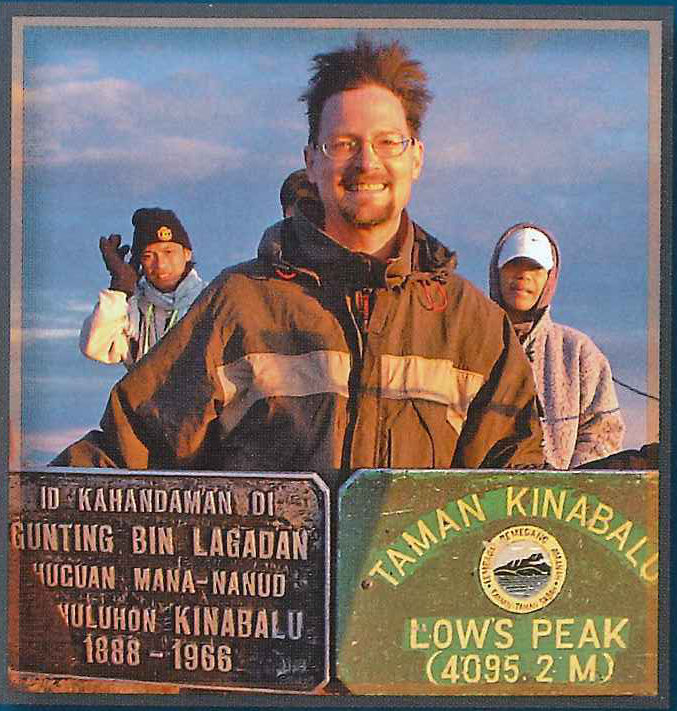
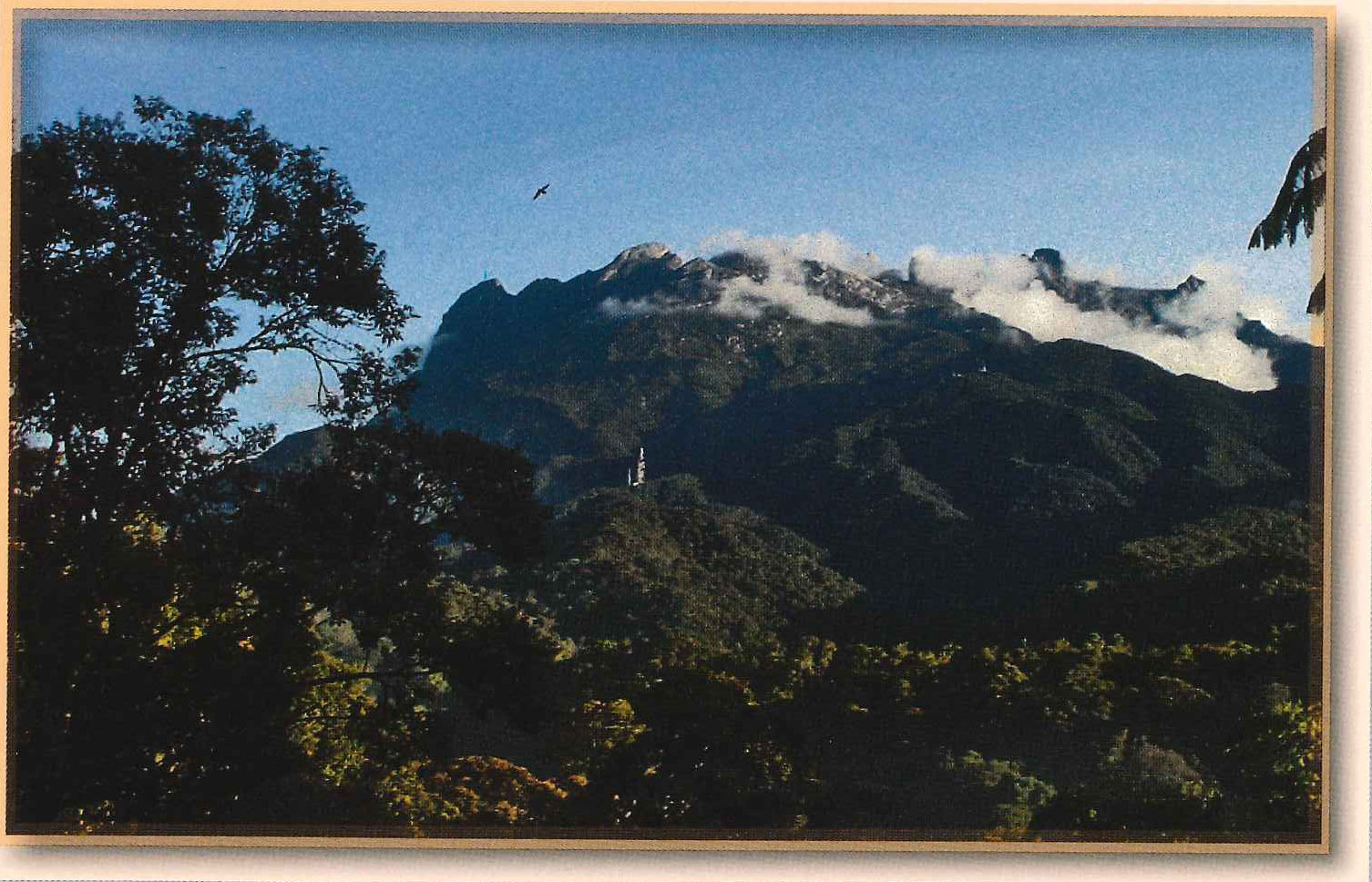
Last December, Piaf and I had the “bonding experience” of our lives climbing Mt. Kinabalu. Kinabalu is the tallest in Southeast Asia at 4,095 metres. The family had had two days to acclimatize to altitude, the first staying in a local indigenous Dusun community and the second at park headquarters. It was spectacular scenery — when visible! Generally, we’d planned well and managed to visit countries during winter dry periods but planning had gone awry in Sabah and we arrived smack in the middle of monsoon season. Fortunately, early mornings generally were clear.
The four of us had very different experiences during the climb. Debbie made the sensible decision to take the direct route up from Park Headquarters to the Laban Rata Resthouse, the jumping-off point for the final push to the summit. She set off at 9:30 a.m. and made it to the Resthouse by 1:30 p.m. The rest of us decided to take the more “scenic” route starting from Mesilou Nature Resort. On the way, we had the bizarre experience of driving through a golf course carved out of the mountain.
In hindsight, I wish we had paid more attention to the description of this alternate route in Anthea Phillips’ excellent guide to Kinabalu Park: “This route is used mainly by scientists and researchers as it takes longer… and many parts are steep and slippery, particularly in wet weather … [It] has been advertised in the past as an alternative route to the first part of the summit climb, but it is much longer and more arduous than the standard trail.”
Robyn set off with a Swiss member of our group and they made great time. Despite the difficulty of the climb, they arrived at the Resthouse only 30 minutes behind Debbie. Meanwhile, Piaf and I were moving at a slower pace. We took our time over the first hour and a half, much of it downhill. The scenery was spectacular and we saw plenty of the biological diversity that makes Kinabalu famous, including carnivorous pitcher plants. However, a morning mist became torrential rain as we started uphill. The trail turned into a mountain culvert. We found ourselves struggling upwards against a gushing stream, taking twenty steps and then stopping to gasp for breath. Enormous earthworms
– longer than a foot were driven above ground. However, we were too preoccupied to focus on much more than climbing. To make matters worse, we’d both come down with a mild case of food poisoning and the stomach cramps were made worse by the altitude. We finally met the main trail and took a break to get some warm, dry clothes on Piaf. We arrived at the Resthouse at 5:00 p.m., as darkness approached. Piaf and I couldn’t stomach much more than a tea and bowl of consommé but were very happy to have made it.
Robyn and I were up by 2:00 a.m. the next morning to begin the final ascent. Deb and Piaf had decided to stay behind while Robyn and I took the remaining dry warm clothes. We started as part of a larger group but then spread out along the trail. We had had it drummed into us to stay on the trail, since a young woman on a previous tour had died of exposure when she had wandered off and gotten lost. Almost immediately, Robyn started having severe stomach cramps, a combination of food poisoning and altitude sickness. Altitude sickness gets worse the higher you go; we turned around and headed back to base camp when the cramps became too much to bear. However, we had only returned about 100 metres when we met a guide who led Robyn back down so that I could continue on.
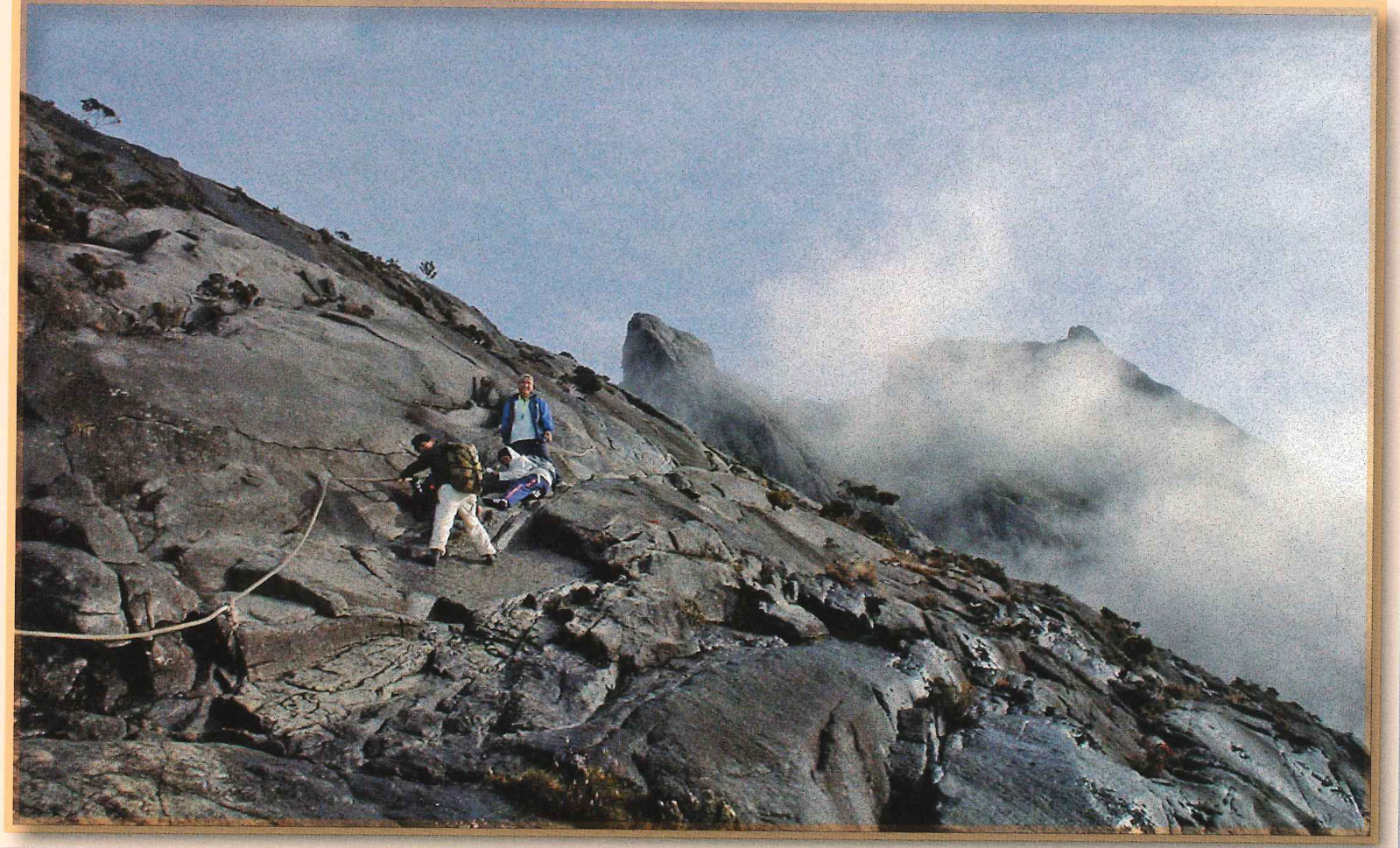
The next three hours involved labouriously lifting one foot after another while gasping for breath. It’s amazing how the world can narrow down to that simple action. Parts of the trail led up over steep rocky outcroppings
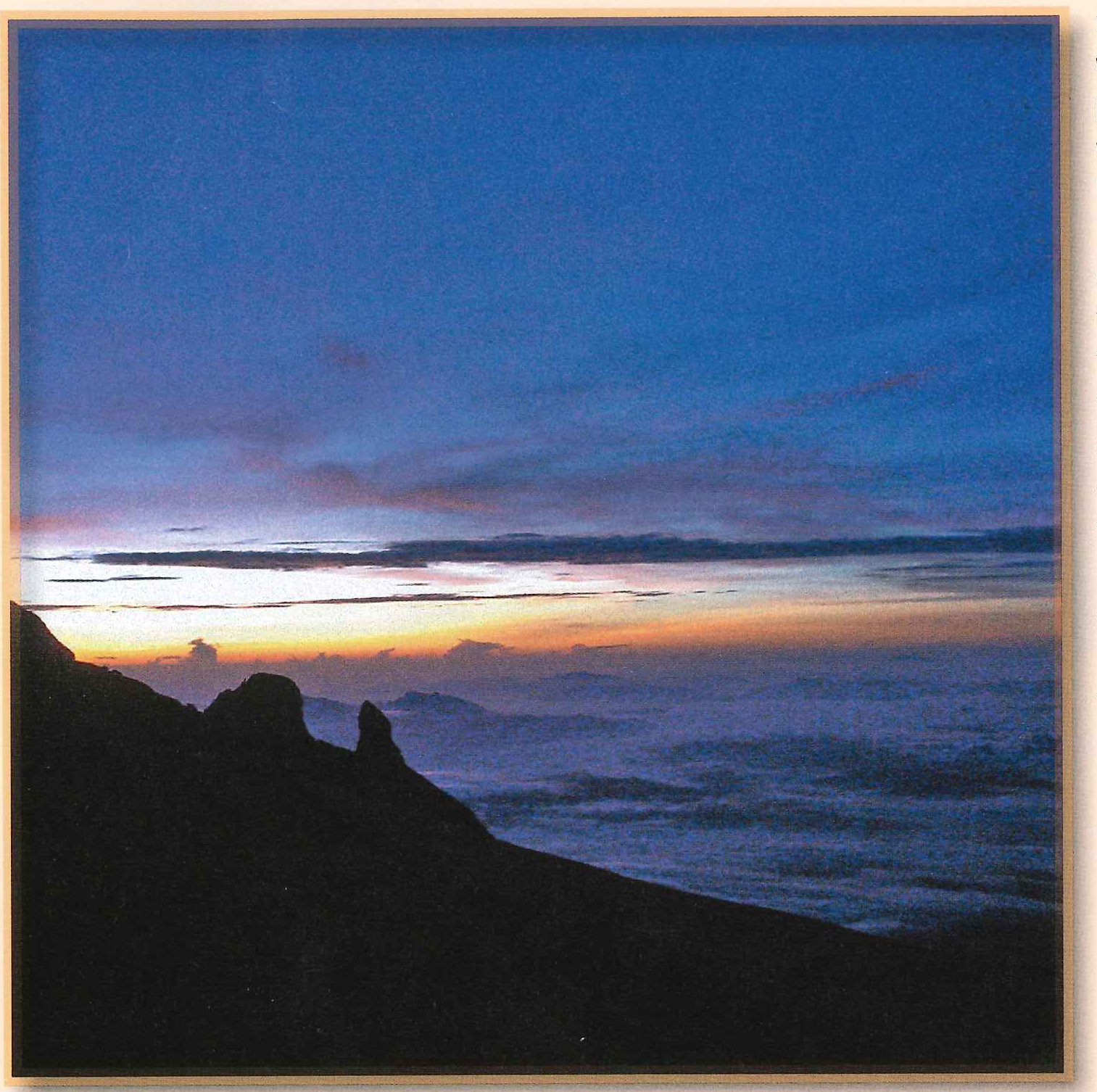
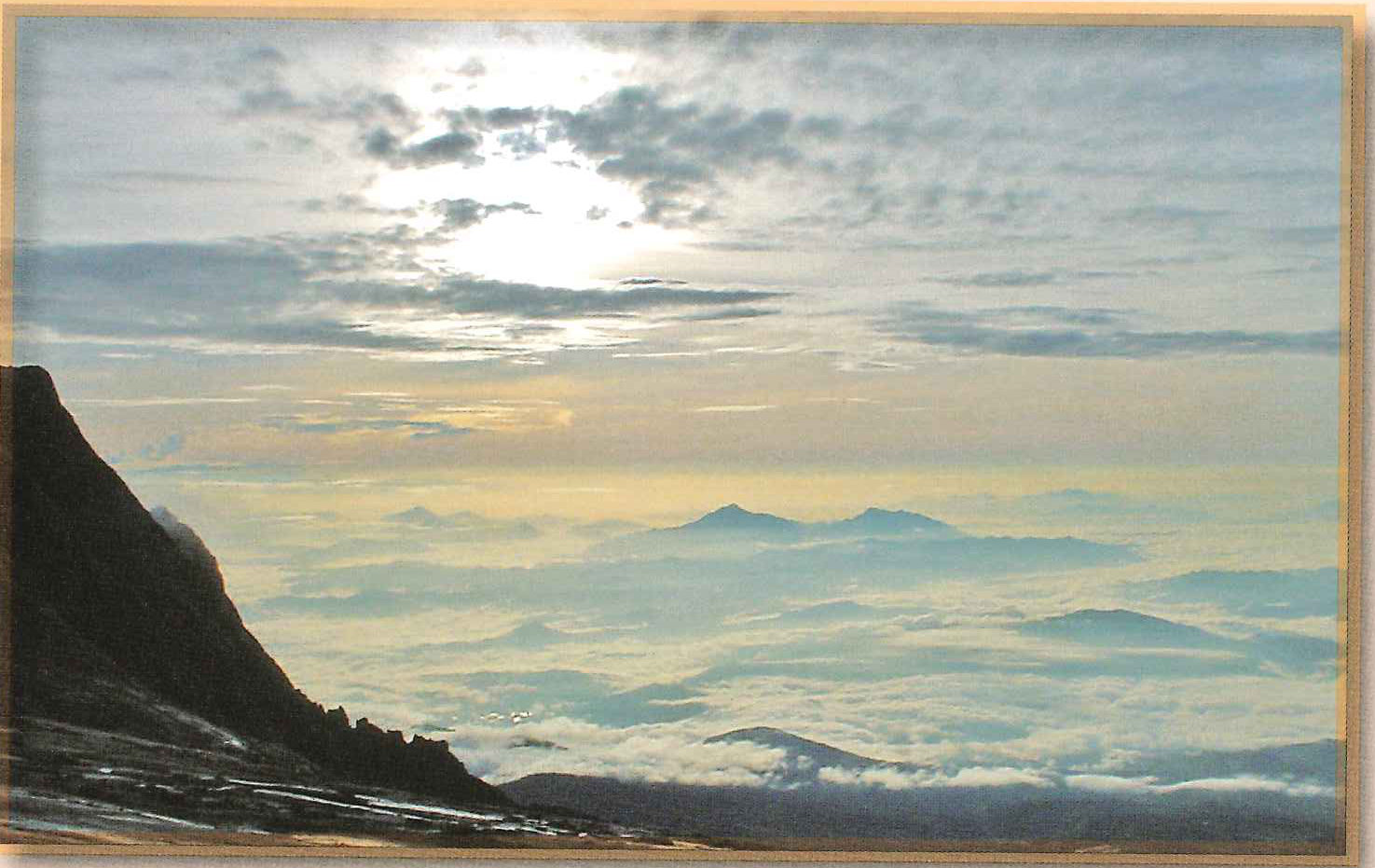
– in the dark, there was the sensation of being on the edge of an abyss. Fortunately there were guide ropes to cling to and to pull yourself up. What keeps you going is the promise of the summit and the dawn. And, indeed, it was spectacular, even if, or perhaps because, it was shared with 60 other people who had made the same trek that morning.
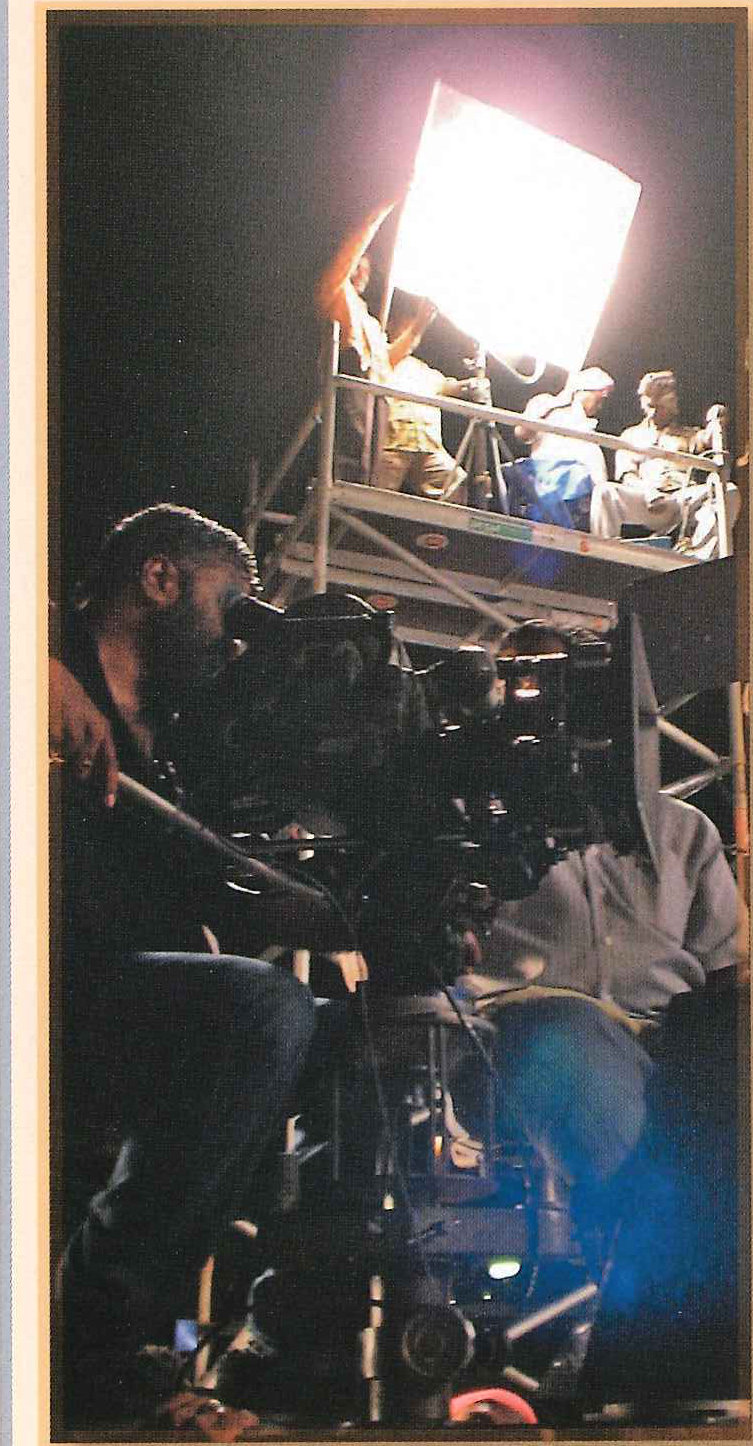
It was on a trek of an entirely different type that we embarked on another adventure. We were in Chennai/Madras for two weeks in early January. We had come so that Debbie could take a yoga course and spend some time at the Theosophical Society, while the kids and I did some serious home schooling. But we jiggled our schedule to spend several days volunteering with the tsunami relief effort and seeing the sights. Like “Bollywood,” Chennai is the centre of a huge film industry. On Deb’s birthday, we trekked out to AVM Studios, even being invited into a jail house set to watch a scene being filmed from behind the cameras. As we were leaving, a woman driving up stopped and asked if we wanted to be in a television commercial. We looked at each other, shrugged and said yes.
We were sent off for a screen test, which consisted of having our pictures taken and chatting with Narmada, the talent coordinator. By this time, we were very curious about what we might be selling. It turned out that it would be Mirinda, Pepsi’s answer to Coke’s Orange Fanta. Here’s one of the beauties of being on self-funded leave and travelling anonymously around the world. If we had been posted to India, we might have worried about upholding the proper image of a diplomat. We might even have questioned what we were doing promoting a product that we never drink. Instead we chortled about having an opportunity for adventure fall into our laps.
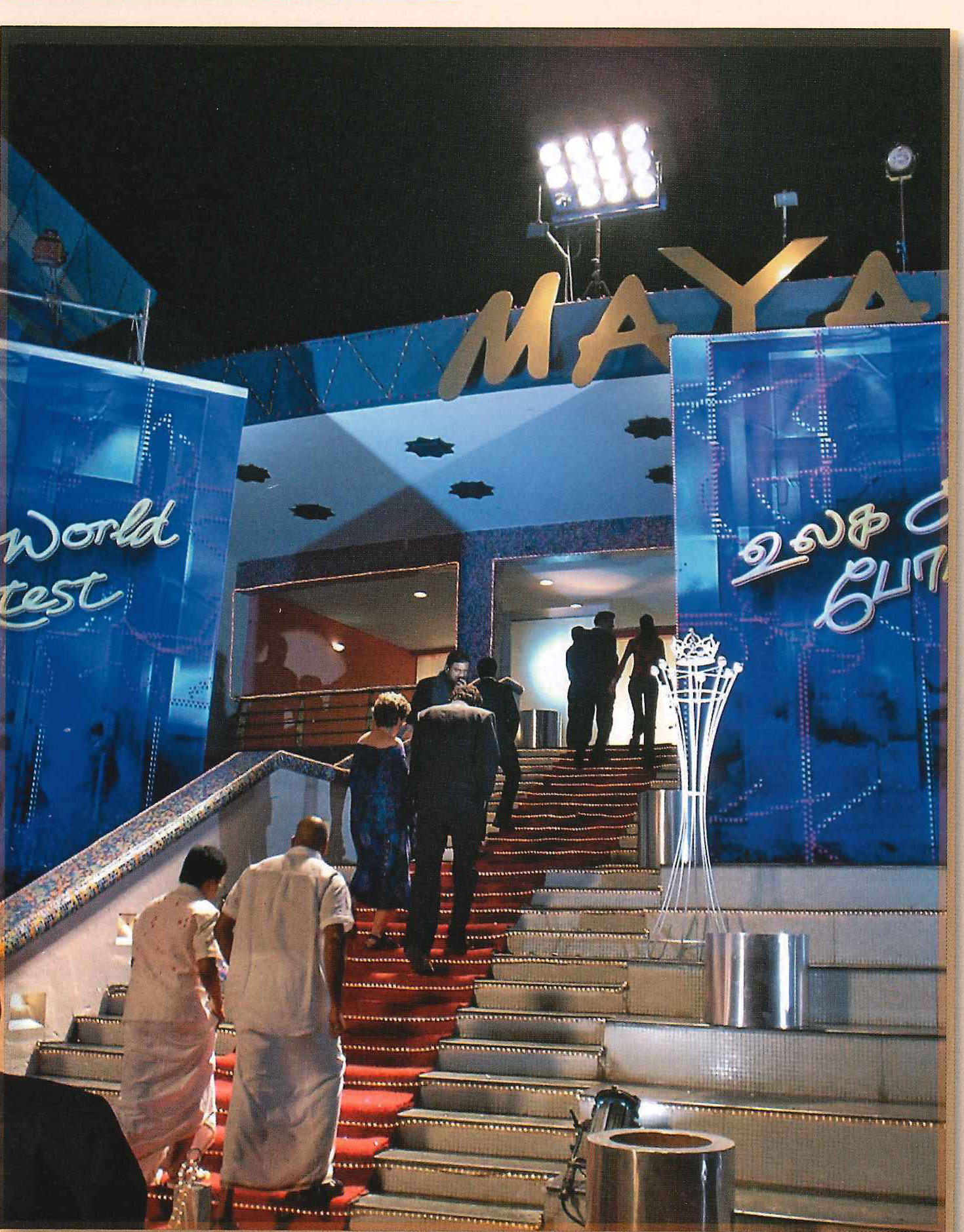
Initially, though, it seemed like just a bit too much of an adventure. Back at our hotel, we received a garbled message about someone coming to pick us up to take us to a night shoot. Getting ready involved several shopping expeditions in order to be properly attired in semi-formal western clothes. On the appointed evening, we were all dressed up and slightly nervous about what we were getting ourselves into. After a thirty-minute wait, our driver showed up. We drove further and further south until we had left the city of Chennai behind. Just as paranoia was setting in (visions of Mexico City and kidnappings were running through our heads), we started passing some film studios. Finally, we pulled into “Mayajaal — India’s Largest Multiplex Theatre,” a SilverCity-type movie complex where the commercial was to be filmed
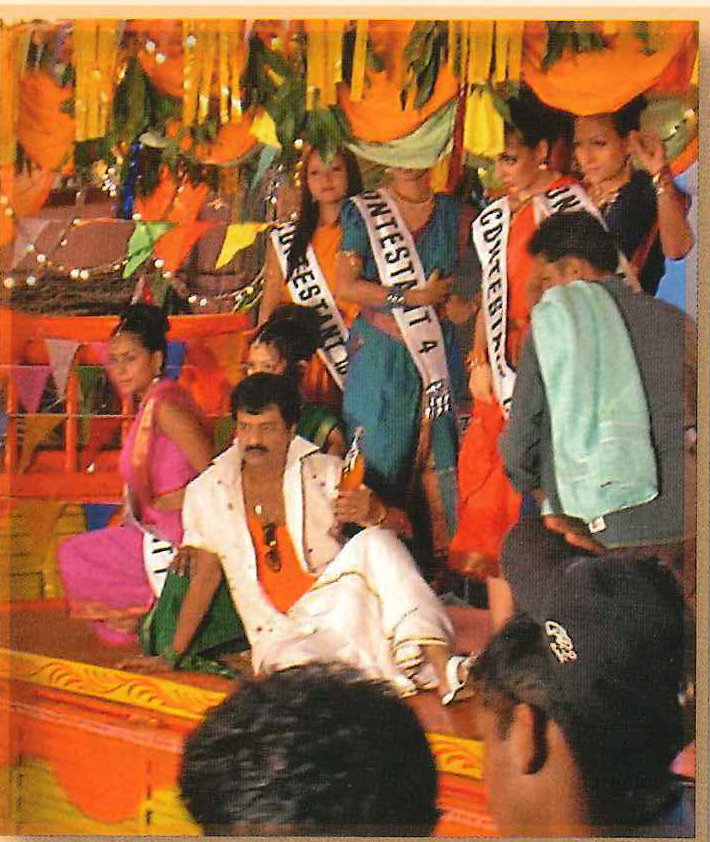
Over two nights of filming, the storyline emerged. A “Miss World” beauty pageant is being hosted in southern India. The action opens with couples in western attire walking up the staircase to the auditorium. Two men dressed in traditional “vesti” (like a sarong) try to gain admittance and are turned away by security. One of them (Vivek, a Tamil comedian/movie star) threatens revenge. He returns with a truck, complete with cow horns and painted eyes, loaded with Mirinda and blaring south Indian music. The beauty contestants rush off the stage, trampling security, in their zeal to get to the Mirinda. They exchange their gowns for saris and lead the celebration with one of those dance numbers that Indian films are famous for, while the assembled multitudes cheer them on, waving bottles of Mirinda in the air.
Well, maybe not terribly politically correct but what a riot! And quite a clever way to turn a fizzy drink produced by a transnational company into some kind of defiant cultural statement.
Setting up for filming took several hours the first night. The sweeping entrance to the theatre complex was festooned with lights across the stairs, on the banisters and along the roof. Towers for lighting were put up, electrical wires run everywhere and the actors and extras marshalled. Filming started around 11:30 p.m. and lasted until 4:45 a.m.
Like a movie, there was a definite hierarchy among the performers. The star was, understandably, well looked after (I admit to being envious of his deck chair). However, even he had to be patient between takes throughout the night. Other key performers included the head of security, the star’s companion in trying to break the clothing barrier, and the beauty contestants. The head of security, tall and handsome with his black hair pulled back into a ponytail, was our favourite. He had a classical training in theatre and it showed as he remained consistently in character throughout the two nights, projecting a commanding presence with a dry sense of humour (a bit like Patrick Stewart, aka “Jean-Luc Picard” in Star Trek, with hair). The star’s fellow rebel against the clothing barrier turned out to be a local film director whose friends had been urging him to see what it was like on the other side of the camera. The beauty contestants were lead by a model/dancer from Texas!
The extras, like us, were divided into two groups: the multitudinous crowd outside the auditorium and those lucky few of us with tickets to the beauty pageant. Those of us in the latter group walked up the sweeping outside staircase over and over and over again as sparkling confetti rained over us and the assistant director roared, cajoled and swore at the camera and lighting crews and everyone else. Deb got special attention, walking up the stairs directly in front of the star. She was told that it was her bare shoulders (ah, those decadent westerners) that gave her the edge.
The key scenes, such as the star’s altercation with the security manager, were overseen by the director, Jayenda Panchapakesan. Jayenda runs Real Image, “India’s foremost technology provider for the film, video and audio markets.” His wife, Sudha, is originally from Ottawa, of all places, and took us under her wing the first night of shooting. In contrast to his assistant, Jayenda is soft spoken; he comes across as a genuinely nice person. For several years now, a portion of the company profits have been invested in development projects through an NGO he founded called Bhoomika Trust. What with work on the commercial and the tsunami reliet efforts, he and Sudha were getting by on very little sleep.
Working through the night can be a challenge. There are long stretches as lights and props are being assembled. After sinking into a state of near stupor, suddenly you’re supposed to be full of vim and vigour and be able to avoid tripping over your own feet. This is harder than it sounds. By 4:45 a.m., we were told we could go home, either because enough progress had been made or everyone was too tired. But we were all back again the next night to film the security manager being stampeded by the pageant contestants desperate to get to the Mirinda truck and the contestants (now in saris) doing their dance number while the rest of us waved Mirinda bottles wildly in the air and howled our approval. Robyn got a front row view of the dance stage as the director called out, “will Harry Potter please move forward.” Filming ended around 5:00 a.m. with our star mugging for the camera, surrounded by the beauty contestants.
We now look at commercials with a very different eye. We have an appreciation for the hard work that can go into making that frenetic 30-second clip. Hopefully, most of them aren’t shot during the night! We made some new friends and can even say that the experience helped to make the world a better place. In order to ensure that we didn’t run afoul of India’s labour laws (it sure helps to have a consular officer in the family, we asked that a donation be made to Chennai’s tsunami victims, in lieu of remuneration.
By the end of the trip, we had enough memories to last a lifetime – volunteering as assistant panda keepers in the mountains of Wolong, racing camels in the Rajasthan desert, drifting down the Nile for two days in a felucca … except, now we’re trying to figure out how we can do it again in another ten years. It’s said that soon people regularly will be living to the age of 140 – regular mental health breaks are important! Think about it….
View the original scanned pages →
Originally published in bout de papier, Vol. 21, No. 4 (2005) — Winter 2005 // Hiver 2005, pp. 29–33. Read the rest of this issue →



