
bout de papier, Vol. 21, No. 4 (2005) — Winter 2005 // Hiver 2005, pp. 9–15
As Chester Ronning closed the doors of the Canadian Embassy C in China in 1951, police arrested innocent locally-engaged employee Tessie Wong
Una January day in 1951 Tessie Wong, a localy engaged Chinese receptionist/typist at the Canadian Embassy, was en route by rail from Nanjing to Shanghai, on instructions from Charge d’Affaires Chester Ronning. Both knew it was a risky mission, to deliver a message to Canadian Consul-General George Patterson, but hand delivery was the only dependable means of communication available.
Without accreditation to the People’s Republic of China, Ronning’s position was precarious. In 1949 and early 1950 it had seemed almost certain that Ottawa would recognize China, although the US was very opposed. Arthur Menzies, who was Head of the American and Far Eastern Division at External Affairs, was deeply involved in the deliberations. Despite reluctance in some quarters, Menzies had fully expected that Ronning would go to Beijing as chargé d’affaires. In January 1950 Ronning had already rented the building in Beijing where the new Canadian Embassy would be established — but the Korean Conflict began in June 1950 and Canada fought on behalf of the United Nations. As soon as “Chinese volunteers” crossed the Yalu River in support of North Korea in late October, Canada and China were effectively at war, and overtures toward Canadian recognition of China were ended abruptly. Ronning was ordered to close the Embassy in January 1951, and he was now considered an enemy alien, despite his personal friendship with some leading members of the Communist Party whom he had met in Chongqing and his life-long friendship with the Chinese people, among whom he had grown up.
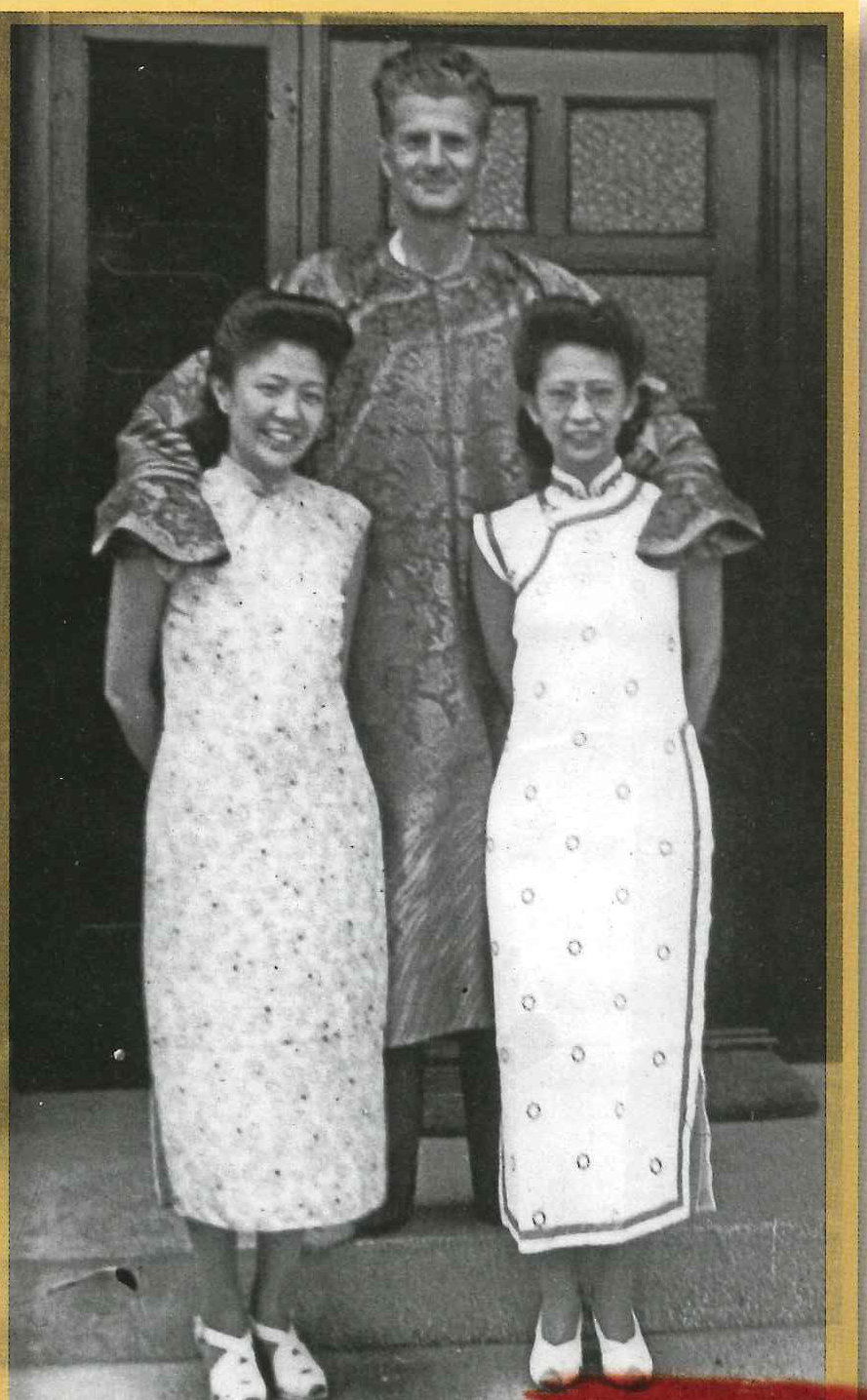
Ronning was preparing to wind down the affairs of the Canadian Embassy with the assistance of the remaining staff of three – Canadian administrator John Staines, locally engaged translator Mr. Chen, and Tessie
General in Shanghai Bruce Rankin had exited China with no money, no papers, nothing but the clothes he was wearing. His wife, Mona Rankin, recalls, “It was a terrible time. When any foreigner had to leave they had to advertise in advance that they were leaving. In many cases servants would come forward and complain of mistreatment – whether or not it was true. Bruce managed to smuggle out one American who had got in trouble.” If Ronning’s position was insecure, Tessie Wong’s was perilous. Mona Rankin says, “There was a tremendous amount of retaliation toward those who worked for foreigners who had no accreditation.” Bruce Rankin had reportedly refused to depart until the eleventh hour, having held out for permission from Ottawa to evacuate his loyal native Chinese staff. “To have left them behind,” Rankin believed, “would have been signing their death warrants.” Nevitt Maybee, who had accompanied her diplomat husband Jack Maybee to Nanjing, recounts sadly, “Anybody who worked for foreigners was suspect. We sent money to our old amah [nanny] after we left, but after a while she asked us not to write or send money anymore; she said they thought she was a spy. We never heard from her again.” Although without diplomatic status, Ronning was well known and respected as a diplomat and friend to China, and his government ensured his safe return to Ottawa. Tessie’s connections, on the other hand, were in all the wrong places.
Wong Yaoying (she was given the name “Tessie” by an Italian sister at St. Mary’s School in Hangzhou) was born to upper class parents of Cantonese origin in Beijing in 1921. Her father, Wong Dilian, had studied in Canton, and in Beijing at Qinghua University. His wife, Liu Shuznen, had influential family connections through which Wong had become a government official and later Secretary of the Treasury in the northern government. Tessie and her younger sister Weiying (Katharine) enjoyed a privileged upbringing. They lived in a fine Beijing house with wide red gates flanked by lions, through which the family’s horse-drawn carriage would take Tessie to kindergarten to learn paper folding and singing.
The Wongs’ only son died in infancy, and the Wongs treated Tessie in some ways as a substitute for their son, even dressing her like a boy when she was a small child. Tessie’s father doted on her and treated her well, imparting a sense of self-confidence and the expectation that life was full of opportunities for enjoyment and fulfilment. As she grew older Tessie would come to prize the freedom she had taken for granted as a child The Wong household was a traditional one, but China was changing rapidly, and both parents were affected by modern western influences. Liu Shuzhen’s feet had been bound, according to traditional practice, and to ensure her marriageability. Shuzhen loved partying, and especially loved dancing in high heels, despite the pain it caused her broken feet. She refused to have Tessie’s feet bound. Shuzhen was a strong capable woman, who in Tessie’s estimation might have been successful in business or as a cabinet minister, had it been acceptable for women to pursue a career. She was a force to be reckoned with in the Wong household When Dilian chose a concubine, Shuzhen refused to accept the situation. Having tailed to provide Dilian with a surviving heir, she was painfully aware that a concubine might bear him a son; if that happened she would lose her favoured family status and the security that went with it. Forbidden to express the depth of her anger at Dilian, she directed it at Tessie, beating her with a duster. As Tessie and Katharine grew up during the 1920s and 1930s, Shuzhen moved the family around war-torn China, seeking to shelter them from continual waves of civil conflict and Japanese encroachment.
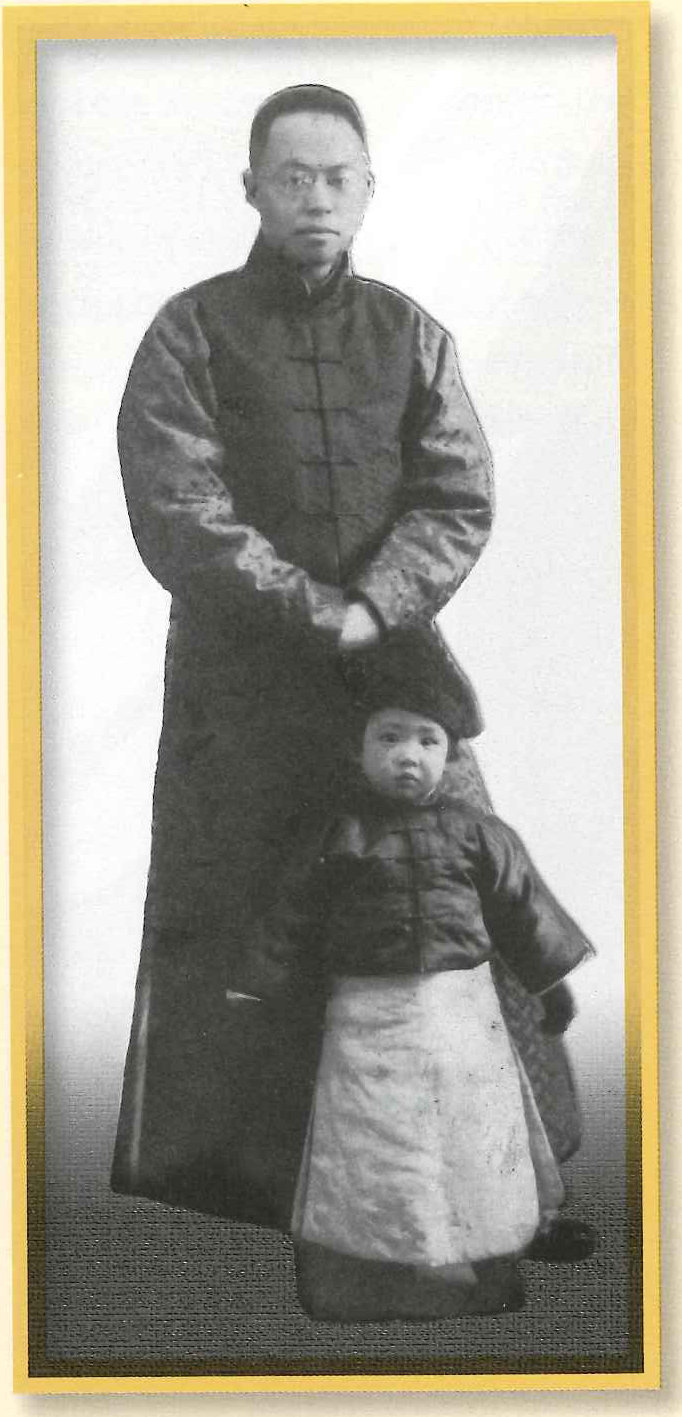
Shuzhen’s strategy of frequent moves also served to reduce Dilian’s rank, which in turn made him less attractive to prospective concubines. During these years the girls were educated in the best private schools in Canton, Shanghai, Hong Kong, and Hangzhou. Tessie enjoyed the sociable environment of school, where she and the other girls learned foreign languages, wrestled with the complexities of the Chinese language, and entertained each other with jokes behind the teacher’s back. “I was very naughty,” Tessie admitted later with a satisfied grin. The latter years of her schooling were focused on the acquisition of social graces: feminine posture and carriage, the proper way to close a door, how to cut an orange. The traditional curriculum for an upper class woman reminded Tessie that the education of Chinese women was designed strictly to prepare them for Attractive, intelligent and vivacious, Tessie enjoyed the freedom afforded by her background, and put off the day when she would be obliged to accept the confinement of marriage. After completing her basic education, she went to a business school in Hong Kong to learn typing and shorthand. Unlike her sister, who had an academic bent, Tessie was driven by a desire for friendship and social adventure. Every day after class, she and her classmates went to tea dances from five until seven o’clock, where they enjoyed music and made new friends in fashionable society. Meanwhile, Shuzhen was busily outfitting her daughters with beautiful dresses and reminding them to be delicate and pour tea nicely. She warned Tessie, “If you don’t marry before you are 25 you will be an old maid.” Shuzhen must have also thought that, since she did not have a son, she would have to rely on a daughter and son-in-law to take care of her in old age.
Eventually Tessie met someone to her mother’s, but not her father’s, liking. Then, in Shanghai, a banker introduced her to another suitor: a tall, handsome, older man, a quiet and gifted scholar named Un-Lin Chang. Chang had studied chemistry at M.I.T., but his mother had summoned him home before finishing his thesis. Tessie’s parents thought Chang a good catch, especially since his uncle was Wang Jingwei, president of the government in occupied China at Nanjing.
Tessie knew her mother would soon insist on making a match for her, and she decided to marry Chang. They had a big traditional wedding ceremony in 1942, when she was 21 years old. Tessie began to have misgivings even before the ceremony was over. She later recalled with disgust, “I had to kowtow to my husband’s father.” Because of her desire to carry on her own family name in the absence of a brother, she did not change her surname. Tessie soon realized that she had little in common with her sincere, kind, but inelegant husband, and his quiet way of life. She thought of herself as a social butterfly, mismatched with a scholar. Un-Lin and Tessie had a daughter, Sau Wai, in 1943. The next year Wang Jingwei died. When Chiang Kai-shek denounced him as a traitor and collaborator with the Japanese occupiers, public outrage forced Wang’s extended family to flee. At this critical juncture, Chang decided to move to Hong Kong, where he became a college professor.
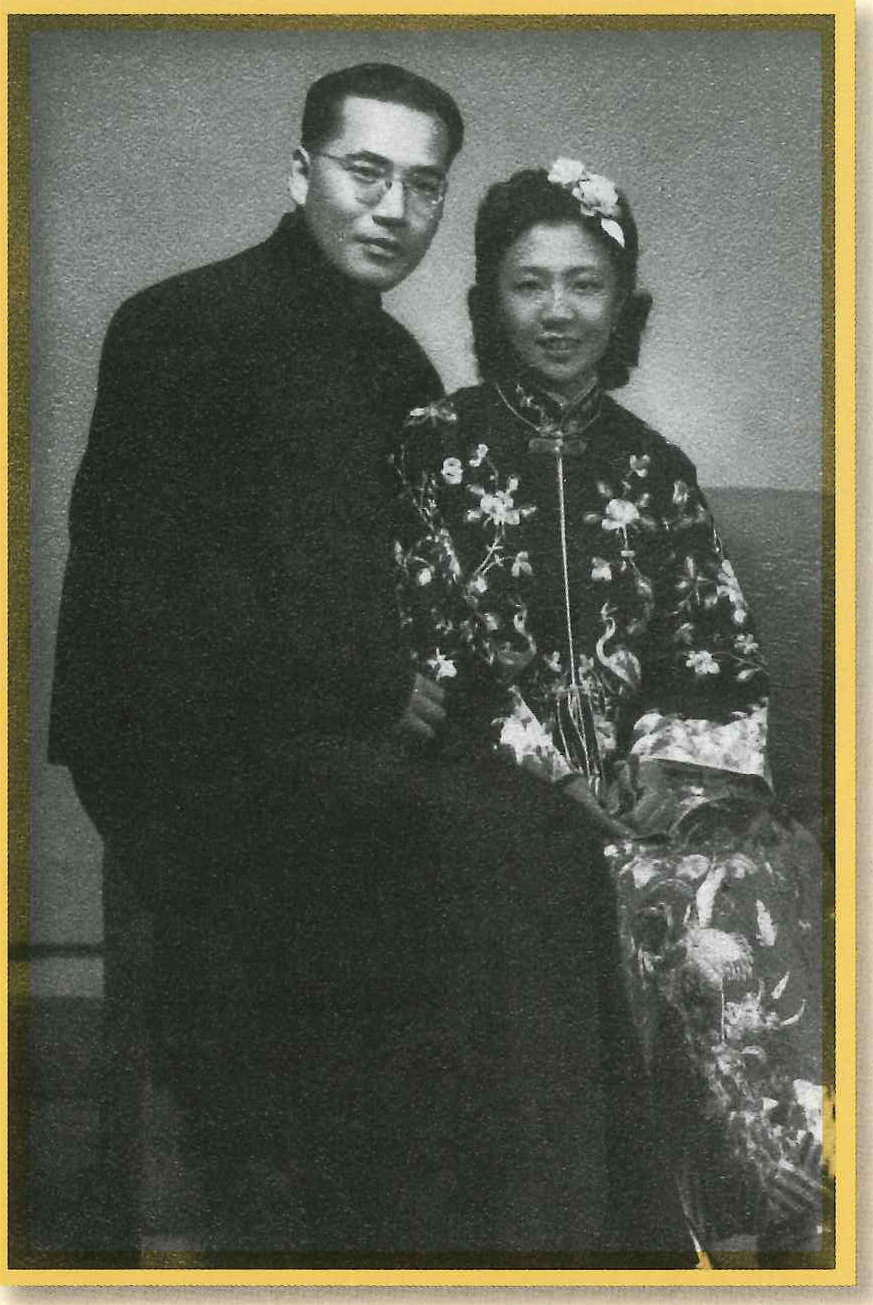
Tessie, however, parted from her husband, and in December 1945 went to work at the newly-established Canadian Embassy in Chongqing, where her university-educated sister was already on staff. Sau Wai was taken to Canton with Shuzhen. Within a few years this fateful decision would lead to more misery than Tessie could have imagined As a receptionist at the Embassy Tessie was in her element, and was popular with everyone on staff. Her only complaint was that the typing assignments given her by the severe ambassador, Major General Victor Odlum, were lengthy and boring. Odlum needlessly rationed the charcoal used in the office heater, and issued knitting gloves to the secretaries so they could continue typing in the frigid office. The living quarters were frosty, too, and only one blanket per person was allowed. Tessie and the other office staff took pity on First Secretary Chester Ronning, who suffered from asthma and was particularly sensitive to cold, and managed secretly to provide him with an extra blanket. Odlum forbade the women to go out in the Embassy Jeep, but Chester would take them for picnics, warning them to crouch down on the floor as they passed the ambassador. Despite Odlum’s unpleasantness, Tessie diplomatically honoured him by bestowing the name “Victoria” on her daughter Sau Wai, during one of her periodic visits.
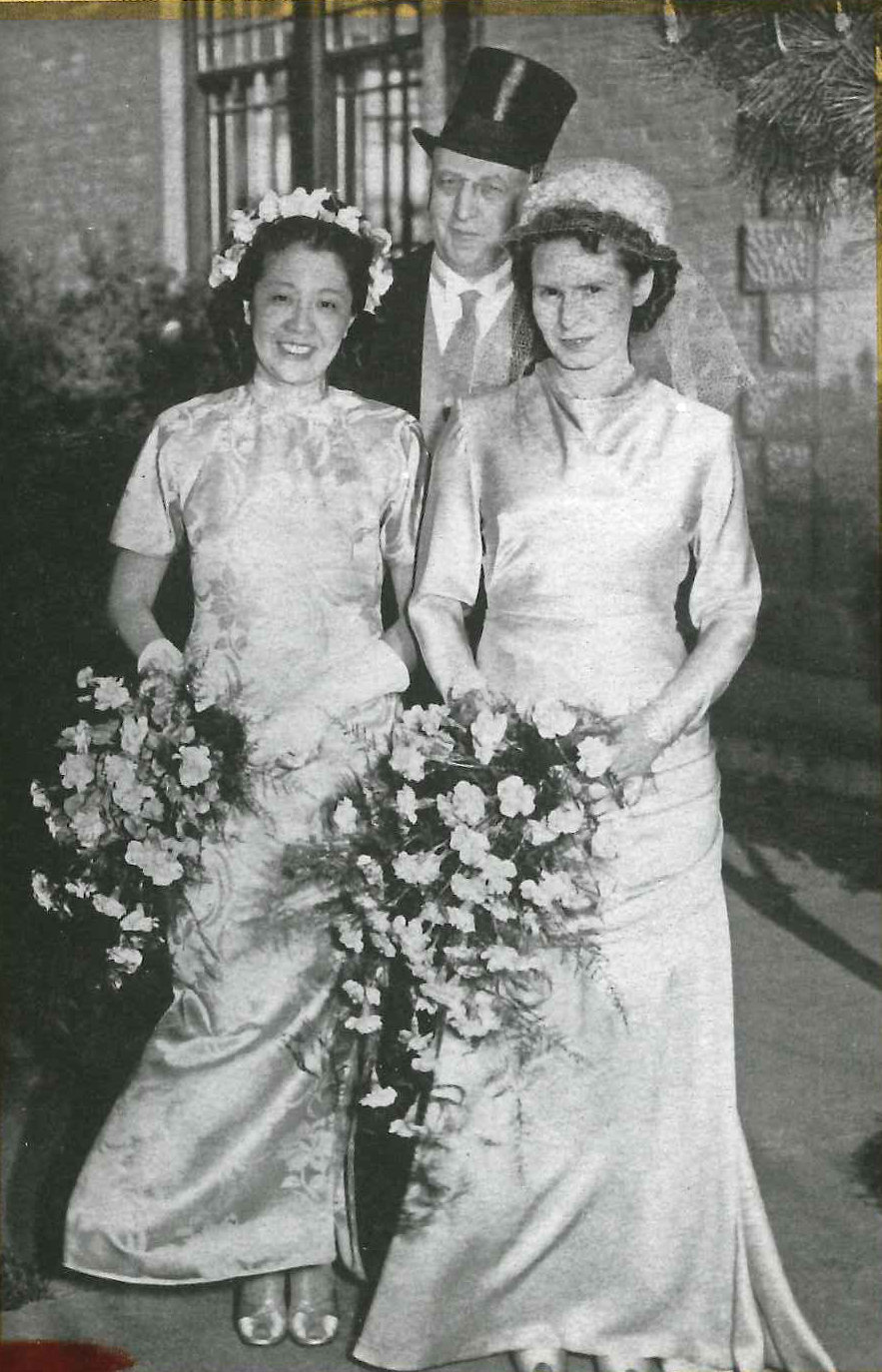
When the Embassy moved to Nanjing in May 1946, Tessie moved with it. In October the new ambassador, Thomas Clayton Davis, arrived and created a much more agreeable office atmosphere. Tessie continued to revel in the camaraderie of the staff and families, and in the social life of the Embassy, with its lively parties, dancing, and opportunities to make new friends from the diplomatic community. Well-liked by everyone, she had become particularly close to Chester Ronning, and she betriended his wife and children when they arrived in 1947. Her friend Nevitt Maybee says, “Chester was very loving and outgoing. He treated Tessie like his daughter. Tessie was part of the Embassy family.” Another close friend was secretary Alice Mullins, whose marriage to Canadian Military Attaché Col. Frederick Clifford she attended as bridesmaid on April 10, 1948. Jack Maybee was one of the ushers.
Through her friendships at the Embassy, Tessie developed a great admiration for Canadians and Canada, and a desire to visit and study there. In 1947 Tessie’s sister had gone to join her husband, who had already emigrated to the United States, and she had spent a period of study at the University of Toronto. With her mother and daughter still in China, Tessie chose to stay with the Embassy. Around March 13, 1949, HMCS Crescent arrived in Nanjing with responsibility for the safety se non-Chinese staffs ad to evacuate. Peter utenant on HMCS alled Tessie as “an every good English
1. She was so proud arbour, took delight in ited so much to come the Communist nd travel increasingly dangerous, Ottawa ordered the Canadian women and children at the Embassy to leave. Ambassador and Mrs. Davis left early in 1949. Tessie must have realized then that she had no choice but to stay with the Embassy. Given the attitude of the Communists toward those associated with foreigners, and those from upper-class families, her prospects of employment elsewhere in China would have been virtually nil. For the same reason, a study visit to Canada with a return to a hostile China would have been out of the question. Re-settlement in Canada was impossible; until 1962 Canada restricted the immigration of people of Asian origin to the wives or unmarried children of Canadian citizens. It was too late to make her way safely out of the country or re-join her widowed mother and her daughter in Canton. It seems she had faith, as Ronning did, that things would settle down, the Embassy would be re-established, and that she would then go to Canada. Nevitt Maybee believes there was another reason for staying, however. “She stayed out of loyalty, says Nevitt. “It was her job.” Tessie’s loyalty would soon be tested severely.
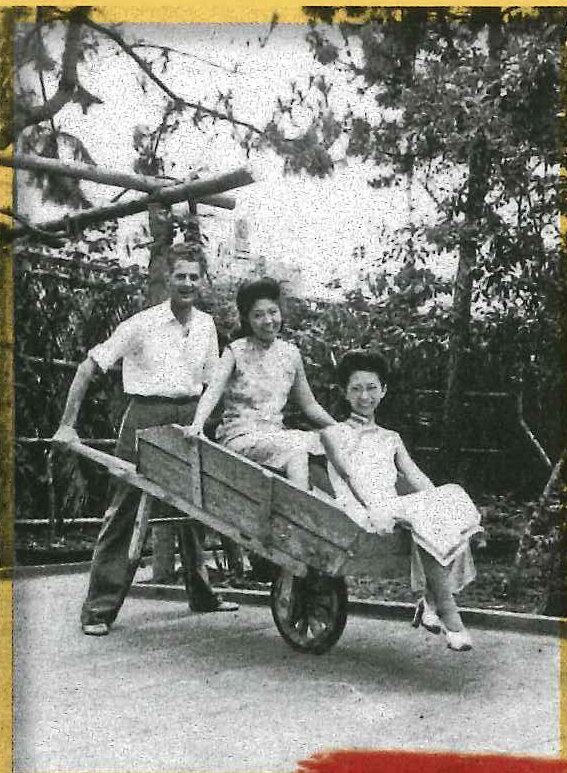
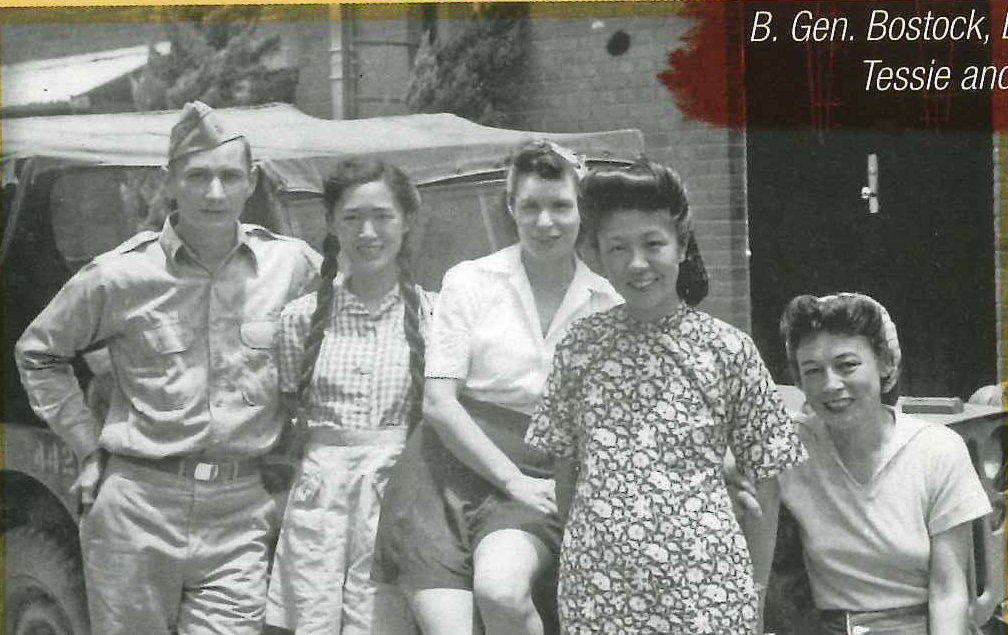
On that January day in 1951, ready as always to help Ronning, Tessie boarded the train for Shanghai. Shortly after her departure, the local police visited Ronning and told him it had been announced that morning that permits had to be obtained prior to departing from Nanjing; neither he nor Tessie had been aware of the new requirement. On her return Tessie was confined to the Embassy compound to answer police charges and was placed under house arrest.
Suspected of espionage, Tessie was taken daily to the police station and questioned over and over, always maintaining that she knew nothing. Meanwhile, Ronning and Jim Staines had to make a hasty retreat from China, leaving Tessie, age 30, alone under house arrest in the compound. The Canadian government gave temporary special permission to accept Tessie unconditionally as an immigrant to Canada as soon as she got an exit permit. However, nothing was heard from her for some time. When George Patterson returned to Canada he told Ronning what he had learned about Tessie during a final inspection visit he was allowed to make to the Nanjing compound. She had continued to be subjected to frequent questioning for months on end. She was asked repeatedly to condemn the past activities of the Canadian staff at the Embassy, and was promised immunity from punishment if she would agree to make a condemnatory statement about Canadian diplomats in the press. She refused. Finally she was threatened with a possible death sentence and given a week to reconsider her position of support for Canada.
She consulted Mr. Chen, who lived nearby and had been engaged as custodian of the compound. He agreed with her that she should return to the police immediately and re-state the facts as she had already, told them. The police then seemed to be convinced; nevertheless her request for an exit permit was denied and she was forced to remain in the Nanjing compound for seven years. Cut off from family and friends, often with little to eat, harrassed by authorities, Tessie became very ill. “I was very upset and depressed. I thought I was going to die,” Tessie admitted later. Only the care and encouragement of Mr. and Mrs. Chen kept her going. Mrs. Chen would remind her, “Life is like being on a stage. One day you play a part; the next day you play a different part.”
In 1958 the Embassy property was sold by the People’s Republic of China government, and Tessie was allowed to move to Canton to care for her ailing mother, a year before famine in southern China was to kill millions. Tessie scrounged for food and work and took care of her mother. She was offered employment at several foreign embassies in Beijing, but was refused the requisite employment permit. In a letter to Personnel Division in April 1960, Ronning reported to his colleagues that an officer of the Swiss Legation in Beijing had visited Tessie and had told him “she is facing her difficulties bravely.”
“Everybody was very distressed about Tessie’s situation,” says Mona Rankin. Chester Ronning was particularly distressed, and took every opportunity to press the Chinese government to allow her to leave, and his own government to allow her to immigrate to Canada. If she were able to leave, she would still face hurdles before Canada would open its doors to her; the temporary permission granted in 1951 had long expired, and a medical examination would be required in Hong Kong. Chester urged officials to consider what would happen to Tessie if, once in Hong Kong, she failed the medical. He was also worried by a May 4, 1960, telex from Personnel Division concerning a Time correspondent who had got wind of “the Tessie Wong affair.” On June 2, 1960, he sent a priority telex to headquarters from his office in Delhi:
Immigration apparently does not realize that to save a life from Communist clutches during a revolution, unconditional permission is vital. Communist agents in Hong Kong would report [her] call upon Canadian office. Investigation and punishment would follow upon return to Canton if medical exam is failed. Trip to Hong Kong would result in even greater danger than now and possible publication of story now in hands of reporter would certainly mean death sentence. Can Minister of Citizenship and Immigration be approached to make special ruling in these dangerous circumstances…. / accept responsibility for payment for any medical treatment Immigration doctors find necessary in Hong Kong before departure or after arrival in Canada.
The magazine publisher was persuaded to back off, and within days Immigration gave temporary unconditional permission for Tessie and her daughter to be given permanent entry visas, in hopes that Tessie would be able to escape to Hong Kong. However, it was not until October 1960, when Chester personally delivered the message to a trusted contact in Hong Kong, that Tessie received the news and applied for permission to visit Hong Kong. In Hong Kong, Chester called on Victoria, a student there, and learned that letters from Tessie and Shuzhen indicated they were unable to visit her, and that they were short of food. Aware that Tessie might have to wait a long time to be released, Chester asked the Department to persuade Immigration authorities not to cancel the permission for admission to Canada. As Tessie continued to seek an exit permit without success, the Canton police resumed interrogation about her work at the Embassy, and also made an oblique offer to employ her as an informer.
Tessie politely declined. Again, her application for an exit permit was denied. “I almost killed myself,” she admitted to friends later. “Lots of people killed themselves. Luckily I didn’t. I stayed in bed for three months. My cousin, a doctor, said, ’You must go to the park.! I thought, ’I can’t move, my heart is aching, but I went to the park. I learned to do taigi. “My taiqi teacher was good to me. Things were very bad, but he would say, ’Nothing that important — let’s go and eat.’ He would go to the black market outside of town and bring back a chicken or fish. He would close the door and then cook it. They watched us – everyone, every move. They watched me. But I’m just like a turtle. When I know it’s bad I put my head down. That’s why I didn’t die.” When her husband died in 1965 Tessie was not allowed to attend his funeral in Hong Kong.
“I suffered a lot during the Cultural Revolution,” Tessie recounted later. “In 1966 my apartment was ransacked by the Red Guards. They destroyed most of my photographs, but I had sent some out before. I had also sent some clothes out, including my embroidered wedding outfit.” Finally Canada established diplomatic relations with the People’s Republic and in 1971 Chester accepted an invitation from his old friend Premier Zhou Enlai to visit China. Chester spoke to the premier about Tessie’s case and received a positive response. “The local street authorities, however, ran their affairs in their own way,” he explains in a letter to the Honourable Flora MacDonald, Secretary of State for External Affairs, dated July 31, 1979. In his letters to Flora MacDonald and to Allan Gotlieb, he recounts that on a second visit, in 1973, he reported the case again to the premier and to the Vice Minister of Foreign Affairs, Qiao Guanhua, who assured him there would be no problem in Tessie’s leaving China. On that trip, accompanied by his daughters Meme and Audrey, he visited Tessie at her home in Canton for several hours. Still she was unable to get an exit permit. In 1975 Zhou Enlai introduced Chester to Deng Xiaoping. “Being a native of Canton,” Chester wrote to Gotlieb, “he apparently pressured the local authorities who were in charge of issuing exit permits.” Chester went on to say it was only when Deng was reinstated as deputy premier in 1977, that the local authorities gave ner a passport in November. She was given four days to leave.
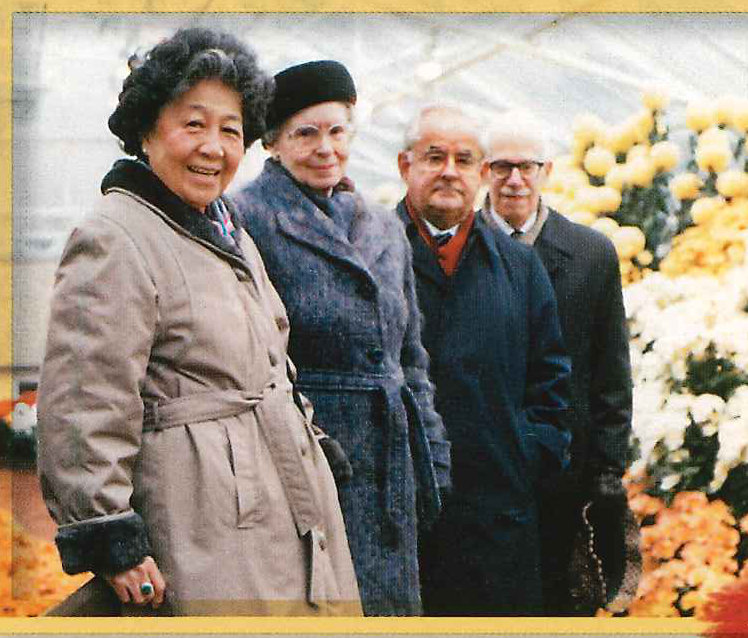
After 27 years Tessie was finally free. “When I came out I cried and cried,” she said. Clifton Shaw was in his office at the Canadian Consulate in Hong Kong on a cold, rainy, December day when the receptionist announced the arrival of “a Mrs. Wong,” adding, “She says she knows Chester Ronning.” As Program Manager for the Immigration and Refugee Program, Clifton knew her file inside out; Chester had seen to that. Still, he was not prepared for the bedraggled appearance of the woman who had come to see him. “She looked destroyed,” he says, like a little waif — no glamour, not like the person we knew later and knew she had been before. Her hair was gray and cut in a Mao cut, straight across the bottom. She was wearing a padded jacket and Mao pants. Since she was most anxious to distance herself from China, arrangements for her immigration were dealt with expeditiously and she left for Canada early in 1978”
On arrival in Canada Tessie spent several happy months with Chester, now 84 years old, and his daughters, in their home town of Camrose, Alberta. She re-connected with Victoria, who had lived with her father in Hong Kong during her teenage years and was by now a geneticist settled in the United States. At the age of 57 Tessie then went about obtaining longer-term employment and citizenship. Her old friends Alice and Freddie Clifford welcomed her as a house guest in Ottawa. She applied for special consideration to expedite her citizenship application in June 1978, so she would qualify for employment, but the response was slow.
In July, 1979 she wrote to the new Secretary of State for External Affairs, Flora MacDonald, to solicit her support. On August 22, 1979, Allan Gotlieb, forwarding Tessie’s letter and Chester’s plea to him, urged his minister to appeal to the Secretary of State of Canada, David MacDonald, regarding “the peculiar plight of Mrs. Tessie Wong.” He pointed out that Tessie was “clearly in a Catch-22 situation; without a guarantee of employment, the Registrar will not recommend her application for citizenship, and even with citizenship, prospects for sustaining employment are far from clear. These technicalities tend to obscure the overwhelming degree of suffering that service to the Canadian Government resulted in for Mrs. Wong. In no way can this Department rectify the loss of twenty-seven years of her life but we strongly believe that on humanitarian grounds, it should be possible to contribute to her dignity through granting her citizenship and assisting her when possible to obtain employment.”
The Minister agreed and wrote to David MacDonald, “I am acutely conscious of the need on the part of the Canadian Government to extend special recognition to Mrs. Wong and to seek to remedy the calamitous consequences she suffered by her unquestioning allegiance and dedication to duty at a time of great political strife and uncertainty… to manifest its concern and appreciation of the tragic effects upon Mrs. Wong’s life wrought by her service to the Canadian Government and to alleviate the continuing indignity she has been exposed to since her arrival in Canada. …” Tessie received her treasured Canadian citizenship at the Citizenship Court held in Ottawa on January 24, 1980.
Ruth Thompson, Director of Library Services at External Affairs, had taken a strong interest in Tessie’s case and now she was able to hire Tessie as a clerk, and to assist officers in reading Chinese newspapers. Tessie presented herself to her new supervisor (the author of this article) to begin work, auspiciously on the latter’s birthday, April 28, 1980. Doubly auspicious, Tessie noted, was her supervisor’s name, which was the same as the name of Chester’s home town, Camrose. She quickly endeared herself to the library staff, who appreciated her kindness, her interest in them, her sense of fun, and her willingness to try anything. Bea Mascaro, a retired library manager, says, “I just remember how hard she worked running, not walking, about her tasks, and always with a smile. She was a very generous and kind-hearted lady.” Her colleague Pat Bélanger recalls that while filing cards in the catalogue she would practise the steps she had learned at her latest dance class.
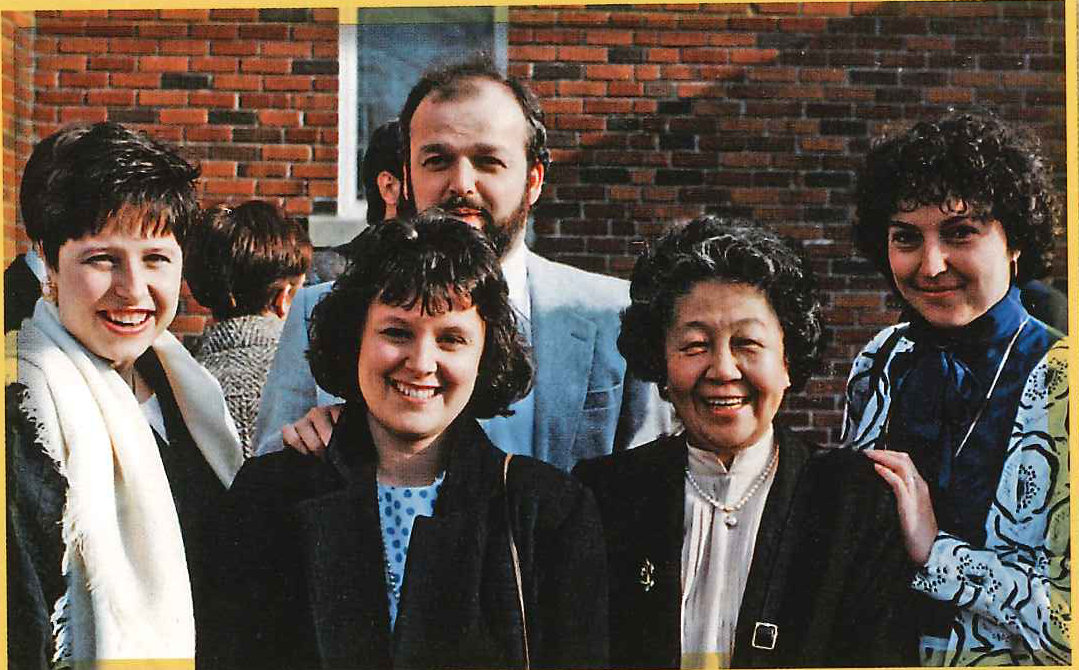
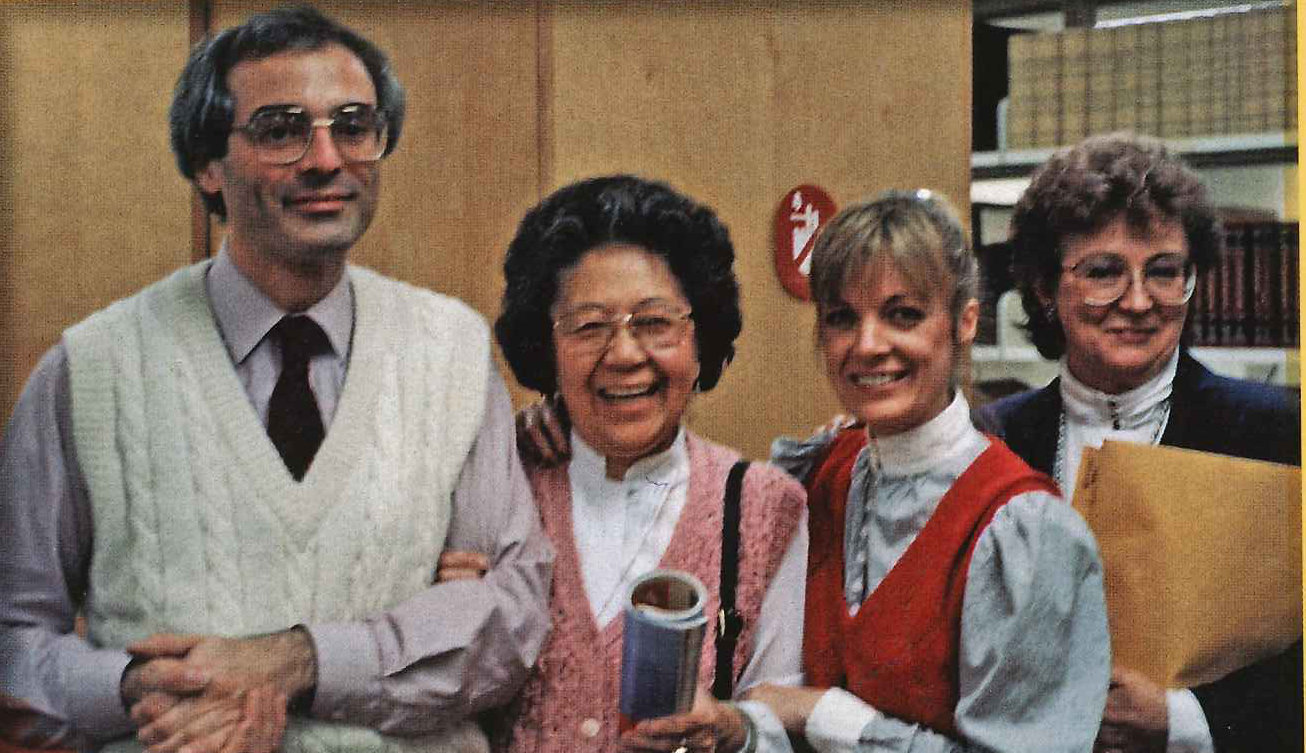
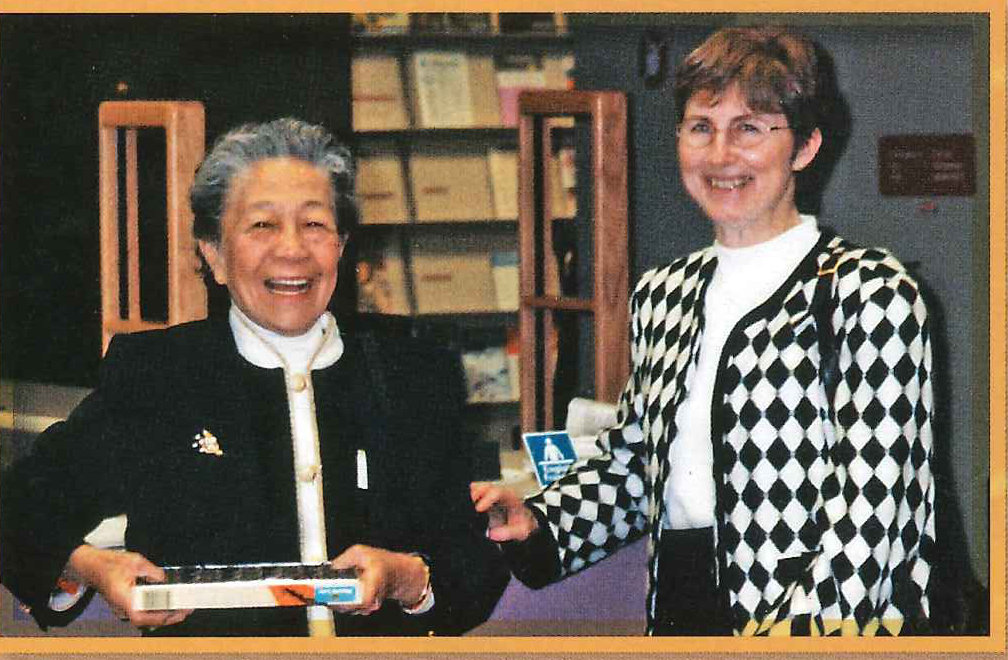
Another retired library manager, Alice Adams, hosted Tessie in Victoria when she went there for an HMCS Crescent reunion. The Crescent veterans remembered with delight her entertaining them in Nanjing in 1949. Tessie seldom spoke about the hardships she had endured. She would say, “Just t now. Let’s go out to eat!” When she retired after ten years, she continued to work in the International Documents section of the library as a volunteer for a few years. Then she enjoyed several years of travel before illness confined her to Ottawa. She loved reminiscing about the library. Her years there were clearly among the best, if not the best, in her life.
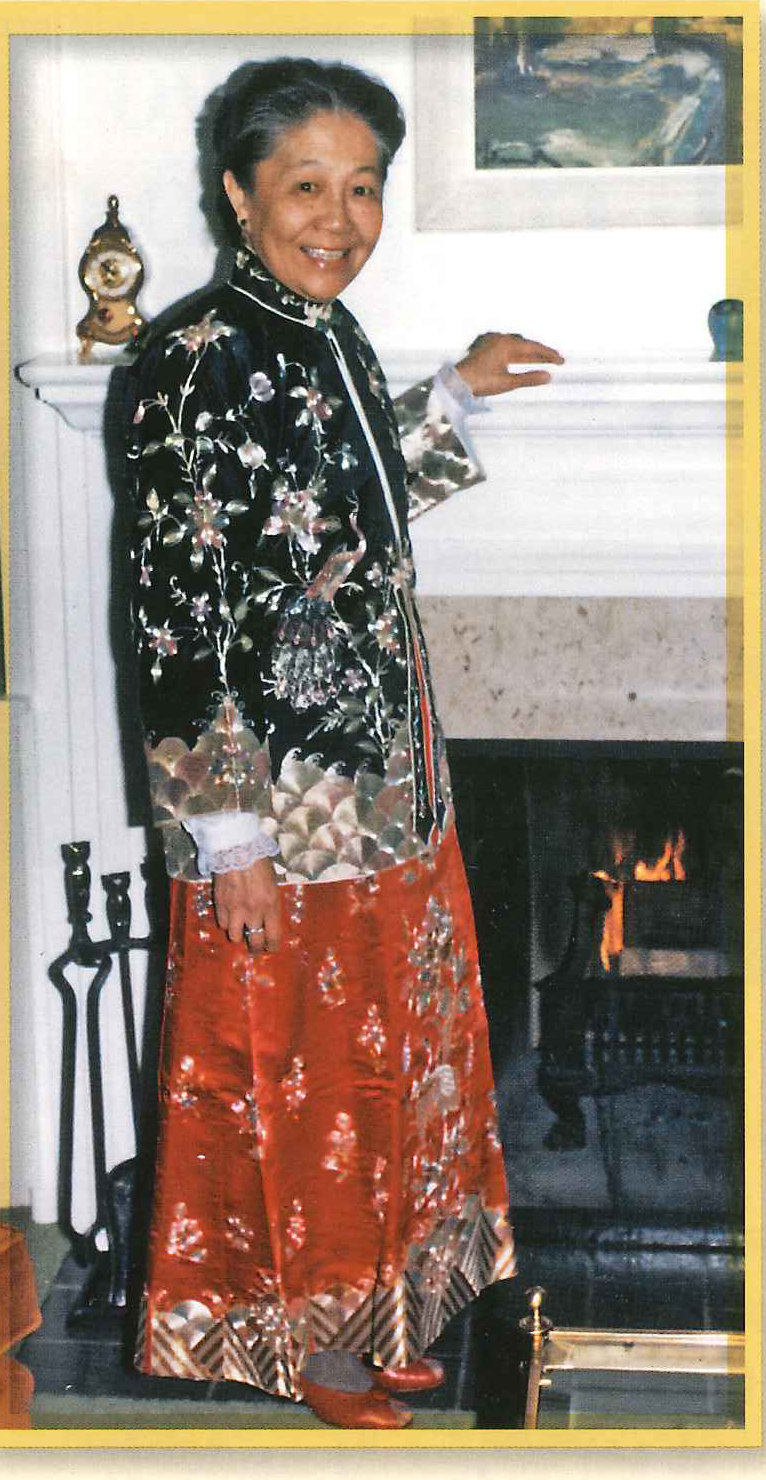
Her ten years of service in the library were recognized in an official retirement letter signed by Prime Minister Mulroney. For her years of loyal service and ensuing hardship in China, there has been no public acknowledgement, a fact that Arthur Menzies laments. Chester Ronning once gave her a copy of his memoirs, inscribed:
To Tessie Wong in admiration for the manner in which she conducted herself during extremely tough times in China from 1951 to 1958. She became a citizen of Canada in 1980 and now works in the Library of External Affairs in Ottawa. Good luck, Tessie. Tessie passed away in Ottawa on Mothers’ Day, May 8, 2005, surrounded by her daughter, other family
Author’s Note
se who knew her, as well as photographs, Canadian government documents, and other sources. I am grateful to Arthur Menzies, who explained the historical context for the story and provided wise guidance throughout the writing project, and to Tessie’s daughter Sau Wai Cheung and son-in-law Ming Wong for their research contributions and sustained enthusiasm.
Nevitt Maybee, Mona Rankin, Clifton Shaw, Ruth Thompson, Marion Fournier, Audrey Ronning Topping and Tessie’s sister, Katharine Hsiao, provided many useful details and insights. I would like to acknowledge their generosity and that of the following individuals who contributed to the project: Michael Egan, for editorial guidance and revision; Scott Wade, who provided helpful comments on the text and who, together with Jean Duval, supplied the appropriate standard spelling of Chinese names (Un-Lin Chang, the legal name of Tessie’s husband, is an exception); Eber Rice, for suggesting bout de papier as publisher; Hector Mackenzie, who took up the suggestion and helped verify facts from Departmental historical sources; Gilbert Hsiao for documenting and making available his mother Katharine’s recollections; Debra Hulley of bout de papier for her cheerful and efficient cooperation; Cletus Peters for his encouragement and for his comments on the text; and Jane Kurys and the Department of Foreign Affairs Library staff for communicating their memories of Tessie, and for maintaining and/or making accessible pertinent information resources.
Any errors are my responsibility.
Editor’s Note: The original submission included references which were eliminated for editorial reasons.
View the original scanned pages →
Originally published in bout de papier, Vol. 21, No. 4 (2005) — Winter 2005 // Hiver 2005, pp. 9–15. Read the rest of this issue →



