
bout de papier, Vol. 22, No. 3 (2006) — Fall/Winter 2006 // Automne/Hiver 2006, pp. 37–39
It was the package that arrived in the mail that started me thinking about past and present. It was wrapped in brown paper with my son Rowan’s name printed in heavy black ink. “What is it?” he said. We cut open the packing tape with kitchen scissors and tore at the paper. He looked at me, and with both hands, ripped open the package.
Inside was a history of a family. Not a written history traced chronologically from day to day, but a history in stamps. This collection of thousands, maybe even hundreds of thousands of stamps, was sent to Rowan by his grandfather, who collected them in the 1970s and 1980s during his years at the High Commissions in India and Kenya, and the Embassy in Washington. The stamps tell stories of travels to Afghanistan, Tibet, Mauritius, Poland and Tanzania. They whisper of letters from Peru and Honduras and the Solomon Islands. They hint at furtive visits to wars in El Salvador and Pakistan, and troubles in Ethiopia. They remind us of sojourns to countries that no longer exist: Czechoslovakia, Tanganyika, even Newfoundland. They speak of a life so large it travels the whole world.
Rowan wanted to look at the stamps right away, so we sat right down on the living room floor and sifted through the bundles. My husband Michael and I were both instantly transported. As children of diplomats these lands are familiar to us, and we have either visited many of these places or known people from them. We sat and reminisced about the time we ate lobster on the beach in Costa Rica with Michael’s family, I found a colourful stamp of a lizard from Ghana, and laughed as I spoke of my brother Bruce chasing them with his friends. Michael held up a stamp from Kenya and told us about his school there, and the friends he had. We spent hours that day looking at stamps and reminiscing.
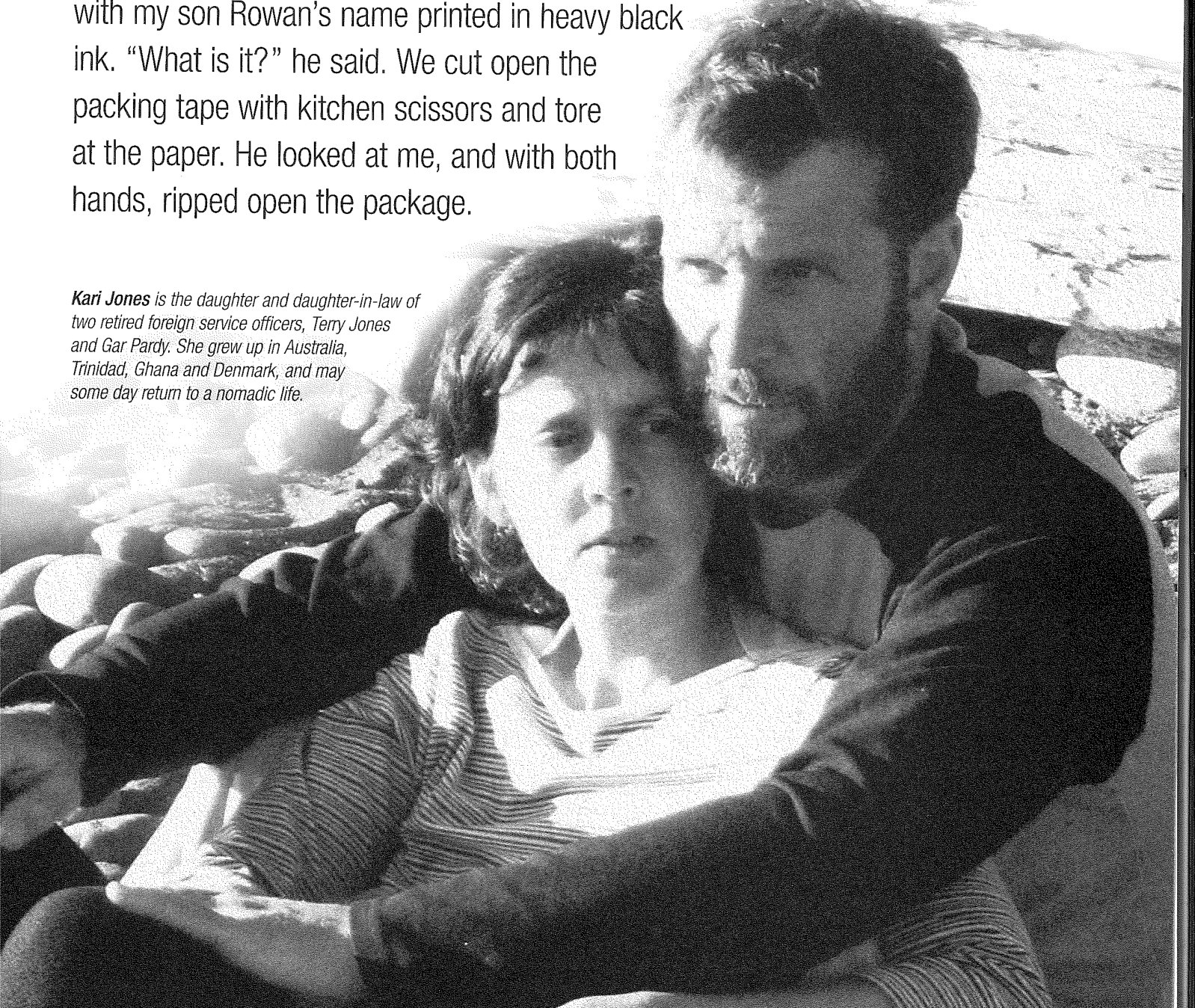
It has been 20 years now since Michael and I left our family homes and started our own lives as adults. We have lived in Victoria, B.C., for I years, Michael has his own business focusing on outdoor leadership and training, and I am a freelance and fiction writer. Periodically we say to each other, “Let’s move. We always wanted to go back to New Zealand.” But the thing is, we never do. Seeing these stamps from around the world brought back that strong desire. I looked at Michael. I could see he was feeling it too.
A quick look outside on a summer’s day tells the story of our current lives. Our yard is crisscrossed with ropes, strung from the tree house to the deck, from the deck to the fence. Wetsuits and spray skirts and life jackets hang from them like flags. Michael teaches kayaking to guides and instructors from across Canada who come to paddle on the wild west coast and learn. Each week as Michael comes back from another trip the wetsuits and other gear will change, but they will be there all summer. He brings treasures home with him too. A moon snail from Nootka Sound. A fossilized sea star from a beach at Tofino. The jaw bones of an otter, long bleached by the sun.
Rowan and I have added to this collection too. We bring shells of sea urchins home from our camping trips at Sombrio Beach along the west coast of Vancouver Island, and half clams from nearby Salt Spring Island. Sometimes we find rusty nails the size of pencils, once used to build telephone poles and railway tracks.
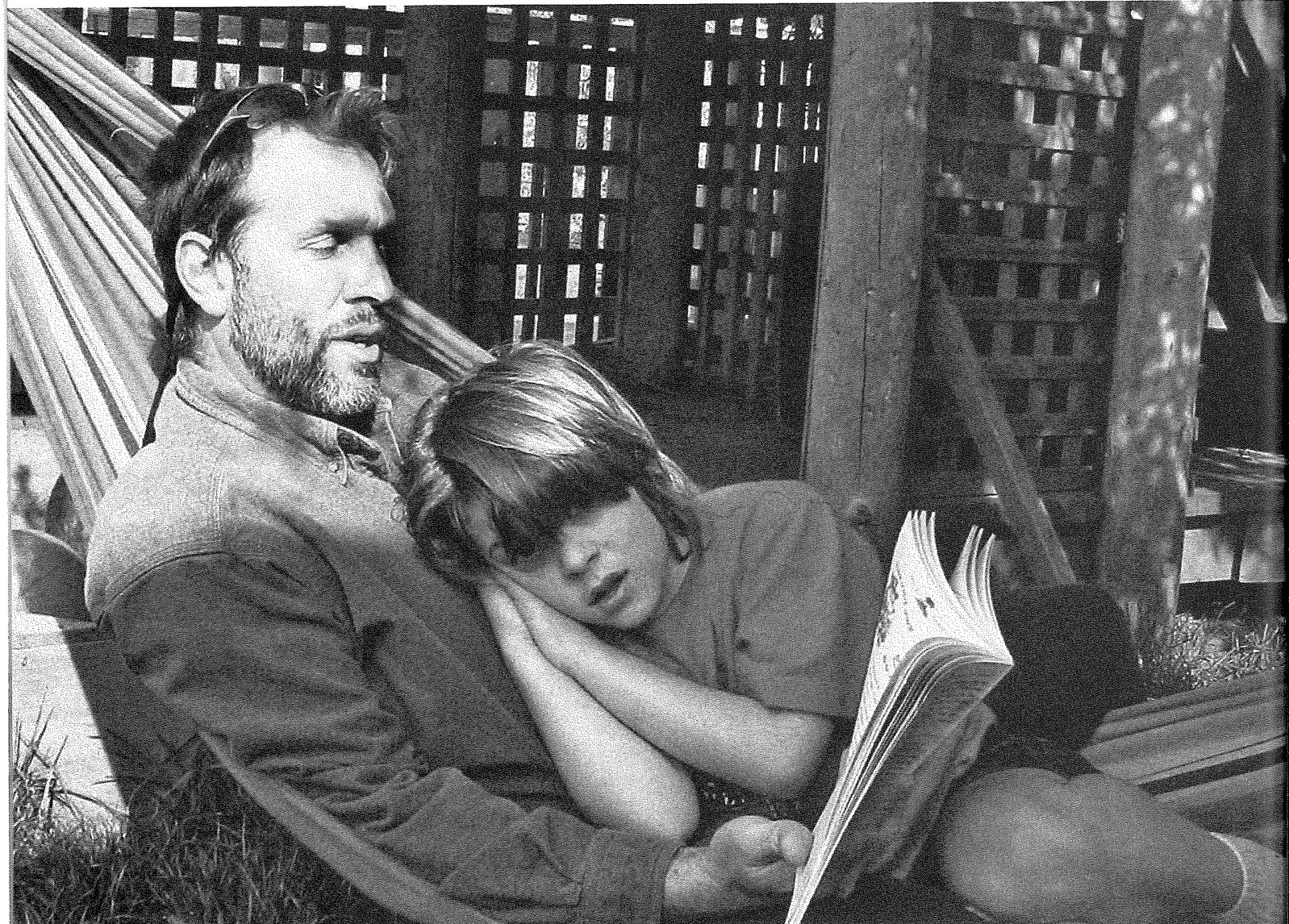
Over the years our house has become cluttered with these treasures. They lie in piles in the windows and along the mantle. But every year when we return to our favourite camping spots, or venture on a kayaking trip to a new part of the island, we replenish our collection, adding a geode or simply a beautiful rock or shell.
This is the texture of our lives these days. We have replaced the exotic with the deeply familiar. Where once we thrilled with the adventure of climbing the turrets of a castle in a country we had never been to before, now we are excited to plan our seventh annual family camping weekend at French Beach on Vancouver Island’s west coast. Where our memories of childhood are filled with new countries and cities, Rowan’s will be filled with details of the Island we live on.
What we have really done is replaced transience with roots. These changes don’t always sit easily with me. Sometimes this life seems too small. Sometimes I think if I have to walk down the same streets to the same school or corner store one more time I will scream. Sometimes, I think we made the wrong choice. But then, coming home from dropping Rowan off at school I bump into Joanne, a friend I made when our boys were babies, and she asks, “Do you have time for a coffee this morning?”.
We walk her dog back home on our way to the coffee shop at the corner. “Oh, by the way, I’ve dug up those day lilies for you. You can get them whenever you’re ready,” she says, and in a second I am once again seduced by the power ot belonging.
Shortly after the stamps arrived my brother came to visit. He flew in looking tired. “Look at my stamps,” said Rowan, and the two of them disappeared for nours into his room. Later, when I got a moment alone with Bruce I told him of my musings about the past and the present.
He lay back on the sofa and closed his eyes. Without having to think about it he said, “I consciously miss having a home city in my life. It is something i have never had.” Bruce has never stood still. From the time he went away to London for his graduate degrees until now, he has worked all over the world for the UN and other international organizations on peace-related issues. “The thing is,” said Bruce, “as the kids of diplomats, we are always aware of the duality.”
It’s true. Duality is always with us, and the pros and cons of each choice. I look back now and feel the poverty of not having friends who have known me since I was two, or being able to walk down the street to the house my grandparents grew up in. I can see the actions of my neighbours who take umbrage when a new development threatens the character of the village nearby. They have faith they will be here in this neighbourhood to witness the change. And at the same time I see how our friends turn to us to ask questions when something happens in another part of the world. “What do you think?” they ask.
Recently, Rowan burst out of school at the end of the day and said, “Guess what Mum? I got the highest score on our Canada test. The highest score.” He was so proud of himself, and I was proud too. He knows this country well. He’s been to all of the provinces, and has plans to visit Auyuittuq National Park in Nunavut as soon as he’s old enough to carry his own backpack on a hiking trip.
And as for the rest of the world? We are aware of it every day. In the books we read and the movies we watch. In conversations with friends; in our awareness of where things we buy are made. In the food we eat. things we write and the volunteer work we do. For years we’ve been involved in a project working in El Salvador and Bolivia. It’s the bright side of duality. The largeness that our lives still hold.
A life’s tapestry can be woven out of many things. One day we might pack up our house and move to New Zealand. The possibility is always there. But for now, we’re happy growing roots here in Victoria. The stamps have given us a way to talk to Rowan about our childhoods and the countries and people we met. He loves to listen. a
View the original scanned pages →
Originally published in bout de papier, Vol. 22, No. 3 (2006) — Fall/Winter 2006 // Automne/Hiver 2006, pp. 37–39. Read the rest of this issue →



