
bout de papier, Vol. 22, No. 3 (2006) — Fall/Winter 2006 // Automne/Hiver 2006, pp. 29–33
Nusa Tenggara, or the Lesser Sunda islands, are located to the east of Bali in Indonesia. The main islands are Lombok, Sumbawa, Flores, Sumba and Timor. I travelled through the latter three islands in the spring of 2006. It was a chance to complete a missed segment of the classic long-distance overland journey from Europe to Australia which I had undertaken in the late 1970s.
A t the age of 23I left Canada with a backpack, a little bit of money and a lot of curiosity about the world. I wanted to circumnavigate the globe, by hitchhiking or by the cheapest local transport, and I wanted to do as much of it as possible overland. I bought a one-way ticket to Reykjavik, Iceland, in May 1977. After a few days at the youth hostel, I walked to the edge of town, stuck out my thumb and began a journey that would take me through Scandinavia and Eastern Europe, then through the Middle East and Asia for a year, and beyond to Australia. I picked up odd jobs in Western Australia, Tasmania and the South Island of New Zealand. Fortified with some extra earnings, I flew across a series of South Pacific islands to Tahiti, Easter Island and then to Chile. From Santiago, I travelled for another year, hitch-hiking down to Tierra del Fuego and then gradually making my way back up through South America, Central America and some of the larger Caribbean islands, returning to Canada in August 1980.
When I originally envisaged the trip, I intended to make my way through the Lesser Sunda islands in order to arrive in Dili, in what was then Portuguese Timor. In the early 1970s it was possible to catch a cheap flight from Dili to Darwin, Australia. My university roommate passed that way in 1974 and had taken a particularly beautiful photograph of a solitary Makassar schooner in Dili harbour. It came to symbolize a destination point about as exotic and as distant from Ottawa as I could imagine.
Global events sometimes have a way of altering travel plans. My journey to India and Nepal through West Asia in the summer and tall of 1977 occurred when that part of the Asian overland route was still viable and popular. I travelled through Iran on the eve of the fall of the Shah and through Afghanistan prior to the communist takeover and subsequent Soviet invasion. Further to the east, however, events by the mid-1970s had restricted travel in previously accessible parts of Southeast Asia. The expansion and then the denouement of the conflict in Indochina rendered Vietnam, then Cambodia, and then finally Laos effectively off limits to backpackers. Slightly later, Indonesia’s annexation of what had been Portuguese Timor in late 1975 blocked that route into Australia.
In 1978, I decided to pass on Nusa Tenggara and instead went up to Sulawesi. I then backtracked to Jakarta before catching a flight to Perth, Australia. For almost three decades, however, curiosity about “missed” islands east of Bali continued to pique my interest. I had read of the Komodo dragons, the famous coloured lakes of the Kelimutu volcano, and the lazy backwater of Dili, portrayed as a Mediterranean town misplaced in the far-flung reaches of Southeast Asia.
In order to make the most of my experience, and following feedback from knowledgeable colleagues working at the Canadian Embassy in Jakarta, I decided to focus my time in 2006 on three of the islands — Timor, Sumba and Flores.
Nusa Tenggara is in a transition zone between Asia and Australia. In the early 1800s, British naturalist Alfred Russel Wallace had noted that fauna from Bali west is typical of the rest of Asia. Lombok, Sulawesi and beyond marked a sharp transition to fauna more typical of Australia. In other ways as well, Nusa Tenggara differs from other parts of Indonesia. While Islam predominates in Lombok and Sumbawa, the islands beyond, including Flores, Timor and Sumba, are mainly Christian (mixed, particularly on Sumba, with traditional animist beliefs). The terrain on some islands, particularly East Sumba and parts of East Timor, is noticeably drier than in other parts of Indonesia.
There are wide expanses of dry grasslands, open fields, and eucalyptus trees. Infrastructure, though improving, is still inferior to that found in many other parts of Indonesia. Flights are more frequently subject to cancellation, something I was to experience first hand.
East Timor’s long struggle for independence is well documented. It emerged from Indonesian control in late 1999 and came under the transitional administration of the United Nations. In May 2002 it became fully independent. In retrospect, my journey in East Timor had one uncomfortable parallel to my experience in West Asia almost three decades earlier. I arrived after an initial set of riots had occurred in March, but before the situation completely spun out of control in late April and May. The dispute related to a confrontation within the military, culminating in a controversial government decision to dismiss 600 soldiers. Despite the brooding unresolved crisis, the United Nations was getting on with finishing its mandate and withdrawing police and other advisors who had been working in the country.
My arrival in Dili at the beginning of the Easter weekend in this overwhelmingly Christian country occurred as almost everything in the small city was shutting down for several days. My main concern on arrival in Dili was boredom. At no point did I have any sense of danger. Dili still has the feeling of a lazy Mediterranean town. For some reason the heat and humidity seemed even more intense than elsewhere.
Prices in East Timor, which rocketed during the time of the peak United Nations intervention, have softened somewhat, but they remain high in comparison to Indonesia or elsewhere in Southeast Asia. The US dollar remains the official currency, though local Timorese coins are produced
After a few days in Dili, and scuba diving in nearby locations, I rented a vehicle and drove up into the mountains. I spent a night in Fatumaca at the John Bosco Technical High School, founded by Father Eligio Locatelli. Father Locatelli, of Italian origin, is a Salesian priest who has been living in Timor since 1964.
Father Locatelli had an interesting perspective on the situation in East Timor. He observed that on one level, independence had given Timorese their liberty. The fear and repression had abated since the departure of the Indonesian military. Yet he noted that since independence the economic situation in the country had deteriorated, leading to a widespread malaise. Locatelli expressed his appreciation that Canada, through the Canada Fund for Local Initiatives, had been among the most generous of donors to his organization.
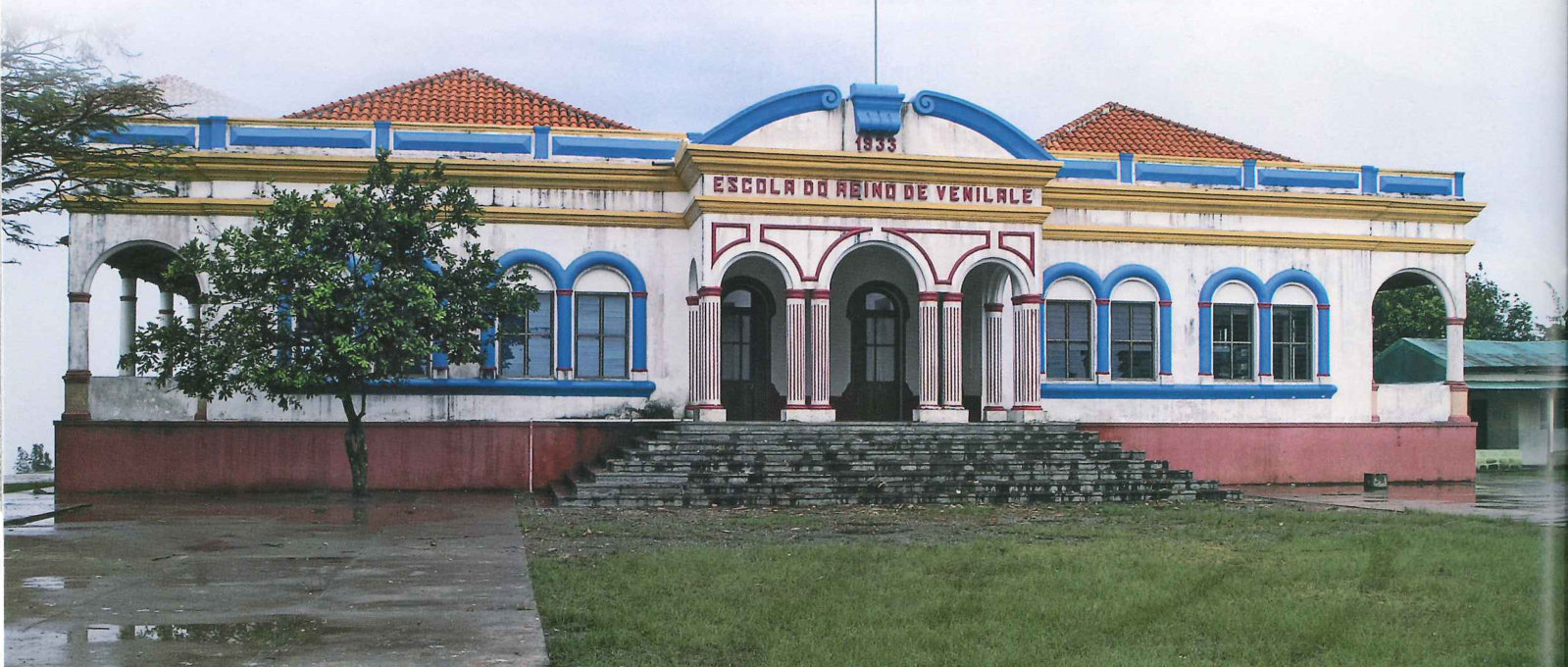
From Fatumaca I went north to the seminary at Venilale on a ridge at over 1000 metres and then continued up to the isolated mountain village of Baguia. Later I went to the far east of the country to the grasslands around Los Palos and the beaches of Com. Evidence of the destruction wrought by the retreating Indonesian military and militias was still in evidence. Abandoned and destroyed buildings can be seen throughout the country.
Despite concern expressed by many about the country’s continuing fragility, the international community was decreasing its presence. In the last year, Canada’s bilateral aid program in the world’s newest fragile state was terminated. Even the local Canada Fund was slashed for East Timor.
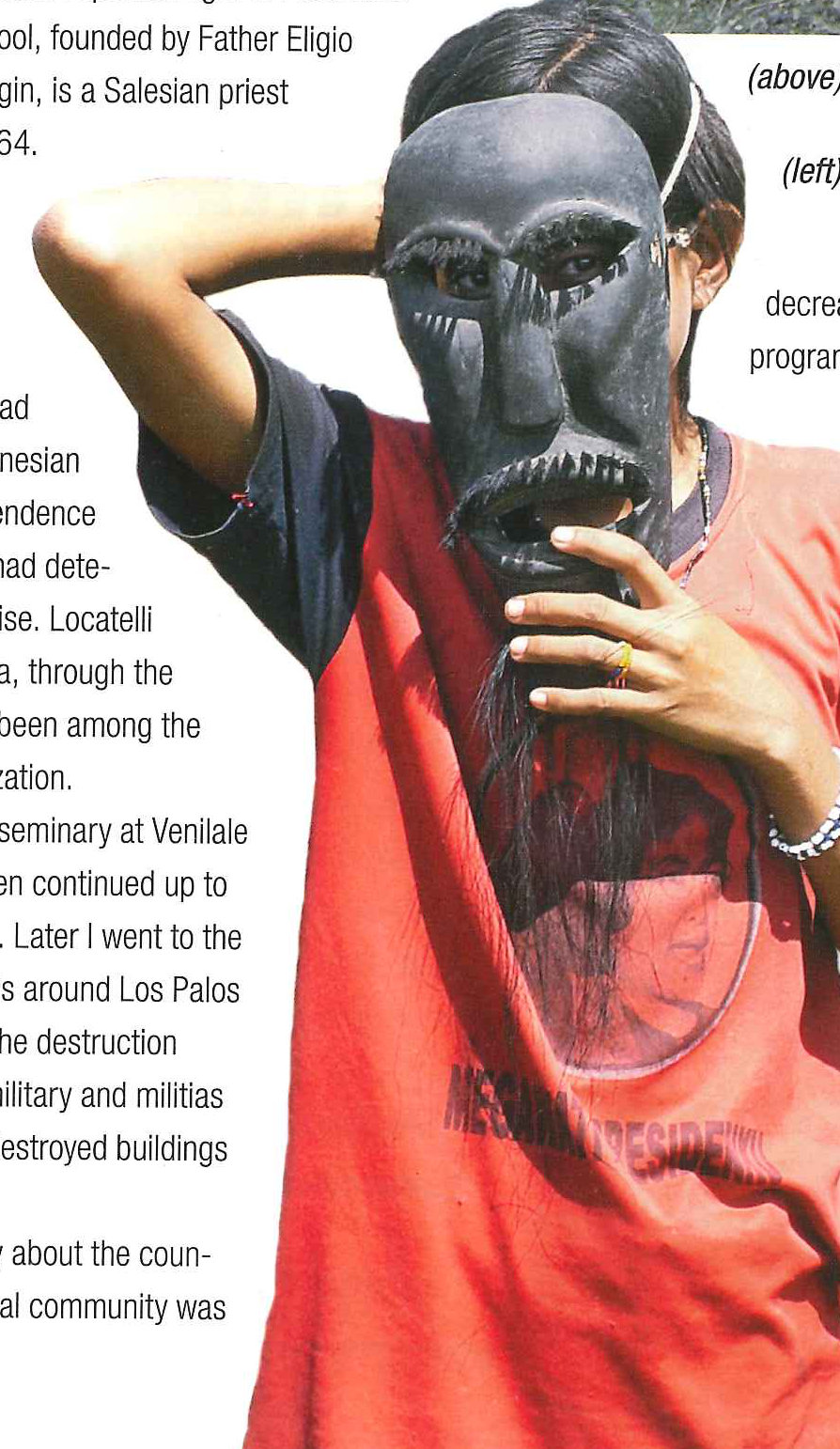
Timorese authorities are gamely trying to encourage tourism, though recent events have made things more difficult. In the interim, Timor struggles with its national identity in dire poverty.
Indonesia’s huge tourist industry has suffered from a series of incidents directed against foreign tourists in recent years. Yet my experience of travel and interpersonal interactions on all the islands was extremely positive. I can understand the caution in official travel advisories. I wonder, however, if in certain circumstances it may have reached the point of diminished credibility. None of the other travellers I met, many well seasoned and by no means foolhardy, believed the warnings to be an accurate reflection of the objective risk. If anything, it was a delight to have a few weeks on remote islands to escape the media-induced “culture of fear” now prevalent in North America. As it is, tourist arrivals to Indonesia still exceed three million annually.
Flores is one of the most surpassingly beautiful islands on the planet. After arrival at Ende airport from Kupang, I arranged to head to the village of Moni, some 52 kilometres east, on the back of a motorcycle. As the kilometres unfolded, the scenery and images reminded me of Tahiti. There were high rocky cliffs, cascading waterfalls, thick bamboo forests, verdant bird life and butterflies, and brooding green volcanic peaks towering overhead.
Throughout towns and villages in Nusa Tenggara, local men often offer their services as guides. I found travelling on the back of a motorcycle through the mountains to local villages to be among the most exhilarating of travel experiences.
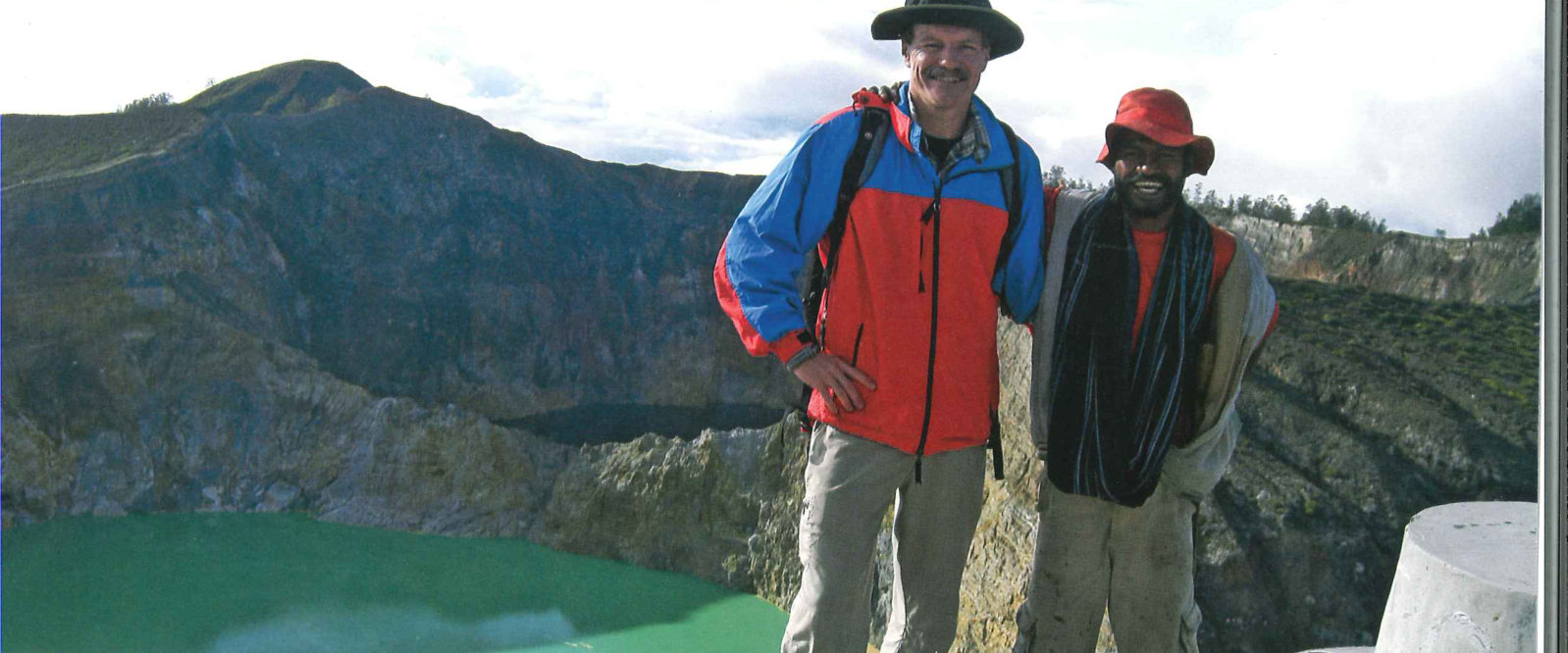
Moni is a small village lying at the base of the Kelimutu volcano. Kelimutu has been famous since Dutch colonial times for its three water-filled calderas with lakes of different colours. The colour of the lakes changes from time to time. No one is scientifically certain why this is the case. Sunrise is the best time to see the lakes, before the clouds roll in obscuring the view. I caught a motorcycle lift from Moni at 4:30 and was driven to the roadhead in the chill mountain air shortly before dawn. The last stretch of the trail is a 1.5 kilometre walk done just prior to sunrise. There is an observation platform at the summit. To the south are two of the volcanic lakes side by side. The largest and closest lake is currently a bright turquoise. Beyond, separated only by a thin ridge of crumbling rock, is a rust-brown coloured lake. Two kilometres away to the north is a dark olive green lake. It is a smaller lake than the other two, and due to the vegetation and trees within the caldera rim, it appears to have been inactive for far longer than the other two lakes.
As the sun rose, the colours of the lakes became more and more vivid. There was a cluster of 25 visitors at the summit that morning to watch the sunrise. By 7:00 people began leaving. By 8:00 the only others left were two young Dutch men. They left shortly afterwards and for the last couple of hours I had the experience of Kelimutu, one of the most surreal sights of Indonesia, completely to myself.
According to local legend, the spirits of the young who have died reside in the turquoise lake. In the smaller olive-green lake lie the spirits of the old. The rust-brown lake contains the spirits of those who were evil in life. As I sat at the edge of the ridge separating “young person lake” from “evil person lake,” a large raptor, probably a Changeable Hawk-Eagle (Spizaetus cirrhatus floris), flew overhead. It circled three or four times over the turquoise lake. After a few minutes, it soared away in the direction of the olive green lake a couple of kilometres away. I saw it appearing to circle once and then it slipped out of view. I waited and absorbed the magical scenery for another hour, then took three hours to hike on my own along the road and pathway back to the village of Moni. I recounted my experience of witnessing the flight of the hawk-eagle to a local Indonesian woman. She was educated in Holland but had recently returned to live in her home village. She responded that according to their belief system, what I had seen meant that a young person and an old person from the village were about to die.

It took seven hours on a local bus heading west from Moni to arrive at Bajawa, a cool town at 1100 metres in the central west of Flores. The mountains around this area also have a variety of traditional villages. Two particularly attractive villages were Luba and Bena, lying at the foot of Gunung Inerie, an inactive volcano. In both of these villages there were many women weaving ikat (a tie-dye technique with cloth), megalithic monuments and interesting syncretic religious symbols – spirit houses and crosses – mixing Christianity with traditional animist rites.
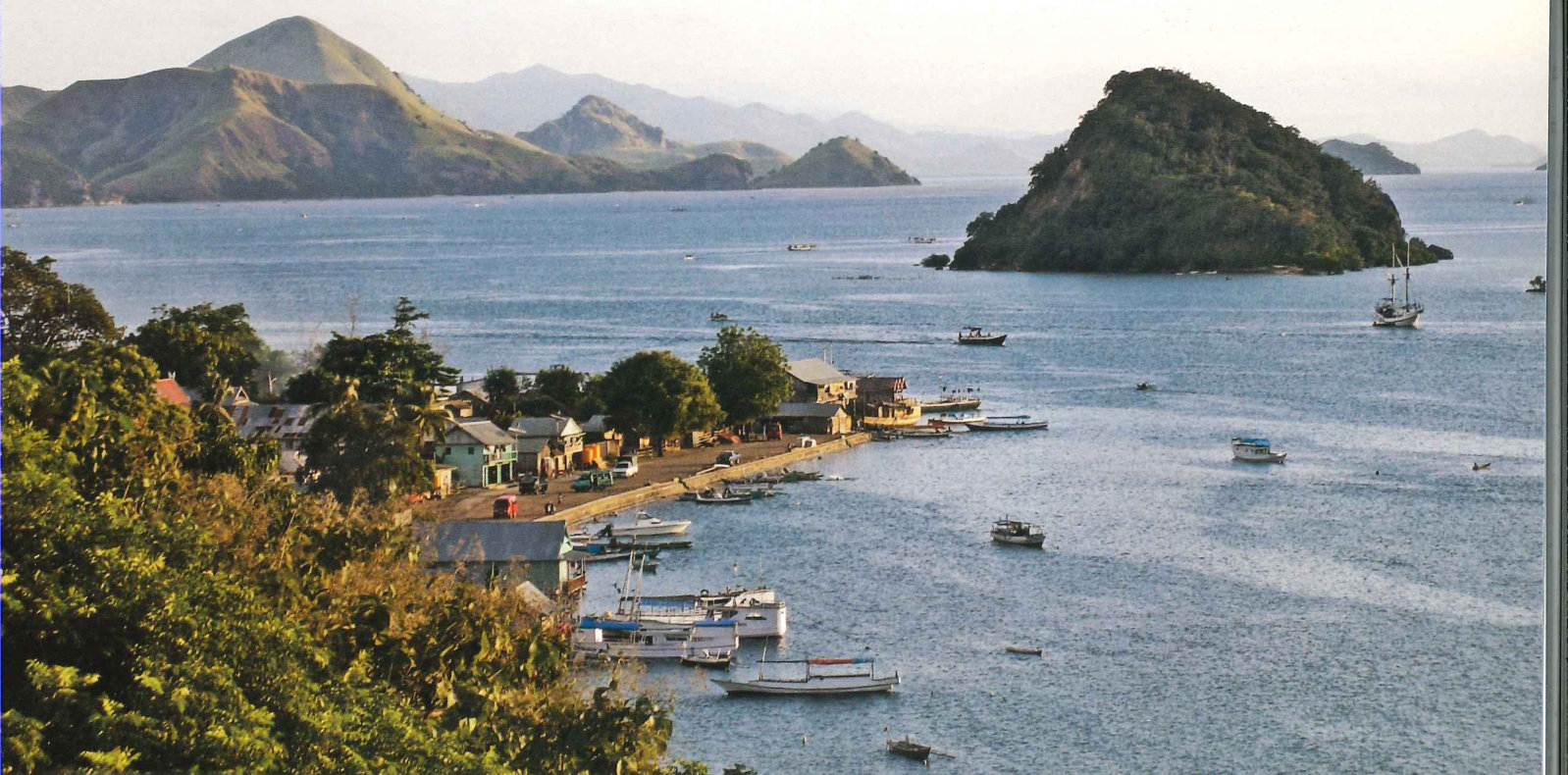
At the far western tip of the island of Flores, almost twelve gruelling hours away by bus beyond Bajawa, is Labuanbajo. Labuanbajo is a destination just popular enough to attract a core of other travellers. It is famous as the jumping-off point to see the Komodo dragons, the largest lizards in the world. The dragons are found on the islands of Komodo and Rinca between the larger islands of Sumbawa and Flores. The area is well known for its snorkelling and scuba diving. There are several dive shops, and many travellers arrive in Labuanbajo having taken a multi-day boat tour from Lombok. It is frequently the end point for travellers from Bali and Lombok. It was the one point during my entire stay in Nusa Tengarra, save for the hour at dawn at the summit of Kelimutu, where I was able to meet a substantial group of other travellers.
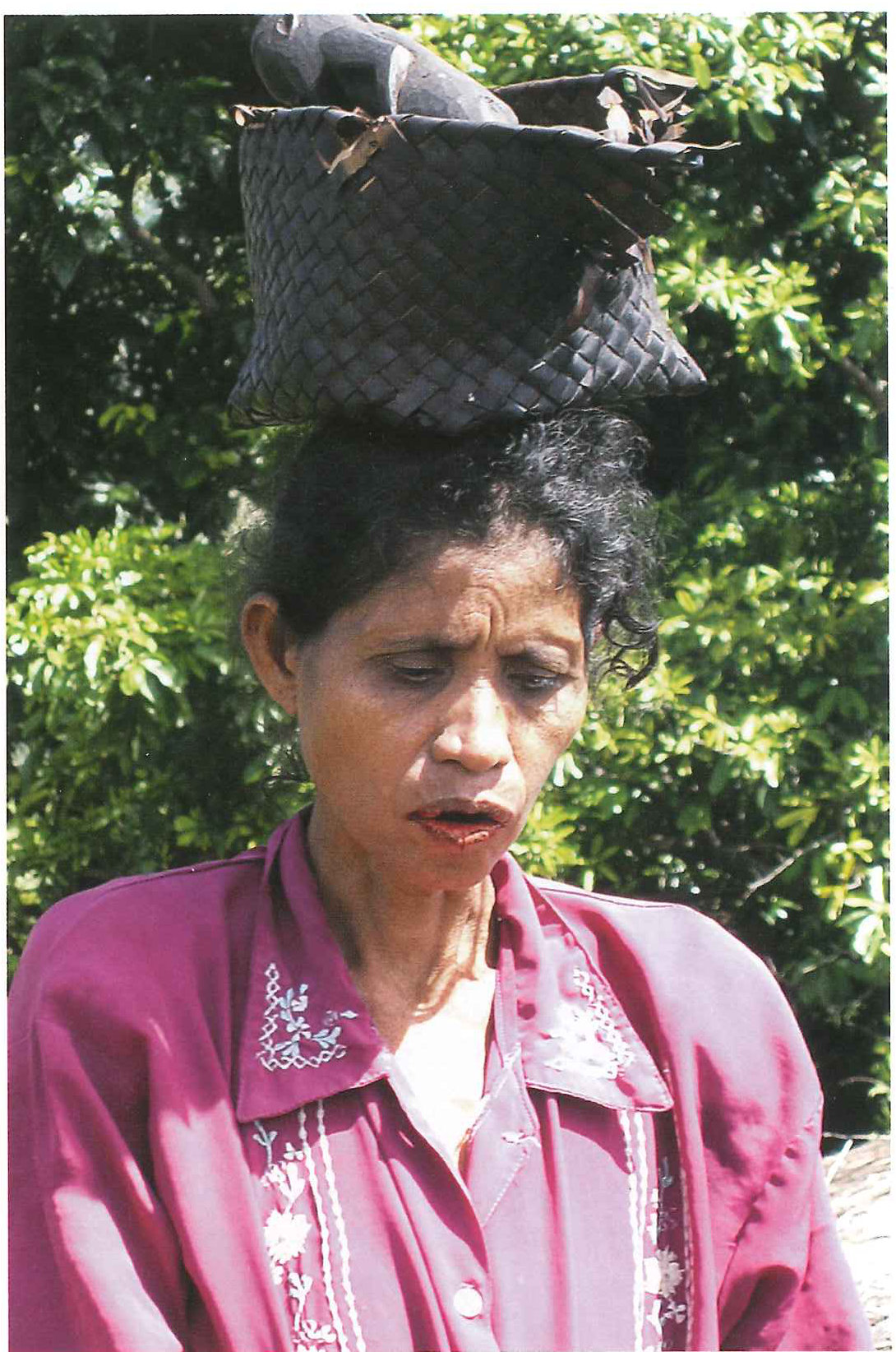
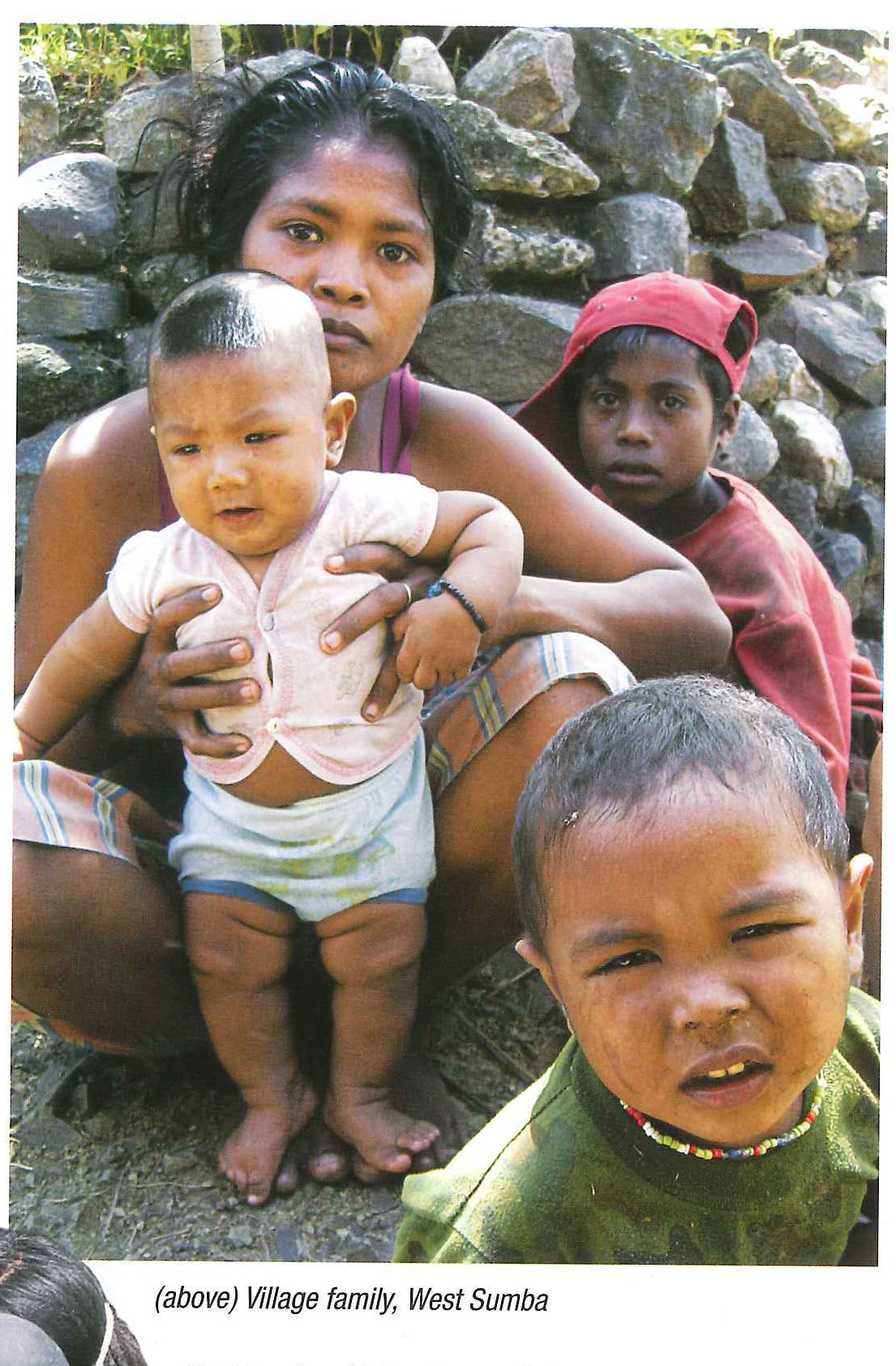
Sumba is one of the most interesting islands in Indonesia. The island, particularly in the western part, maintains adherence to traditional belief structures without the overlay of Islam, Christianity or Hinduism that you see in other parts of Indonesia. West Sumba was a particularly attractive area, centred around the town of Waikabubak. Villages are characterized by very high peaked conical thatched-roof clan houses. Women in the villages are famed for the quality of their ikat weavings. In the villages it is customary for visitors to hand out kretek cigarettes and betel to the elders and then to make a contribution and sign a book. Sumba is even more lightly visited than Flores. Even within the Kampung Tarung and Kampung Waitabar, literally on the outskirts of Waikabubak, there had only been 25 visitors in the previous five months. While the villages are exceptionally scenic, there was also evidence of malnutrition. I was told that most of the children in the traditional villages do not attend school. The only other non-Indonesian I met during my stay in Sumba was a Danish woman working with an environmental non-governmental organization. The topography of the western part is hilly, green and quite lush. Long isolated sandy beaches are found along the south shore. The drive from Waikabubak to the capital of Waingapu, located on the east of Sumba, took four hours. One goes through a protected forested area about half way along. East Sumba is considerably drier with rolling hills and grasslands, almost reminiscent of Australia. Waingapu itself was a rather unremarkable and noisy town, though graced slightly by a range of hills on the horizon.
Coming back to transit in Bali was a bit of a shock. While most Balinese involved in the tourist sector bemoaned the serious economic impact of the decline in tourism, I found the noise, commercialism and over-development, predominantly Kuta-Legian but also throughout much of the island, to be unappealing after the relative pristineness and tranquillity of Nusa Tenggara.
In a world where the sense of discovery and adventure seems to have diminished, travel in Nusa Tenggara brought back memories of an earlier age and time, where something new and special was waiting at the other end of the next bus destination. Unspoiled paradises welcoming travellers still exist and the sense of wonder of exploration still remains. For that reassurance, I was blessed with the chance to see Nusa Tenggara three decades later than on my first long trip.
Much later on that same trip, one other destination which I was unable to reach was the Falkland Islands… Hmmmm.
View the original scanned pages →
Originally published in bout de papier, Vol. 22, No. 3 (2006) — Fall/Winter 2006 // Automne/Hiver 2006, pp. 29–33. Read the rest of this issue →



