
bout de papier, Vol. 24, No. 1 (2008) — Fall/Winter 2008 // Automne/Hiver 2008, pp. 4–8
From 540 to 565, Peter the Patrician (what a name for a diplomat!) was Constantinople’s Magister Officorum (Master of Offices). The Magister was a sort of “Minister of Everything.” His responsibilities included: the Imperial Guard; the Agentes in Rebus (a cross between CSIS and the Auditor General’s office); a network of state-run arms factories; the Postal Service; and the Scrina Barbarorum (Office of Barbarian — i.e. Foreign — Affairs). Peter took an active interest in this last element of his portfolio. He won his position — and elevation to the rank of Patrician (the highest rank awarded those not members of the Imperial family) — for his role in a high-stakes mission to effect regime change in Ostrogothic Italy. The mission ultimately failed and Peter spent four years in Gothic captivity. This may have given him time to reflect on how Roman diplomacy could be managed better.
Early Roman diplomacy was a rather haphazard affair, subordinated to the normal way in which Roman foreign policy objectives were met — by force and intimidation. Events of the late 4th century prompted a rethink in this traditional approach. Within the course of 15 years the Romans suffered major reverses at the hands of the Persians and then the Goths, forcing territorial concessions to the one, and the granting of lands within the Empire to the other. Civil wars further eroded the Empire’s military strength and over the course of the 5th century control of its western provinces was lost to a succession of barbarian warlords. By the early 5th century the Magister Officorum included among his staff a group called “The Interpreters for all Peoples,” presumably people knowledgeable in the various Germanic, Iranian, Turkic and Semitic languages used by the foreigners with whom the Romans had dealings. In happier times such specialists would hardly have been needed. Except at the most local level, foreigners would have been expected to deal with the Empire in Latin or Greek. With the creation of this core of professional specialists, we also begin to see the first efforts to develop an institutional memory and to codify procedures. The terms for concluding hostilities with Iran in 363 were set down in a written framework treaty, the basic elements of which remained in force for the next 250 years. When required, the treaty was renewed and amended through appropriate annexes. We also know that by the time of Justinian (527-65) a proper treaty register existed, containing the texts of treaties with other states, although at some point in the late 6th century much of its contents were destroyed in a fire. Peter the Patrician took this process of codification further. He wrote (or more probably had his subordinates draft) a Manual of Procedures setting out such matters as how foreign embassies should be received. Peter may also have initiated the practice of writing and disseminating formal reports on the course and results of negotiations. Happily, the section of the manual dealing with the care and feeding of Iranian embassies has survived, as has a précis of Peter’s “reporting tel” on a round of treaty negotiations with Iran which Peter led in 561-62. These two documents shed valuable insights on Roman-Iranian relations, as well as on the mechanics of Roman diplomacy.
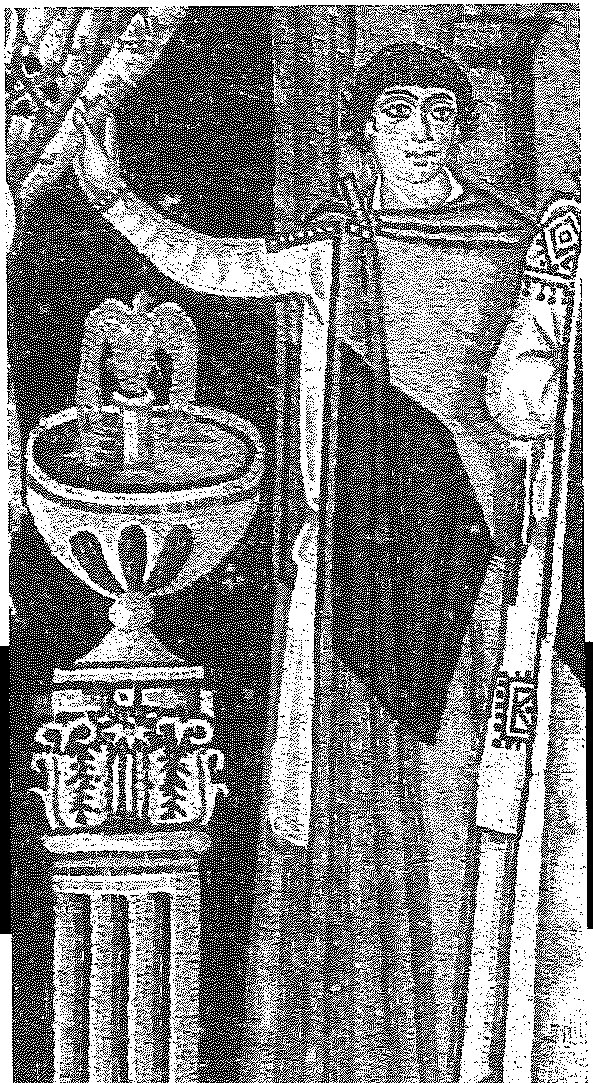
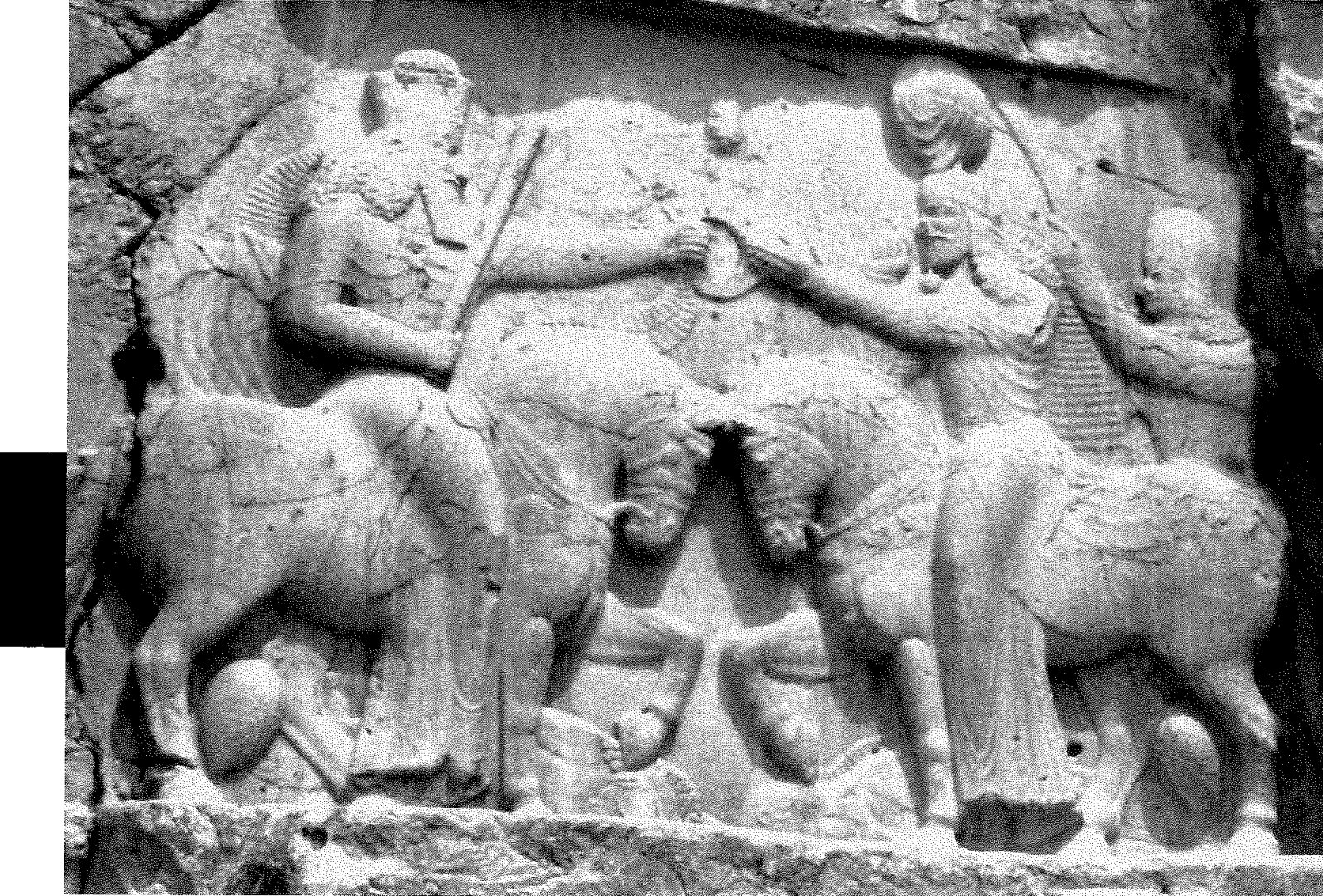
Relations between the Roman and Iranian Empires were rarely cordial. There was too much overlap between the territorial ambitions of the two powers, while geography placed the two Empires’ richest territories — respectively Syria and Iraq — within striking distance of the other’s armies. To counter such encroachments, each side built up a heavily fortified belt of cities along a line of control roughly equivalent to modern Turkey and Syria’s frontiers with Iran and Iraq. From the late 3rd century, an ideological/religious element was added. Iranian rulers had always given preeminence to the Zoroastrian religion, which centered on the worship of the supreme god Ahura-Mazda, while generally tolerating other faiths. In 230 a new dynasty, the Sassanids, seized power in Iran. The Sassanids had strong links with the Zoroastrian clergy, under whose influence efforts began to enforce the practice of Zoroastrianism throughout Iran, while suppressing rival religions such as Christianity and Buddhism. With Constantine the Great (307-37), Christianity became the Roman Empire’s official religion. Shortly after seizing control of the eastern part of the Empire in 324, Constantine wrote to his Iranian “brother” Shapur II, telling him how his conversion to Christianity had brought him victory over his enemies, internal and external, while his opponents, who had persecuted Christians, had met their deserved comeuppance. Constantine concluded his letter: “Imagine my joy when I learned that the finest provinces of Persia are filled with … Christians. For abundant blessing will be to you and to them in equal amounts … because your power is great commend them to your protection, because your piety is eminent, I commit them to your care. Cherish them with your customary humanity and kindness, for by this proof of faith, you will secure immeasurable benefit both to yourself and us.” Needless to say, this only confirmed the Iranian belief that Christians in Iran represented a potential Fifth Column. This was not without justification. In 419 an Iranian Christian bishop destroyed a Zoroastrian fire-temple in Khuzestan. He swiftly met the martyrdom he desired, which only encouraged his co-religionists to emulate him. A general persecution of Iranian Christians soon followed. At the time, the court in Constantinople was dominated by Emperor Theodosius II’s pious sister Pulcheria, who launched, in effect, a holy war against Iran. As was often the case, neither side made much progress in penetrating the line of fortresses that girded upper Mesopotamia, while nomad raids into the Balkans and eastern Iran quickly encouraged the two sides to revive the peace treaty. However, “Pulcheria’s crusade” was only one occasion when religion was a factor in exacerbating tensions. Sassanian efforts to enforce Zoroastrian practices in Christian Armenia and Georgia sparked revolts which invited Roman intervention, while in 6th century Yemen the Persians and the Romans’ Ethiopian surrogates respectively backed rival Jewish and Christian claimants to the throne.
While Roman/Iranian relations were relatively peaceful in the 5th century, warfare became almost endemic in the 6th, as Iran became more self-confident and Constantinople was preoccupied with the re-conquest of the Empire’s lost western provinces. Causes of war varied, revolts by one or the other power’s Caucasian or Arab allies (sparked respectively by Persian religious persecutions and overly efficient Roman tax collection) could escalate into a general war. Iran was perpetually cash-strapped and surprise attacks to plunder or mulct protection payments from the rich cities of Roman Syria were seen as source of revenue. Iran also sought to extort payment from the Romans, ostensibly to help protect the Caucasian passes from nomads. Whatever the cause, the wars usually quickly degenerated into a stalemate, at which point envoys would be exchanged to seek mutually acceptable peace terms. From this evolved a protocol for the regular exchange of envoys in times of both peace and war. These exchanges could range from relatively low-level envoys passing on routine greetings or congratulations to notifying the other side of deaths, accessions, victories, etc. (the sort of thing we might send a diplomatic note for). More senior ambassadors were empowered to conduct real negotiations, trying to defuse potential conflicts (or on occasion exacerbate them to create a plausible causus belli).
Sometime around 550, Peter the Patrician codified the procedures for receiving Iranian delegations. In minute detail Peter’s scenario brief spelled out how the Iranian Ambassador would be received as he crossed from Nisibis on the Persian side to Dara in Roman territory. The seniority of the Roman escort officer was to be appropriate to that of the Iranian Ambassador. The size of the Iranian delegation was strictly limited — one Iranian ambassador had tried to use his overlarge delegation to seize Dara by coup de main. The scale of provisions to be provided the delegation, the number of wagons and post horses allotted them, and the duration of the journey from Dara to Constantinople (104 days) were all stipulated (the Emperorhad = / the discretion to allow more time or allot more resources). The escort officer was enjoined to check constantly with the [ranian Ambassador to ensure that he was satisfied with arrangements. Provisions for housing the delegation were spelled out, including which agency was responsible for things like horses for their:
transportation (the Imperial Guard), furnishings, pots, pans and bedding (the Prefect of the City), and workmen (Prefect of the Warehouses). All expenses were vouchered to the Scrina Barbarorum. Steps were also taken to control the movements of members of the Iranian delegation to ensure they did notfoment any trouble. Even so, critics claimed the government was inclined to give them too much freedom.
The key event was the imperial audience, largely a ceremonial event, and the degree of cordiality displayed was a good barometer of the state of the bilateral relationship. The audience was carefully choreographed. Peter’s scenario brief even included talking points for both the Emperor and the Iranian Ambassador. Care was taken to make a careful inventory of the gifts being presented, to ensure there were no disputes about their value and the reciprocity of what was being offered (and given in return). All in all, Peter the Patrician’s brief distilled the Romans’ long experience in their diplomatic exchanges with a prickly and slippery foe. Generally the Emperor held aloof from actual negotiations; substantive business was left to senior officials, or indeed most substantive discussions took place at Dara or Nisibis, not in Constantinople or Ctesiphon. The Iranians had similar arrangements for receiving Roman delegations; however, as the Shah tended to join his army on campaign, Roman delegations often had to journey to remote (and inhospitable) corners of the Iranian Empire for their audience, and on one occasion a Roman delegation was left to swelter in their tents through the Iraqi summer.
An excerpt from Peter’s report of negotiations he led in 561-62 to end a war that had been dragging on and off since 540 has also survived. The basic elements of peace were settled by Peter and his counterpart in Nisibis. Peter’s opening interventions are quoted verbatim. He had a reputation as a great rhetorician. Alas, rhetoricians in the 6th century cherished neither brevity nor clarity, and worse, Peter’s interventions were delivered in a classicizing Attic Greek — imagine making an intervention in Chaucerian or Shakespearean English! “We are here oh men of Persia, at the behest of the Emperor of the Romans. It would be superfluous to tell you what kind of man our Emperor is. His achievements describe him. I am here to turn the present peace into a comprehensive one. I wish first to explain to you the nature and power of the state with which you will be making the treaty and if I seem to be dwelling at too great length on the advantages to both states, do not let my verbosity irritate you … ,” etc., etc., etc. His Iranian counterpart Yesdegusnaph Zikh’s reply seems far more free and frank: “… all agree that peace is a blessing, I should have been taken in by your fine words, were you not Romans and we Persians. Do not imagine your fine words hide from us the sort of people you are, seeking your own advantage. You use peace as a cover for your cowardice, and seek to hide your manifest dishonour behind it.” Menander, the 6th-century historian who was using Peter’s report as his source, says that the text of these and many subsequent interventions filled a very large volume. Menander considered Peter’s report to be reliable, except he thought that Peter may have placed too much emphasis on himself to enhance his reputation as an effective and convincing speaker able to “ … bring around the unyielding and arrogant spirits of the barbarians.”
Despite this, the elements of an agreement emerged — in part a renewal of the standing treaty, in part the resolution of outstanding issues. A series of clauses reaffirmed the terms of the basic treaty:
• neither party would allow barbarians to attack the other
through the Caucasian passes;
• the treaty would bind each party’s Arab allies not to
attack the territory of the other;
• regulated trade between the two parties through
designated customs posts;
• related to diplomatic privileges and immunities;
• related to ensuring that Arab and other barbarian
merchants did not try to by-pass the designated customs
posts. They would be hunted down by officers from one
side of the frontier and turned over (with their goods) to
those on the other side;
• related to defectors (they would be allowed asylum in time
of war, but handed back in time of peace);
• the two sides agreed not to reinforce their frontier fortifi-
cations; with respect to Dara, a garrison adequate to its
defence would be allowed but it would not be used as the
headquarters for the Roman Magister Militum per Oriens
(Commander in Chief of the Eastern Field Army);
• provided dispute-settling mechanisms for people living
along the border; handling local violations of the peace;
and compensating for damages inflicted by cities on one
side of the border against cities on the other side.
Additional annexes stipulated that the peace was to last for 50 years. The Romans would pay an annual indemnity of 30,000 solidi (200 kg of gold) per annum. The Persians wanted a lump-sum installment for 40 years paid up-front. The Romans, who had previously been burned when the Persians had taken such payments, only to break the peace treaty, baulked. In the end the Persians agreed to accept a lump-sum payment for seven years. The Persians also agreed to cede Lazica (western Georgia) back to Roman control. The question of payments was in a secret annex to the treaty as the Romans did not wish to give the impression they were paying tribute. On the other hand, they realized that 200 kg of gold a year put far less of a strain on the treasury than the cost of reinforcing the eastern field army.
Another annex to the treaty related to the status of Persian Christians, who would be allowed to build churches and worship freely; they would not be forced to participate in Zoroastrian ceremonies and would be allowed to bury their dead in graves and not expose them as Zoroastrian practice required. Iranian Christians, however, would not be allowed to proselytize among the Zoroastrian community. For their part, the Romans agreed to freedom of worship for the (much smaller) Zoroastrian community in eastern Anatolia.
The treaty was prepared in Greek and Persian versions (each equally binding). Peter and Yesdegusnaph Zikh each sealed the official copies, while their six Roman and six Persian interpreters certified the translations. The Romans received the unsealed Greek and sealed Persian copies, and the Persians the sealed Greek and unsealed Persian copies.
Two outstanding issues were left unresolved. One concerned Roman claims to Suania, a mountain province of what is now Georgia. The other concerned demands by the Lakhmid Arabs — clients of Iran, based in Hira in southern Iraq — for what were in effect protection payments from the Romans. It speaks much to Peter’s prestige that he now proceeded to Ctesiphon to deal with these matters face to face with the Shahanshah, Khusro I Anoushirvan (he of the beautiful soul).
Peter argued that Suania was an integral part of Lazica and therefore belonged by right to the Romans. He tabled documents showing that for the past century the kings of Lazica (who were Roman tributaries) had appointed the chiefs of Suania. Khusro was not convinced; he claimed never to have heard of Suania until one of his generals occupied it while suppressing bandits. Besides, Peter’s list did not show an unbroken secession. Khusro, however, was willing to concede Suania, if the Suani wanted to be Roman subjects. Not that he was willing to canvas their views: “I do not wish to ask the Suani anything about Suania, since it is neither right nor just to leave the decision about that land to slaves.” Clearly the idea of self-determination had a long way to go in the 6th century.
The Lakhmid issue was more readily solved. The Lakhmid king wanted to receive regular (protection) payments from the Romans. Peter indicated that should Lakhmid envoys send gifts to the Emperor, the Emperor would be pleased to reciprocate (presumably with suitably richer gifts). The Roman position in this case was a strong one. Their own Ghassanid Arab allies had heavily defeated the Lakhmids, while Khusro had no desire to see any weakening Lakhmid dependency on Iran. Khusro agreed with Peter that any Roman payment to the Lakhmids be in the form of a reciprocal gift exchange.
Unfortunately, the 50-year peace did not last for 10 years. Justinian died in 565 and Peter around the same time. He was succeeded for a time as Magister Officorum by his son Theodore. Unfortunately, Justinian’s successor, Justin II, had a less pragmatic view about exchanging cash for peace. When the next lump-sum payment came due, Justin refused to pay, while giving support to a revolt in Persian Armenia. Hostilities broke out again and lasted — with fortune favouring one side and then the other — for the next 20 years. While peace between the two empires briefly prevailed through the last decade of the 6th century, war broke out again in 602. The ensuing quarter century saw the two empires engulfed and exhausted by what has been called “the last great war of antiquity.” Even as the final peace between Rome and Iran was being concluded in 628, the Arabs, united under a new faith, began their advance from the desert. Within less than two decades the Iranian Empire had ceased to exist and the Romans had lost Syria, Palestine and Egypt. The best efforts of Roman and Iranian diplomats to put in place mechanisms for defusing tensions and settling disputes could not overcome the innate, and ultimately self-destructive, hostility that separated the two Empires.
Roger Lucy is a retired Foreign Service
View the original scanned pages →
Originally published in bout de papier, Vol. 24, No. 1 (2008) — Fall/Winter 2008 // Automne/Hiver 2008, pp. 4–8. Read the rest of this issue →



