
bout de papier, Vol. 23, No. 2 (2007) — Fall 2007 // Automne 2007, pp. 17–22
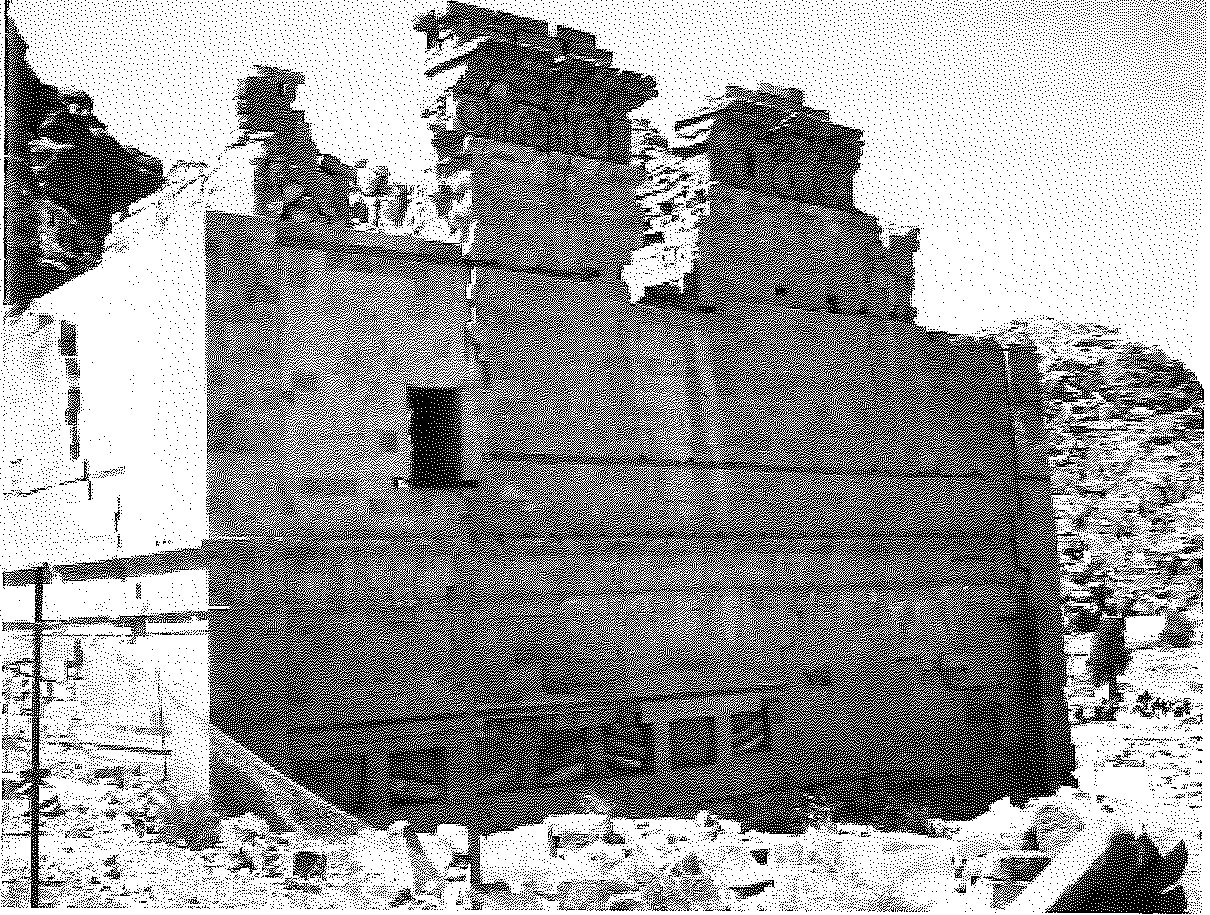
In 64 BC, the Roman general Gnaeus Pompeius Magnus (Pompey the Great), having chased Rome’s long time adversary Mithradates out of Asia Minor, descended into Syria, looking for fresh fields of glory. Much of the region was in chaos, afflicted by the prolonged death agony of the once-great Selucid Kingdom. Pompey put the dynasty out of its misery and set about reorganizing Syria — here taken in its broadest sense, embracing the entire Levant from Antioch to Agaba and from the Mediterranean to the Euphrates. Republican and early Imperial Rome did not have much in the way of bureaucracy to administer conquered territories and, where possible, the Romans delegated the day-to-day grind of law and order, public works, and above all, collecting taxes, to local city councils. The main tasks of the governor of a Roman province were to act as judge in important legal cases, and to defend and (where appropriate) extend its frontiers. This hands-off system worked well for the largely Hellenized city states in what is now northern Syria and Lebanon, which were organized in much the same way as Rome itself. Syria’s mountainous interior and the desert fringe, were ruled by a welter of minor princelings, nomad tribes, temple-states, and plain old-fashioned robber barons. There, Pompey and his legates set about suppressing the more obvious bandits, while identifying likely client rulers who could maintain order, deliver tribute and contribute military contingents when required — paying a hefty bribe to the Romans was another major selection criterion. Client rulers who did well often had their territories or sources of revenue augmented. Those who did not measure up, showed signs of less than total loyalty or who got ideas above their stations, were swiftly dealt with. The Romans were not too fussy whether or not the ruler was of the same ethnicity or religion as his subjects, as long as he was loyal and got the job done. The system worked well enough. A century later some 17 of these, what Pliny the Elder called, “ethnarchies with barbarous names” still existed.
The two largest client states in the region lay in the south, roughly separated by the Jordan river and the Rift Valley. To the west lay the Jewish state of Judea, to the east, the Arab Nabatean kingdom. Judea was ruled by the Hasmonean dynasty, which combined within the same family (and often the same person) the offices of King of Judea and High Priest of the Temple at Jerusalem. The Hasmoneans had broken away from Selucid rule a century earlier, and had steadily expanded their realm at the expense of their neighbours. The Nabatean Arabs were formerly nomadic bedouin, but had grown immensely wealthy “protecting” the caravans that brought spices from what is now Yemen to the Mediterranean. Centered in their mountainous stronghold at Petra — in what is now southern Jordan – Nabatean control eventually stretched from the northern Hejaz to the region around Damascus, as well as into the Negev and Sinai. The Nabatean Arabs’ wealth made them a tempting target, but their impregnable capital, largely inhospitable terrain and judicious bribes allowed them to fend off several of Alexander’s successors, as well as various Roman generals. Nabatean Arab and Judean interests came into conflict over control of Perea — on the east banks of the Jordan and the Dead Sea, as well as over southern coastal cities such as Gaza and Raffa, important outlets for the spice trade.
At the time of Pompey’s arrival, the Hasmoneans were embroiled in a civil war between the brothers Hyracanus and Aristobulus, sons of the late King Alexander Janeaus. Aristobulus gained the upper hand, and Hyracanus fled to Petra, where one of his supporters, Antipater, had family connections. Antipater persuaded the Nabatean king, Aretas, to intervene on Hyracanus’ behalf in exchange for several disputed east bank cities. This turned the tide — soon, Aristobulus was holed up on the Temple Mount in Jerusalem, fighting for his life, when Pompey’s legate Scaurus appeared on the scene. After considering offers from rival claimants, Scaurus was persuaded to take up Aristobulus’ cause. Aretas had to beat a retreat and Hyracanus’ cause seemed lost, when Pompey himself arrived. Offers and counter-offers were made and Pompey was persuaded that Hyracanus had the better case. The Temple was stormed (although Pompey refrained from plundering its treasury) and Aristobulus deported to Rome. Hyracanus became King of Judea, less a number of Hellenized cities on the upper Jordan and on the coast, which the Romans incorporated into their Syrian province. Pompey’s generals made a couple of half-hearted efforts to invade the Nabatean kingdom, but found the logistical challenges so daunting that they readily accepted relatively moderate bribes to go away. The tonne or so of silver that these pay-offs cost King Aretas was a fraction of the value of a single spice caravan.
While Hyracanus was now the King of Judea, the de facto ruler was Antipater, who skillfully navigated the civil war that broke out in 49 BC between his former benefactor Pompey and Julius Caesar. When Caesar found himself trapped in Cleopatra’s palace in Alexandria by her brother’s supporters, Antipater sent a relief force including both Judean and Nabatean Arab troops. For this he was rewarded with Roman citizenship and the lucrative post of Procurator (financial manager) of Judea. His son Herod became governor of Galilee. Herod accompanied his father on campaign and undertook diplomatic missions on his behalf giving him the opportunity to accumulate an impressive number of influential Roman friends. Indeed, during a visit to Antioch he arranged the fateful introduction of Cleopatra to Mark Anthony (Marcus Antonius).
Caesar’s assassination in 44 BC led to a new round of civil wars, during which the Aristobulus faction tried to regain control of Judea. Antipater was assassinated. Invited in by one of Pompey’s former partisans, the Parthians (rulers of what are now Iran and Iraq) invaded Syria in 40 BC, over-running Judea. The figure-head king Hyracanus was deposed and deported to Babyion, and his late brother Aristobulus’ son, Antigonus was placed on the throne. Herod escaped to Petra, but Malichus, who had succeeded Aretas as King of the Nabatean Arabs, refused him sanctuary, preferring to submit to the Parthians. Herod then made his way to Alexandria where Cleopatra arranged for his passage to Rome. In Rome, he began to work his connections, and with Anthony’s help, the Senate was persuaded to vote a decree making Herod king of Judea. He swore his oath of office at the altar of Jupiter on the Capitoline Hill. This clearly violated several of the Ten Commandments — but “when in Rome” Herod was more than happy to do as the Romans did.
Armed with his Roman mandate, Herod made his way back to Galilee, where he raised an army. By 37 BC, he had retaken Jerusalem, killing off Antigonus in the process. Mark Anthony, who had taken control of Rome’s eastern provinces needed loyal client kings such as Herod, but his desire to reward him ran afoul of Cleopatra’s ambitions to restore Ptolemaic Egypt’s long-lost hegemony over Syria. While Anthony thwarted her ambition to annex Judea and the Nabatean Arab realm, Herod was forced to cede Jericho to her.
Malichus was deprived of his ports along the Arabian coast of the Red Sea coast — giving Egypt a monopoly over the emerging maritime spice trade – and forced to pay her a large tribute. When Malichus balked at this, Cleopatra tasked Herod with collecting it — hoping the two kings would destroy each other. She almost achieved her objective. Herod invaded the Nabatean Arab kingdom, but suffered a humiliating defeat just south of the Golan Heights. Herod’s position was further undermined by a severe earthquake which devastated Judea. He tried to sue for peace, but Malichus executed his ambassadors. Malichus then invaded Judea, hoping to conquer it, but Herod was able to rally his troops and defeat the Arab invasion. Outside events then intervened. Anthony and Cleopatra had gone to war against Caesar’s adopted son Octavian (the future emperor Augustus). Octavian defeated them at Actium in 31 BC. Destructive though it had been, their war had spared Herod and Malichus from being caught up in Anthony and Cleopatra’s debacle. They quickly broke off their own hostilities to make peace with the victor of Actium. Malichus sent a force to Suez to burn the remains of Cleopatra’s fleet, while Herod hastened to Rhodes to congratulate Octavian. There, he convinced Octavian that by remaining loyal to Anthony to the end, he had shown himself to be far more reliable as a client than if he had changed sides at an opportune moment. Whether or not he was convinced by this argument, Octavian had few alternatives. Herod had already narrowed Octavian’s options by executing any eligible member of the Hasmonean dynasty. Herod was confirmed as King of Judea. The territories he had lost to Cleopatra were returned to him, and, over time, as he continued to prove his worth as a client, further territories were added to Judea, including Gaza, the Golan and other parts of modern Jordan and Syria. This was to be a cause of future Judean-Nabatean Arab strife.
Cicero had remarked that a good client ruler should be strong enough to keep order within his own realm but not grow so strong as to threaten Roman interests. In this respect Herod proved the very model of how a client king should behave. Judea was fractious enough, but Herod kept it under control so effectively that other territories were granted to him when their former rulers proved incapable of controlling them. Herod also provided troop contingents as required, including 500 men to accompany Aulus Gallus’ expedition to seize the Sabean kingdom in Yemen. The expedition, dependent on Nabatean guides and logistical support, was not a success. Failing to take the Sabeans’ capital at Marib, Gallus accepted their nominal submission and beat a retreat back to Egypt. He blamed Syllaeus, leader of the Nabatean Arab contingent, for leading him astray. Although the Nabateans had little to gain from Rome winning control over the source of the spices on which their prosperity depended, it seems more likely that Gallus failed because he underestimated the sheer difficulty of mounting a major expedition down the inhospitable Red Sea coast. In any event, the nominal Sabean submission was enough to enable Augustus to declare the expedition a success in his memoirs.
Herod believed in enhancing his prestige through ambitious public works. Most famously he enlarged and embellished the Temple in Jerusalem (the Romans allowed him to levy a tithe on the diaspora to help pay for it. He also rendered unto Caesar by building (in the non-Jewish parts of his realm) several temples dedicated to Rome and Augustus. He built a major port (with the help of Roman engineers and their latest concrete construction techniques) at Strato’s Tower – tactfully renamed Caesarea. The main Samarian city was also rebuilt on Roman lines and renamed Sebastea (“sebastos” is Greek for Augustus). Like another, more recently deceased middle-eastern despot, Herod had a penchant for elaborately decorated (and heavily fortified) palaces. The most famous of course was Masada, the ancient seat of his family. Herod also endowed cities throughout the eastern part of the Roman empire with subsidies and public works, and maintained his close contacts with the Roman elite, including, of course, Augustus (who made an official tour of Judea), his number-two, Marcus Agrippa, and various senators and provincial governors.
The Nabatean Arabs, by contrast, seem to have taken the view that the best course for dealing with the Romans was to try and stay “out of sight and out of mind.” Malichus died soon after Actium and was succeeded by Obodas who proved far less capable than Herod at managing his relationship with Rome. When another local dynast, Zenodoros, offered to sell him the Trachontis — a mountainous, but potentially fertile, region east of the Golan – Obodas neglected to seek Roman permission before proceeding. Zenodoros was selling up because the Trachontis was a nest of bandits and its neighbours — including Herod — were beginning to complain. Ignoring (or even unaware of) Zenodoros’ deal with Obodas, Augustus gave the Trachontis to Herod, who proceeded, with his usual zeal, to suppress the bandits. Those Trachontians who did not wish to become peaceful farmers fled to Nabatean territory from where they started to raid Herod’s lands. Syllaeus, now the power behind the Nabatean throne, encouraged their activities and brushed off Herod’s complaints. Herod, believing he had the assent of the Governor of Syria, invaded Nabatea and wiped out the bandits’ nest. Inevitably there were collateral Nabatean Arab casualties, and Syllaeus made the most of it, appealing to Rome. For once Herod’s lobby failed to counter his claims. Syllaeus’ tale grew considerably in the telling. According to the Jewish historian Josephus, Syllaeus “…told Caesar that Arabia was afflicted with war, and that all the kingdom was in great confusion, with Herod laying it waste with his army. He said, with tears in his eyes, that two thousand five hundred of the principal men among the Arabians had been destroyed.” Augustus was not amused, and wrote a very stiff note admonishing Herod, telling him that “… while previously he had treated him as his friend, from now on he would treat him as his subject.” Back in Trachontis, the inhabitants rebelled and expelled Herod’s garrison.
Things were looking bleak for Herod. In addition to a war gone sour, and Augustus’ unwonted displeasure, he was also having family problems (largely self-imposed). To shore up his legitimacy, Herod had married Mariamne, a Hasmonean princess. His new mother-in-law, Alexandra, did not approve of the match (Herod had executed her father) and intrigued against him. In the end, Alexandra, Mariamne, and Herod’s two sons by her, were all executed by Herod. Fortunately for Herod, before things could get worse, Obodas, king of the Nabatean Arabs, died. His throne was seized by a nobleman from the Hejaz, Aeneas, who took the royal name of Aretas. In true Nabatean Arab fashion, Aretas neglected to seek Augustus’ permission before assuming the throne. Now both the Judeans and the Nabateans were feeling the chill of Augustus’ displeasure. Syllaeus, hoping to succeed Obodas, tried to exploit this. However, despite the liberal douceurs Syllaeus paid various courtiers, Augustus was unimpressed by his claims. He may have recalled Syllaeus’ role in the misguided Yemeni expedition.
Herod now sent his best lobbyist to Rome, Nicolaus of Damascus. Nicolaus was able to document that the Trachontian brigands operating from their sanctuary in Nabatean Arab territory had been a serious menace, and that Herod had indeed received the Governor of Syria’s permission to suppress them. Nicolaus was also able to convince Augustus that Syllaeus’ claims about the damage caused by Herod’s troops in Nabatea were greatly exaggerated.
Herod was forgiven and Augustus even considered handing the Nabatean kingdom over to him. In the end, due to Herod’s failing health and his on-going family troubles, Augustus decided against this. Aretas was confirmed as King of the Nabatean Arabs. Syllaeus, amazingly, was allowed to return to Petra where he began a campaign of assassinations against his potential rivals. Finally he went too far, a conspiracy to assassinate Herod was uncovered and he was extradited to Rome and executed
In 4 BC Herod died from some very repellent disease. Shortly before his death Herod executed yet another son — his eldest – Antipater. Augustus had given Herod the right to name his own successor (normally an Imperial prerogative, as Aretas of Nabatea had learned), and in his will Herod divided up his kingdom among his three surviving teenage sons, Archelaus, Philip and Antipas. Augustus reluctantly accepted the arrangement, although — contrary to Herod’s wish — the younger sons were not subordinated to the eldest, Archelaus. While he received the Judean heartland, Archelaus was only granted the title of Ethnarch, not King. Antipas became Tetrach of Galilee, while Philip’s Tetrachy comprised the Golan, Trachontis and other highland territories in southern Syria. While Antipas and Philip proved to be quite competent rulers, Archelaus did not prosper. At the start of his reign, while he was off in Rome — lobbying for a larger share of his father’s dominions — a major uprising broke out in Jerusalem requiring the intervention of the Governor of Syria, Publius Quintillius Varus (better known for leading three legions to disaster in Germany in 9 AD). Varus was willingly aided by Nabatean Arab auxiliaries, who seemed mainly interested in ravaging Galilee. Restored to his throne, Archelaus proved every bit as paranoid as his father, but far less competent. In 6 AD he was fired by Augustus and exiled to Gaul. Judea was annexed to the province of Syria and placed under the control of a Roman procurator.
Antipas took a leaf out of his grandfather’s book and fostered good relations with the Nabatean Arabs, marrying one of King Aretas’ daughters. Philip also seems to have ensured that relations with Nabatea ran smoothly. This happy state of affairs ended in 34 AD when Philip died. Antipas married Philip’s widow, Herodias (mother of the infamous Salome), and sent Aretas’ daughter home. This not only offended Jewish law (and John the Baptist) but, needless to say, enraged Aretas. Nabatea and Galilee went to war, with the main theatre the Golan — Philip’s former territory — which both Antipas and Aretas had hoped to inherit. The Nabatean Arabs were victorious, but, true to form, Aretas had failed to consult the Romans. The new Emperor, Tiberius, had other plans for Philip’s former territories, annexing them to the province of Syria. The Governor of Syria, Vitellius, was ordered to launch a punitive expedition against the Nabatean Arabs, which he did somewhat reluctantly. Vitellius promptly halted the invasion the moment news reached him of Tiberius’ death. He was wise to do so. Tiberius was succeeded by his nephew Gaius (better known as Caligula) who granted Philip’s Tetrachy to Herod Agrippa, son of Herod’s executed son Aristobulus. Agrippa had been raised in the Roman court and (as fans of / Claudius will know was close friends not only with Caligula, but also his eventual successor, Claudius.
Soon after, Caligula exiled Antipas to Gaul and gave his Tetrachy, as well, to Agrippa. Agrippa was in no hurry to visit his unexpected inheritances and was in Rome in 41 when Caligula was assassinated. Agrippa was instrumental in persuading the Imperial Guard to proclaim Claudius as emperor. Agrippa was granted Judea and Samaria and the royal title. The kingdom of Herod the Great had been restored. But not for long.
As friend and maker of Emperors, Agrippa clearly had exalted ideas about his place in the Roman East. The Governor of Syria had to intervene when Agrippa called an unsanctioned regional conference of client kings. In 44 Agrippa was in Caesarea, adjudicating a dispute between Tyre and Sidon (properly the responsibility of the Governor of Syria). Those present so approved of his judgment, that the crowd hailed his words as being those of a god. Agrippa seems to have taken this literally, but shortly afterwards was struck down by some nasty intestinal disease which soon killed him. We don’t know if this sudden ailment was —— as the pious assumed — divine retribution for Agrippa’s hubris; executive action by nervous Roman officials, who had decided that, even for a friend of the Emperor, Agrippa was getting too big for his boots — or just a bad meal choice. Judea reverted to direct Roman rule.
Over the next two decades, without the firm hand or local knowledge of someone of Herod the Great’s calibre, relations between the Romans and their Jewish subjects grew steadily worse; as did intercommunal relations between the Jews and the Hellenized populations of cities like Caesarea and Sebastea. In 66 a major revolt broke out, in the course of which a Roman punitive force was heavily defeated. The Romans mounted a major counterattack commanded by the future emperor Vespasian.
Jerusalem was besieged and stormed and the Temple was destroyed. The Nabatean Arabs, along with other client states, were invited to join the punitive expedition which, according to Tacitus, they did with great enthusiasm. The resulting booty may well have helped finance a fine tomb which can still be seen in Petra, commemorating the likely leader of the Nabatean contingent.
Since Vitellius’ aborted expedition, Nabatean Arab behaviour had, in Roman eyes, become exemplary. Aretas and his successors devoted their energies to enhancing the Kingdom’s agricultural productivity (their water management schemes are a model to this day) and embellishing Petra and its other cities with the usual apparatus of a Roman city — temples, baths and theatres. But despite, or because of, this, the Kingdom’s days of independence were numbered. While modern colonial powers granted colonies their independence once they reached a certain level of development, the Romans did the opposite. In 106 the Emperor Trajan, wishing to tidy up the frontiers before invading Iran, took advantage of the death of the then king to annex the Nabatea, transforming it into the Province of Arabia. The transition seems to have gone smoothly and peacefully. The Nabatean army was incorporated into the Roman army and the Ill Cyrenica Legion was sent to garrison the new province. The next 500 years — until the Islamic conquest — were for Roman Arabia a period of prosperous obscurity. Judea was less fortunate, another Jewish revolt broke out in 130, which was, again, suppressed with great severity. Judea became Palestina and Jerusalem became the Roman Colony of Aelia Capitolina. So it was that the Romans resolved the Arab/Judean situation.
View the original scanned pages →
Originally published in bout de papier, Vol. 23, No. 2 (2007) — Fall 2007 // Automne 2007, pp. 17–22. Read the rest of this issue →



