
bout de papier, Vol. 23, No. 2 (2007) — Fall 2007 // Automne 2007, pp. 9–15
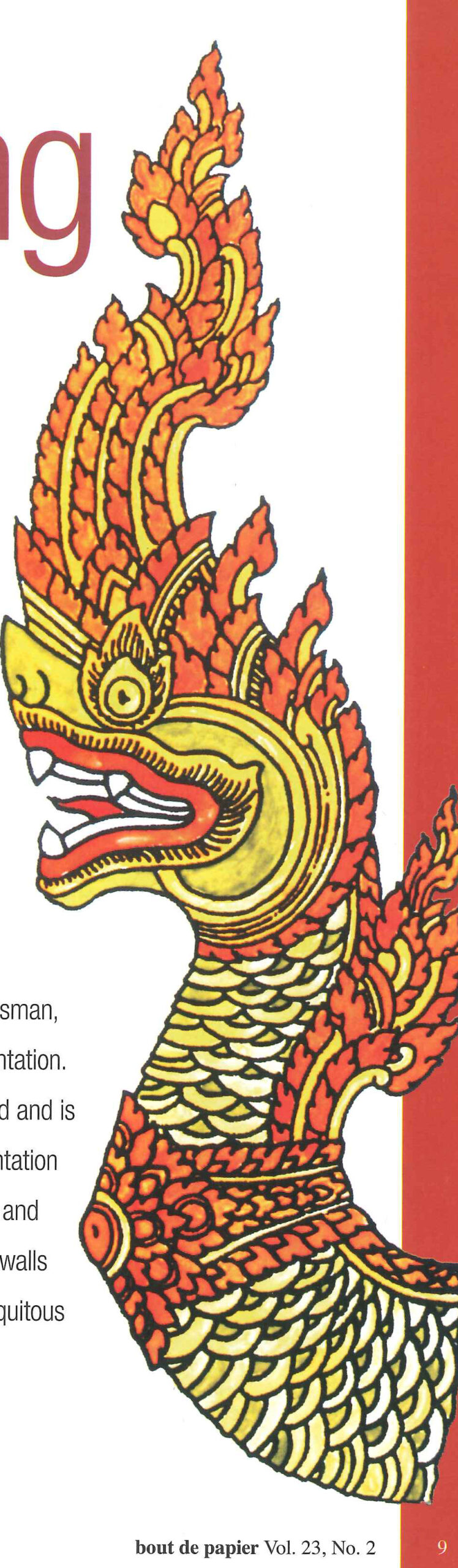
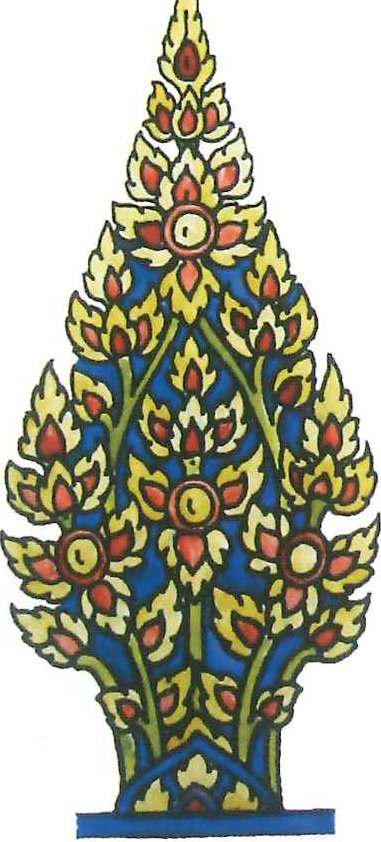
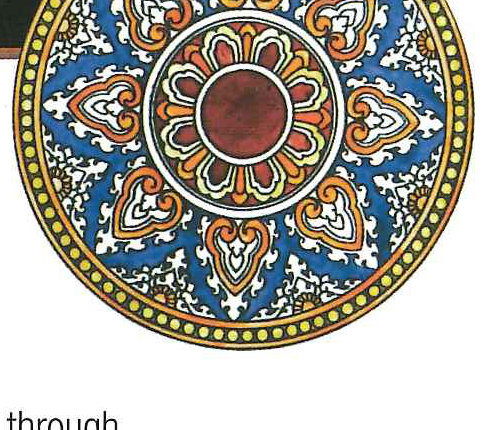
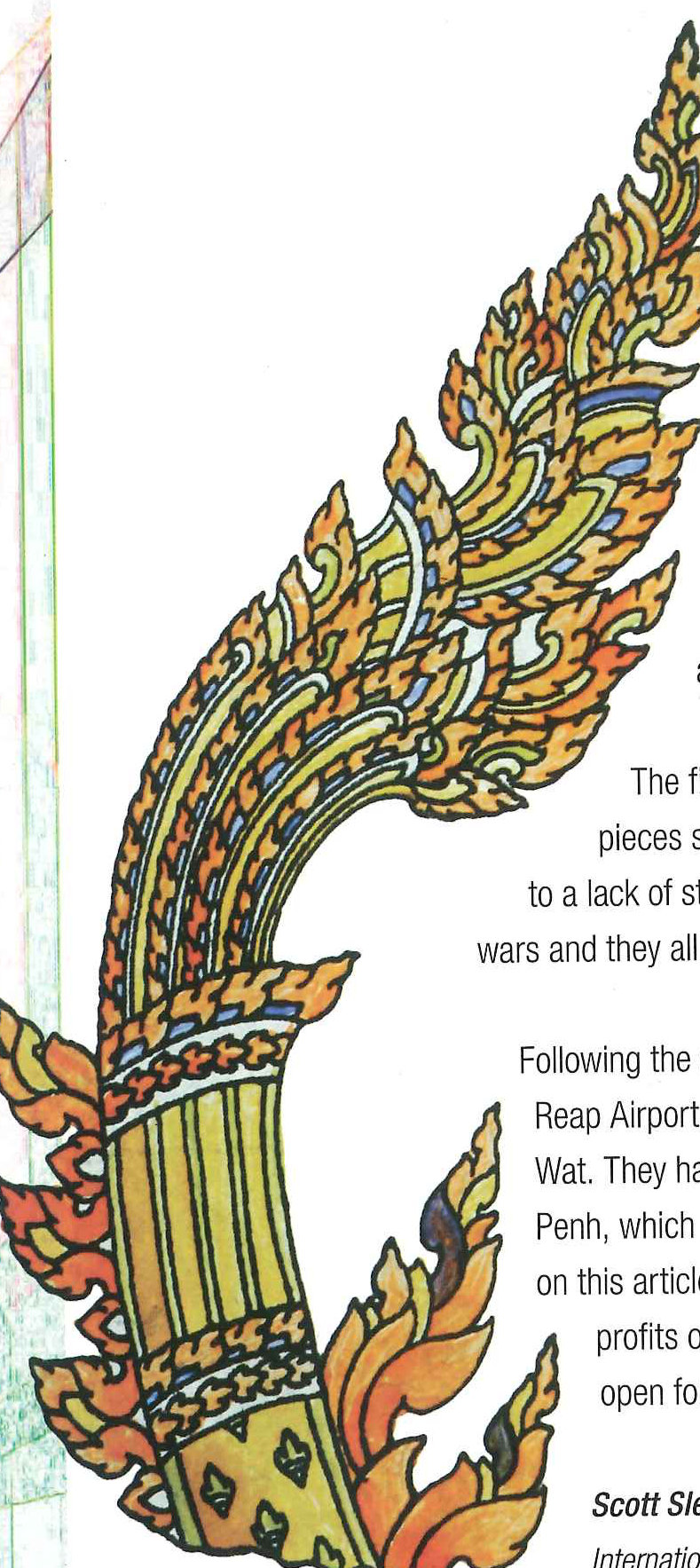
In 2005, Reyum Publishing put out a book called Kbach: A Study of Khmer Ornamentation. Its aim was to document the design and drawing techniques of a cadre of artisans and artists on the verge of extinction after decades of conflict. The illustrations allow designers and students to follow the detailed development of Khmer ornamentation from natural elements like bamboo, lotus petals or fish eggs to newer forms represented in wood, plaster, stone, concrete, bone or plastic. As a former draftsman, I was drawn to the high quality illustrations of Angkorian ornamentation. This form of ornamentation has been widely promoted in Thailand and is often thought to be Thai, but they picked up the original ornamentation from Angkor Wat in Cambodia. It is impossible to visit Cambodia and not walk away with the images of the ornamentation you find on walls and roofs of pagodas, public buildings and homes. The most ubiquitous is the mythical goose tail you find on the roof ridges.
The designs were equally interesting to me as a stained glass artisan and inspired a series of window designs. Sporadic progress was made on these designs around my French training, stints as Chargé in Brunei and valued time with our daughter. It was the summer of 2006, when I found myself back in Nova Scotia telling a friend, artist and art conservator,
John Thomson, about my latest project, that John suggested the idea of training some local artists in working with glass. John visited us in Cambodia in 2006-07 and did a conservation workshop (cleaning paintings and casting broken statues) at the Reyum Art School.
We spent a hilarious afternoon in the markets buying his materials (many of which are toxic) and ultimately looking for substitutes based on Latin chemical names and our trusty noses.
That fall, back in Phnom Penh, I met with the Director of the Reyum Institute of Arts and Culture, Daravuth Ly, to get his permission to use the Kbach designs for a series of windows and to see if he knew of a group of artists interested in learning how to work with glass. He explained that Reyum also had an art school that provided a free, four-year art program to disadvantaged children and infrequent workshops for graduates of their program. He said that they would be happy to organize a workshop on stained glass if I was willing to teach it, particularly if participants would acquire skills that might help them find work. We scheduled the workshop for January-February, 2007, and left the idea of an exhibit open ended.
There were no stained glass supplies in Cambodia – except for what was in my personal workshop. In the end, we brought some supplies in from Singapore, friends brought some glass from Canada and lead was transported into Cambodia by volunteers working on a housing project with Tabitha, a local NGO run by Canadian Janne Ritskes. Janne is from Ottawa and runs an NGO called Tabitha (www tabitha ca) that makes silk handicrafts and builds houses (700+ since 1996) with teams of volunteers.
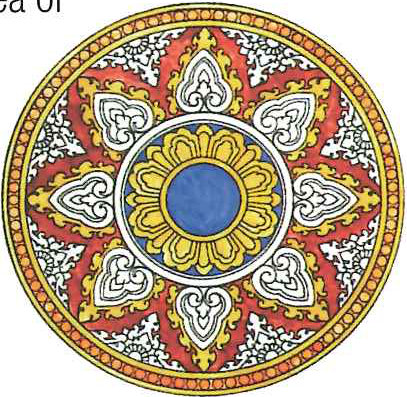
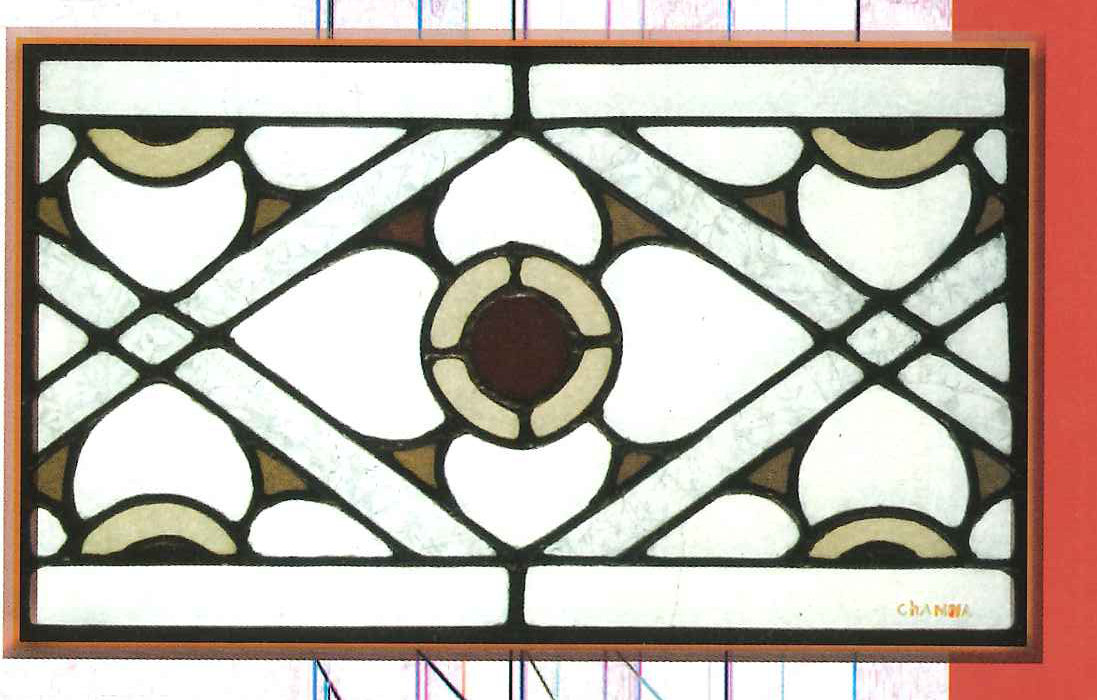
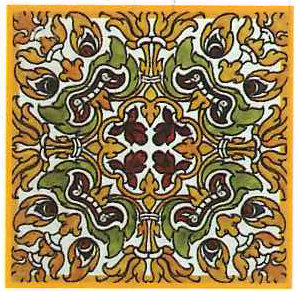
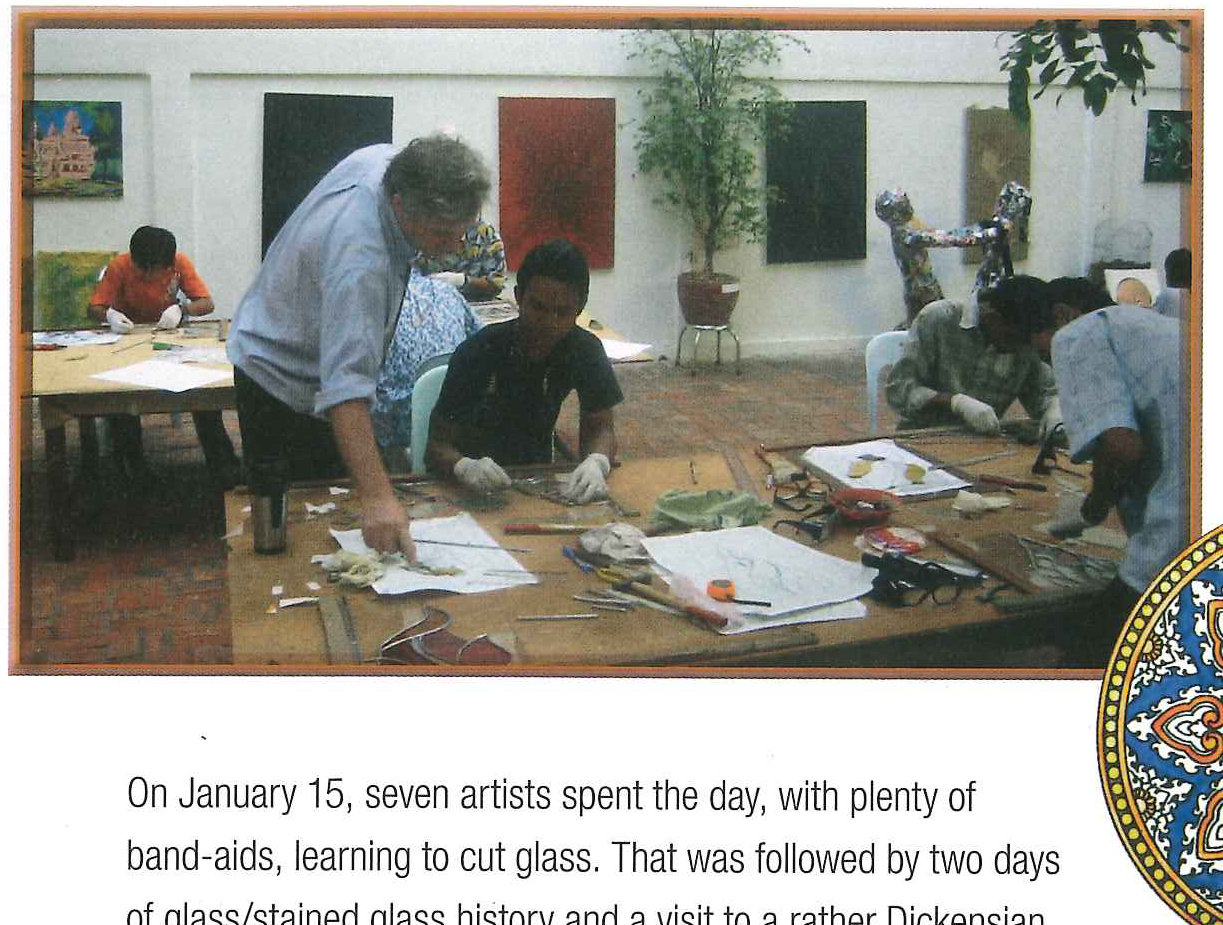
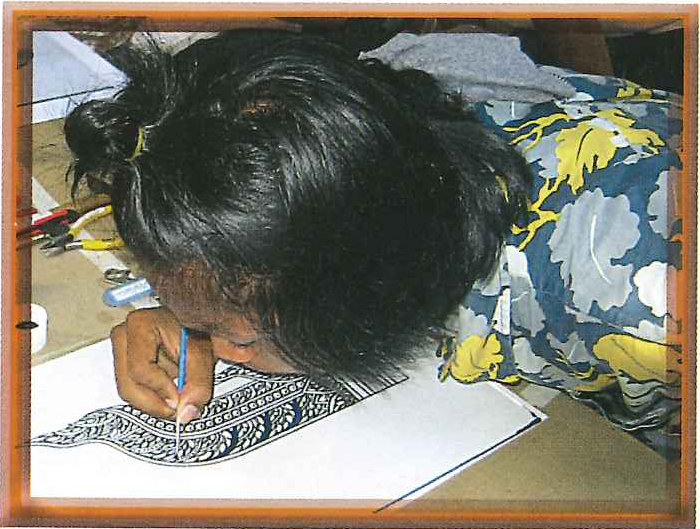
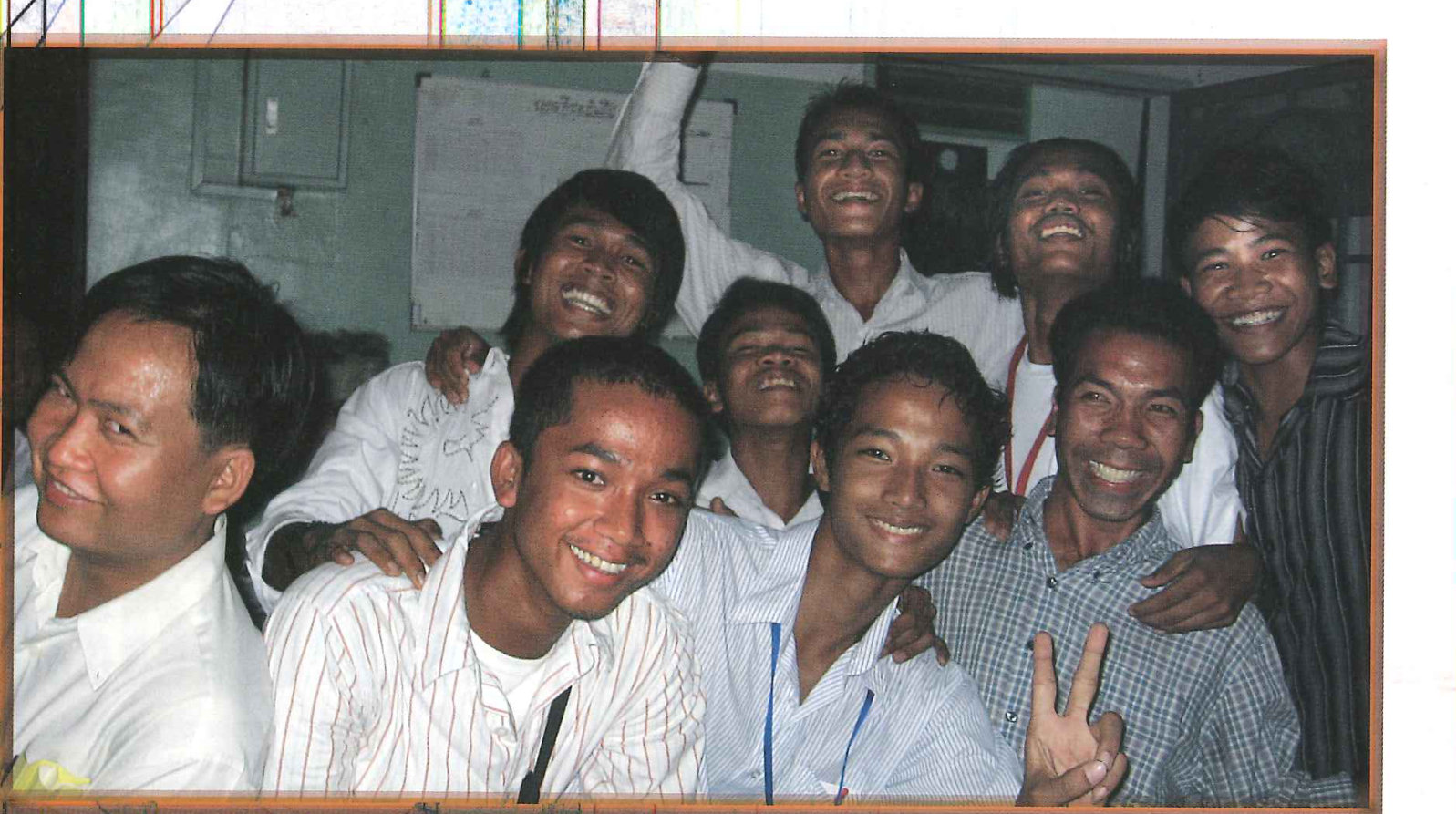
On January 15, seven artists spent the day, with plenty of band-aids, learning to cut glass. That was followed by two days of glass/stained glass history and a visit to a rather Dickensian bottle making factory so that they could appreciate the fluid, dynamic nature of glass. Over the next four weeks I walked them through the design and fabrication phases of three types of windows: leaded, foiled and painted. Each of the artists made two leaded/foiled windows and did a number of painted windows.
As I became more familiar with Reyum over the course of the workshop, it became clear that the Reyum Art School was in financial difficulty. With this in mind, we estimated profits from the sale of the workshop-produced windows and developed a brief business plan for starting a stained glass shop in Reyum — the profits of which could be used to help fund the school. Daravuth remained understandably skeptical in the absence of clear public interest in stained glass. As windows progressed, he started to see how unique and marketable the windows might be, but he remained trepidatious.
People who had heard about the workshop through Reyum started to ask about commissions. That spurred a more detailed business plan to show Daravuth costs and profits over three years. There were two versions of the plan, one sourcing larger quantities of materials from Canadian producers and a second sourcing smaller quantities from businesses in Thailand who sell Canadian, American and Australian materials at marked-up prices. When the first few windows were finished, Daravuth became keen on the exhibit and we set it up for March 17, 2007. By the end of the workshop and after a full-page article in the Cambodian Daily, the school staff, artists and students were very excited. In the midst of that excitement Daravuth and I started to worry no one would attend, or worse, that they would come but not buy anything. First, we had to transform the courtyard that had been our classroom into an exhibition space.
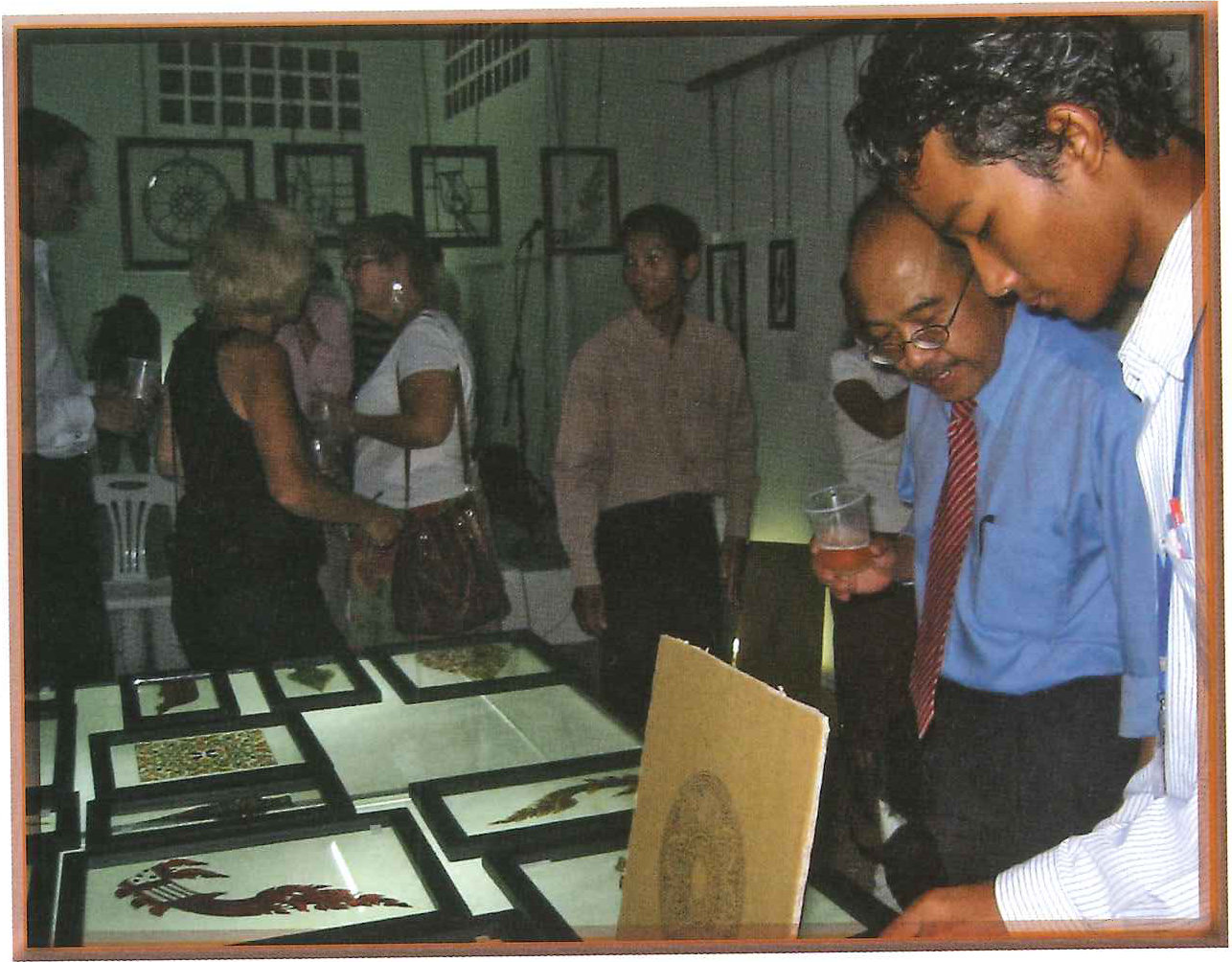
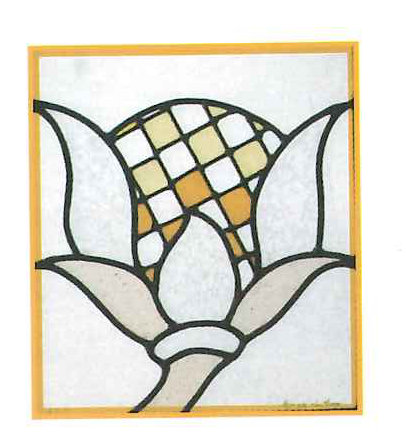
Like all exhibits, the day before and the day of were nerve-wracking. Reyum had a good number of the older students involved in reworking the rooms and setting up lighting, tables, etc. They even printed some T-shirts with the designs we had used for painted windows. At the last minute, we had to discard the wooden stands which required we alter the recycled cardboard boxes we had custom made for each window. We had lit the fabricated windows from behind and placed the painted windows on a light table to optimize the effect. The final pieces were in place just as the first visitors arrived. The lead/foil windows were sold in a silent auction and the painted windows had fixed prices.
The first visitor (about 200 came that evening) bought three painted pieces. Then the pieces seemed to fly off the table for the rest of the night and four had to be ordered due to a lack of stock. The lead/foil windows took longer to get started but soon generated bidding wars and they all sold. Profits of $4K USD+ exceeded my estimates.
Following the exhibit, Reyum received a commission for three large leaded windows for the Seim Reap Airport, which receives hundreds of thousands of tourists each year on their way to Angkor Wat. They have also received an order for 40 windows from an upscale furniture store in Phnom Penh, which will use the windows in tables they are designing. Finally, as I put the finishing touches on this article, Teacher Lim from the Reyum School of Art is on his way to Bangkok to spend their profits on a shipment of lead and glass. It would appear that the Reyum Glass Studio is open for business.
View the original scanned pages →
Originally published in bout de papier, Vol. 23, No. 2 (2007) — Fall 2007 // Automne 2007, pp. 9–15. Read the rest of this issue →



