bout de papier, Vol. 25, No. 1 (2010) — Spring 2010 // Printemps 2010, pp. 32–33
TRANSFORMING
RIGHTS: REFLECTIONS
FROM THE FRONT LINES,
by Maxwell Yalden. Toronto:
University of Toronto Press,
2009, 256 pp, $39.95.
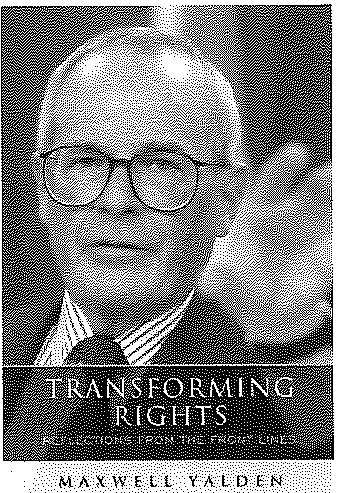
Former Foreign Service Officer Maxwell Yalden has written a book faithful to his own persona: informed, thoughtful, eloquent, and straight talking. Anyone concerned about bilingualism, human rights and Canada’s future should appreciate it. The book opens with a mini-memoir of an impeccably managed career which began in External Affairs and took him to senior levels in Secretary of State, Communications, and then service as Official Languages Commissioner, Human Rights Commissioner, Ambassador to Belgium, and member of the United Nations Human Rights Committee. bout de papier readers will be edified to hear that no-one was immune to sub-standard diplomatic housing in Moscow in the Cold War days.
After taking stock of the pitiable state of French language services outside Quebec at the time of the First Report of Royal Commission on Bilingualism and Biculturalism (1965) and before the Official Languages Act of 1969, Yalden chronicles the legal evolution and the steady progress made. For example, in 1971, there were no Francophone-controlled school boards outside Quebec. By 2004 there were 30, managing 675 French-language schools. The Act is deemed “probably one of the most successful pieces of societal legislation to emerge from the federal administration since the war.” To build on its significant achievements, Yalden has some tough advice: the Clerk and Deputies have to show they care and insist that official language “champions” report directly to them; Francophones must exercise their right to work in French; s should make a second language ‘y and provide training.
iadian human rights files, Yalden milestones in removing discriyn. grounds of gender, disability, orientation. He recalls Quebec’s and so far unique invocation of vithstanding clause” after the Sourt ruling on its sign law which ts began the unravelling of the ike Accord. He looks at every equity issues. With the excepigoing age discrimination, he approves of what our legislatures, ons and courts have achieved. He as “urban myth” the idea that the ve been unacceptably “activist.” ing that Canada has done better s on multiculturalism, he deplores yn polygamy have not been vigorrced. He gives us his wisdom on sues around “reasonable accom-’ such as clothing or the presence icifix in the Quebec National (still hanging there with unaniport).
inada’s treatment of its First Yalden is worth heeding. He ‘greater candour noting that total lependence on other governments 1f-government unrealistic. He with the “nation” approach of the mmission and advances ideas ights plus” system for individual 1 Canadians wherever they reside. cted to the idea of an ombudsman ‘iginal Affairs, reporting to Parliament, to give a push to projects and negotiations. He finds Canada’s opposition to the 2007 UN Declaration on the Rights of Indigenous Peoples to be based on “singularly flimsy grounds.” He flags the Government’s increasing isolation in its stance with the Canadian Parliament’s supportive resolution of April 2008 and the Obama Administration’s reconsideration of its position. (In the March 3, 2010 Speech from the Throne, the Government undertook to take steps to endorse the UN Declaration.)
On human rights issues at the UN from 1996-2004, Yalden brought to bear his training as a philosopher and experiences as a diplomat and deputy minister to come up with workable policy advice. This unique, non-legalistic perspective made him invaluable to the UN Human Rights Committee, an expert body which critiques Member States performance under the UN Covenant on Civil and Political Rights. Most of the other members were lawyers. I recall the then Chair of the Committee, an eminent Tunisian law professor, pleading with us to put forward Mr. Yalden’s re-election for a third four-year term. Canada, however, decided to adhere to its policy of two terms only for all UN elected expert and secretariat positions. Yalden evaluates the shortcomings of the UN’s inter-governmental and human rights treaty machinery making reasonable recommendations to streamline member states reporting. Canada’s good record in making legislative changes in response to the UN Committee’s findings has been marred, in Yalden’s view, by the refusal of both Canada and Ontario to expand to other faiths the pre-Confederation advantages accorded Roman Catholics.
He believes our overall human rights policy could do with a little less moral posturing vis-d-vis others and more effort to resolve problems at home. He concludes that if he gives Canada only a passing mark, it is because he believes that we can do better. It is also because he cares deeply about such issues and about Canada, and because they are so connected to our identity and our values.
View the original scanned pages →
Originally published in bout de papier, Vol. 25, No. 1 (2010) — Spring 2010 // Printemps 2010, pp. 32–33. Read the rest of this issue →