
bout de papier, Vol. 25, No. 1 (2010) — Spring 2010 // Printemps 2010, p. 3
An otherwise ordinary day is soon etched in our memories. Thomas Garden Barnes passed away on March 9th, after a stroke. A terrific friend of many of us who served in the United States, Tom was Professor of Law and History at the University of California, Berkeley. He was also past President of the Association for Canadian Studies in the US, Co-Director of the Canadian Studies Program at Berkeley (with the well-known anthropologist of the Inuit, Nelson Graburn), and arguably the best friend Canada could hope for among top flight universities in America. He was a bit of a polymath, jokingly referred to as the “Senior Professor of Last Resort” as it seemed that there was no issue so obscure as to stump him.
American by birth and descended of noted Nova Scotian jurists, clerics and farmers, Tom was an award-winning student at Oxford. In France he met his lovely bride, Jeanne Marie Dubus. Together they presided over their ancestral home on St. Mary’s Bay, at Plympton south of Digby, every summer for decades. No scallop or lobster was safe. Denizens of Nova Scotia know their old “front yard” as Savary Provincial Park, a sizeable picnic spot with glorious views of the bay, Digby neck and sunsets.
Much of Tom’s magnum opus was completed there, his 100-volume Legal Classics Library. A collection of landmarks in the intellectual history of the law, his introductions were so succinct and compelling that two volumes of those prefatory essays were compiled on civil and common law respectively, with potentially more to come. Tom, of course, made sure that Canada was part of that stellar collection with “The Queen vs Louis Riel”, dealing with issues that are more topical than ever.
A keen student of Acadian history, he was a good friend of Prix Goncourt author Antonine Maillet. He hugely admired Canada’s contributions to the Great War and to the defeat of Nazism in WWII which he felt were seriously underestimated. Fascinated by the Arctic, he convened several conferences on Arctic issues and sometimes said what others might not want to hear. Giving a talk at Costa Rica’s Instituto Diplomatico in January 2009, he argued that Canada’s position on Arctic sovereignty and navigation was understandable but that international law and the precedent set by Magellan centuries before in the southern hemisphere did not favour Canada’s posture; we needed to rethink and retool.
Tom wanted Canadian Studies to prosper at Berkeley. He worked assiduously to fund a Chair. He inspired support from many quarters, including friends in Alberta’s energy sector; the Thomas G. Barnes Endowed Chair of Canadian Studies was established in 2005. It was named in his honour despite Tom’s wish to keep a more modest profile. Tom slipped away just as a conference on “North American Futures”, co-sponsored by the Canadian Studies Program, got underway at Berkeley. It gave participants and old friends like Joe Clark and former Québec PM Pierre Marc Johnson a chance to bid farewell in person at his funeral mass.
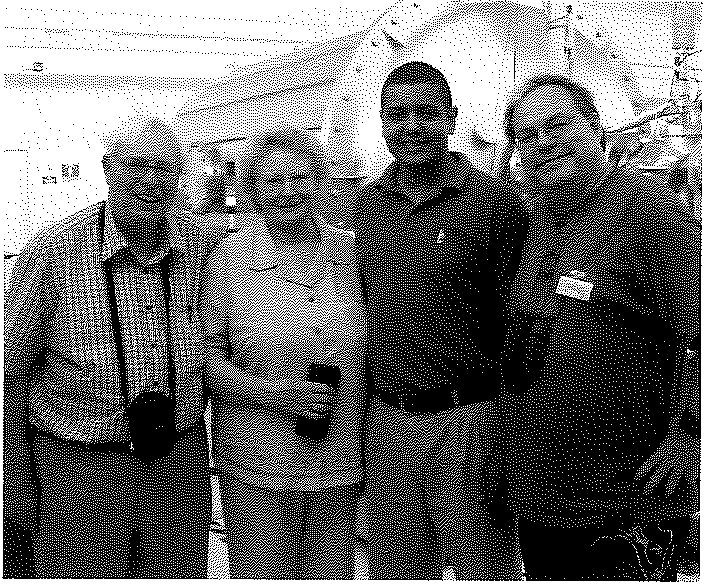
Thanks to Tom some of America’s brightest will learn about Canada in their formative years, and the benefit of that will last for years to come. For Tom, success always required the kind of commitment and great affection he had for Canada. Were we lucky to have him? Absolutely, but our sustained commitment to Canadian Studies also was essential. As one of Stephen Leacock’s characters aptly said: “It took twenty years of hard work to get this lucky!” That hard work was never more rewarding than in our many years of joint effort with Berkeley’s much-loved Senior Professor of Last Resort.
View the original scanned pages →
Originally published in bout de papier, Vol. 25, No. 1 (2010) — Spring 2010 // Printemps 2010, p. 3. Read the rest of this issue →



