bout de papier, Vol. 24, No. 3 (2009) — Summer/Fall 2009 // Été/Automne 2009, pp. 17–23
ohn Diefenbaker treasured his contacts with the great men of his time. His boyhood meeting J with Sir Wilfrid Laurier in Saskatoon and his encounter with “the Old Man” — Sir Winston
Churchill — in 1962 were hallowed moments which provided tales he loved to recount. (Some were included in a Victor recording of Mr. Diefenbaker, produced by Graham Watt, under the title “I am a Canadian”: a series of baroque performances that may still amuse and delight today.)
It was no surprise, then, that his first request when he came to Israel in November 1963, was to call on that country’s famous Old Man, David Ben-Gurion. Both were then newly, and uneasily, out of office: Mr. Ben-Gurion had been forced out by age and pressures related to the mysterious “Lavon Affair;” Mr. Diefenbaker by the defeats he had incurred earlier that year, first, in the House of Commons and, then, in national elections. Bearing these events in mind, our Ambassador and
his wife, Arthur and Joyce Andrew, did the Leader of the Opposition and Mrs. Diefenbaker all the honours, meeting them at the airport, hosting them at the residence, and accompanying them to David Ben-Gurion’s desert retreat at Sde Boker. So it was that Arthur Andrew came to tell us what really happened there.
John Diefenbaker — an early and devoted Zionist among Canadian politicians — came to Israel with a romantic vision of the land based, in equal parts, on Bible stories, memories of his youth pioneering in northern Saskatchewan, and tales of settlers and sabras “making the desert bloom.” His line of questioning when the two men settled down together at the kibbutz betrayed his misconception of Mr. Ben-Gurion’s role, as politician and intellectual, in Israel. “Did you make that chair?” No. “Did you build that table?” No. Had Israel’s co-founder and long-time leader laid the bricks and worked on the roof? A puzzled Mr. Ben-Gurion offered what he could by way of response to these queries. It began to emerge that the two men’s pioneering experiences had been very different.
Sde Boker’s experiments in hydroponic agriculture, one of Mr. Ben-Gurion’s enthusiasms, offered something closer to common ground, but remained distant from the issues of the day. Fearing he would have nothing to write home about, Arthur Andrew resolved to “get them talking like statesmen.” He asked Ben-Gurion for his views on China, and was gratified to hear him eloquently develop his theory about that country’s coming greatness and crucial role in international relations — once it emerged from its isolation and began to utilize the skills of its people (a precocious judgement about Mao’s China in 1963). That led to a brief review of the international scene and the situation in the Middle East — just enough to provide material for a necessarily brief, but charmingly breezy, report to Ottawa. The two statesmen and their wives met again at a dinner at the ambassador’s residence but nothing of moment occurred there except Paula Ben-Gurion’s stage whisper to her husband, across two tables, “You can’t eat that!” He calmly went on 17?
spooning his dessert.
The next item on the Diefenbakers’ programme was a trip to Jerusalem. I had last seen the two of them on the night the Conservative government went down to defeat in the House of Commons, Mrs. Diefenbaker sitting straight and apparently unmoved in the Government Gallery, Mr. Diefenbaker, visibly shaken, his fingers tensely crossed, unsteadily descending the back staircase from his office to the Chamber. When I called at their hotel to escort them to Jerusalem, I was struck by how relaxed and vigorous John Diefenbaker looked; quite unlike the harassed, defeated figure I had seen seven months earlier. As I introduced myself — from Saskatoon, a recent recruit to the foreign service and a former aide to Howard Green — Mr. Diefenbaker took charge: “Ah yes, Bergbusch. A Dr. Bergbusch used to write me about … immigration cases.” I acknowledged that that was probably true. My father, as head of the Western Canada Synod of the Lutheran Church, had probably written him about cases of special concern. My name and background seemed to provide an immediate level of comfort in our relationship: I, clearly, did not rate as a “Pearsonality.”
As we travelled together during the following days, it became clear that this was, in many ways, the trip of a lifetime for Mr. and Mrs. Diefenbaker. The “Land of Israel” evoked foundational tales studied in Sunday School and they were augmented now by the fascination of a new state of Israel. Invited while in office by Dr. Yaacov Herzog, Israel’s learned and energetic ambassador, Mr. Diefenbaker easily transcended on such a trip the burden of a name that had dogged him for years and was still a matter of occasional ridicule. He was to be the first Canadian Prime Minister to visit Israel while in office or out. (He also stopped in Cairo during this trip, but Mr. St. Laurent had beaten him there.)
The government of Israel and its agencies had charge of the Diefenbakers’ time in West Jerusalem, and I was not called upon to attend the tree-planting ceremony at the Canada forest, nor the tour of Yad Vashem, nor the celebratory dinner at the King David Hotel. However, as a newly arrived Third Secretary, the tour of East Jerusalem was in my hands; it was the embassy’s first test of my competence. Luckily for me, the British Consul-General in Jerusalem had made the arrangements for us with his customary tact and skill.
The day started badly. At the Mandelbaum Gate, we were welcomed to ‘Jerusalem, Jordan” not by the Governor of the Old City but by his Deputy, a falling off Mr. Diefenbaker duly noted. The Deputy apologized profusely for the Governor’s absence explaining that a political crisis had blown up. This disappointing start was, happily, softened when the British Consul’s two sons, about 10 and 12 years old, came forward. Their mother was Canadian and they had obtained permission to skip school in order to meet Mr. Diefenbaker and get his autograph. The honours were done with aplomb and we set off through the Damascus Gate to see the treasures of the Holy City.
Now, Jerusalem is a “city built on high.” Mr. and Mrs. Diefenbaker were both dressed formally for this great occasion and the heat began to tell on us as we climbed through the narrow, winding passages of the Sukh. John Diefenbaker took off his jacket and loosened his tie, but Olive had no such recourse and continued to walk stiffly up the stairs encased in the special corset she wore to support her injured back. The route taken by our Palestinian guide was filled with interest: wailing Arab music drifted across our path; fragrances of coffee, cardamon and other spices wafted in the air; piles of carpets, beads, coffee pots, shoes and textiles dazzled our eyes. Alas, that was not all. The smell of manure rose from the donkey dung sprinkled here and there on the steps and the carcasses of beef and lamb, hung on one side — the host of flies settling on them idly whisked away by a small boy — added their own aromas. Mrs. Diefenbaker, a home economist by training, was especially shocked by this lack of hygiene, lack of care. Someone should do something about that…
We emerged from the narrow lanes under a blazing noon-day sun to follow the Via Dolorosa to the Church of the Holy Sepulchre. En route we descended to a basement to view games of chance which had been carved in the stone pavement in biblical times. Finally, we arrived at the church. Yet our guide felt obliged to explain the politics of the place — the role of the Muslim keeper of the keys and the position of the Copts with their chapel outside — before we were allowed to step into the Church’s dark interior. Seeing the strained looks on Mr. and Mrs. Diefenbaker’s faces, I began again to fear the outing would be deemed a disaster.
We were just getting our bearings in the mystic gloom among religious decorations, piles of sand and tiles, and ubiquitous scaffolding, when a side door opened and a suave, well-dressed man came forward, greeted the Diefenbakers, and apologized for missing them at the gate. Turning around, he vainly waved at the five patriarchs of Jerusalem to assist him in welcoming “the Prime Minister of Canada” to Jerusalem and the Church of the Holy Sepulchre. But the patriarchs, tall men all, with their bejewelled robes, great hats and fine staffs carried before them, swept away, studiously ignoring Mr. Diefenbaker, the Governor and one another. The Governor calmly explained that a fierce dispute had broken out that morning over claims that the long overdue repairs and renovations currently underway were altering the time-hallowed lines of demarcation between the various churches. Such disputes had flared into violence and bloodshed in the past and the Governor had felt obliged to intervene quickly with the parties lest worse betide. This fascinating account, drawing on the history of this holy site, and the Governor’s renewed apologies, left Mr. and Mrs. Diefenbaker intrigued and satisfied. Their day — my day — was looking up.
It became even better when a number of American tourists from the mid-west, and then a few Canadians, came up to pay their respects to Mr. Diefenbaker (Newsweek’s earlier cover depicting him as a raging maniac had evidently made less of an impression in the United States than I had imagined). Mr. Diefenbaker responded to the occasion with habitual ease. His interlocutors’ friendly greetings brought out the personal warmth, humour and gift of homely repartee that had made him the most formidable street-front politician of his generation. We lingered a bit in the glow of recognition before our guide called on us to see the Holy Sepulchre in the crypt. We then rushed off, in the appointed car, to the lunch that awaited us at a nearby convent.
Our quiet lunch a trois inside the convent’s massive walls, at an oak table in a small refectory, brought cool and calm to the hot day — and grace in the exquisite courtesy of the Mother Superior and the quiet, skillful service of the sisters. We spoke in low tones in this muted atmosphere, relishing the simple fare, cooked from local produce. (I benefitted, in particular, when Mr. and Mrs. Diefenbaker, for fear of stomach upsets, skipped the crisp watercress salad the sisters had prepared for us.) By the time we finished lunch, conveyed our thanks, drove across the city, and transferred from the Jordanian car to the Israeli car in “no-man’s land” (at the Mandelbaum Gate), the shadows were beginning to lengthen. When we got to the King David Hotel, Jerusalem was bathed in a golden light; we were ready for a restful evening. Mr. and Mrs. Diefenbaker had spent a memorable day in the old city.
The next morning’s programme began with a press conference arranged by the foreign ministry. The Israeli press corps had come to record the arrival of another celebrated foreign visitor, the first of his rank from Canada, and stayed to be entertained by Mr. Diefenbaker’s expressive, emphatic and darkly allusive responses to their questions. A good time was had by all.
Then we set off, with a new and larger cast of characters, in Jerusalem’s fresh morning air for the Galilee and northern Israel. Norman Genzer, a businessman from Montreal and Mr. Diefenbaker’s long-time friend, who had something to do with Progressive Conservative party politics, sat in the front of our limousine, next to the driver. Nitzan Hadass, my opposite number as the Canada desk officer in the foreign ministry (also a recent recruit), sat with me in the jump seats, facing Mr. and Mrs. Diefenbaker. While we started off in suits, our attire and spirits became, respectively, ever more casual and jovial as we went along. It was sightseeing all the way as we wound down the narrow road from Jerusalem and turned north past Arab villages to the Galilee. Nitzan, an observant Orthodox Jew with military training, was widely read and knowledgeable on many points of history, law and religion. Norman Genzer enjoyed bits of reminiscence and respectful badinage with Mr. Diefenbaker as we looked out at the passing scene. Mr. Diefenbaker quizzed Nitzan on the historical role of the Sanhedrin court and on Israel’s current legal system before we reached our first stop, King Solomon’s stables at Megiddo built to accommodate the king’s chariot host. I stayed with Mrs. Diefenbaker while the rest of the company clambered down into the excavation. Mr. Diefenbaker, on returning, gave her a full account of the marvels they had seen, noting that this was the supposed site of Armageddon.
Archaeologists differ about Meggido. Some think the structures there were storerooms not stables. Some attribute its construction to the era of King Ahab, not Solomon. It is an impressive complex in any event and the site of storied battles. The belief that a final human battle will be fought at Megiddo, otherwise “Har Megiddo” (Mount Megiddo) or “Armageddon” has a long history.
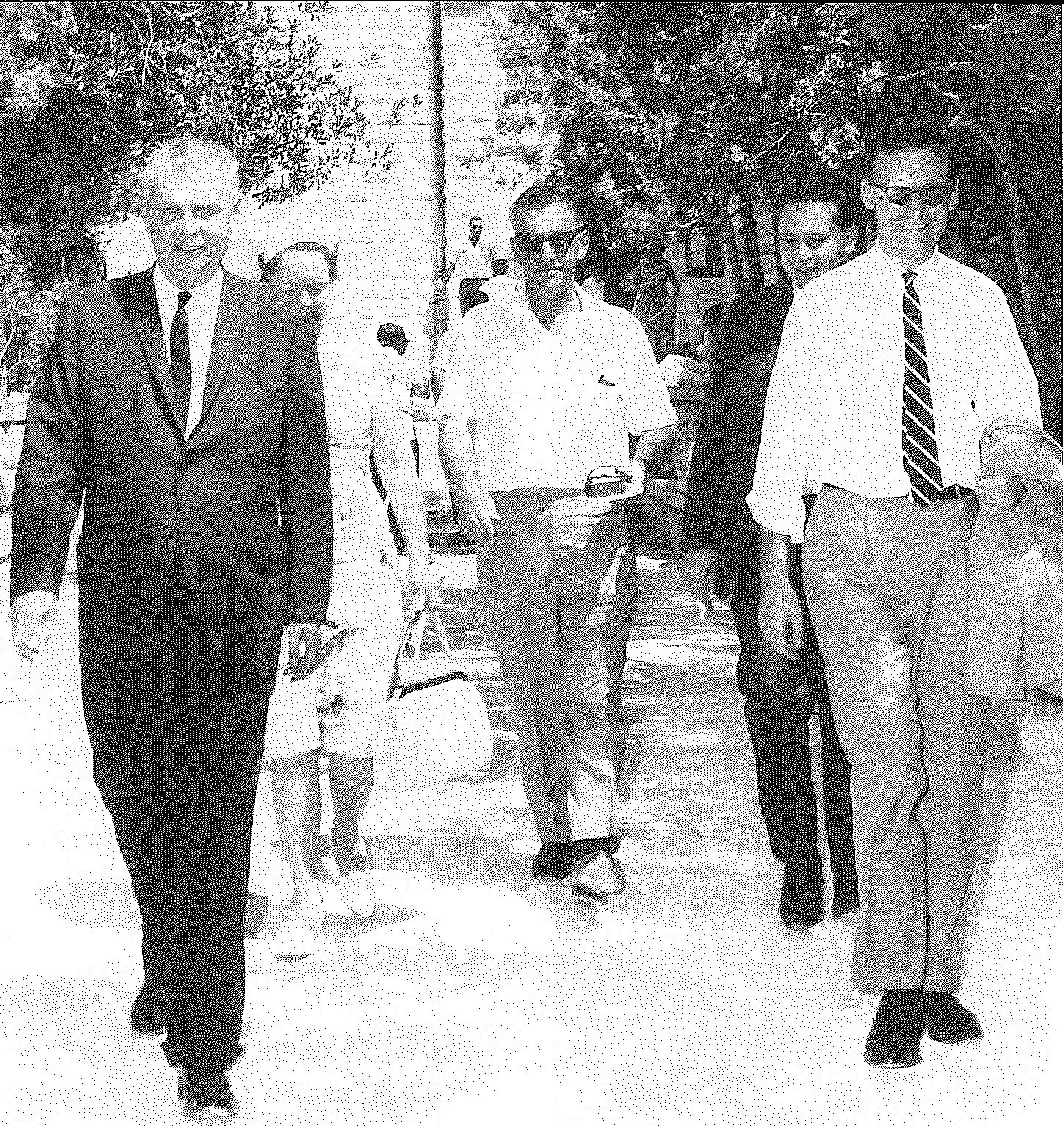
Next was a stop at Cana, where we visited the Greek Orthodox and Roman Catholic churches in turn, each allegedly on the spot where Jesus miraculously changed water to wine at a wedding feast. Mr. and Mrs. Diefenbaker had already visited sites where different Christian churches made conflicting claims and they had had a lively and extended discussion as to which of their two families would have been more shocked by such contradictions. Mr. Diefenbaker addressed the matter in front of the hallowed “old jar” at the Franciscan church, having previously surveyed the “stone vats” at the Greek Orthodox church. “Young man,” he told our Arab Christian guide, “I have a bit of a problem. We were just over at that other place (waving his arms expressively) and they told us that that was the site of the miracle. Now you tell us that this was the place. So which one is was it?” (All this in a quizzical tone calculated to amuse the audience around him.) “Well, Mr. Diefenbaker, many people ask me that; some Lutheran pastors here last week asked the same question. What I always tell them is that it doesn’t matter so long as it strengthens your faith.” “A very good answer, young man!” Mr. Diefenbaker responded and vigorously shook our guide’s hand to the satisfaction of all.
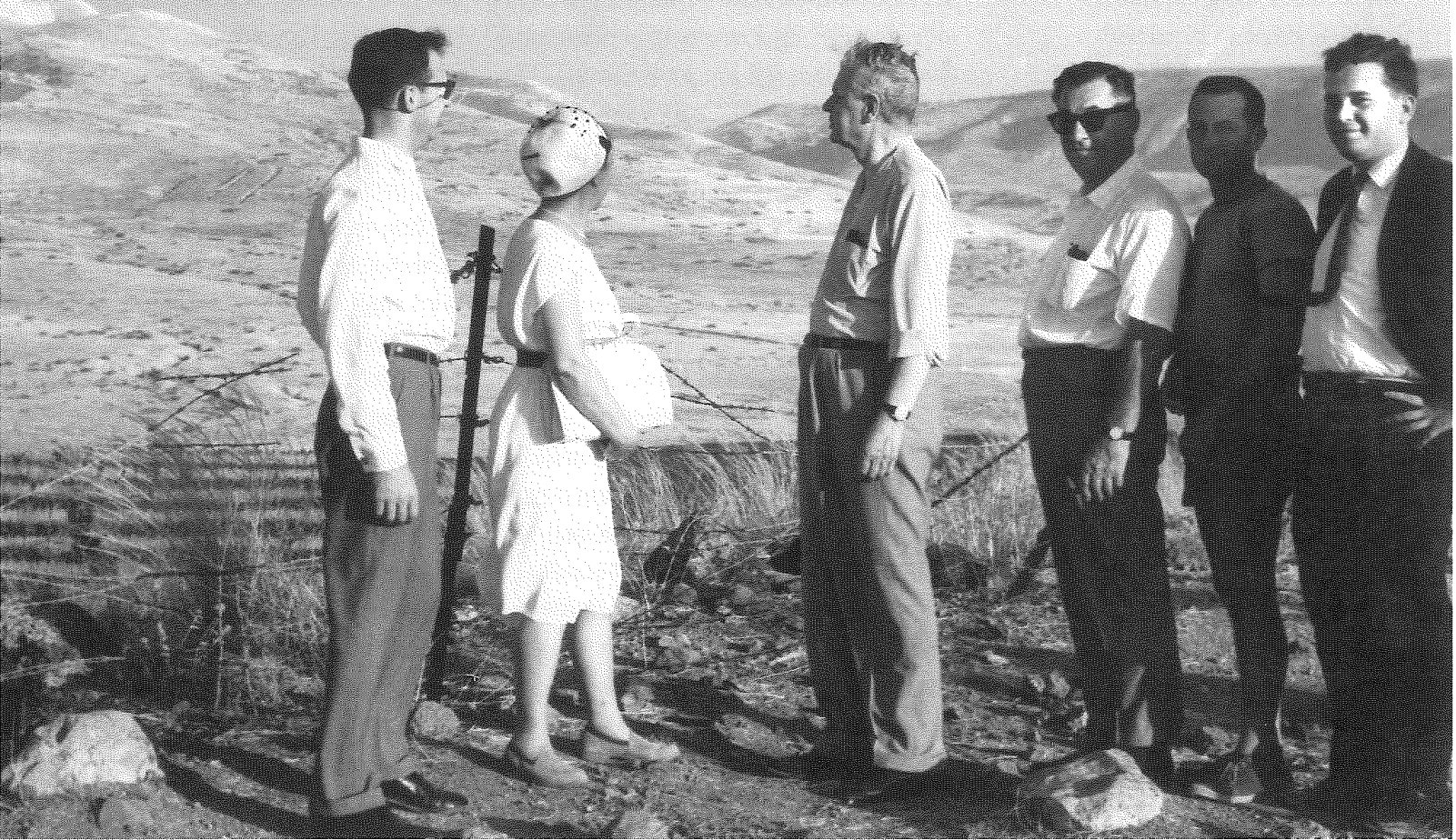
We drove on towards Yam Kinneret — the Hebrew name — also known as Lake Tiberius or the Sea of Galilee. But now our talk was of the Horns of Hattin, where Saladin surrounded the last major Crusader force in the heat of the summer of 1187, and then broke and destroyed it. Mr. Diefenbaker had noted that the site was near our route and he was eager to see it. Consequently, when we got near the hillside, we stopped and walked until we could see the two high points and the saddle between them. There, Nitzan answered Mr. Diefenbaker’s questions and gave a sequential account of the men, materiel and tactics used in the three-day battle.
Nitzan Hadass and his wife Ruth were later involved in a dangerous and dramatic incident while on a posting to Bangkok. In December 1972, they were taken prisoner, with other members of the Israel embassy, by four Palestinian gunmen. They were subsequently released unharmed after the terrorists were persuaded to give up their demand for the release of 36 Arab prisoners and to be escorted out of the country.
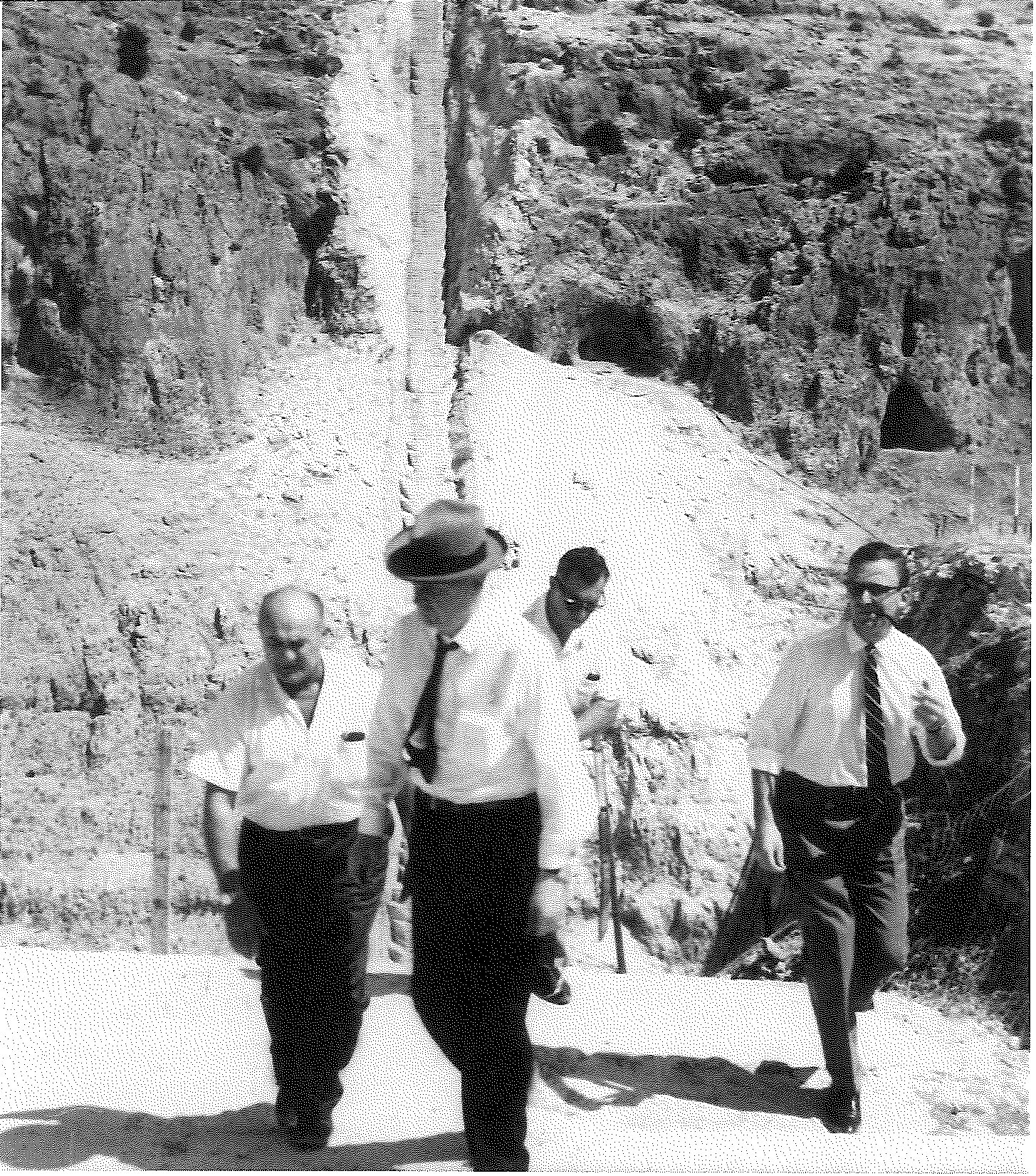
Inverted syphon above the Sea of Galilee — (left to right) Official from the Israel Water Authority, John Diefenbaker, Norman Genzer and Eric Bergbusch.
By now, we had seen three historical sites from three different eras and we were ready for lunch. At a restaurant overlooking the Sea of Galilee (and not far from Capernaum where the miracle of the loaves and fishes is celebrated), we dined on St. Peter’s fish, locally caught.
After our lunch break, we wound up a tortuous road into the hills west of the Sea of Galilee. At a well-guarded spot (which no-one in the Canadian embassy had yet seen), officials of the Israel Water Authority showed us a remarkable sight: a great trench cut across two steep hillsides in which there lay a gigantic pipe folded in a giant “V”. This was the inverted syphon by which water from the intakes in the Sea of Galilee was to be drawn by gravity across the hills and down to the coastal plain. The timing and details of the project were still covered by heavy security, but it was clear that its inauguration was not far off. (Five months later, in May 1964, the government of Israel announced that water from the Jordan system was flowing to Tel Aviv and the coastal plain. At about the same time, a student activist named Yasser Arafat, frustrated by the lack of response from the Arab states, organized a resistance group called El Fatah, and mounted the first — largely ineffectual — attacks on the diversion project. These terrorist raids by Palestinian groups in Jordan and Syria sparked rivalry among Syria, Jordan and Egypt and triggered a gradual escalation of violence which led to the Six-Day War.) Mr. Diefenbaker came away from this scene mightily impressed.
Then we were off to an even more exciting place: Kibbutz Tel Katzir. This was the famous kibbutz featured in press and TV accounts of the shelling and counter-fire that took place periodically on Israel’s border with Syria. We were shown around by the bronzed chair of the kibbutz and casually greeted by tanned kibbutzniks, male and female, wherever we went. They might have been Saskatchewan farm people but for the lightness of their dress — shorts and sandals instead of overalls and boots. We climbed down into the bomb shelter built for the children’s school, examined the blast walls set up to deflect artillery fire, and looked around the armoured tractors standing in a nearby field. Before us we could see the kibbutz’s cultivated fields sloping down to the 1949 Armistice Line and the Syrian hills rising behind them. There was little cultivation to be seen on the Syrian side.
“Will they shoot today?” Mr. Diefenbaker asked as he gazed intently at the Syrian gun positions up on the Golan Heights. They were highlighted by the afternoon sun. No, the chairman assured him, there was no cultivation underway and the guns would not fire today. (Syria’s intentions were not as mysterious as they then seemed. Its artillery opened up during planting and harvesting whenever the kibbutz tractors crossed the “line of habitual cultivation,’ a limit spelled out under the 1949 Armistice Agreement but not agreed between the parties. Our informants in the IDF Liaison Office, I later found, were quite open on the matter, readily specifying on what days contested cultivation might draw Syrian fire.)
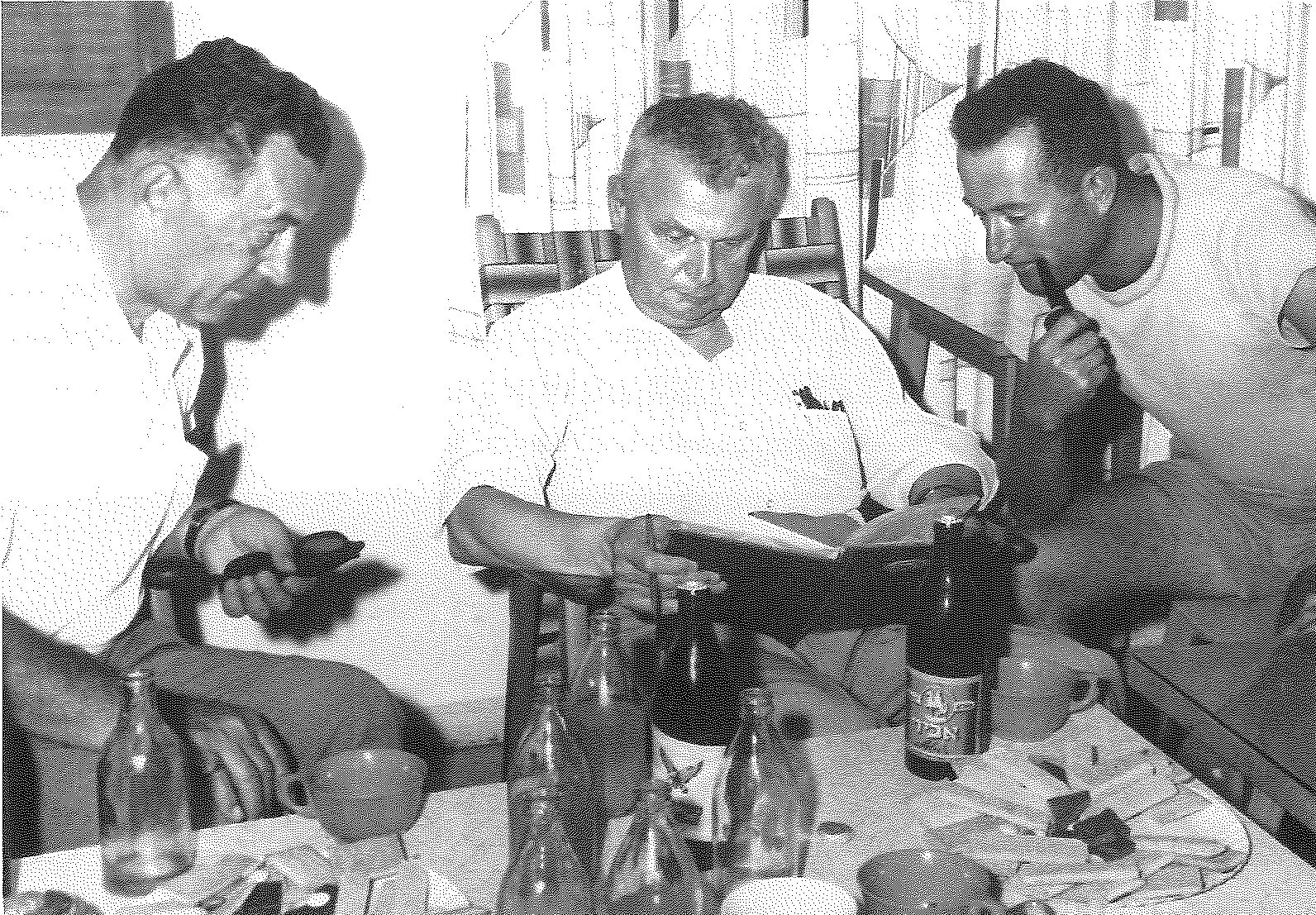
After our tour of the kibbutz, we sat down with our hosts for refreshing drinks of orange juice or beer. Mr. Diefenbaker, a famous teetotaller, chose the latter. It turned out that he was what some might call a Saskatchewan teetotaller: only one beer on a hot afternoon and one glass of wine for dinner (when not in the public eye). A less hidebound man than one had imagined — almost a regular guy!
We were tired and content on saying goodbye to the young people at Tel Katzir and largely silent on the drive to our hotel in Haifa. But the day was not over yet. Mr. Diefenbaker asked Norman Genzer and me to join him in the restaurant later on; Mrs. Diefenbaker preferred to rest in her room. So we three Canadians sat down together, Norman Genzer and John Diefenbaker to review the fortunes of the Progressive Conservative Party and me to listen. Many who listened to Mr. Diefenbaker over the years — and his listeners were legion — must have heard the same stories. But they were new to me, and well worth listening to. He spoke of Mackenzie King’s political smarts: “Oh, he was terrific!,” he repeatedly said, and recounted another of King’s political manoeuvres. Though Mr. Pearson’s name was never mentioned, the implication might have been that he lacked the political arts of his wily predecessor.
Then there was George Hees. Mr. Diefenbaker praised him highly for his skills and great promise. “But he threw it all away!” Again the matter was y?
not spelled out but the meaning was clear.
Hees had been his favoured and inevitable successor: only his rebellion against the Chief had forever destroyed his chance of leading the party. Most shocking of all, however, was the case of the eminent Quebec businessman and financier who, it was proposed, should get himself elected and serve in Mr. Diefenbaker’s cabinet. Yet what had he demanded as a guarantee if he were to leave the business world and enter politics? One hundred thousand dollars annually for 10 years: one million dollars (equivalent to ten times that amount today). Mr. Diefenbaker shook in indignation even as we ate dessert. The very thought of it — a million dollars! No wonder he had not always had the best rapport with his Quebec caucus when they posed demands such as that.
Mr. Diefenbaker’s visit to the Holy Land was now drawing to a close. His thoughts were turning back to Canada and the political challenges which awaited him there. The next morning before returning to Tel Aviv we stopped briefly in Acre to see the Roman and Crusader ruins. An Arab boy nearby, seeing a tourist party (and abetted by Norman Genzer), tried to get Mr. Diefenbaker to hire the donkey for a brief ride and photograph. I thought the Chief was momentarily tempted by the offer, but he thought better of it and joked with the Arab boy instead. We drove off to Tel Aviv, said our farewells, and went our separate Ways.
Mr. and Mrs. Diefenbaker flew out of Lod (now Ben-Gurion) airport the next morning, and I never met or spoke to them again. Nevertheless, I felt then, as I feel now, that they left pretty well content with their visit to the Holy Land.
View the original scanned pages →
Originally published in bout de papier, Vol. 24, No. 3 (2009) — Summer/Fall 2009 // Été/Automne 2009, pp. 17–23. Read the rest of this issue →