
bout de papier, Vol. 24, No. 4 (2009) — Winter 2009 // Hiver 2009, pp. 28–32
One does not expect a barbarian warlord — especially one who secured his control over Italy by bisecting his rival with a sword during a state dinner — to maintain an active foreign policy of constructive engagement, through skillful diplomacy with his neighbours. However, thanks to surviving diplomatic correspondence, and to the highly descriptive epitaph of one of his senior Roman diplomats, we are left with a remarkably clear picture of how the Ostrogothic king, Theoderic the Great, who ruled Italy from 493 to 526, conducted his foreign relations.
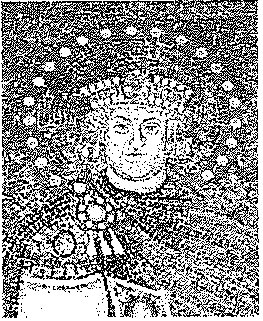
Patrician and Magister Militum (Master of Soldiers) Flavius Theodericus — known to his Ostrogothic people as King Thiudareiks son of Thuidimir and to posterity as Theoderic the Great — was very much a man of two worlds. Born in Pannonia (modern Hungary), in the mid 5th century — shortly after the death of Attila the Hun — he spent much of his youth as princely hostage in Constantinople. There, as part of the Roman policy of grooming suitably indoctrinated client kings, he received a good classical education. On his father’s death, Theoderic returned to Pannonia to take command of his Ostrogothic tribe.
He was soon embroiled in protracted three-way struggle involving his people; a rival Ostrogoth leader, Theoderic Strabo (the squinter); and the east Roman government (which played one Gothic faction off against the other). In 481, Strabo died in a riding accident, and Theoderic, having ensured that Strabo’s son Recitach did not long survive him, proclaimed himself king of the united Ostrogoths. The eastern Emperor, Zeno, soon found that Theoderic’s now combined force of 30,000 Gothic soldiers was a bit too much of a good thing. In 488, he persuaded Theoderic to take his people to Italy to displace Odovacar (who had overthrown the last western Emperor in 476) and to rule Italy until the Emperor could “come in person”. Once Theoderic had finally disposed of Odovacar in 493 (commenting as he cleaned his sword, “The old man had no bones in him”)
Helped by able officials on the staff responsible for foreign affairs), Theode
at securing and extending the frontiei set about restoring peace, order and good government to the battered peninsula. His formula was simple: the Goths formed the Army, the Romans ran the civil administration.
Following the deposition of its last Emperor, the territories of the former western Roman Empire had become the domains of a number of tribal kings, governing with a greater or lesser degree of imperial sanction. France north of the Loire was taken over by Clovis, king of the Salian Franks; southern Gaul and most of Spain were ruled by Alaric II, king of the Visigoths; southeastern Gaul was governed by Gundobad the Burgundian, who maintained the fiction that he was an Imperial general (Magister Militum). For the past half century, North Africa had been controlled by the Vandals, now led by their king, Thrasamund. Other lesser peoples grabbed odd corners of the empire. The Suevi (Swabians) were ensconced in north-west Spain; the Alamanni straddled the upper Rhine, while the Angles and Saxons were slowly filling the vacuum that was post-Roman Britain. Theoderic was particularly fortunate compared to his peers. He alone had (as he said in a letter to the eastern Emperor) “…Ô learned in your Republic the art of governing Romans with equity.” Moreover, unlike the other rulers, who could only call upon whatever remained of the local administration of the provinces they had taken over, Theoderic had inherited the central government of the western Empire, which — despite the past century’s vicissitudes — still functioned, staffed by a cadre of well-educated, effective and loyal Roman bureaucrats.
As ruler of the core of the lost western Empire, Theoderic saw himself as more than first among equals, within this constellation of Germanic successor states. Helped by able officials on the staff of his Master of Offices (the minister responsible for foreign affairs), Theoderic pursued an active foreign policy aimed at securing and extending the frontiers and sphere of influence of his realm, as well as trying to prevent any of his co-rulers (in particular the very expansionist Clovis) from becoming over-mighty. At the same time he had to watch his eastern flank, lest his formal suzerain, the Emperor in Constantinople, might indeed one day choose to “come in person” to Italy, to reassert the rights that Theoderic was exercising on his behalf.
One of the keys to Theoderic’s western foreign policy was to weave a web of marriage alliances to link the Germanic rulers of western Europe. From the Bronze Age to the Great War, royal marriages were a standard tool of diplomacy, sealing alliances, cementing peace treaties, or even, through the skillful selection of heiresses, making territorial gains. In 493, shortly after consolidating his rule over Italy, Theoderic had requested and received the hand of Clovis’ sister Audofleda. At the same time, Clovis married the daughter of Gundobad of the Burgundians. To complete the triangle, Theoderic’s daughter by his first marriage, Ostrogotho, was married to Gundobad’s son, Sigismund. Another of Theoderic’s daughters, Theodegotho, married Alaric I, king of the Visigoths, while his sister Amalafrida was wed to Thrasamund, king of the Vandals. This last was particularly important as North Africa was Italy’s major trading partner, a source of grain, wine, oil and even fine table-ware. Moreover, the Vandal fleet posed a formidable threat. Amalfida arrived in Carthage with a bodyguard of 5,000 Gothic soldiers to ensure Thrasamund’s good behaviour (the Vandals had a bad habit of mistreating royal brides who had become surplus to requirements). Amalfida’s daughter by her first marriage, Amalabirga, was later married to Hermiafrid, king of the Thuringians, a potential threat to Clovis’ eastern flank and a demonstration that Theoderic’s interest extended even beyond the old Roman frontier.
Over and above these connubial activities, Theoderic pursued a very active diplomacy, sending out a constant stream of letters and envoys to Constantinople, and to the Frankish, Visigothic, Burgundian, Vandal and other lesser courts. In an era before resident missions, 6th century diplomacy was based on the regular despatch of envoys, bearing letters from one ruler to another. These letters ranged from the routine exchange of greetings; notifications of the accession or death of rulers; up to the complex negotiations of alliances. The letter itself served as the envoy’s credentials, attesting to his bona fides. It contained the essential message, but it was up to the bearer to explain the issue in detail. For this reason the effectiveness of an embassy depended to a great extent on the ambassador’s skill as an advocate. As the chief aim of the ancient education system was to produce skilled orators by honing the student’s rhetorical skills, Theodoric could draw upon a pool of well educated, upper-class Romans to serve effectively as his envoys.
We are fortunate that one of Theoderic’s most important senior officials, Flavius Magnus Aurelius Cassiodorus Senator, collected and published examples of the very extensive and wide-ranging correspondence he had drafted on his master’s behalf, for use as templates by some future administration. Cassiodorus held a succession of offices, starting as Quaestor (in charge of drafting legislation and replies to petitions, and — by extension — government spokesman). He rose to become Theoderic’s Master of Offices (in effect “minister of everything” — including the postal service, the secret service and foreign affairs) and under Theoderic’s successors, Praetorian Prefect of Italy (in effect Prime Minister). Among his Variae, as he called them, are a number of letters related to diplomatic issues. These cover all aspects of diplomacy including: the care and feeding of foreign delegations, instructions to ambassadors, the provision of diplomatic gifts, and a number of letters drafted in Theoderic’s name to fellow princes. In the first category we get a request to the city of Ticinium (Pavia) to provide envoys from the Heruli (a trans-Danubian tribe related to the Goths) with provisions for five days, “that they may at once see the difference between Italy and their own hungry country.” A more general instruction noted that returning embassies should be well provisioned so that
“… they should feel that they have been well treated … Nothing pleases those who have commenced their return journey better than speeding them on their way.”
To his eastern counterpart the Praetorian Prefect in Thessalonica Cassiodorus wrote:
“We are sending two ambassadors to the most serene Emperor, who will salute your Greatness. We earnestly hope that your Excellency will speed them on their journey.”
Cassiodorus also described some of the qualities required for ambassadors, in his (admittedly rhetorical) description of his grandfather’s performance on his mission from the western Emperor to Attila, some time in the 440s:
“He showed himself intrepid before the man who made the Empire quail …. He found the King insolent, he left him pacified; and so countered [Attila’s] slanders and allegations with the truth that the king, instead of quarreling with the Empire, condescended to seek its favour. … Thus did he bring back the peace which men had despaired of, and his countrymen men felt that Rome could not be pronounced defenceless, while she was armed with such ambassadors.”
It was one thing to soothe a ferocious barbarian, but the real test of an envoy’s rhetorical skills was a mission to Constantinople. The relationship was a delicate one.
Constitutionally Italy was still part of a united Roman Empire, which Theoderic administered and defended in the Emperor’s name. The Roman Senate was still alive and well in Italy, and each year it still nominated (or rather rubber-stamped Theoderic’s appointee) one of the two Consuls — a thousand-year-old, if now honorific, post. A barometer of the health of the east/west relationship was whether Constantinople formally accepted the western nominee. While Theoderic called himself King, it was in his capacity as king of the Goths. He claimed no such title over Italy, preferring such titles as Princeps-first citizen. The status quo that he sought to have accepted was of “… two Republics, which have forever been declared to form one body under their ancient princes.” His Roman subjects were willing to put up with an alien and heretical ruler so long as they felt they were still part of the Empire. Besides, Emperor Anastasius was also a heretic, if of a different stripe, not to mention a Greek.
While for his part Emperor Anastasius was normally content to observe this fiction, Theoderic’s representatives in Constantinople had to tread carefully. Writing in Theoderic’s name, Cassiodorus warned one prospective envoy, Agapitus:
“_…. here there is need of especial prudence, because you will have to dispute against the most subtle persons — artificers of words, who think they can foresee every possible answer to their arguments. Do your best therefore to justify the opinion which I formed of you before full trial of your powers.”
Extolling the conduct of another senior official, Cyprian, after a mission to Constantinople, Cassiodorus told the Senate:
“Thus prepared he was sent on an embassy to the East, a commission which he discharged with conspicuous ability.
Versed in three languages he found that Greece had nothing to show him that was new, as for subtlety, he was a match for the keenest of the Greeks.”
The subtle East used, it seems, more than words to ensnare western delegations. One poetic diplomat, Maximianus, wrote an epigram lamenting how, on a mission to Constantinople, he fell into what sounds like a ’honey-trap”
“Sent as an envoy to the lands of the Dawn … to weave a tranquil work of peace … impious wars entered into my own heart.”
We know more about the career of another of Theoderic’s diplomats, Senarius, who from the number of missions he undertook, was the nearest equivalent to a professional foreign service officer. Clearly of good birth and with an excellent education, Senarius joined, at an early age, the staff of the Palace, becoming an exceptor (secretary) to Theoderic’s Consistory — in effect his Cabinet. Frequently charged with ensuring royal commands were carried out, and distinguished (according to Cassiodorus’ glowing rating) for his eloquence, discretion and diligence, he was soon charged with undertaking diplomatic missions. Senarius is credited with many other virtues:
“… his success as an advocate, the charm of his pronunciation, his purity of morals; his popularity with high and low … his affable demeanour … moderation and reserve in the midst of success.”
Rating inflation is, it seems, no new phenomenon.
Senarius’ epitaph has survived, written in elegant Latin hexameters. He tells us:
I am that former traveller without borders, Senarius.
My limbs, but not my name, are confined to this tomb.
Distinguished by my love for my invincible prince,
I was, while in this world, the voice of kings,
The language of Security, the orator of treaties,
The way of Peace, the terminator of Wrath,
The seed of Friendship, the banishment of War,
the foe of Strife.
Allowing for some poetic license, this job description seems as good a rejoinder, as any, to those who question what Foreign Service Officers actually do. Senarius’ epitaph then provides his curriculum vitae. He was, he says, known in the East, in the furthest clime of Spain, the frigid North and in sun-drenched Africa. In all, he took part in 25 embassies su which (how like our own) “never failed in their task.” His crowning achievement however was the year when he:
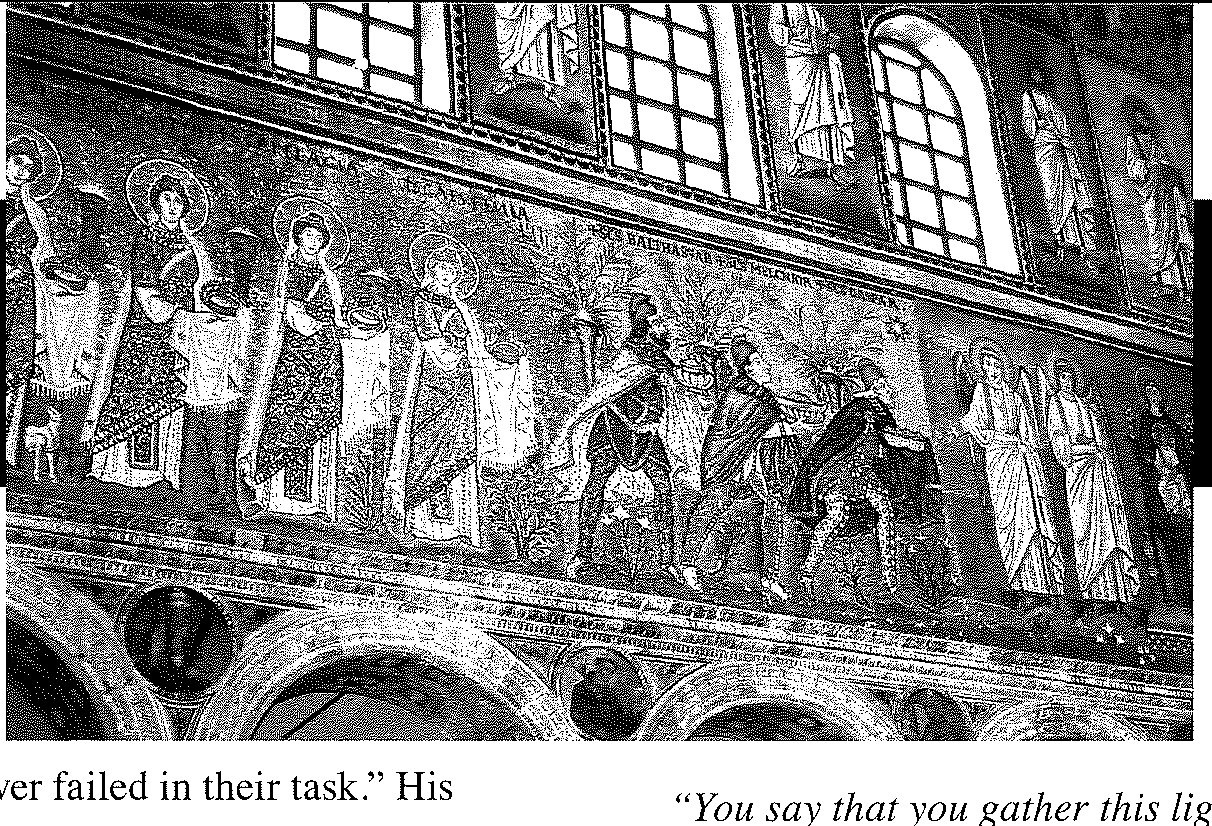
“Twice saw the shores of the [Atlantic] Ocean, and twice the Pontic [Black] Sea, Traversing both Europe and Asia, the two limits of the World.”
This last, clearly a major exercise in shuttle diplomacy, was likely related to a major crisis which took place in 506 that will be examined in a future article. In 510, as a reward for these efforts, Senarius was appointed Comes Patrimonium in charge of administering Crown Lands (the proceeds of which covered such things as provisioning the governors of distant provinces or bailing out distressed ship-owners), and made a Patrician and a Senator. In his letter of appointment Theodoric alludes to some of the challenges which had faced Senarius, as a diplomat (and gives a less than flattering description of some of his brother monarchs):
LES. standing up to kings, he was an advocate not unequal to the task, constrained to reveal Justice even to those who, in their base obstinacy, were barely able to understand reason … you subjected insolence to truth and following our instructions forced the barbarians to their senses.”
Not all of Theoderic’s envoys were Roman, some were Goths. In a letter to the king of the Heruli, conveying him a gift of horses, weapons and armour (archaeology indicates that highly decorated helmets were a favourite Ostrogothic diplomatic gift) and making him his “son in arms,” Theoderic concludes “… the bearers of these letters will explain to you in your native tongue the rest of our message to you.”
It was also probably Goths who made the long journey from Ravenna to the eastern Baltic with a reply to an embassy from the Haesti, thanking them for their present of amber and assuring them that Theoderic would
“… be glad to receive further visits from you by the road which you have now opened and to show you future favours.”
In drafting the letter, Cassiodorus cannot resist showing off his erudition to the Haesti:
“You say that you gather this lightest of all substances from the shores of the Ocean, but do not know where it comes from.”
With a long-winded citation from Tacitus, he informs them, that amber is hardened pine resin.
“We have thought it better to point this out to you, lest you should imagine that your supposed secrets have escaped our knowledge.”
Cassiodorus also could not resist showing off in delegating two somewhat unusual requests for diplomatic gifts. The first was a request from Clovis for a harpist. Cassiodorus (writing in Theoderic’s name) delegated the task of recruiting one to the philosopher Boethius. Deeming it
“important to oblige our royal neighbours, even in trifles, for none can tell what great matters may be aided thereby. … The King of the Franks has asked us to send him a harpist. We felt that in you lay our best chance of complying with his request, because you, being such a lover of music yourself, will be able to introduce us to the right man.”
Following a long discourse on music, Cassiodorus/Theoderic concludes
“We have indulged ourselves in a pleasant digression, because it is always agreeable to talk of learning with the learned; but be sure to get us a citharist, who will go forth like another Orpheus to charm the bestial hearts of the Barbarians. You will thus both obey us and render yourself famous.”
Another request came from the Burgundian king, Gundobad, who had asked for what sounds like a combined water-clock, sun-dial and mechanical planetarium. Again the task was delegated to poor Boethius, with detailed specifications, a list of all the scientific works that Boethius had translated from Greek and the exhortation:
“It will be a great gain to us that the Burgundians should daily look upon something sent by us which will appear to them little short of miraculous. Exert yourself therefore, oh Boethius, to get this thing put in hand.”
The covering letter which Cassiodorus drafted for Theoderic, conveying the completed clock to Gundobad, expounded on the civilizing effect of being able to tell time accurately, rather than
“… like beasts, only knowing the passage of the hours by the pangs of hunger, and having no greater certainty as to the flight of time than as is afforded them by their bellies.”
One hopes Theoderic reviewed Cassiodorus’ draft, and edited out that less than tactful passage.
Theoderic ruled Italy until his death in 526. Alas things did not always go his way. A subsequent article will discuss his vain efforts to forestall a war between the Franks and the Visigoths in 506, which led to the death of his son-in-law Alaric II. Nor did Theoderic’s Herul son-in-arms prosper. He was killed by the Lombards. Some of his people were forced to seek shelter in Gothic territory, others migrated back to their ancestral home in Denmark.
Moreover, some of Theoderic’s diplomatic marriages had unhappy endings. After Theoderic’s daughter Ostrogotho died, her husband, Sigismund, married a Frankish princess. Sigismund’s new bride turned out to be a prototypical “ugly step-mother,” persuading Sigismund to kill Sigeric, his son by Ostrogotho.
Theoderic’s sister Amalafrida also met an unhappy end. When her Vandal husband king Thrasamund died in 523, his successor Hilderic had her imprisoned, killing her Gothic retainers. On receiving news of her death in 527, Theoderic’s daughter and heiress, Amalasuintha sent a stiff note to Carthage, demanding an explanation.
“Friendship and relationship are turned to bitterness by the tidings that Amalafrida, of divine memory, the distinguished ornament of our race, has been put to death by you. … Our Goths keenly feel the insults conveyed in this deed. … We hear that you pretend that her death was natural. You must send us ambassadors to explain the matter. … If you do not do this, all ties of alliance between us are broken, and we must leave you to the judgment of the Divine Majesty.”
Amalasuintha lacked the naval power to follow up, but she gladly facilitated the east Roman general Belisarius’ expedition to overthrow the Vandal kingdom in 533 (ironically, Belisarius’ casus belli was to avenge Hilderic’s own overthrow).
Cassiodorus continued to serve the Goths until 538. His correspondence shows he was heavily involved in the negotiations with the east Roman diplomat, Peter the Patrician, whose failed mission in 535 precipitated the fall of Theoderic’s dynasty (see Peter and the Goths bout de papier Vol. 23 No. 4). As things fell apart, Cassiodorus retired to a monastery, to devote himself to collecting and preserving classical works for posterity.
View the original scanned pages →
Originally published in bout de papier, Vol. 24, No. 4 (2009) — Winter 2009 // Hiver 2009, pp. 28–32. Read the rest of this issue →



