
bout de papier, Vol. 24, No. 4 (2009) — Winter 2009 // Hiver 2009, pp. 9–12

Mew Small, past President of PAFSO, contributor to bout de papier and now a senior officer with DFAIT, has just published a book of interest to a wide cross section of bout’s readers: The Forgotten Peace: Mediation at Niagara Falls, 1914, The University of Ottawa Press, 2009, 179 pp. It is the product of research first undertaken a few years ago while a fellow at Harvard University (see “A Posting to the People’s Republic of Cambridge” in bout, Volume 22, No. 2, Autumn 2006), research undertaken to make sense of an almost unknown Canadian footnote in the history of conflict resolution in the Americas.
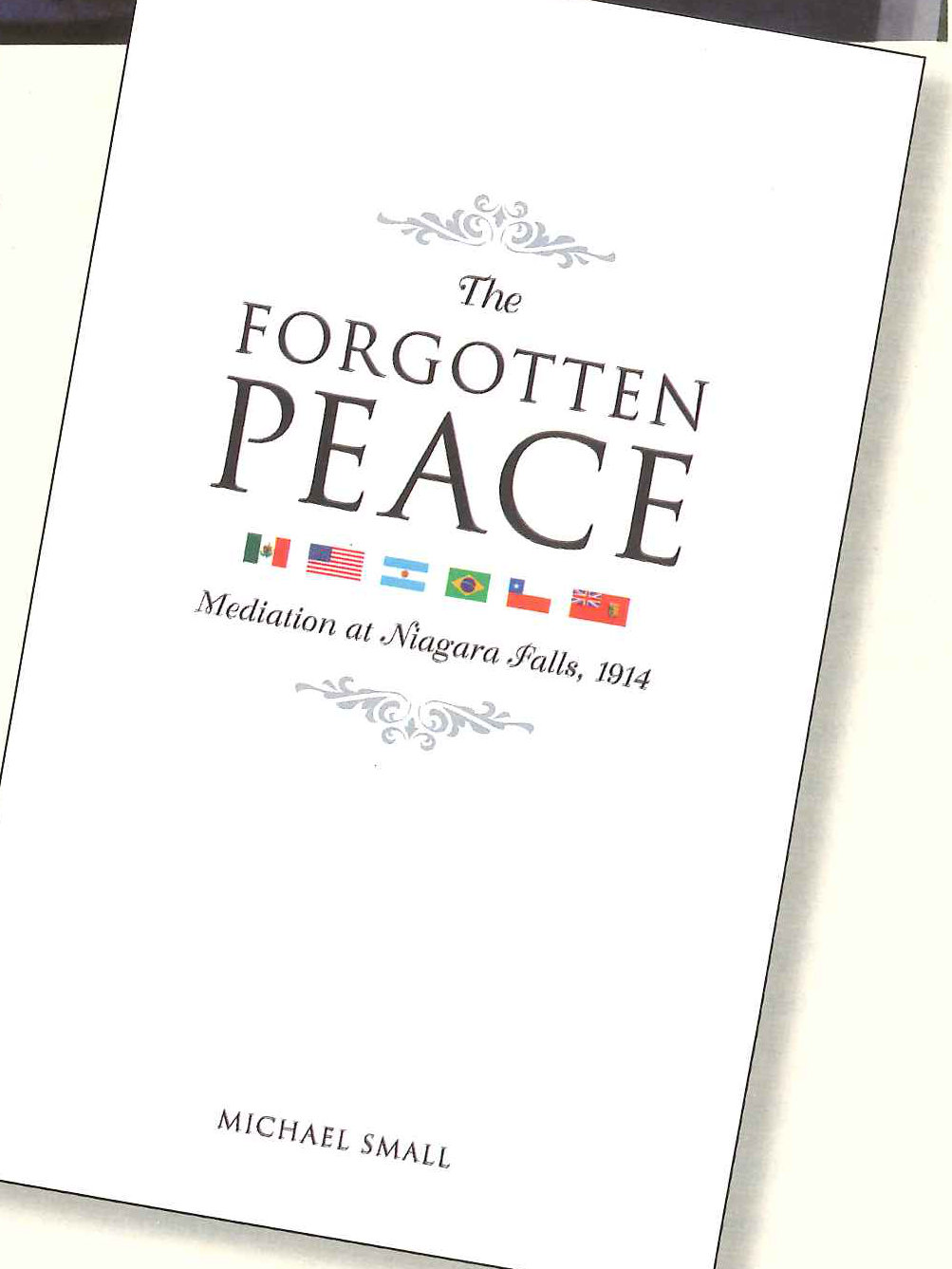
Some footnote! Although Canada played a modest role in the proceedings as the provider of a venue all could agree on, the issues at stake were anything but modest: US intervention under President Woodrow Wilson in the Mexican Revolution (and American occupation of the port of Veracruz) and South American mediation to help end the war there. The conference was deemed a “failure” in immediate hindsight because the Mexican civil war continued apace — with the results that formed modern Mexico. However, in broader perspective, it was also a seminal moment in the construction of inter- American institutionality, in peacebuilding in the hemisphere, and marked something of a sea-change in US policy toward the Americas.
For today’s readers, up-to-speed with events in Central America, Michael Small’s account offers a remarkable sense of déjà vu. From the nature of the conflict itself and its underlying causes to well-meaning but often misplaced intentions of the mediators of 1914, one might well be reading about the international community’s attempt to deal with the struggle in Honduras. The parallels in efforts to find common ground in the containment of conflict and in restoring constitutional continuity in Mexico in 1914 and in Honduras today seem so close that one wonders if Michael was prescient or if the nature of politics in much of our hemisphere has changed so little.
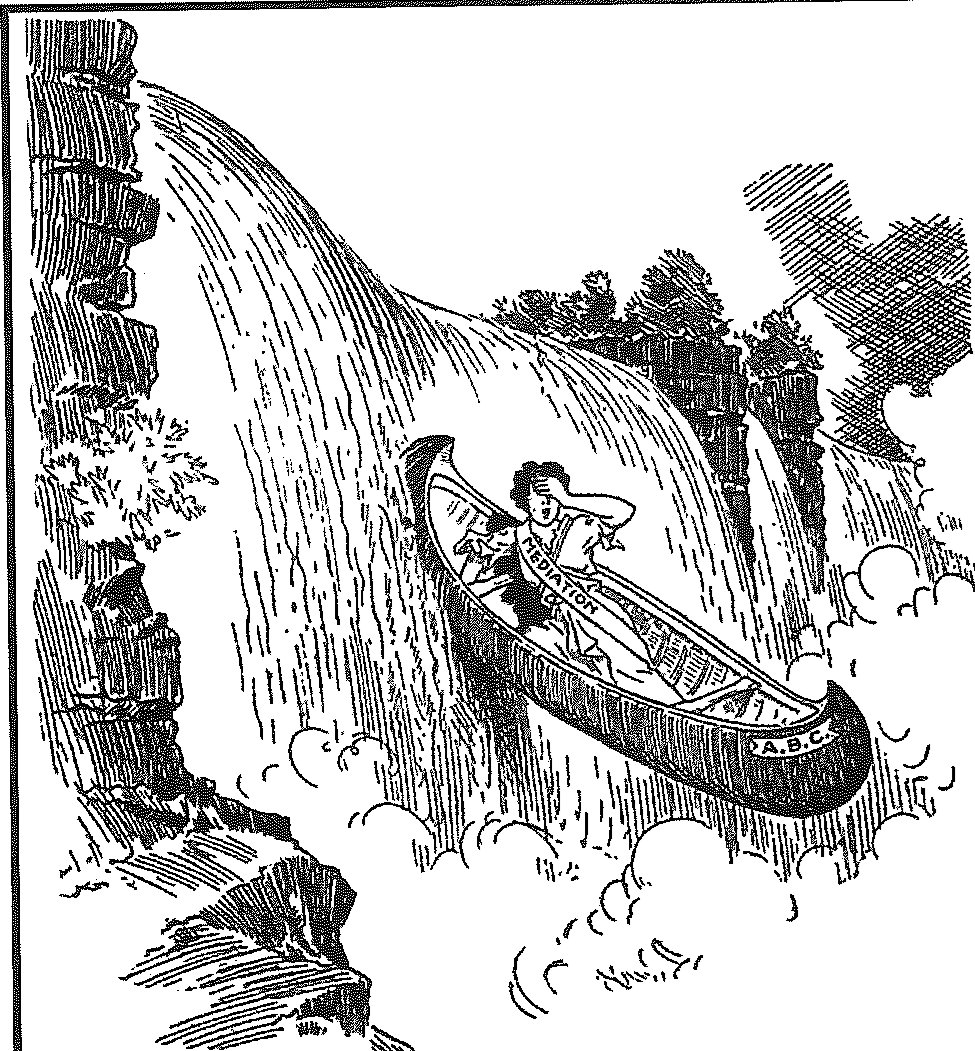
Whatever the reality, the book is short, lucid, eminently readable, well-illustrated (great cartoons!), and ultimately a good antidote to facile cynicism about the craft of diplomacy. The fact that Canadians know almost nothing about a conference that took place long ago on our soil suggests that we may still underestimate our potential to promote peace building in this hemisphere and beyond.
bout: What prompted you to study a forgotten conference about a conflict many find obscure?
MS: I first learned about the Niagara Falls Peace Conference in a single paragraph in a book on the Mexican Revolution which I read 16 years ago while studying Spanish at Cuernavaca, just before starting a posting to Mexico. At the time, I wondered what the good citizens of Niagara Falls in 1914 would have made of South American diplomats and Mexican and American envoys, all in top hats, conferring in a Canadian resort hotel. So, 10 years later, when I had the time and the access to an outstanding research library at Harvard, I began doing a little digging to see what I could find. I was given a lead to look up Volume XVIII of the Proceedings of the Buffalo Historical Society, published in 1914, entitled Peace Episodes on the Niagara. Not exactly a best seller — but Harvard had it on their shelves and to judge by the slip, I was the first person to have checked it out in over 50 years. It contained a detailed contemporary account of the Conference, written by a local Buffalo historian using newspaper accounts as his sources. A little more browsing on the shelves indicated that the treatment of the Conference in the secondary literature on the Mexican Revolution since had been cursory at best; no one had written a full length analysis of it in English since 1914; and there was absolutely nothing from a Canadian perspective. So, I knew there was an untold story to tell.
As I read more deeply into contemporary newspapers and diplomatic archives, I realized what a big event this was at the time. The Mexican Revolution was as familiar and important to North American newspaper readers in 1914 as the conflicts in Iraq or Afghanistan are to us today. If anything, the reading public of 1914 was much more knowledgeable than the public of today: for example, American cartoonists would frequently draw parodies of the leading figures in the Mexican conflict and expect their readers to recognize them as readily as American politicians. As for the peace conference itself, 150 journalists covered the conference for papers from all over North America. I found it amazing that an event like this — certainly unprecedented in Canadian history — could have so completely dropped out of historical memory.
Beyond my curiosity in unearthing the tale of the “Forgotten Peace,” I had a few other personal reasons for choosing the topic. I had just completed four postings in Latin America, including in Mexico and Cuba, and had periodically encountered suggestions that Canada could or should somehow mediate or mitigate tensions between the United States and Latin America. So, that drew me to the topic. As well, the year that I did the research, I was living in the United States in the first months after the Iraq war, while the United States was still the occupying power. I went to every talk I could find on American intervention in Iraq, which was a subject of intense debate. That unfolding morality play was always a mental point of comparison for me in writing this story, since I was dealing with an earlier attempt by a very different President — Woodrow Wilson — to carry out in Mexico exactly what today would be called “regime change.”
Finally, as a professional diplomat, I thought I could bring something to the research and writing of this story that a professional historian might not. I kept my eye all the time on the three South American mediators who convened the conference, and cross-referenced what they were doing with what the American and Mexican envoys and their masters were doing — to judge by the diplomatic archives which I also found at Harvard. The advantage of course of writing history is that you have hindsight. In this case, I tried to use that to understand why the mediators succeeded at first and why they ultimately failed, while remaining sympathetic all the time to their attempt.
bout: You argue, sometimes by implication, that the Niagara conference was a milestone in the evolution of today’s inter- American system — why? how?
MS: It was certainly heralded by many commentators at the time as a new high-water mark in inter-American diplomacy. There had been a growing “pan-American movement” over the the preceeding 20 years to promote a culture of peaceful resolution of disputes in the Hemisphere — something that was very new for diplomacy, both in Europe and in the Americas. That movement resulted in the founding of the Pan-American Union in 1910 — the precursor organization to the Organization of American States (OAS). The mediators from the three “ABC” countries, Argentina, Brazil and Chile, who convened the Conference, were their countries’ representatives to the Pan-American Union. So the mediation at Niagara Falls was certainly a precursor to modern day diplomacy within the inter- American system, as it has evolved over the 20th century.
What was striking for me, though, was how modern-looking were the goals of the mediation. All sides recognized that while they were formally mediating an inter-state conflict between the United States and Mexico, what they were really doing was trying to constitute a new provisional government within Mexico that could end a civil war. For most of the subsequent decades after 1914, that would have been deemed unacceptable by most members of the OAS — first and foremost by Mexico — on the grounds of external interference in the internal affairs of a sovereign state. It was not until the beginning of the 1990s, once almost all the states in the Hemisphere had become legitimate elected democracies, that the norms in the inter- American system changed to embrace the defence of democracy within member states as a core value of the OAS. So, in 1914, the mediators and envoys were trying to negotiate a peace on terms which would have been impossible again until the 1990s. At the same time, when I read how Woodrow Wilson tried to use the Niagara Falls Conference to legitimize his attempt at regime change in Mexico, I understood why so many Latin American states, with Mexico in the vanguard, were so allergic for so long to any proposals to use inter-American institutions to mediate internal political disputes.
bout: There are striking parallels between the conflict to be resolved then and the crisis in Honduras today — as a disinterested observer, in your view what can diplomacy learn from Niagara that we might usefully apply today?
MS: There at least two clear lessons for me. The first is that internal political instability always creates instability for a country’s neighbours. This can happen directly, e.g. through refugee flows, cross-border arms shipments and internal factions seeking external allies — all of which happened in Mexico during its Revolution or in Central America in the 1980s. It could easily happen in any contemporary conflict. Instability also spills over indirectly: the demonstration effect of a democratic government being successfully overthrown in a coup weakens confidence in democracy through the region. And when neighbouring powers intervene in an internal conflict on one side or another, even distant neighbours fear the same thing could happen to them, if their internal order ever broke down. All of these factors were reasons why the leading democratic countries of South America — Argentina, Brazil and Chile — were keen to mediate an end to the American intervention in Mexico in 1914; and equally, why so many member states of OAS were prepared to support aggressive diplomatic intervention in 2009 after the ousting of the elected President of Honduras.
The second lesson is that it is much harder to mediate a conflict if there are no established ground rules for the exercise or an institutional framework which commands some respect from all parties. That did not yet exist in 1914. The Pan-American Union had not yet been given any political teeth, so the three “ABC” countries had to create their own ground rules for the mediation. Disagreement over the rules of the game ultimately led to the failure of the conference. Today, we have a comparatively robust regional political institution in the OAS, with universal adherence to key documents like the Inter- American Democratic Charter. It is easy to take these normative frameworks for granted and minimize their efficacy. But when you look at how much harder it was to carry out peaceful conflict resolution before such norms were entrenched, you appreciate their value. Both of these are simple but profound lessons for diplomacy that are illustrated well by this story. bout: Only four decades separate Niagara from Pearson’s Nobel Peace Prize — are there specific lessons from Niagara for Canada and its diplomats?
MS: I think so. The first is an appreciation of how far we evolved as an independent country with its own capacity for conducting foreign policy in the 20th century. At Niagara Falls in 1914, Canada provided the neutral venue, but Canadians were spectators not actors at the peace conference. By 1957, Lester Pearson was awarded the Nobel Prize, not just for helping to end a specific crisis in Suez, but for creating a whole new international instrument for promoting peace, namely peacekeeping. Today, another 50 years later, we have an even wider set of tools in our tool kit for peace-building: look at all the ways we operate now to build or rebuild institutions in fragile states. However, the one tool that was at the forefront of the story in 1914, in which I think we have not invested as much as we could, is a diplomatic capacity for mediation. Today, this happens more often through unofficial “track two”
Building this kind of capacity would be a great project to launch the Department’s next 100 years.
The second lesson, which should serve to temper the first, is the importance of keeping some sense of perspective while serving as a mediator. I came to the conclusion piecing together this story that the three ABC mediators became too attached to the rules they had set out for the process, and ceased paying enough attention to what was really happening on the ground in Mexico. As a result, the conference started out being highly relevant to the immediate needs of the belligerents, but ended up being a sideshow. It concluded as a formal diplomatic “success,” followed by self-congratulatory telegrams all around, which overlooked the failure to achieve any lasting results. This ending seems all too familiar to anyone who has been in this business. The risk of falling into self-serving illusions of greatness is even greater, I think, for middle powers — since they can easily over-estimate their moral authority relative to their actual clout in any given conflict. In this story, Argentina, Brazil and Chile, were acting in the classic middle power role that Canada has
View the original scanned pages →
Originally published in bout de papier, Vol. 24, No. 4 (2009) — Winter 2009 // Hiver 2009, pp. 9–12. Read the rest of this issue →



