
bout de papier, Vol. 24, No. 4 (2009) — Winter 2009 // Hiver 2009, pp. 4–8
eaders of bout de papier will recall Georges Rivers report of his visit to Buchenwald in
April 1945, which was published in Volume 21, No. 2 (Spring 2005). One of the reasons for Vanier’s mission had been to ascertain the fate of three Canadians — Frank Pickersgill, Ken Macalister and Guy Sabourin — who were among those Allied agents who had been parachuted into Nazi-occupied France in an effort to assist the French resistance. Vanier’s grim finding was that all had been barbarously executed by their captors after lengthy imprisonment and torture. We know much more about the life of Frank Pickersgill than we do about his colleagues, as Frank was a prolific writer of letters and articles, which his family and friends have preserved. As well, a few survivors of the horrors of Buchenwald have attested to his extraordinary valour, as well as his remarkable spirit and fellowship when confronting the evils of Nazi Germany and its perverse talent for cruelty. These various recollections attest to Frank’s love of France, his hatred for the German regime and his determination to employ his intelligence, his linguistic skills and his physical strength to confront the enemy personally and directly. In recognition of his courage and commitment, Pickersgill was posthumously awarded the Cross of a Chevalier of the Legion of Honour by the Government of France as “an obligation of gratitude for one of its best friends.”
Pickersgill’s letters home from Europe, before and during the Second World War, as well as an extract from a proposed book on France’s first year of war (the first three paragraphs of which are identical to those in the document below, though entitled “Cloudburst” in that version), have been published in two books by George H. Ford: The Pickersgill Letters, written by Frank Pickersgill during the period 1934-1943 and edited with a Memoir by George H. Ford (Toronto: Ryerson Press, 1948); The Making of a Secret Agent, Letters of 1934-1943, written by Frank Pickersgill and edited with a memoir by George H. Ford (Toronto: McClelland and Stewart, 1978). More recently, Jonathan F. Vance has drawn on these sources and others to convey the heroism of Pickersgill and Macalister in Unlikely Soldiers: How Two Canadians Fought the Secret War Against Nazi Occupation. More so than Ford’s books, Vance’s account intertwines the fate of these two Canadians (and others who attempted to assist French resistance to Nazi domination of Europe) to the failure of the Special Operations Executive in the United Kingdom to appreciate that key networks had been compromised and were effectively controlled by the Germans, thus dooming the SOE operatives (as well as their contacts in France) and ultimately imperiling the purposes of their work.
The narrative reprinted below was itself undated but attached to a note dated 15 April 1940 from the Under-Secretary of State for External Affairs, 0.D. Skelton, to senior staff (Laurent Beaudry, John Read, Hugh Keenleyside and Norman Robertson). Skelton noted that he had written to Georges Vanier (then Canada’s Minister to France) asking him, along with Scott Macdonald (then Counsellor in the Canadian Legation) and Pierre Dupuy (then First Secretary in that mission) to examine Pickersgill orally on his knowledge of French and possibly also to arrange for a test to be administered in London, presumably for admission to Canada’s foreign service. Skelton undoubtedly received the manuscript from Frank’s elder brother Jack, nominally a foreign service officer but already serving in the prime minister’s office. That test never took place, as Frank Pickersgill was interned for two years in the wake of France’s defeat before he escaped and made his way to England. As the narratives cited above indicate, Frank was offered safer options (including employment in Ottawa) which he rejected, in spite of entreaties from his family, in favour of the perilous service which he undertook. His love of France, as well
as his appreciation of its strengths and weaknesses, are shown in this document, which may be found at
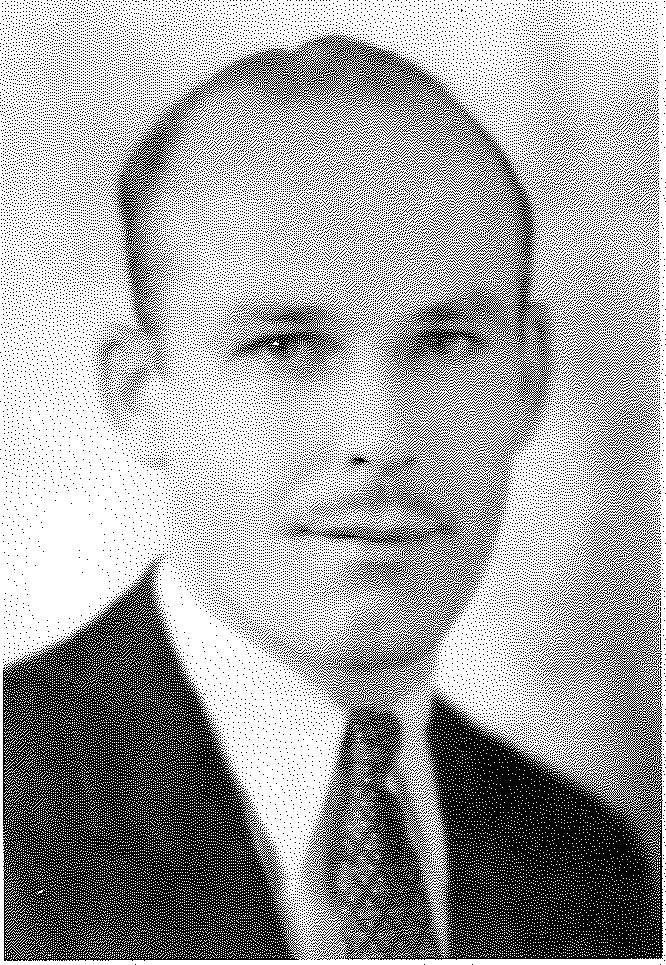
Library and Archives Canada in the records of the Department of External Affairs (RG 25), Volume 2961, file 36: bout de papier is indebted to Paulette Dozois, a skilled and dedicated archivist who specializes in the records of DFAIT and its predecessors at LAC, for locating this document and for assisting in its editing for publication. We would also like to express our profound appreciation and gratitude for the helpfulness and generosity of Alan Pickersgill, Frank’s nephew, who provided bout de papier with the photograph of his uncle which is reproduced here with his kind permission.
War of Nerves
Paris, September 1, 1939: It was three o’clock in the afternoon when I got into the Gare de Lyon on the Simplon Express. I was a sort of Polish refugee. I had left Warsaw six days before. I had borrowed and begged a weary journey through Roumania back to France. Three days on the train from Bucharest, three days without news of the war that was being prepared in Europe. The train was a buzzing hive of wild rumours of every sort, ending up, toward the French-Swiss frontier, with stories of Polish capitulation and a general settlement, stories which no one quite believed but which were nevertheless listened to with that mixture of relief and alarm, hope and shame about one’s own hope, which should by now be familiar to all followers of European crises. It was a relief to be coming back to Paris, after the past turbulent months in Central Europe, and I was looking forward to seeing my friends, revisiting my favourite cafes and so on. In fact it was like coming home. I jumped out of the train into a subway. There the shock met me. Still I hadn’t seen any newspapers. But the subway, crowded worse than a sardine tin, was as dismal as a funeral home. I was unnerved from several sleepless nights and expected more from Paris than this inexpressible gloom oozing up out of the subway’s heat. I finally managed to look over a man’s shoulder and read the newspaper headlines. Germany had invaded Poland, the Franco-British declaration of war would be a matter of days, or hours.
The subway got too much for me. I struggled out of it with my luggage and piled myselfintoa bus.
There were crowds everywhere, terrific crowds. Never before had I seen crowds completely silent. Some people were already carrying gas-masks. They knotted up round the posters proclaiming general mobilization, “provisions for three days including knife, fork, spoon, tin cup, tin plate etc., etc.” They were reading the proclamations over and over, as though expecting them to change. Two people got off the bus to be sick. I was afraid I was going to be the third. People were unusually kindly and careful about not getting in each other’s way or bumping into each other. I was sore all over, mentally, and felt afraid to touch anything or anybody for fear that I would yell; the cautious, considerate way in which people avoided each other and kept their voices down suggested that I was by no means alone in this feeling. [up to this point, this text corresponds to “Cloudburst” — that manuscript is more detailed but less personal than what follows]
The next two days of waiting for what everyone knew was going to happen, passed like two years in the blazing heat. The extraordinary severity, harshness and violence of the regulations about keeping windows and shutters closed can be contrasted with the later laxness in these matters, as an example of the thunderstorm atmosphere of foreboding which was even working on the official nerves.
When the war was declared it was almost a relief. We heard the announcement of the British declaration of war in the morning; at five in the afternoon the sound of the “Marseillaise,” penetrating to the street from somebody’s radio, was the sign of the French entry into the general massacre. That “Marseillaise” was not being repeated in the streets, nor were they singing Tipperary or anything else. There was more than tragedy about the Parisians’ faces that day; it was vaguer than tragedy. They all looked as though they had been hit by a blunt instrument.
And automatically I sent out postcards to all my friends to find out their whereabouts, when they would be mobilized, and what they would be doing. Huddling together, really: I wanted to find the people I knew, who were suffering or going to suffer, and huddle with them.
You cannot keep a critical sense when your main immediate interest in life is finding others of your kind and crowding up miserably against them. The war had started, and with it a national solidarity which could not be called chauvinism, war psychosis or any other of the pet names used to cover these mass sentiments. Nobody was psychopathic, nobody hated the Germans because nobody was even thinking about the Germans. It was the thing that had cracked down on them, on the nape of the neck, pulverizing the whole scheme of their various existences, which was occupying their minds, and that thing was impersonal, was War, and had nothing in particular to do with Germans or with any other given group of people. So they were shoved together by the same instinct which was pushing me toward the people I knew.
For this reason, during those first days of the war no one questioned anything that was going on. Censorship, conduct of the war, reasons for going into the war, all were accepted as right, good and inevitable, the effort to think otherwise under the nervous strain of what had happened and was (we thought) going to happen was too great, it would have made us yell. Just like touching something or talking too loud that first day in the bus. I found a friend of mine, who had long been a strong supporter of Communism and of Soviet Russia. He was going to be mobilized in a few days. He was, like me, like everyone, utterly blank on the subject of politics. He was suffering a violent revulsion from his former political views. Why? Because of the war. Even the out-and-out Communists were under the general strain and were, in the main, accepting the situation like everyone else without a murmur. No one thought about anything but the immediate fact of war; like a sort of horrible object it obsessed the mind of everyone, without any relation to its causes or possible outcome.
It is strange how the moral effects of the first shock differ from the moral effects of the pain which succeeds it. “Solidarity in misery” could be a definition of the French people’s attitude during these first weeks. Every second shop closed down, with signs on the doors: “Closed because of general mobilization”; families broken up; thousands thrown out of work because of the enormous disorganization of small businesses; the young people, waiting about to be called up, spending two weeks of “tranquillity” which were like being suspended over the Grand Canyon on a silk thread; every night going to bed wondering if the night would bring general destruction in an aerial bombardment; with all this on their minds how could the French people think of anything but the immediate present? Never was this politically-minded race so utterly indifferent to politics of every sort, or to their ultimate fate, as during those first weeks of war. Automatically one did what one was supposed to; reacted as one was expected to — not through emotional excitement, nor even through strong conviction, but because, what else was there to do?
And the French Premier [Edouard Daladier (1884-1970); Leader of the Radical Party; Prime Minister of France (for the third time) from 10 April 1938 to 21 March 1940; imprisoned 1940-438; deported to Buchenwald, where he remained until the end of the war] made the best radio speeches of his political career those days; speeches whose tone was calculated to harmonize perfectly with the general feeling of devastation: “this war imposed on us,” “this utterly futile, horrible and stupid war” — phrases which warmed people to Monsieur Daladier and to the government and to national solidarity more than any amount of band-playing, enthusiasm, chauvinism, or ideals could have done in a hundred years.
Imagine the Communist leader, Maurice Thorez [€1900-64), Secretary General of the Communist Party of France from 1930 until his death;
instrumental in formation of the Popular Front, which governed France from 1936 to 1938; deserted from the French Army and fled to the USSR; sentenced to death in absentia for desertion; pardoned in 1944], a deserter three weeks later, writing a passionately patriotic, sincere and tragic letter to the editor of one of the leading Paris morning papers about the middle of September! It happened; even the group which has since broken the “sacred union” of the nation was caught up during these first weeks by the feeling that swept the country, the automatic response to a situation bared of all its implications in the minds of individuals.
The news from the Front denoted a certain activity: there was the battle of the Warndt Forest; there was some progress toward the Siegfried Line; there was the news, changing every day, of the lightning-like advances of the Germans in Poland. This kept up the tension through September.
Then things slackened, people began relaxing. The Polish war came to an end and nothing at all was happening on the western front. Cinemas began reopening, and cafes; we began going out a bit in the evenings. And the renewed activity brought with it a return to critical thinking; people began to connect events together. The war seemed not so terrible after all. The stations were pouring bored evacuees back into Paris every day. Most of the people mobilized found themselves buried in a stationary existence somewhere in the provinces, ten chances to one a long way from the Maginot Line. New habits of living were being formed, without husbands or fathers or sons, without stable businesses or occupations, sleeping on straw instead of spring mattresses, going about in the dark on the streets at night. They weren’t like the old habits and they were tiresome, painful or inconvenient. People could not help thinking about this, too.
Another friend, a “fascicule bleu,” which meant that he would not be called up for an indefinite period, had lost his job the first day of the mobilization, because the place where he worked closed down. His “fascicule bleu” prevented him from getting another job; nobody seemed to want a man who was likely to be called up from one day to the next. He had been in the last war. He was over forty years old, had his life arranged, more or less, and he was past the age when it is easy to break out into new channels. He could not get work; was eating into his savings to live; he was frightfully bored and depressed with nothing to do, and the only prospect of change was the day when he would be mobilized. But he had already been in one war, and knew what it was like. Caught between present misery and the future one, he started drinking too much. He had nothing to do any more but hang around bars, anyway. “I got the Croix de Guerre in the last one for blowing a fellow’s brains out and taking his machine-gun”, he told me. “A nice decent-looking guy, too. I had to shoot him first or he would have shot me. I didn’t know what the score was, either, and thought I was being patriotic. It’s revolting to think about getting into that again. And what else do you expect me to think about, now that I’m out of work and have nothing to do. When I’m half-drunk I can forget about it.”
The drag of a war that is not war has a bad effect on the morale. And people have too much time to think. Anything for a change from this dreary existence, anything at all. So, if you go about listening to conversations in bars, listening to the war-talk of the people who[se] brother has a friend whose nephew is a chauffeur to the cousin of Colonel X in the general staff, at Blank, you will in the spring. And you will hear that everywhere, where two or three are gathered together in front of aperitives, the one thing taken for granted as an incontrovertible fact is the gigantic spring offensive. Where it will be, and which side it will come from, are questions left unanswered, or very vaguely answered. No hint of this offensive has come out in any newspapers, no amount of logic could produce this offensive as the inevitable or even highly probable terms of a sequence of events. Where, when, does it come from, this sensational news which has no longer any news value but is the common property of every uneducated or half-educated person? It is, clearly, nothing but wishful thinking; anything at all would be preferable to this war as it is; the most obvious alternative is more war, so unthinkingly this bigger and more violent war is imagined into existence.
There is no getting around it: the new habits of life are dismally dreary ones for the vast majority of people. And without any action there is not even any drama or any heroism to compensate for the drag, boredom and disorientation.
Anything would be better than this, the “average man” is inclined to think. A moment’s thought shows how wrong he is. It is no doubt a great blessing that the population has, up till now, been spared a really bloody war. But this is far from being a picnic. One wonders whether it is realized elsewhere, just what a strain this waiting about can be on the public’s nerves. Everyone is leading a make-shift, temporary sort of life. Of six-million-and-a-half Frenchmen mobilized, only a tiny proportion has seen any action, even any peaceful action such as construction work or what you will. The vast majority fill in their time sitting around their camps and barracks playing cards, go out for a bit of drill, eat and sleep. The people who are not mobilized can no more lead normal, purposeful lives than those who are.
There is no doubt about it, war is a sinister form of inactivity, even when it is war that is no war.
View the original scanned pages →
Originally published in bout de papier, Vol. 24, No. 4 (2009) — Winter 2009 // Hiver 2009, pp. 4–8. Read the rest of this issue →



