
bout de papier, Vol. 26, No. 1 (2011) — Summer/Fall 2011 // Été/Automne 2011, pp. 41–43
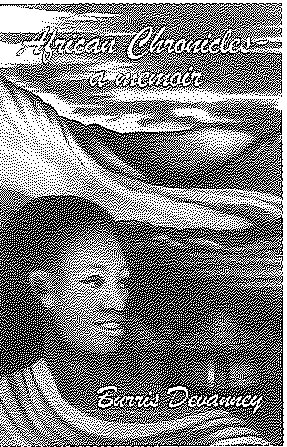
AFRICAN CHRONICLES — A
MEMOIR, by Burris Devanney, P.O. Box
36075, Halifax, N.S. B3J 3S9, New World
Publishing, 2010, 445 pp.
In the 1960s the Honourable and Reverend Walter McLean was the first field director and senior advisor for CUSO in West Africa, minister of the Presbyterian Church, chaplain to the University of Nigeria, and a peace envoy between the government of Eastern Nigeria and the Federal Government. Elected MP in 1979 ( Waterloo), he served in PM Brian Mulroney’s Cabinet and as Canada’s parliamentary delegate to the UN General Assembly (1987-93). As the PM’s Special Representative for African and Commonwealth Affairs he worked on antiapartheid efforts with front-line states including Zimbabwe. Barbara McLean was head of the English Department and Librarian at Queen’s School (for girls), Enugu, in Eastern Nigeria.
African Chronicles — a Memoir captures within its pages a love of Africa and everyday experiences with people in Rhodesia/ Zimbabwe and Nigeria. A careful diarist, Burris Devanney writes about African life in all its richness. This book is more than its title with other themes interwoven among the chronicles. The author includes detailed accounts of political events and leaders, African travel and an Epilogue on international develon- The title draws the reader into a personal account of the author’s experiences in the mid-1960s as a young teacher in two very different parts of Africa. In August 1965, Canada’s External Aid Office sent a large number of Canadian teachers to Africa, Asia and the Caribbean. Burris Devanney and his wife Louanne experienced the racial divide in the Rhodesia of 1965 at the time of the civil rights struggle in the U.S.A. External Aid teachers were paid professional salaries, unlike other Canadians who were part of volunteer programs. Contracts provided by the Canadian government included air travel vouchers to Europe for holidays and personnel were able to spend days off and vacation time in western-style accommodation within Rhodesia and Nigeria.
Burris was first posted to Tegwani, a 40-year-old mission school in southern Rhodesia. Readers are treated to descriptions of African life in Tegwani, and to moving glimpses of students and others of the school community. On November 11, 1965 the Prime Minister of Rhodesia, Ian Smith, announced a “unilateral declaration of independence” (UDI). A week later the Canadian government issued an evacuation order to citizens working in Rhodesia; Canada did not recognize the Smith regime.
Via short wave radio, External Aid teachers heard a statement by Prime Minister Pearson that he was withdrawing the High Commissioner from Rhodesia. Those listening remarked that no one had told them there was a Canadian High Commission in Salisbury, Rhodesia. There might have been poor communication between the new External Aid Office and the High Commission. It seems strange that teachers who were university graduates were unaware that the Canadian government had representatives in capital cities abroad.
After leaving Tegwani, the couple went to South Africa for a short time and spent Christmas in Cape Town. They had asked External Aid for a new assignment. After a chance meeting with a colleague who was heading to Nigeria to teach, they booked passage on a freighter bound for Lagos, Nigeria and sent a telegram to Ottawa asking the External Aid Office to identify a job posting in Nigeria. On January 5, 1966 they arrived in Lagos. In less than two weeks there was a military coup which led to tribal-religious massacres, the secession of Nigeria’s Eastern Region as the sovereign Republic of Biafra and a 30-month civil war. Burris Devanney describes the events of the coup carefully.
This was the backdrop against which the author taught with several other External Aid teachers at Government College Umuahia, a well-funded school for boys in Eastern Nigeria. There is no doubt that the experience of expatriate Canadians who lived and worked in West Africa and those who lived in countries with white settler populations were very different. The assignment to Umuahia followed Burris Devanney’s original assignment in Eastern Nigeria, which was to teach English at a brand new high school in a rural village, Okposi. Construction was months behind schedule and the Devanneys were anxious to begin a work assignment. Two photographs in the book of Rhodesia and of Nigeria vividly show the differences between the two countries — downtown Salisbury (on page 37) and a road scene in Nigeria (on page 328).
There were many other Canadians in Eastern Nigeria at the time. Canadian University Service Overseas (CUSO) had been established in 1961. In 1963 the first group of CUSO volunteers arrived in the Eastern Nigeria capital of Enugu and were placed in schools or hospitals. Several families from the Presbyterian Church in Canada (invited to Eastern Nigeria by the Nigerian Presbyterian Church), were resident in Enugu, Abakaliki, Umuahia, Ohafia, Calabar and other towns. CUSO volunteers and church workers were paid local salaries and provided “holiday hospitality” for one another.
By the time Burris Devanney arrived in 1966 there were more than 80 CUSO volunteers in Nigeria, most of whom worked in Eastern or Western Nigeria. Pharmacists, pastors and teachers working in partnership with the Presbyterian Church of Nigeria were living in Umuahia and were posted to the Queen Elizabeth Hospital, the Womens’ Training Centre and Trinity College. It appears that the Devanneys had no contact with them. Their main Canadian relationships were with other External Aid contract families.
Critical comments throughout the chapters on Nigeria relate to officials at the Canadian High Commission in Lagos. The External Aid teachers had high expectations of service from those officials. The Devanneys were met upon arrival in Lagos by a High Commission officer, had their way through the immigration procedure expedited and were offered hospitality and accommodation. The many criticisms by External Aid teachers do not reflect the reality that more than 600 Canadians, many of whom were working in remote locations, also required attention.
A number of Canadians in Eastern Nigeria had close relationships with African leaders in the Region and knew that the massacres and coups had led to deteriorating relationships with the rest of the country. It was true that the advice of these people was ignored by Canadian foreign service officers. As the author points out, J. Harrison Cleveland, the High Commissioner in Lagos at that time, was out of touch with the reality that war would break out, as were the American Ambassador and the British High Commissioner. They dismissed reports of the American Consul, the British Deputy High Commissioner and the CUSO senior advisor, all based in the Eastern Capital of Enugu. However, the inclusion in the book of rude critical comments about Canadian officials in Lagos was inappropriate. It added nothing to the book and diverted from its largely respectful tone.
In the years before the arrival of External Aid teachers at Government College, Umuahia, a number of FS officers posted in Lagos visited the Eastern Region and sought advice from Canadians living there. High Commissioner Tom Carter, First Secretaries Douglas Small and Andre Couvrette, officers David Rose and Art Wright, trade officers Gordon Mintenko, Bob Food and others were competent, thoughtful and greatly appreciated by Canadians working in Nigeria. After the Biafran declaration of independence at the end of May 1967, Robert Sterling, Second Secretary from the Canadian High Commission, spent the next month in Enugu assisting with the evacuation of Canadians.
The Nigeria section of African Chronicles — a Memoir ends with an evacuation for the Devanneys and many others after civil war broke out in mid-1967. As happened to fellow Canadians, the author’s possessions were destroyed on the docks of Port Harcourt. The suffering of Biafrans went on for 30 months. The section on Canadian aid from NGO’s to Biafra through the flights of Canairelief and pressure on the Canadian government to send aid and to recognize Biafra is a story in itself. Its inclusion is appreciated. Interestingly, External Affairs Minister the Hon. Mitchell Sharp announced Canada’s recognition of Biafra on the day the war ended.
The bibliography is impressive, as are the many rich quotations, literary and historical. Devanney read widely and carefully. Quotations from Col. Philip Efiong’s book and descriptions of his escape from Northern Nigeria after the massacres of 1966 are riveting. He travelled on foot in disguise from safe house to safe house. We were in the home of Philip Effiong’s cousin Chief N.U. Akpan (Chief Secretary — Deputy Minister — to the Government of Eastern Nigeria), when the Colonel appeared in disguise at the end of the last leg of his long, difficult journey.
View the original scanned pages →
Originally published in bout de papier, Vol. 26, No. 1 (2011) — Summer/Fall 2011 // Été/Automne 2011, pp. 41–43. Read the rest of this issue →



