
bout de papier, Vol. 26, No. 1 (2011) — Summer/Fall 2011 // Été/Automne 2011, pp. 26–27
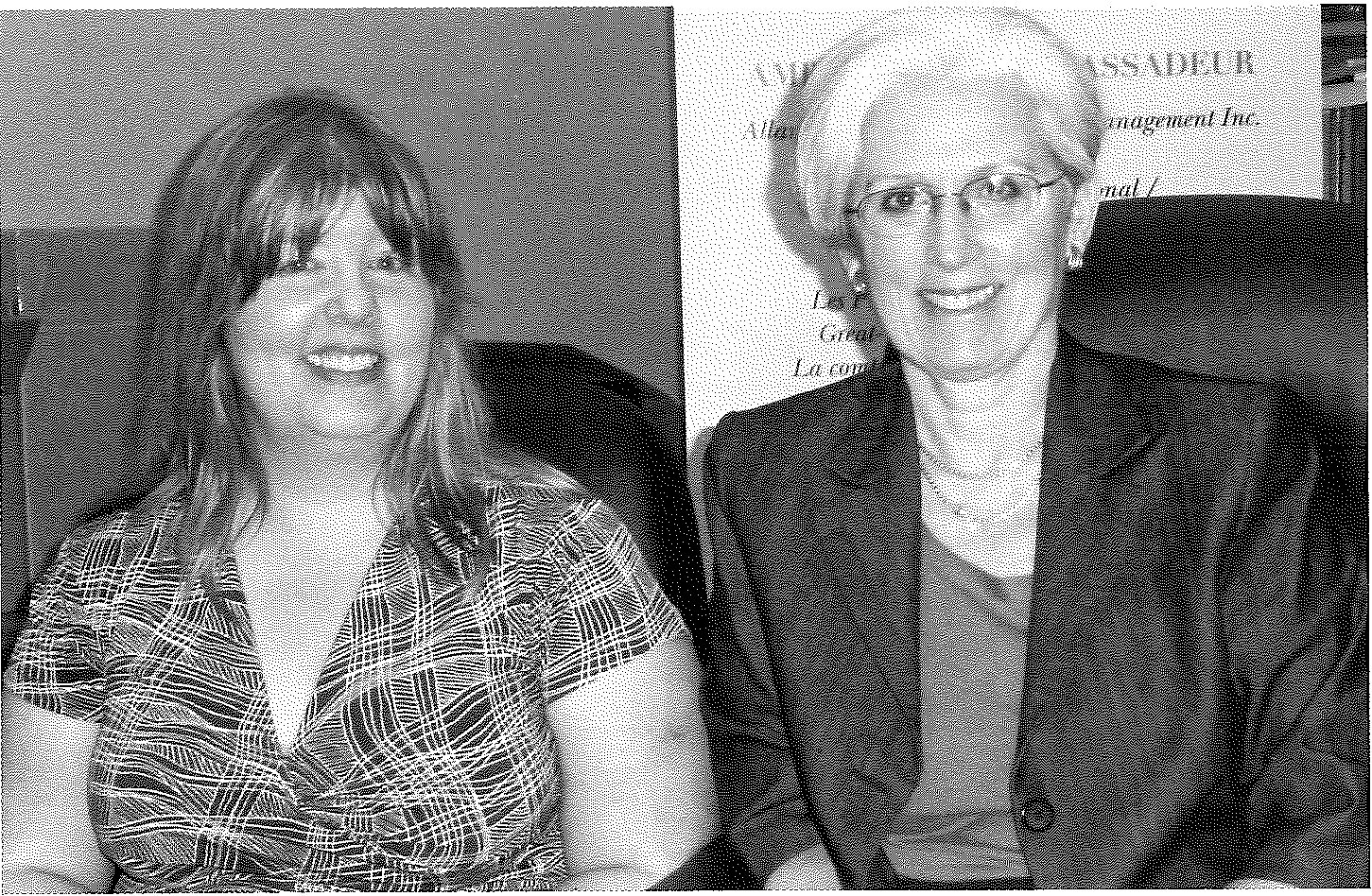
bout de papier took the opportunity to chat with the American Foreign Service Association’s President, Susan R. Johnson, on a recent visit to Ottawa. She spoke to audiences ranging from the Canadian International Council to PAFSO members, interspersed with liaison at Ottawa’s U.S. Embassy. Susan proved an articulate, provocative and engaging spokesperson for the tradecraft of diplomacy.
Susan’s first posting was Havana in 1980. She descends from an FS bloodline — her father and brother were both practitioners as would have been her mother had the State Department permitted tandem couples in earlier days. Her husband was a Pakistani diplomat — ambassador to Khazakstan and the People’s Republic of China, and the top position of Foreign Secretary in Islamabad. Hers has been a lifework of achievement coupled with the challenges of leaves-of-absence and commutes between capitals to accommodate the twin careers of nationals of different states.
With degrees in History and International Relations, her first job was with a private sector multi-national in Omaha, Nebraska. Inevitably, the calling of her early family conditioning led her back to State; she now looks back on a rewarding career with a teasing grin, having “seen it all”.
Susan discerned a number of changes in diplomacy during assignments in Cuba, the UN, Mauritius (DCM), Kazakhstan, Russia, Irag, Bosnia, Romania (DCM), stints at State Department in Washington, the National Endowment for Democracy, and as a Pearson Fellow in Congress (working for former Senator Bill Bradley). Her perspective is, of course, Washington-based, but extrapolations to other jurisdictions would appear consistent.
Most important is a sense of decline in diplomacy as a tool of national power. Susan ascribes this to three main factors:
1. Globalization — communications, the internet, mobility of heads of government and the ubiquity of data join in diluting the role of Foreign Minister who is no longer a main actor;
2. Militarization — the evident growth in the blend of diplomacy with the flexing of military authority;
3. Domestic politics — as the House of Representatives sees itself as a surrogate source of foreign policy.
Susan listed other culprits such as an operational tempo that is faster and having to do more with less. In 1970 the U.S. Foreign Service had 12,000 career officers; today, the number is the same but spread more thinly over more missions and across a great diversity of programs.
Secretary of State Hilary Clinton has introduced a number of reforms to improve diplomacy’s status, but there’s a long way to go. An emerging new dictum for diplomacy is “management of change through non-violent means”. Her approach tackles the challenge of improving statecraft along the lines of Diplomacy, Development and Defence, taking a long-term perspective.
Susan also outlined a growing debate over whether diplomacy is a “profession”. » The concern is not so much that it isn’t, but that it needs improved definition. Just as lawyers and physicians are closely regulated against core competencies, so should diplomats be measured against identifiable criteria that are posted and promulgated.
and, in a climate of redressing
Greater diversity is a target: new recruits (to cite one example) now have an age cutoff at 59 years; African-Americans and Latinos continue to be under-represented (largely because they tend to prefer the private sector); and Southerners lean more often in the direction of the military. Women are being recruited at a rate of 50% (as in our foreign service) yet continue to have a lower representation in senior ranks, in the 25% range.
Susan adds that the eight week maximu maternity leave provision leaves room fi improvement and commiserates that tl spousal role (and its rewards) is about tl same in both our foreign services. SI noted (with envy) that the Japanese Foreig Service allows spouses posted abroz to receive an incremental 20% of tt diplomat’s salary. This is designed I compensate for support provided durir an overseas assignment although there no specific contractual accountability.
About 10% of the U.S. Foreign Servic has been reserved for tandem couple given the growing need to attract du. professional partners. Approximate! 1,000 positions do not permit family accon paniment and, in a climate of redressir spousal concerns, singles wind up feelir discriminated against.
At State, it is generally accepted that : order to make it to the top, competenc in both policy and program management required. Policy wonks need to demonstra the ability to implement policy to qualit for upward movement. A greater emphas is accorded to Teamwork now with le: emphasis on excellence in just one subject or on the individual “superstar”.
Asked how our foreign services compare, Susan saw our two professional organizations as fundamentally similar in “value”, reputation and effectiveness — with two exceptions: scale and security. The U.S. Foreign Service is just bigger — a mid-sized embassy has 300 employees. Baghdad has 8,000 and is growing to 17,000. U.S. engagement in conflict zones around the world also places a high burden of security on its establishments; finding a workable balance between the proactive work of diplomats and mission security is a chronic challenge.
Non-career Heads of Mission a common in the U.S. Foreign Servic around 30%. This is a phenomenon AFS recognizes as the clear purview of t Executive Branch but tracks it carefully its website: www afsa org.
Asked “would you recommend joini: the Foreign Service to young peop today?” Susan said her view has evolveu.
A decade ago she would have recommended that applicants put all their options on the table before making a firm decision, foreign service being one of many choice careers. Today, she would enthusiastically push a foreign service career if for no other reason than renewal of the craft is a compelling demand.
Finally, Susan brandished and recommended a copy of AFSA’s newly published book Inside a U.S. Embassy, Diplomacy at Work —a few copies are available at PAFSO headquarters if members wish to have a look. There is fuel for thought therein — is a Canadian version in the cards?
View the original scanned pages →
Originally published in bout de papier, Vol. 26, No. 1 (2011) — Summer/Fall 2011 // Été/Automne 2011, pp. 26–27. Read the rest of this issue →



