
bout de papier, Vol. 26, No. 1 (2011) — Summer/Fall 2011 // Été/Automne 2011, pp. 7–10
When I became Head of Mission in Costa Rica in the fall of 2007 (cross-accredited to Honduras and Nicaragua), Honduras hardly seemed a likely setting for Canadian diplomatic activism. This was to change dramatically.
Months of political crisis and street confrontations were to follow the early morning removal from office of President Zelaya by the military on June 28, 2009. Honduras suddenly became a focus of intense regional diplomacy, of debate in the Organization of American States (OAS), and of international media attention as images of violence on the streets of Tegucigalpa and other parts of the country beamed out to the international community. Canada came to play a central role in attempts to resolve the crisis due to a number of convergent and coincidental factors, consistent with the Government’s enhanced engagement with the region under our Americas Strategy.
What transpired in Honduras on the 28th and in following months has been widely debated. Regional experts will argue for years about responsibility for what happened and the rationale behind the intervention of the Armed Forces to remove Zelaya (on orders from the country’s Supreme Court and with the support of the Honduran Congress). He was replaced by Roberto Micheletti, President of the Congress and next in line under the constitution.
The signs of tension were all there in the months leading up to the crisis. Honduras returned to civilian rule in 1982 after over 20 years of military-dominated governments. It continued to suffer from chronically weak political institutions with deep political and class cleavages, extreme disparities in income and among the weakest socio-economic indicators in the Americas. National institutions proved incapable of coping with the severe pressures generated by tensions between Zelaya and other branches of government.
Following presidential primaries (declared free and fair by the OAS), Zelaya pushed for a controversial public consultation on constitutional reform. Many believed he meant to open the door to his re-election, which is not permitted under the Honduran constitution. Zelaya was sent into exile. Members of the Honduran middle and upper classes, business community and elites argued the intervention by the military was a legal “constitutional succession” necessary to remove a President who had violated the Constitution. However, a significant number of Hondurans, primarily campesinos, unions, teachers and blue collar workers close to President Zelaya, protested strongly. They developed a resistance movement seeing these events as a golpe de estado against a democratically-elected President.
In a region where many countries are consolidating democratic institutions after decades of military dictatorship, the Honduran crisis opened up old wounds and debates. It also raised fundamental questions about the responsibility of governments and leaders to respect democratic and constitutional frameworks: while the forced removal of a sitting president is not acceptable it must also be recognized that even democratically-elected leaders are accountable and are not above the law and the constitution.
We ventured from the hotel — with private security personnel — only when it was safe, and and political observers.
After the crisis erupted Canada quickly stepped up. We engaged bilaterally and through regional institutions to restore democratic order, including the return of Zelaya to the presidency. Through various means we tried to convince the de facto regime under Micheletti to step down, but a solution could not be found despite our best negotiating efforts and those of international partners, and the pressures of extensive international sanctions against Honduras.
The de facto regime was to last seven months until the democratically-elected government of President Porfirio Lobo took office in January 2010 (following elections in November 2009). Thankfully, the crisis did not spiral out of control into serious violence or death, or spread to other countries. In the end, despite the trauma of what took place, the death toll and injuries from months of confrontations were limited by comparison to more traditional Latin American standards.
At a personal level, the first coincidence in this drama was that my wife Irene and I happened to be in Tegucigalpa the day of the coup. I was calling on Ministers and diplomats, and preparing to host the Canada Day reception a few days later. It was quickly cancelled. We proceeded to spend the next few days stuck in our hotel, monitoring the movements of soldiers and protestors in the streets below. Violent street clashes (including tear gas and water cannon) took place between pro-Zelaya protestors and security forces. Overhead, constant sorties by Honduran Air Force helicopters with gunships patrolled the area near the President’s palace, a major site of demonstrations a block from the hotel. Military personnel and police were stationed in large numbers in strategic locations throughout the capital and the country; a dawn to dusk curfew was put in place for a number of days. It made life extremely difficult for the local population. The curfew was on and off for months on end.
In this volatile environment, my initial instructions from HQ were clear: stay put, stay safe, find out what is going on, report back as needed and wait for further instructions. Keep a close eye on the mission staff, mostly from the Canadian International Development Agency (CIDA), as well as resident Canadians and our business community. We worked out of the hotel and the nearby Embassy office with excellent support from colleagues in the Honduran capital, Tegucigalpa, and from our mission in San José, Costa Rica. We engaged with local interlocutors, keeping attuned to news sources and information (at those times when the de facto authorities permitted Internet service and television broadcasts in what was a heavily censored environment). We ventured from the hotel — with private security personnel — only when it was safe and met with diplomatic colleagues, civil society representatives, Catholic Church leadership and political observers.
Thus began an important but little noticed chapter in Canadian diplomatic history. We benefitted from a truly whole of government approach to crisis management, with the leadership of DFAIT Americas colleagues including Assistant Deputy Minister Alex Bugailiskis, Director General James Lambert and Central America & Caribbean Director Alexandre Leveque and his capable team. We cooperated closely with DFAIT Headquarters and key partners such as CIDA, with our OAS mission headed by Graeme Clark, and with a network of key Embassies in the region. Our consular staff in San Jose and Tegucigalpa, under Management and Consular Officer Julia McNeill, worked closely to ensure the safety of Canadians.
I benefitted from extensive support from CIDA staff in Honduras, particularly from the Head of Aid, Daniel Arsenault. Mission staff in Honduras helped us prepare our daily situation reports, messages and demarches, and monitor the security situation. The CIDA Post Support Unit contributed political scenarios and analyses given their strong networks into the local communities particularly in the countryside. We also benefitted from PERPA temporary duty officers from Caracas, Mexico City and Buenos Aires — an example of the New Business Model in terms of aligning resources with highest priorities to help out a small mission in time of crisis.
At the political level, Peter Kent (our former Minister of State of Foreign Affairs for the Americas) — played a key role throughout the crisis. He relished the opportunity to engage and show leadership, drawing upon his own extensive background as a former television correspondent in Latin America. He was engaged in this crisis from the beginning. He took part in the OAS debate in early July 2009 that led to the suspension of Honduras from the OAS and participated in two Foreign-Minister level OAS missions to Honduras led by OAS Secretary General Jose Miguel Insulza. The Minister engaged directly with Zelaya and Micheletti, advocating a solution at regional meetings and during his bilateral visits. I believe OAS Secretary General Insulza saw Canada, along with countries like Jamaica and Panama, as moderate and well-respected regional players that could undertake an important “broker” role; he brought us into the OAS conciliation effort early on.
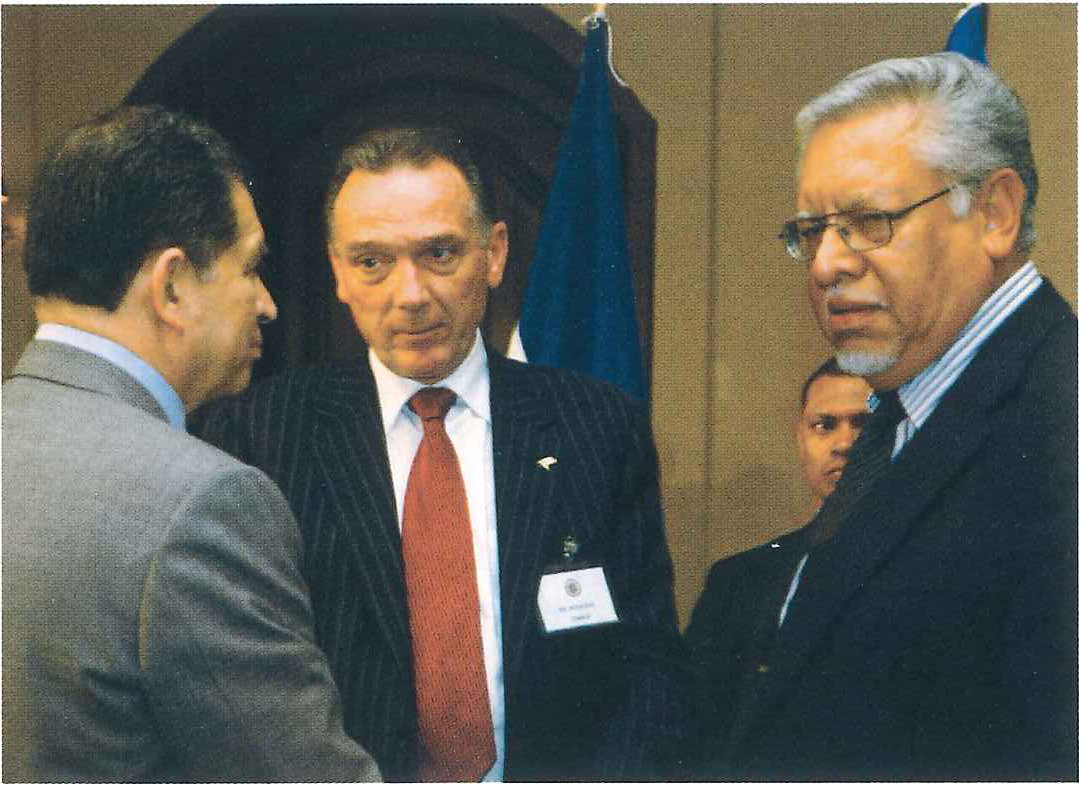
During my second and last meeting with President Zelaya he spoke warmly of the role of Minister Kent and Canada throughout the crisis, including his months of refuge at the Brazilian Embassy (after he made a surprise return to Honduras on September 21 and sought refuge there). It was the very day he was given safe passage to the Dominican Republic. He said some of his most important memories from the “struggle” he had gone through were the “timely and important calls” he received from the “Canadian Minister”. Zelaya thanked me for Canada’s “principled position” and our “solidarity” with the Honduran people in our efforts to promote dialogue and political reconciliation, and to implement the Tegucigalpa-San José Accord.
Throughout the months after the coup, Canada’s efforts were meant to restore democratic order including the return of Zelaya to the presidency. We pushed for signature of the Tegucigalpa-San José Accord between representatives of Zelaya and Micheletti, a comprehensive agreement with a road map forward to reconciliation. It built upon the initial mediation efforts of then-President Oscar Arias of Costa Rica. However, this agreement proved stillborn shortly after signature as it provided too much flexibility and not enough
In this volatile environment, my initial instructions from HQ were clear: stay put, stay safe, find out what is going on, report back as needed and wait for further instructions.
deadlines (or detail) on compliance. Neither of the camps proceeded to implement its provisions. They blamed the other for its failure. However, reflecting the regard for Canada and our key role in this negotiation process, I was invited to witness the signing of the Accord both in my capacity as the Canadian representative and President of the G-16 Group of Donors.
The importance of the donor community in Honduras deserves mention. It is an understated lever that may have relevance in future crises in other countries. Canada has been a major donor there for over 40 years, providing over $400 million in official development assistance. In another coincidence, we took over the six-month rotating presidency of the Group of 16 donors on the very day after the removal of Zelaya from power; our term as donor President was to coincide with the worst moments of the political crisis.
Donors are an important constituency in Honduras but never really played to their strength until this crisis. International assistance to Honduras totals $650 million annually and constitutes 18% of the national budget. By force of circumstance and due to the intense engagement of donor nations, the G-16 became a key player in information gathering and advancing a peaceful resolution to the conflict, and in pressuring the de facto regime through aid restrictions and sanctions.
Under Canadian leadership donors engaged key players including the Resistencia movement supporting President Zelaya’s return, civil society, human rights organizations, the business community, the Catholic Church and important evangelical movements. Donors took a pro-active public position, communicating regularly to the Honduran public on the need for accommodation and reconciliation between the two camps, and for greater respect for human rights. We pressured the regime to actively investigate reports of human rights abuses. In so doing we worked closely with regional and international human rights officials, including the Inter-American Human Rights Commission, whose work and reports in this period were stellar.
Another coincidence in timing that helped position Canadian leadership was that then-Ambassador Graeme Clark also presided over the OAS Permanent Council, the main decision-making body in the organization. We were in the chair in early July when the tough debates and decisions on Honduras had to be taken, including the suspension of Honduran membership in the OAS (because a disruption in the democratic order in the country had taken place).
I cannot understate how our contribution during this crisis was appreciated across Honduran society, irrespective of one’s position on the origins of the crisis. At the 2010 Canada Day reception (my last in Tegucigalpa before returning to Canada), I was struck by the outpouring of emotion and recognition for our role from both Ministers and other guests, including the kind words for our Ministerial engagement. That high esteem for Canada also was reflected in the decision of President Lobo to nominate Michael Kergin as one of two International Commissioners on the Peace and Reconciliation Commission he set up shortly after taking office. Michael is a well known former Ambassador to Washington and career foreign service officer; he played a very constructive role in the work of the Commission, which submitted its report this spring.
The Honduran drama is still not over, Zelaya remains in exile, but a healing process and a national dialogue on what happened and lessons learned from the crisis is underway (Honduras remained suspended from the OAS until June of this year). The Honduran crisis also continues to be a hot button issue in the hemisphere, provoking serious differences of opinion among regional governments. Nonetheless, consistent with our fundamental objective of promoting respect for democracy and human rights in the hemisphere, Canada’s role was widely appreciated both in the region and in Honduras.
In the longer-term there is a need to consolidate democracy in Honduras and strengthen trust in national institutions. Citizens need to engage in civil, peaceful discussion on sensitive issues such as constitutional reform. While we can all agree that the ouster of democratically-elected governments is not acceptable, at the same time democratically-elected governments and leaders cannot assume they are omnipotent and act above the law and the constitution, or try and manipulate the constitution once in office, in order to remain in power. That remains an ongoing, broader challenge for Canada and its hemispheric neighbours, across the Americas.
LESSONS LEARNED
Canada counts internationally, and we have a positive image in the Americas. Sometimes we forget this. We also are unique: a North American actor neither American, nor Latino nor Caribbean.
Ministerial engagement is key; our Minister for the Americas played a high-profile role from the outset, appreciated and constructive.
Donors in heavily aid-dependent countries like Honduras have more influence than they may think and should not be shy to act in support of democratic principles and practice.
CIDA programming can pay off politically — 40 years of ODA to Honduras has made us a major and respected player in the donor community.
All mission staff must contribute in a crisis: no stovepipes, all hands on board. Staff including OGD representatives can help manage operations with their varied skill sets.
Close cooperation and communication with HQ and across the missions involved is key.
We largely failed to communicate our independent role to Canadian media, academic circles and NGO pundits. Although seen positively by most Hondurans and regionally, and reported by international media, some Canadian observers criticized our engagement and failed to appreciate the nuanced and effective role we played. This inability or unwillingness to grasp the complexity of the crisis led to simplistic if not erroneous assessments that Canada was not taking a principled position in support of a democratically elected government.
The crisis showed the limitations of the OAS and its sanctions mechanisms; once Honduras was suspended and prevented from receiving development funding from regional IFls, the OAS’ powder was dry and had little influence on the de facto regime.
The UN was not a player, it saw the crisis as a regional problem for the OAS and not a threat to international peace and security (although local UN officials were engaged throughout the crisis).
Some countries exploited the crisis to discredit U.S. leadership and Noil Reeder undermine the OAS in favour of narrow national interests or to benefit opposing regional organizations.
President Obama sought a consensual role, working through multilateral institutions like the OAS. This was not what Honduran elites expected or wanted, and they were somewhat disappointed with U.S. diplomacy.
Smart sanctions are key. Canada and others imposed sanctions but none had immediate impact except the cancellation of U.S. visas for regime leaders. It hurt Micheletti, his Cabinet and others involved in the coup with family and property in the U.S. Regardless, backed by Honduran elites and armed forces the regime did not budge until Zelaya’s term was over.
Keep the foot on the accelerator — when a solution seemed near, regional partners trusted the two parties to act in good faith and abide by agreements. As international pressure eased, the parties delayed, obfuscated or put up roadblocks. Egos, enmity and distrust on both sides made it difficult to implement any deal. Had pressure been maintained throughout key periods, the crisis might have come out differently.
View the original scanned pages →
Originally published in bout de papier, Vol. 26, No. 1 (2011) — Summer/Fall 2011 // Été/Automne 2011, pp. 7–10. Read the rest of this issue →



