
bout de papier, Vol. 25, No. 3 (2010) — Fall 2010 // Automne 2010, pp. 39–41
The crazy things people will do for their pets is a truism that reaches new heights of absurdity for Foreign Service officers overseas. confess not to have undertaken any persuasive research to support that contention that would withstand scrutiny by even a newly-minted FS: rather I want to believe I am not the only person suffering from this dementia,
It all began innocently enough. At the end of our posting in Moscow in August 2005, Elizabeth and I were preparing to move to Amman, near to where we had begun our FS career in Cairo. Our eldest, Victoria, had left the nest back in 2002. After a year in Toronto and another at Herstmonceux, England, she was now settled into Queen’s University. Twins, Carolyn and Graham, had completed their IB studies at Moscow in June and were setting off to Trinity College and Queen’s, respectively. After 20 years of raising children, Elizabeth and I were facing a new challenge: living as empty nesters abroad.
The nest wasn’t empty for long. Our SQ in Sweifieh, in Amman’s western suburbs, was within walking distance of a wonderful neighbourhood shopping strip. At one end was al Diyar bakery where you could buy oven-fresh pita at all hours; at the other al Hammoudeh restaurant that made hummus to die for: a match made in heaven. Somewhere in the middle was a pet shop, A Shark’s Tale. We ventured in one October day and, past the budgerigars and fish tanks, there was a rather lonely and scruffy African Grey parrot. He was engaging and pathetic at the same time. Elizabeth was quite taken with him, despite her previous bad experience with my late aunt’s cockatiel, Pepper. Pepper’s jealous attacks had led Elizabeth to swear off birds forever. Seeing my hesitation, the owner told me he would be receiving a consignment of younger birds in a couple of weeks. When we returned to the shop, we found our “Chosen One” — a very engaging specimen with a beautiful red tail. After some ritual haggling, he was ours for the princely sum of 350 Jordanian dinars. We named him Monty, in honour of the infamous dead parrot sketch, and Lord Mountbatten. The latter was a bit of a stretch: neither of us could recall if Monty ever made it to the Hashemite Kingdom, but there was desert nearby and we didn’t want to have always to explain our love of Monty Python to the uninitiated.
Monty quickly became part of the family. He would stand dormant vigil on our bedroom door nightly and wake us with a bite to the sheet-covered toes precisely at 6:50 every morning. If he especially liked what was prepared for dinner, it would be cold before I would be allowed to eat his leftovers from our communal plate. Over his three years in Jordan, he acquired a vocabulary of 150 words, including some colourful phrases that he would insist on sharing with the visiting chaplain. His signature tune was, fittingly, the refrain from Eric Idle’s song “Always Look on the Bright Side of Life.”
When it came time to leave Jordan in the summer of 2008, it was a given that wherever we went, Monty would be coming with us. After 13 consecutive years abroad, a return to Canada was reasonably in the cards. Unfortunately, Jordan had reported two isolated cases of avian flu back in 2006. Although Monty had not come into contact with any other birds, there was no denying he was one himself. The Canadian Food Inspection Agency was very Clear: as a bird who had resided in Jordan, Monty was a parrot non grata! The only escape clause would be for him to reside for at least 90 days in our personal possession in a country free of avian flu — if only immigration to Canada were that simple! After confirming with the Mission Administration Officer that Monty would be welcomed in Cuba, we accepted an assignment to Havana. Professionally, it would represent my first assignment as manager of a full-service immigration office; personally, it was our first brush with Latin America and within a short flight to our children in Toronto. Above all though, it would give Monty Cuban nationality and allow him forward to Canada at the end of our posting.
Cross-posting formalities went well: too well in hindsight. Shortly after our household effects were packed up in early July, we received an email from Havana telling us that the Cubans would not accept Monty, again by reason of a history of avian flu in Jordan. We learned that the earlier assurances we had received had not involved speaking to the competent authorities in Havana. What a quandary! It was too late to step back from an assignment because of an inadmissible pet. I decided that I would respond to the challenge using the same natural justice principles that had been drilled into us for years as visa officers: when you convey concerns to the applicant, the applicant must be given the opportunity to disabuse you of those concerns. What was good for the goose had to be good for the parrot, too, I reasoned.
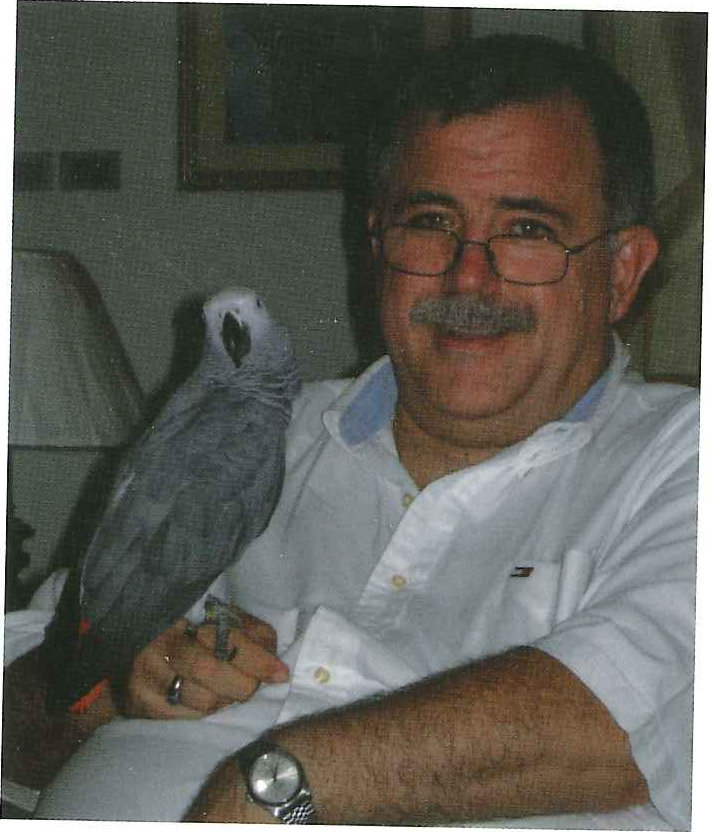
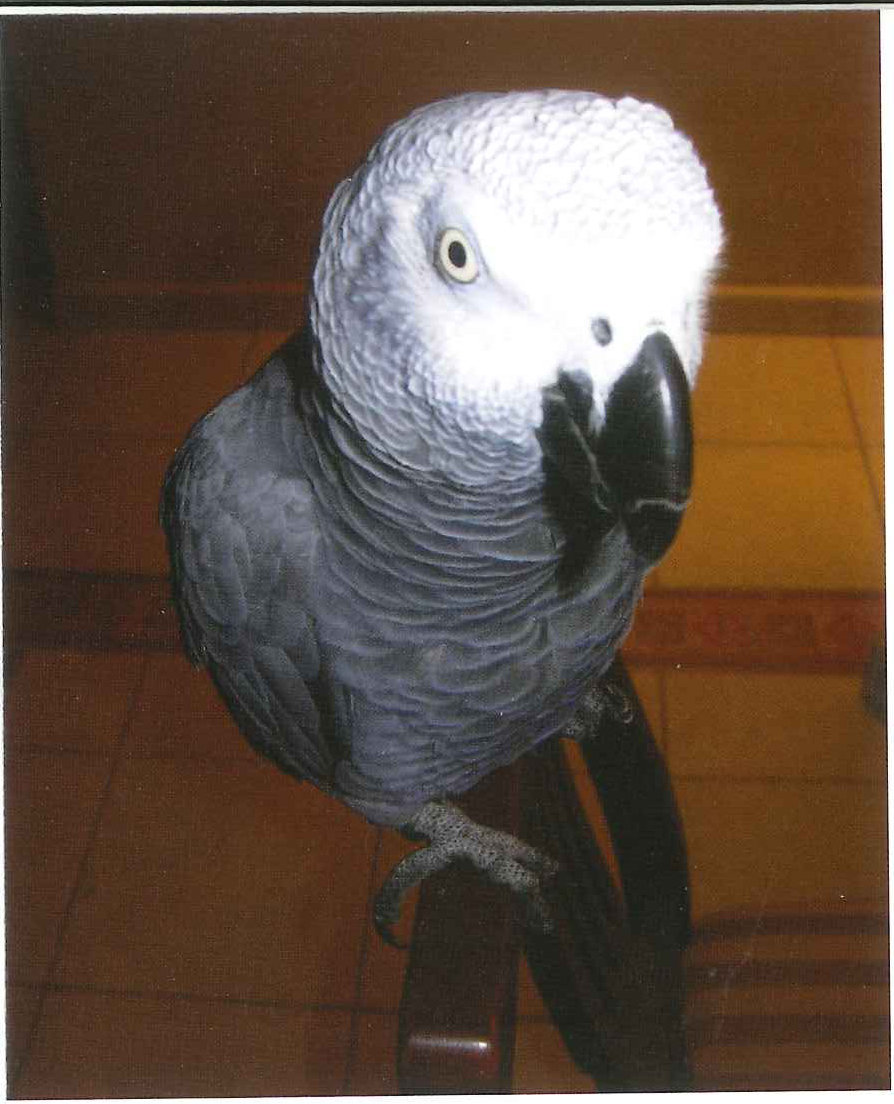
We set about to prove that Monty did not have avian flu. We called on the local vet, who looked at a perplexed Monty through the slits of his travel box and pronounced him healthy. Elizabeth and I felt this would not likely be enough, so we asked the doctor where we could have Monty tested. He gave us the number for the veterinary services division of the Department of Agriculture. After several calls, we learned that their offices were vaguely in the desert south of Amman, so we set out with Monty in search of his proof of good health. The Jordanian officials were very sympathetic to our plight. All they asked was for some fresh droppings. Little did we know that the trauma of a long car journey would give Monty constipation: the box was spotless. It took three of us, three pairs of hands and a king-size Q-tip to do the necessary, but two hours later we were motoring back home with Monty’s clean bill of health in hand.
We translated the health papers and I wrote a compelling rebuttal en Español to Cuba’s denial of admission to Monty. Elizabeth’s church group lent their prayers. Roman Catholic friends, Jordanian and expatriate American, turned their saint statues in the direction of Cuba. Whether it was the strength of my appeal, divine intervention or a combination of both, by early August we received confirmation that the Cuban authorities had reconsidered their position in light of the new evidence: they granted Monty conditional admission. Praise the Lord and pass the pomegranate seeds!
Our reservations on Air France through Paris direct to Havana were notated “Pet in cabin — OK”. When we presented yet more translations of Monty’s papers to the airline, we were told that “pet in cabin”
only referred to dogs and cats. IATA rules decreed that other animals could only travel in the hold. Furthermore, because of bird flu in Jordan. ..What next? We brainstormed various scenarios, including Elizabeth following with Monty by boat. Readers who know how much Elizabeth dreads the idea of being at sea will understand what a sacrifice that would have been. Perhaps we could drive overland to Paris, where Elizabeth could spend three months with Monty surrounded by friends from our earlier posting there. Eventually, Carolyn, the Google queen, found that Aeroflot Russian Airlines was not yet in full compliance with the new IATA rules and would accept Monty in cabin. There was a possible routing from Damascus to Moscow and directly on to Havana: a much longer flight, but we decided Monty would forgive us. We had to obtain our Cuban visas from their embassy in Syria in any event, so it appeared the Fates were smiling on us at last.
We smuggled Monty by land across the Syrian border. We whisked him by the concierges at the Four Seasons Hotel, although the empty birdcage in our accompanying baggage might have been a giveaway. There was a beautiful coffee table book on Old Damascus waiting for us to mark our tenth stay, so we took that as an absolution for our beloved stowaway. At Damascus airport for our flight to Moscow, the security detail asked for Monty’s papers. We didn’t have any for Syria! I reasoned that since he was leaving the country, they shouldn’t care. Fortunately, and perhaps due to the late hour, the customs officer agreed. One final hiccup at the boarding gate, and Monty took wing in a way he never imagined. The Russian flight crew and many of the younger passengers fawned over him. The flight attendant was moved to tears that we would undertake this odyssey out of love for a bird. We arrived in Cuba, cleared veterinary formalities and Monty moved into his new home. He was released from quarantine after 21 days and we looked ahead to his next move to Canada with confidence.
In May 2009, I was granted a leave of absence from the Foreign Service to accept a new career opportunity that required an early move to Toronto. It was well before the two years we planned to spend in Cuba, but more than the three months Monty needed to be able to come home with us. We would have preferred to find a condominium at this stage in our lives, but CFIA rules stipulated that only a detached house would qualify for household quarantine. I found a nice, small place on a house hunting trip in April, but it wouldn’t be finally approved until early May.
We knew that Air Canada would not allow Monty in cabin but prayed that Cubana de Aviacion would do so. Armed with an email exchange to that effect, we made ready our travel to Canada. check-in went well. The airport veterinarian was kind enough to escort us through the security wall, where the Customs officer insisted that Monty either had to go through the x-ray in his box or be removed from it as the box was scanned without him. Following a dressing-down from the veterinarian in unrepeatable Spanish, common sense prevailed. As we waited by the gate, we met the purser William, who was surprised when we recognized him from an earlier flight. He inquired about the travel box, and proceeded to tell us that only dogs and cats could fly in cabin. He suggested perhaps there had been a cat in the box, but that Monty had eaten him. Kind nonsense, really, but at the eleventh hour we would go along with anything.
After we had taken our seats, William came by to confirm that according to Cubana rules, Monty could not travel in cabin. In reply I produced the email exchange, suggesting that Monty could sit with us. After a few tense moments, William came back and told us that the captain had exercised his discretion to allow Monty to remain with us. Eight hours later, after clearing customs formalities at Pearson Airport, Monty emerged from his prison unscathed, into the room that would be his quarantine for the next 45 days.
Monty is free to roam the house now. He is thrilled that Carolyn and Graham have moved back home. Growing flocks are a status symbol for parrots. We don’t know where our Foreign Service career will take us next: all we know is — are you listening, Assignment Division? — Wherever we go, our beloved Monty will be coming with us.
View the original scanned pages →
Originally published in bout de papier, Vol. 25, No. 3 (2010) — Fall 2010 // Automne 2010, pp. 39–41. Read the rest of this issue →



