
bout de papier, Vol. 25, No. 3 (2010) — Fall 2010 // Automne 2010, pp. 33–37
While away writing this past summer, and always on the look-out for something as far removed as possible from my usual topics, I cast my eye over Laurel Pardy’s Life on a Carousel: A Non-Diplomatic Memoir (Trafford Press). It is a collection of reminiscences of a life largely spent adapting to and partnering in her husband Gar’s career which took them to India, Kenya, the United States and Costa Rica (where Gar served as Ambassador), with extended periods in Ottawa in between. Many bout readers will find much that is familiar in these tales and in the related theme of how much changed over the Pardys’ career span with respect to Foreign Service spouses (then mostly women, today a more evenly balanced contingent). I recommend the book. It contains reflections of an intelligent and dedicated, altogether unsentimental, foreign affairs spouse on a joint career of which she writes, in her concluding line, that she would “not have had it any other way”.
Life on a Carousel rekindled my own recollections of extraordinary spouses I had known earlier in my career. It was commonplace to criticize the spouses of Heads of Mission (HOM) then as both superfluous and sometimes overbearing. Their role in overseeing a large official household providing frequent hospitality was seen by some as un-Canadian (while the same individuals often wondered why.they were not invited more often). Their subordination to the career of husbands not generally superior to them, and often starkly the reverse, struck many younger colleagues as an outrage or at least a waste. And because of Canada’s modest budgets, very few of them were likely to capture the title in the “hostess with the mostest” sweepstakes in their capitals of accreditation no matter how creative they proved to be.
And yet, I knew from observing the consorts of my own HOMs what talent these women had, and how helpful (while occasionally intimidating) they often were to young and green officers setting out abroad with limited cultural sensitivity and rudimentary social graces. In an earlier era, my Australian mother had’been one such. She was tremendously helpful to my much more reserved, introverted father. She was mostly responsible for their wide network of acquaintances and friends in their various postings — some prominent, others mainly interesting. The ability of Canadian diplomatic missions to advance the country’s interests depended very much on these networks. Entrepreneurial, younger officers were encouraged to replicate them at their own levels, yielding in the aggregate a large field of “friends of Canada”. But not all of us knew how.
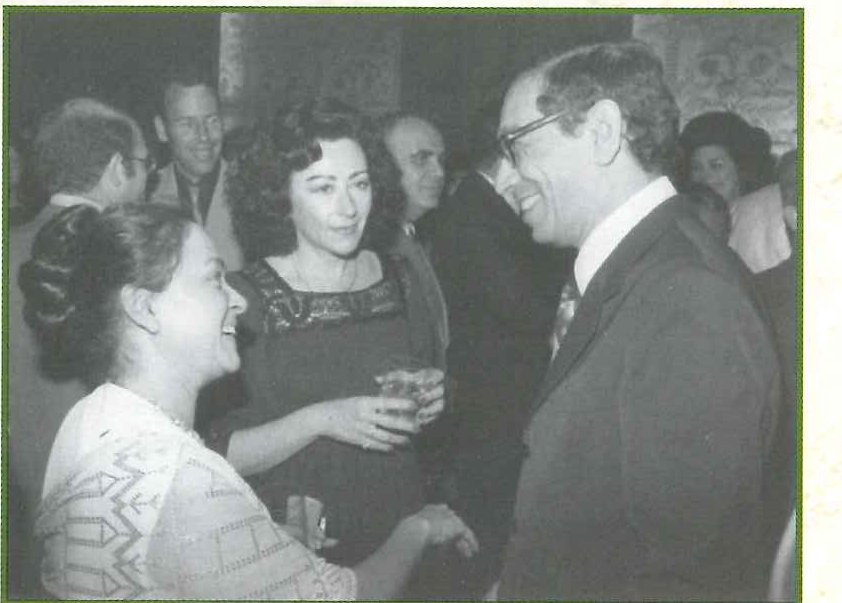
Although, in male fashion, I neglected to observe my mother at work with sufficient curiosity, I did register that the manner in which social interaction was designed and managed mattered a lot — particularly in a Canadian “official residence” (OR). Whether the experience was pleasant enough for guests to wish to return was a matter of real import, especially in capitals where the influential were much courted. It was largely due to such factors that key visitors from Ottawa either benefited from local attention, or did not.
Reaching my own first foreign assignment in Cairo 35 years ago as an enthusiastic but not particularly thoughtful young blade, I was soon to learn quite a bit. My first ambassador was a highly intelligent arabist from whom I was shielded by being on language training while we overlapped in Egypt. He suffered from a serious illness that made him impatient and dismissive on good days, worse on bad. By today’s standards he would have been considered abusive, well beyond tolerable limits. Indeed, his wife seemed long-suffering (both are now deceased). But those were different times, when strong personalities perched on high could often get away with abuse and when bad behaviour was not yet blog-fodder. Fortunately, the political counsellor at the mission, Ian Mundell, and his dynamic wife at the time, Elizabeth, made up for this as did several younger colleagues.
Just as I joined the embassy, a new Ambassador, Jean- Marie Déry, was appointed. With him arrived his dynamo of a wife, Maria-Elena, and two delightful young daughters. The atmosphere at the OR changed from funereal austerity to one of passionate engagement with Egypt and of great fun in the process. Maria-Elena, a Mexican, was drawn to young people and included several of us in many an interesting event. She entertained superbly in the previously gloomy, now welcoming OR she re-decorated to her standards, with many treasures picked up on their earlier assignments, two of them in Africa. Their timing was good: President Sadat had recently launched his peace initiative with Israel and as it happened, Jean-Marie had earlier served in Israel (a rarity then among diplomats serving in Arab countries). Consequently, the Canadian OR soon became the port of call oblige for Egyptians involved in negotiations with Jerusalem and for visiting Israeli negotiators and journalists.
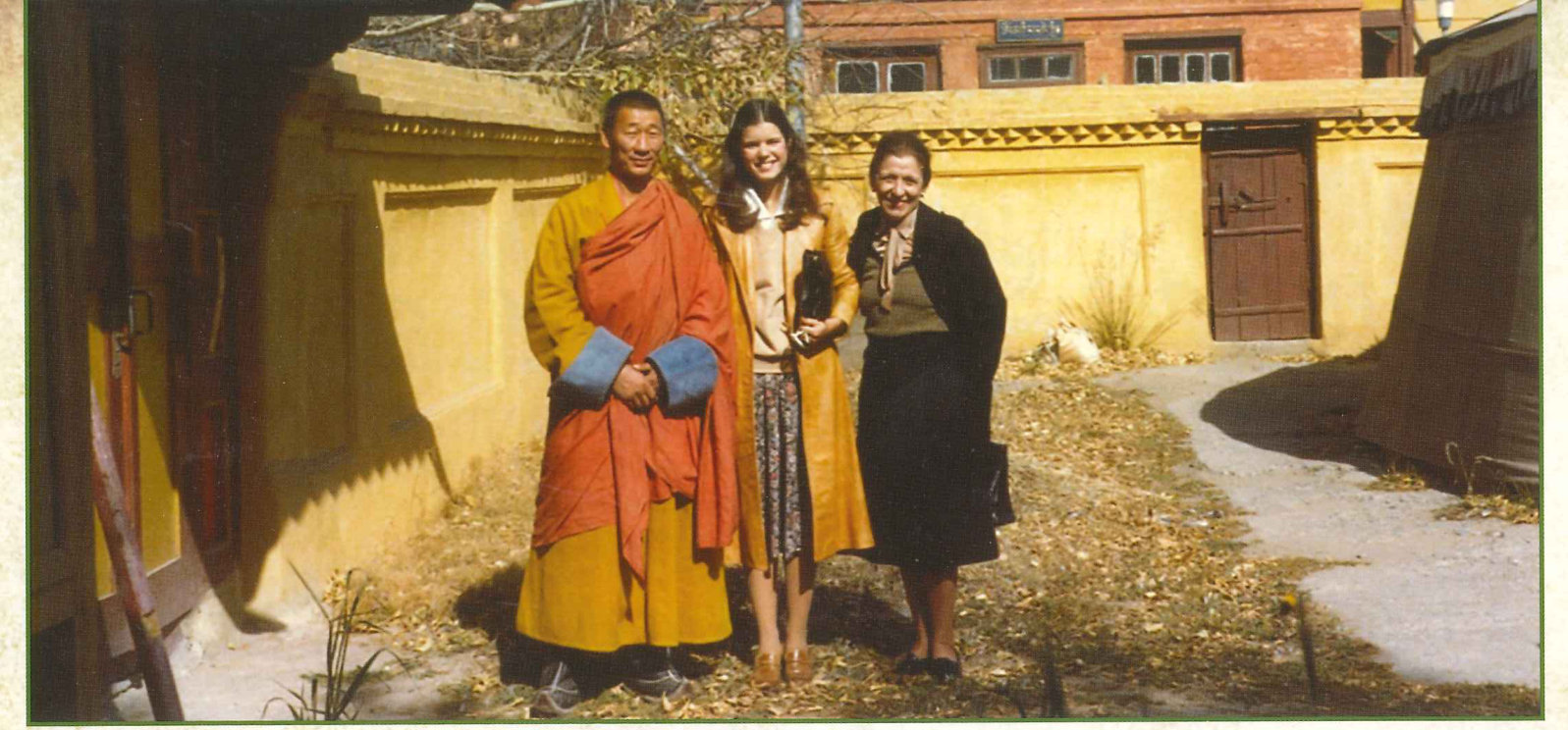
Over all of this the Dérys presided with great panache. Maria-Elena was also thoughtful in ways that were then unusual: when my same-sex companion, a foreign correspondent, was reassigned, Jean-Marie and she insisted on hosting a farewell dinner for him, and this at a time when the Canadian government was still formally discriminating against gays. My great embassy friends, Margaret and Chris Greenshields, of whom the Dérys were very fond (now representing Canada in Ramallah), were tremendous company in the exploration the social side of junior Canadian diplomatic representation and made many friends in Cairo, as did I.
Later, in Jordan, my first ambassador was Keith MacLellan. His wife, the Belgian Countess Marie-Antoinette LeGrelle, was widely viewed as “redoutable”. M” MacLellan (as she would always remain to me), and Keith affected permanent hostilities with each other, at least when others were around to intermediate and to channel communication between them through third persons at the dinner table — a distinctive touch. They were on their third and final HOM assignment, Keith’s adventurous diplomatic career having been interrupted by a run for parliament. King Hussein, a proud soldier, was tremendously taken with Keith’s dashing past as a World War II sharp-shooter behind enemy lines. He was man of great learning, always advanced in a self-effacing manner, and quietly generous to young upstarts like me. I had been tasked by Ottawa to enter into contact with the Palestinian political organizations then clustered in Amman and Damascus, which Keith was not permitted to do. He would have loved to, but rather than resenting this interesting aspect of my portfolio, he proved hugely supportive, providing much good advice on my dispatches.
M”™ MacLellan was well suited to her role, possessing a great sense of style and displaying considerable personal flair — rooted in supreme self-confidence in the face of lesser beings. I sometimes wondered what she thought of Amman, and its (to me) endearingly relaxed royal court. American-born Queen Noor’s glitzy style clashed with the admirably restrained, quietly elegant style of the Queen Mother and other Jordanian royals. The MacLellans liked Jordanians and, as is nearly always the case, their sentiments were reciprocated all over town. Alas, they also are both deceased, but Wikipedia contains a terrific page on Keith detailing his singular war-time service in the UK’s SAS.
In mid-1985, Gary Harman, an accomplished former Ambassador in Cuba and ADM at External headquarters, and his wife Margaret, succeeded the MacLellans in Amman. Their style was much more low-key, but they also were highly successful in Jordan. Margaret had developed a prototypically Canadian way of entertaining in a welcoming, understated way. She volunteered for a Jordanian charity benefitting impoverished women in a mixed Christian-Muslim region to the South of Amman. Over time Jordanians took notice and much admired her for it. At one point we had a senior Canadian visitor, a woman, who was keen on liaising with local feminists. We had to respond that there weren’t any in the Canadian sense of the term. Word came back (in age-old Ottawa fashion) that they would simply have to be found. Margaret and I were disinclined to mount a local Potemkin feminist operation. Working together, we concluded that professional women, lawyers, doctors and such, were our best bet.
In due course, a group of them agreed to meet with our VIP. I heard remarkably little about the session. Margaret was mute. And questions about it seemed to pain my Jordanian friends who had participated. Much later one of them told me that their Canadian interlocutor had exhausted the meeting with jeremiads denouncing men. She little understood (or cared) that the struggle for women’s equality in Jordan involved bringing male relatives, of whom they generally were fond, to accept the need for greater women’s participation in the economy and in the leadership of society, rather than creating a war of the sexes that was never going to get them far. Margaret had remained serene throughout, much to the admiration of the Jordanians involved.
The Harmans could see I was dead keen on my work — a truly fascinating job. They were clearly pleased that I had acquired a wonderful circle of Jordanian friends and some foreign ones too, not least by entertaining a great deal. My representational allowance did not stretch far in high-cost Amman, but my trusty Egyptian cook, Abdu, was up to the challenge. He had served several generations of Canadian diplomats in Cairo before coming to me there and later to Jordan. I was happy to subsidize myself the frequent dinners at home as they were lots of fun beyond being professionally useful, and I learned something about the value of a diplomatic spouse by having to play both roles myself!
By my next assignment, a few years later at the UN in New York, there was no longer a HOM spouse (except for a year at the outset with the terrific Yves Fortier and his wife Carol). Louise Fréchette arrived a few months before I myself succeeded Philippe Kirsch as the Deputy Permanent Representative. Both Philippe and I were granted ambassadorial designation, largely because we chaired one of the UN’s committees. So, once Philippe left, the mission had two single Ambassadors, the real one, Louise, and a junior facsimile. Louise, not so many years older than me, was tremendously self-confident and successful in everything she undertook. She managed her household and the punishing entertainment load with effortless ease. At my less exalted level, I tried to emulate her. And, from observing her, I learned that however much I had benefited from HOM spouses, a single HOM also could cope — and in Louise’s case, superbly.
She and I did notice one change in the Foreign Service that handicapped younger colleagues. While tremendously bright and. hard-working at that mission, some had acquired only a very approximate sense of how and why entertaining was an important part of our job. One evening, Louise, having agreed to host a reception for the members of an important UN committee, was surprised when our excellent young colleague responsible for that body turned up very late, and ready to party. Meanwhile, Louise and I improvised with delegates neither of us knew — none too thrilled. It was obvious that whatever passed for pre-posting training no longer took in protocol or other aspects of the representational side of our work!
The considerable amount I learned throughout my career from HOM spouses and then from Louise, was to be extremely useful to me much later. I had spent a number of intervening years either toiling in the arid vineyards of HQ or on leave from DFAIT (as it had become), returning in 2004 to exciting work first on Africa and the Middle East and then on Global Issues. I was eventually asked whether I would consider a HOM assignment of my own, and, if so, where. “India,” I replied unhesitatingly and, lo, six months later, I was on my way to Delhi. The beautiful OR there, one of the most elegantly proportioned colonial-era “bungalows” in India, would prove a wonderful home, and a tremendous setting for guests. But I knew that juggling my job at Canada’s largest diplomatic mission and the heavy entertainment requirements at the OR, would prove a tall order. And I wanted also to tend to the many houseguests I hoped would visit. And they did, in a glorious, unending stream, including many Indian resident outside Delhi.
Some months earlier, agrément having been sought, I took advantage of business in the area to drop into Delhi to consult my predecessor, Lucie Edwards. She and her husband, Tom Roach, are old friends. Tom had served as household manager while simultaneously tending to his scientific pursuits. For some time he had been reconfiguring the OR staff such that it be headed up by a full-time modern manager, with all the accounting, computing and other skills required today. I am very grateful to him. The hero of the piece was Francis Mangalam, the elegant, unflappable, resourceful and resilient OR manager (and formerly butler), abetted by his trusty deputy, Gabriel Rajan. Of course, I offered ideas on the types of events I thought worked best in Delhi and on catering arrangements. However, my contributions were rather modest relative to the overall effect, which was impressive. Thus was I able to perform at least a mildly convincing impersonation of a High Commissioner needing to discharge spousal functions himself.
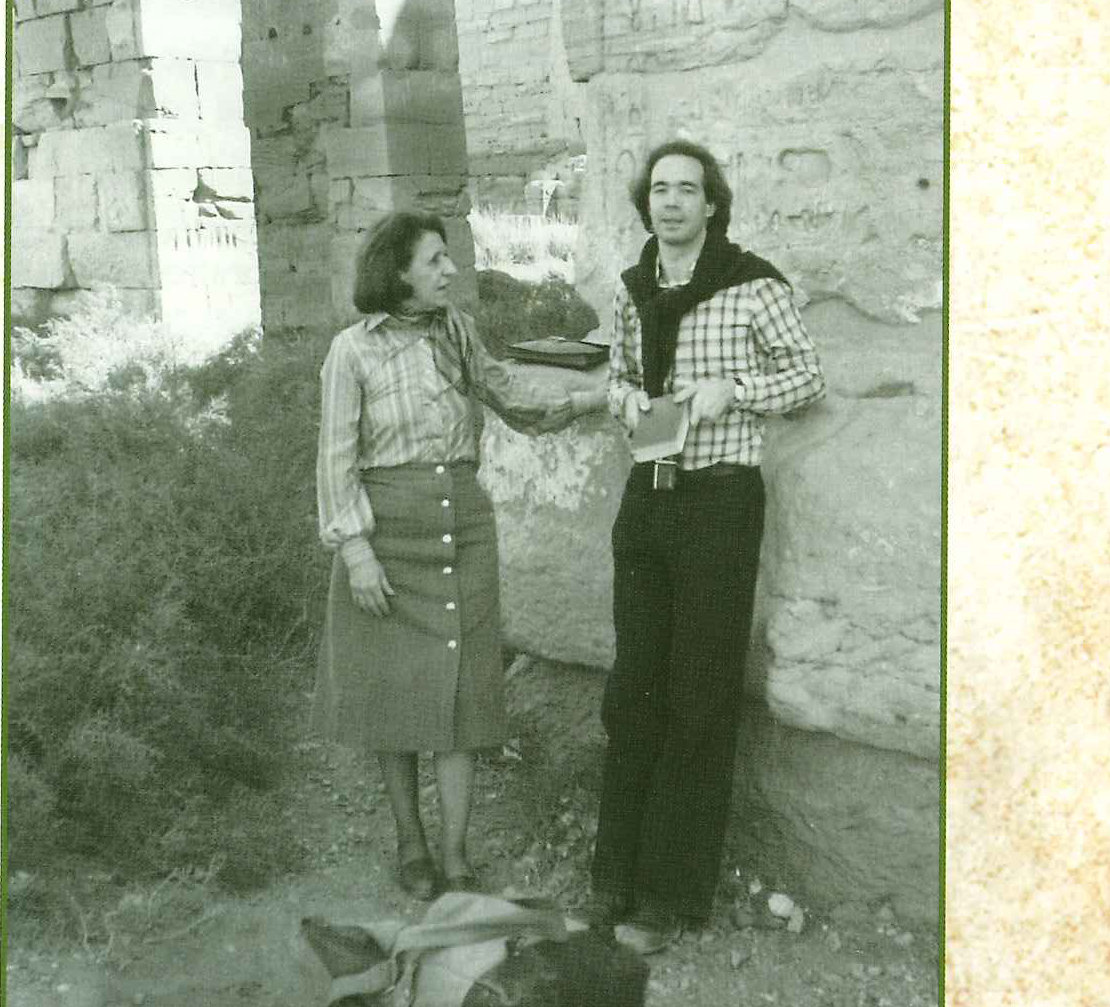
During my years in Delhi I often thought of my former HOMs; what would they have done in my shoes? I also thought of their spouses, whose creativity, personal touch, warmth and sensitivity had done so much to complement their husband’s attributes, and whose approaches I often adopted to the best of my ability. Several other HOM spouses were also on my mind: Inge Paynter returned to stay at the OR — with her new husband Daniel Molgat — for the first time since she and her late husband John had left India in 1995. She had hired the key members of the household staff during her tenure, and they were thrilled to see her again. Inge and John’s tenure in Delhi had been a huge success, as I was often told with fond remembrance. Carol Walker, during the assignment of her husband Peter, redecorated the OR with an elegance echoing the style of the 1950s and early 1960s. Its colour scheme was ideally suited to the local climate, in tones that radiated heat in the winter and refreshed on contact during the many hot months, including those of the monsoon. It was quite an accomplishment, and one much admired by Indian guests. (Having delayed redecoration during my years, Kumru Caron took this on in 2008-2009 with stunning results, another signal contribution by a Foreign Service spouse.)
I joined External very young, needing a job and having, by luck (it seemed), passed the dread Foreign Service exam. I was quick, imaginative, hard-working but also unsteady, emotionally immature and inclined to over-hasty judgments and rash decisions. These latter traits lingered for a number of years, notably during my early postings. I did not handle stress particularly well then (indeed, disastrously sought to medicate it through alcohol). My enthusiasm and enduring optimism helped pull me through. But my colleagues and HOMs exerted a salutary influence, and so did their spouses in those areas where their interventions could be helpful. I also had several very supportive personnel officers at key junctures.
One of them, Jim Judd, fundamentally reoriented my career at a difficult time in my life, taking the risk of challenging rather than coddling me. He sent me to work for the demanding team preparing the discussions of the first G-7 Summit to be hosted in Canada, at Montebello. They included David Lee, Derek Burney, Paul Thibault, and, at my side, Jonathan Fried, who, while still an FS-1D, was able to produce erudite speeches for the PM at the drop of a hat. All of us were toiling for Allan Gotlieb, never an easy task-master, but constant in demanding high standards. I never looked back. Thus, I rate highly the contributions of colleagues, senior and otherwise, in recalling my happy career. One of DFAIT’s very positive characteristics over the years has been an ability to pull together, particularly abroad, providing support for those colleagues needing help. I certainly hope this does not die out.
Today, Canada’s diplomatic spouses are caught in a grey zone between making important unrecognized contributions and being seen as anachronisms. I realize I was fortunate to have known several exceptional HOM spouses in an earlier age when their role in contributing to the mission’s overall success was more widely appreciated. I learned so much from them that turned out to be vital not just to my ability to represent Canada as a single man, but also in equipping myself to love every minute of the experience.
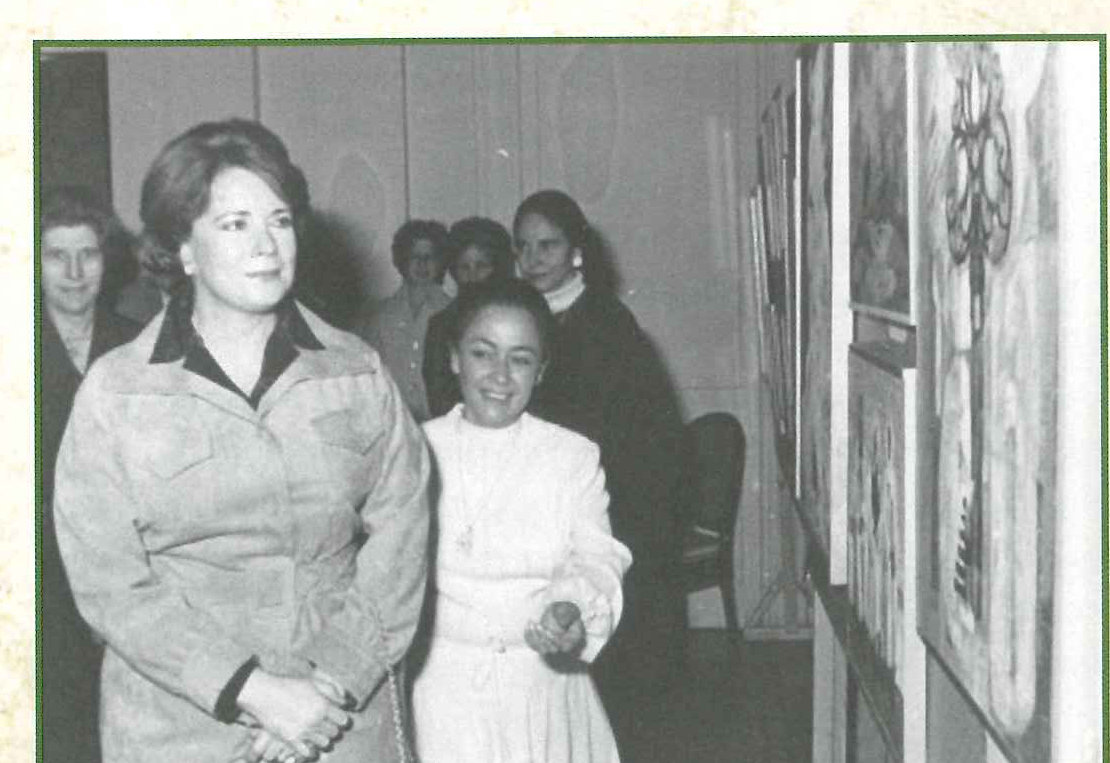
Prior to departing for Egypt in 1976, was given letters of introduction to a number of prominent personalities by R.A.D. Ford and his wife Thereza, friends of my parents. They were in the latter stages of a 16-year tenure in Moscow and had represented Canada in Egypt. The letters proved invaluable, launching me into the inner circles of the remaining Nasser-era purists (including Nasser’s brilliant propagandist, Mohamad Hassanein Heikal, and his wife Hedayat, both still friends) and of the stylish but dilapidated remnants of a fading aristocracy.
At my instigation, Thereza visited Egypt for the first time since they had left. She stayed with the Dérys, whom she much enjoyed. As a Brazilian she found a kindred soul in the fun-loving and elegant Maria-Elena. I travelled with Thereza to Upper Egypt and learned how well attuned she was to Egyptians, pretender prince and pauper peasant alike. She had a rare gift of being able to adapt to local concerns and perspectives. Her visit was celebrated with gusto by the Fords’ many friends in Cairo (while many intervening ambassadors left nary a trace).
Largely a self-made professional as a young woman, Thereza was no less a snob and could be severe. Justly feared by the hoi-polloi, there was much to be learned from her regardless. I once accompanied her to see a Canadian Foreign Service spouse who operated in loud whine mode, complaining nonstop of her wretched circumstances in what was indeed a drab apartment. As we got up to leave, Thereza wondered whether she might have some flour and water, which she expertly mixed. Paste in hand, she jumped up on a chair and briskly reapplied the wallpaper which hung in dispiriting strips. Elementary task completed, she sailed out having made her point — it’s bad enough being miserable, but displaying incapacity is far, far worse.
Never particularly sentimental about colleagues, Robert and Thereza very much liked young people. Two favoured couples adorning the Moscow embassy when I visited in 1979 still have fond memories of the Fords, even of anxious times at Thereza’s side: Donna and Jim Wright, now in London, and Liz and Scott Heatherington now in Riga. Donna remembers junior couples being asked to join in parties — one of them being summoned to join the table in order to fill out the gender balance while the other was served a tray in the library. Presentable young people were at the OR to work (presumably the less fortunate were not invited at all to the grander occasions), not least to guard the Fords’ treasured objects during parties when thieving company from “lesser nations” might be about.
Thereza was a stickler for protocol and etiquette (when it suited her). Donna recalls that a certain uncouth ambassador lit up a cigarette early during a dinner hosted by the Fords (it was acceptable at meal’s end at elegant tables in those days). Thereza jumped up, announced that clearly dinner was over, and invited the guests “to retire to the salon for coffee and liqueurs”! Thereza also enjoyed telling the story of her verbal joust with Soviet leader Leonid Brezhnev. After the invasion of Czechoslovakia in 1968, she claimed to have told him in a Kremlin receiving line: “My husband is the Ambassador. He has to shake your hand. I am not, so I don’t!” Anyone who knew her can believe it.
Jim, like Donna, remembers how warm and generous Thereza was with those she liked (they were many — only those assessed to be slothful, untalented, craven or worse were cast out). Robert was an austere poet, elegant draftsman, acute analyst and great connoisseur of art and literature. He had been seriously handicapped by polio when young and faced growing complications as he aged, and only ever really relaxed in her company. She never ceased to electrify him; “he loved her for that. And so did we,’ says Jim. Liz Heatherington recalls that they relied on younger men in the embassy for the physical strength to help the Ambassador move around. Both Scott and Jim cut the handsome figure that Thereza and Robert thought required. Of course, those two couples (and, by luck of parentage, I) were treated fondly, with a degree of intimacy, or in Liz’s words as “nephews and nieces”; we felt privileged that it was so.
Robert and Thereza’s era now seems so distant. They retired to a pied-dterre on “ne plus ultra” Avenue Foch in Paris and to the imposing (but hardly heart-warming) Chateau de la Poivriére near remote Vichy on the edges of the forbidding Massif Central. Thereza died soon thereafter, and Robert was forever bereft, if brave. The extraordinary standing he had created for himself in the Soviet Union and in the history of twentieth century diplomacy — reflecting so much credit on his own country — faded in the blink of an eye. It is revived, from time to time, but only in the pages of Cold War scholarship. The last time I visited him at La Poivrière he was living in the gatehouse; I found him unbowed, handsome as ever, engaged and engaging, but an icon of the past. It was a tremendously moving but sad farewell. He needed Thereza to make him and his own world whole. And without her, his world was barren of pleasure.
View the original scanned pages →
Originally published in bout de papier, Vol. 25, No. 3 (2010) — Fall 2010 // Automne 2010, pp. 33–37. Read the rest of this issue →



