
bout de papier, Vol. 26, No. 4 (2012) — Summer 2012 // Été 2012, pp. 15–18
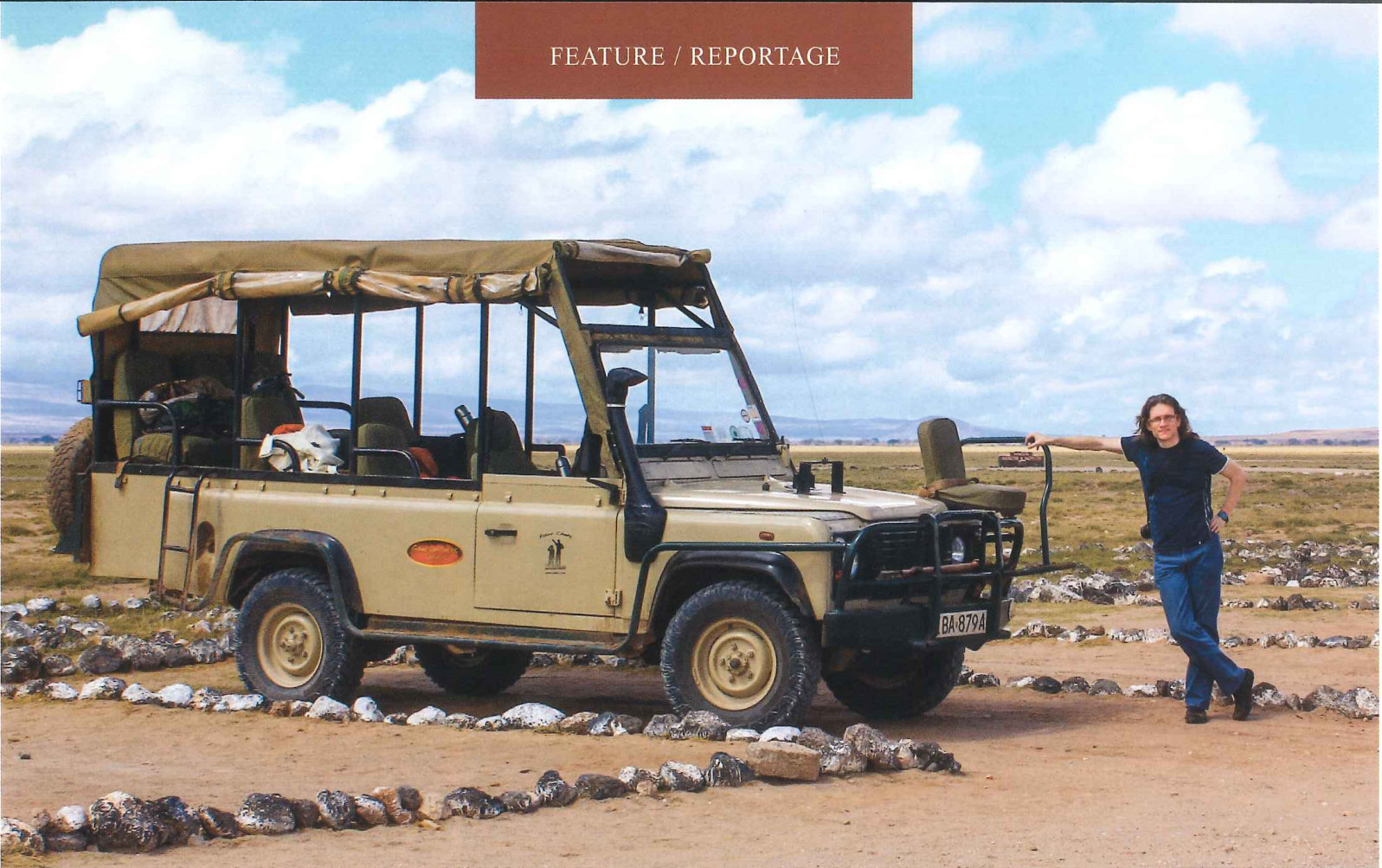
text by Bruce Grundison, photos by Bruce, Keiko, Mei and Leah Grundison
Editor’s Note: Africa rarely gets the attention it deserves, and then usually about something dire like the kidnapping of Bob Fowler and Louis Guay — a lead story in our last issue. We’re back there, but on safari this time, sharing the memorable experience and great visuals of Bruce Grundison and family, as well as the African imagery and mindscapes of Evelyn Voigt’s poetry.
Depuis des années, le mot « safari » fait partie de mon quotidien — à tel point, de fait, que, bien longtemps avant que j’arrive a Nairobi au milieu de 2011, l’idée d’un safari était devenue un cliché. Plus de 20 ans a voyager au sein du service extérieur avait peut-être émoussé quelque peu ma capacité d’émerveillement. Peut-être aussi que le terme a tout simplement vieilli dans un monde où les gens roulent en VUS Safari sur l’autoroute et accèdent à Internet au moyen du logiciel Safari. Mes lectures sur le Kenya m’ont appris que le terme « safari » original en kiswahili signifie « long voyage terrestre », ce qui, effectivement, semble assez ordinaire pour s’appliquer à quelque chose que les Canadiens font tous les jours…
Once we actually set foot in Africa, however, the word took on a new colour. In their first few weeks at their new school, our two daughters took extended school field trips into the wild, and my wife Keiko and I became excited by stories we heard from Canadian colleagues at the High Commission. Even our new Kenyan friends seemed to retain an inspiration and excitement at the notion of a safari.
There were plenty of touring options. We decided not to wait, but to make time early in our stay to make a proper “long overland journey”. One of the privileges of having postings abroad is the opportunity to take time to enjoy the local sights as a resident, and not to rush through a typical tourist’s itinerary.
So it was that, after much research and weighing of recommendations, in October 2011, we booked a safari, and drove ourselves down the busy two-lane Mombasa highway from Nairobi to the edge of Amboseli National Park. Just when we thought we had almost lost our way, my mobile phone rang, the camp phone number showing on the display. “I know where you are; wait there,” said the voice at the other end, after I described the shape of the landscape around us. Sure enough, a Land Rover soon appeared in the distance, at the wheel a Maasai man in a traditional red shuka cloak. That vehicle would be our transport, and our safe haven in the wilderness, for the next four days, and the Maasai driver, introduced as Jackson, would be our guide. After following him in our car for another 20 minutes along bumpy, dusty backroads lined with dried out acacia thorns, we arrived at our destination, a tented camp in the private Selenkay Conservancy.
We had chosen this place for our first safari because it had a good reputation for wildlife sightings and the camp was in an intimate setting, having only a handful of large private tents. It turned out to be even better than expected. Jackson and the other Maasai guides not only kept our family safe and well fed, but each day introduced us to something new.
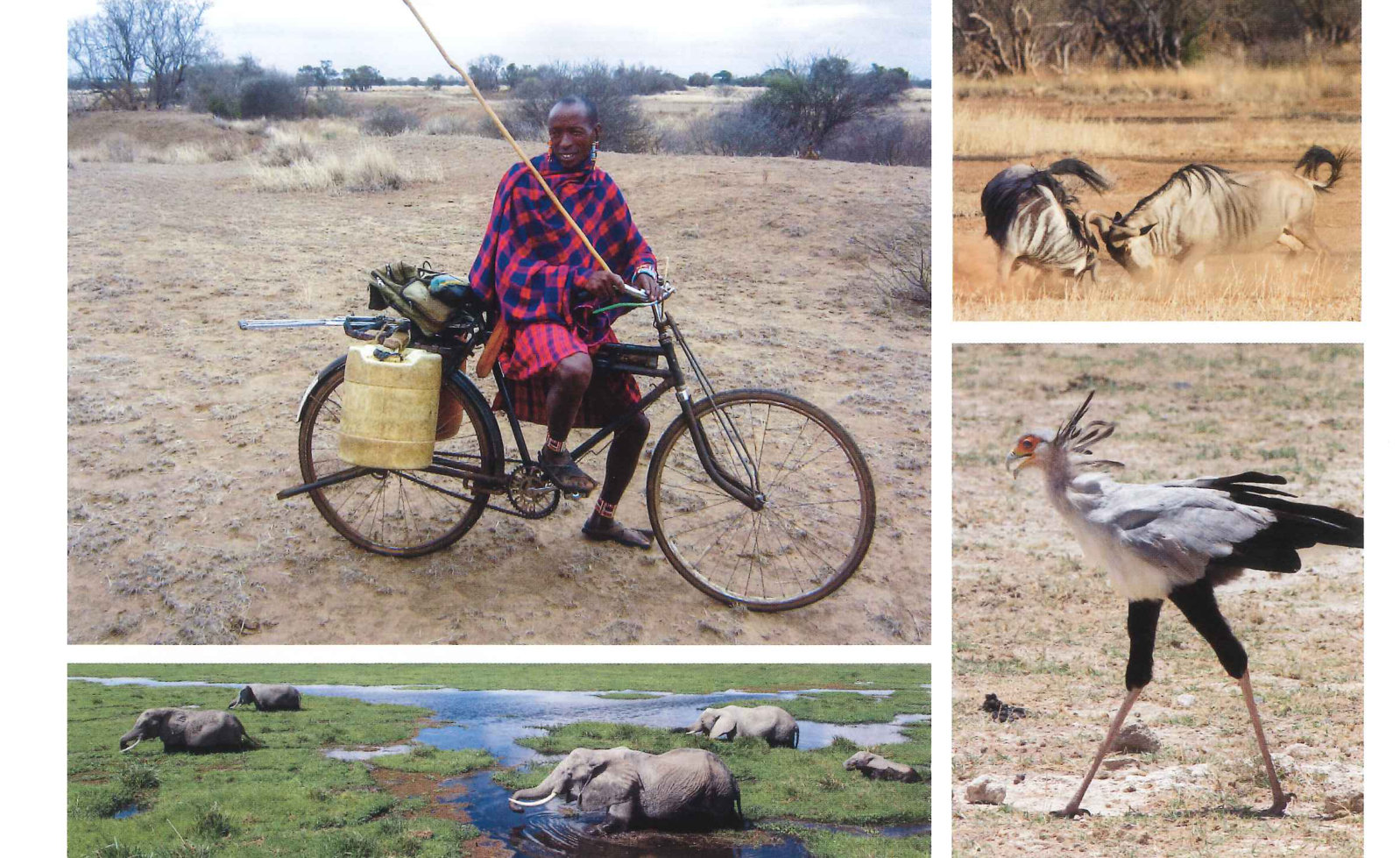
Beginning that first day and continuing for four evenings, we observed the “sundowner” ritual, ending a late-afternoon game drive around a campfire with refreshments, watching the sunset. Riding through the brush to our first sundowner, our daughters smiled as we surprised giraffes and gazelles just along the path, almost close enough to touch. But it was hearing the names of so many different animals that suddenly splashed wonder into my eyes. Jackson could rhyme off the different species and explain identifying marks: this one an impala, that one not just a gazelle, but a Thomson’s gazelle (because of the black stripe), over there a lesser kudu, and that one, eating from the tree on its hind legs, a gerenuk. What interesting names! Unfortunately, we never got a good look at the elusive dik-dik, although we heard Jackson call out that name several times during the week.
Farther along that first evening, wildebeest sparred on the plains. The sky was breathtaking. We stopped to take in the classic view of giraffe and “Kili”, as Jackson called the famous Mount Kilimanjaro. Our four cameras snapped away. We could see the shrinking remains of the glacier, looking like a small white hat atop the peak. Amid the drought conditions around us, that white sliver made climate change suddenly seem very real.
Once the sun was down, however, the breeze became much cooler, and it was time for dinner. With a second Maasai, a “spotter”, joining us and taking up a perch in a seat on the front of the truck, we drove back to the camp.
Dinner was served late, by dim lantern-light, but we were glad to eat. After dark, Maasai guards were required to escort us to our tents to protect us from the dangerous local wildlife, but there were no big cats or other predators spotted around the camp during our stay. I admit to being slightly disappointed: I was expecting to regale friends and family with stories of how brave we had been, hearing lions growling outside our tent. Alas, if lions were present, they kept silent and I have no such stories.
On the way back to the tent our second evening, though, we were surprised when the Maasai’s lantern revealed a black carpet stretched across the canvas lip in front of the tent. The “carpet” turned out to be a column of safari ants. To our relief, they skirted the outside and marched away from our tent. I got my camera out just as the last ants were turning the corner. After that experience, I had new respect for how close we were to the wildlife, and had no desire to hear big cats outside at night.
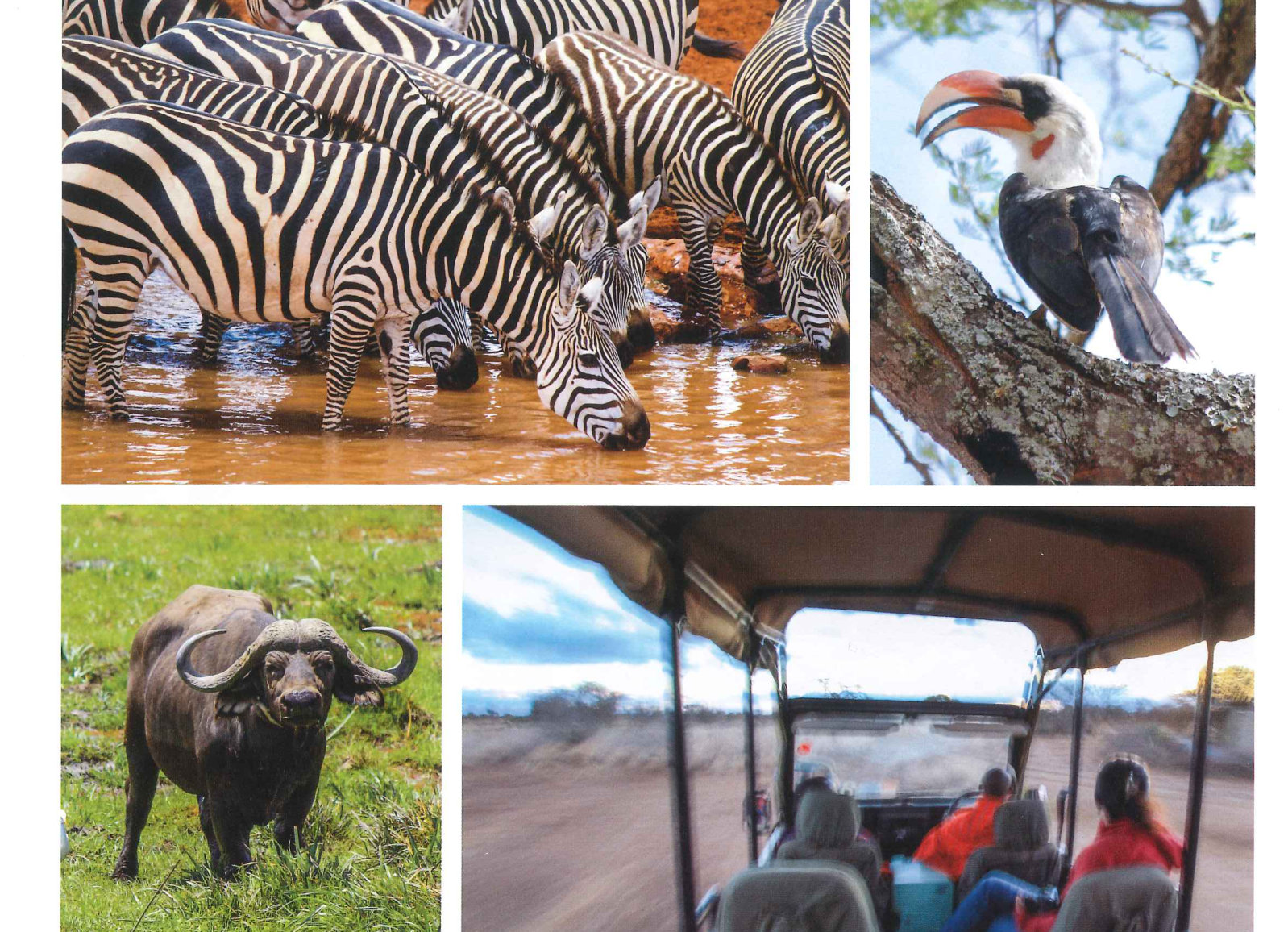
Mornings on our safari began with freshly brewed Kenyan coffee just before dawn, in time for a pre-breakfast game drive, an ideal time for birding. I was not a birder before the safari; since the trip I am. Jackson had us identifying bird species from the first day, and before long we could spot and name different types of hornbills, weavers and bustards, as well as eagles and secretary birds. Even the ubiquitous white-bellied go-away birds surrounding the camp and the helmeted guinea fowl scurrying throughout the brush became interesting.
On our final morning, Jackson and another guide took us on a game walk around the camp where local Maasai villagers walk and cycle. Not 500 metres from our tent we were observed by grazing giraffes that the our guides had tracked for us. The giraffes seemed calm and curious, but we found reminders of the dangerous wilderness, including fresh elephant droppings and a week-old leopard kill, the carcass of a small impala, still hanging from a tree branch. We learned that a watering hole close to the camp drew elephants and giraffes later in the day, when it was hotter and luckily when we were no longer on foot.
For most of the safari we stayed inside the conservancy, but on the third day we also ventured into Amboseli National Park proper, in the hope of seeing elephants. We were not disappointed. Just past the gate at around 9 a.m., in a cloud of dust in the distance a matriarch and her herd appeared, lumbering toward us. We parked; they crossed our path less than 20 metres away. Although they appeared at first to take no notice, two straggling bulls, whom the guide said had been fighting, ambled up to the truck, turning and flaring their ears at us menacingly. We reversed the Land Rover to a safe distance and waited for them to pass, which they did. Within 20 minutes of the dust cloud appearing, all the elephants had come and gone.
Elephants are numerous but the Amboseli plain boasts both grasslands and a lush swamp that in daylight hosts various grazing animals, including buffalo. The swamp was brilliant green despite the persistent drought. Egrets and other water birds tagged along near the big game, herds of which were often grazing together. Even more than the hippo or elephants, and certainly more than the big cats, the buffalo inspired fear in our Maasai guides, who would never get too close. Personally, I will not forget the eerie crunching sound of wildebeest bones in the jaws of hyenas just a few metres away from my seat.
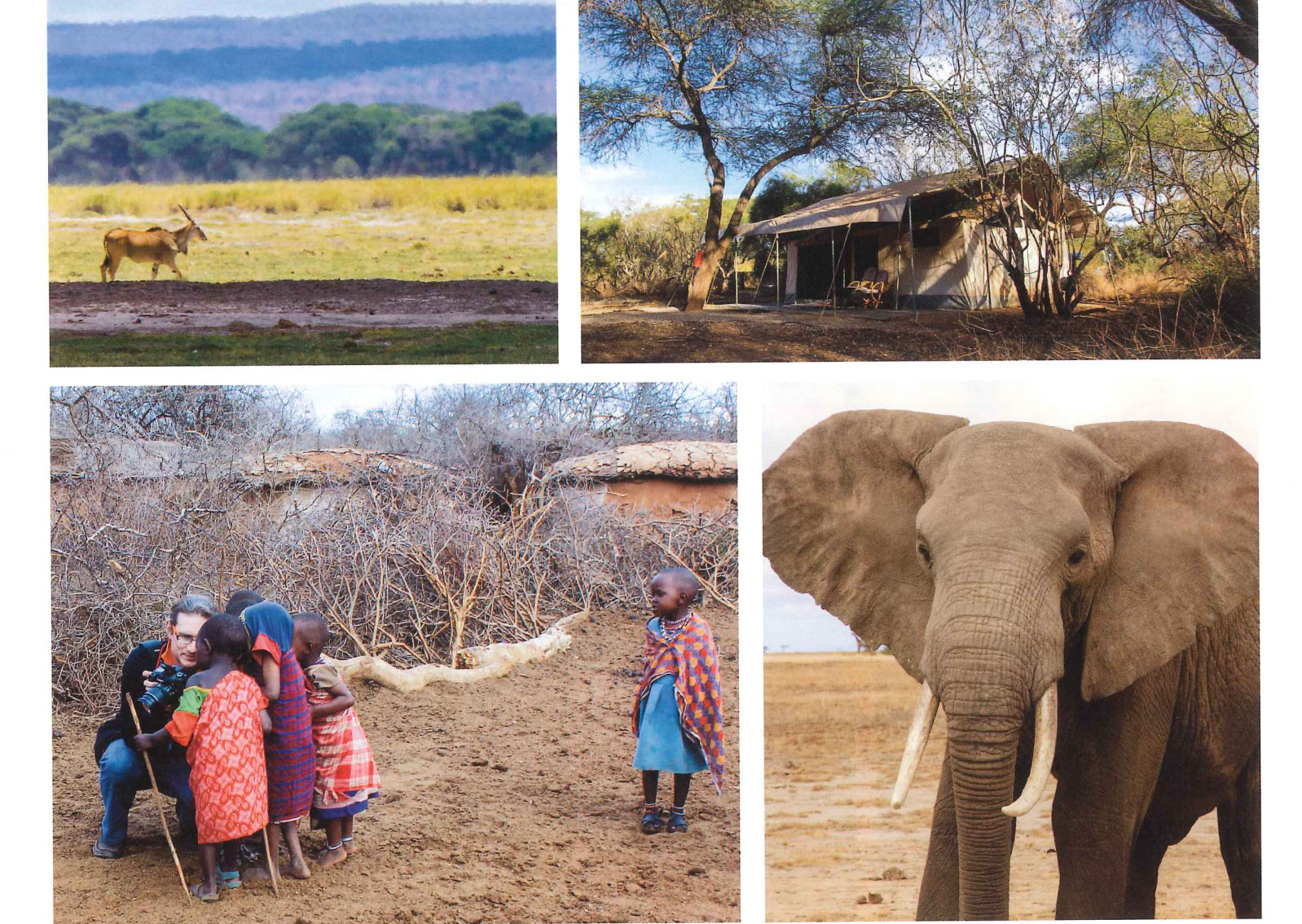
On our final full afternoon we visited the nearby Maasai village. It was their genuine home, but kept somewhat manicured and ready for tourists, who are expected to buy handicrafts back at the camp. The locals welcomed us; the children were very cute and showed much interest in our cameras. They were generous with their time, permitting us to take photos of their rituals and their traditional mud houses. Although every family had at least one mobile phone, and clearly they were used to seeing modern technology, there was no running water, and no electricity in the village. I wondered afterward what kind of life these children would have in another 15 or 20 years.
As we left the camp and began the six-hour drive back to Nairobi, our girls fell asleep in the back seat, tired but content. Keiko reflected aloud that she felt we were lucky to have been able to share the safari as a family, to see our kids excited again by the natural world as they had been when they were very young. I agreed: I had felt a similar exhilaration and simple happiness being outdoors, and I feel it again whenever I look back at our photos from that special week. Thanks to Jackson and our other guides, I had renewed my appreciation for the complexity of the African wilderness. I had become fascinated with different species of birds and animals, their daily rhythms and behaviours.
Yet I found myself feeling conflicted, which often happens when I travel in developing countries. The safari had been full of new names and insights courtesy of the Maasai. I hoped on the one hand that their children, so fascinated by our cameras, would soon have access to education and modern technology, and first of all to basic clean running water and electricity. Of course, since their parents already had mobile phones, the children would probably soon have access to their own cameras. Computers and Safari-type software would not be far behind. But the standard of life we experienced in the tented camp was still far different from that in the village.
At the same time, I also wondered if those children would stay connected to the land to become expert naturalists like our guides. Could they develop their communities, and still maintain a solid and enduring connection to nature? I hoped so. I hoped that they would not let the word “safari” become a cliché, and leave their homes only to drive SUVs on the freeway. I hoped that they would take the next step in developing their communities, and still help others like me to restore a sense of wonder, to take their own “long overland journey”.
Since joining the Foreign Service in 1992, Bruce Grundison has served in Kingston, Beijing, Ankara, Ho Chi Minh City, New Delhi and CIC headquarters in Ottawa. He is currently Minister-Counsellor (Immigration) in Nairobi. He and his wife, Keiko, have two daughters.
View the original scanned pages / Voir les pages numérisées →
Originally published in / Publié à l’origine dans bout de papier, Vol. 26, No. 4 (2012) — Summer 2012 // Été 2012, pp. 15–18. Read the rest of this issue / Lire le reste de ce numéro →



