
bout de papier, Vol. 26, No. 4 (2012) — Summer 2012 // Été 2012, pp. 5–9
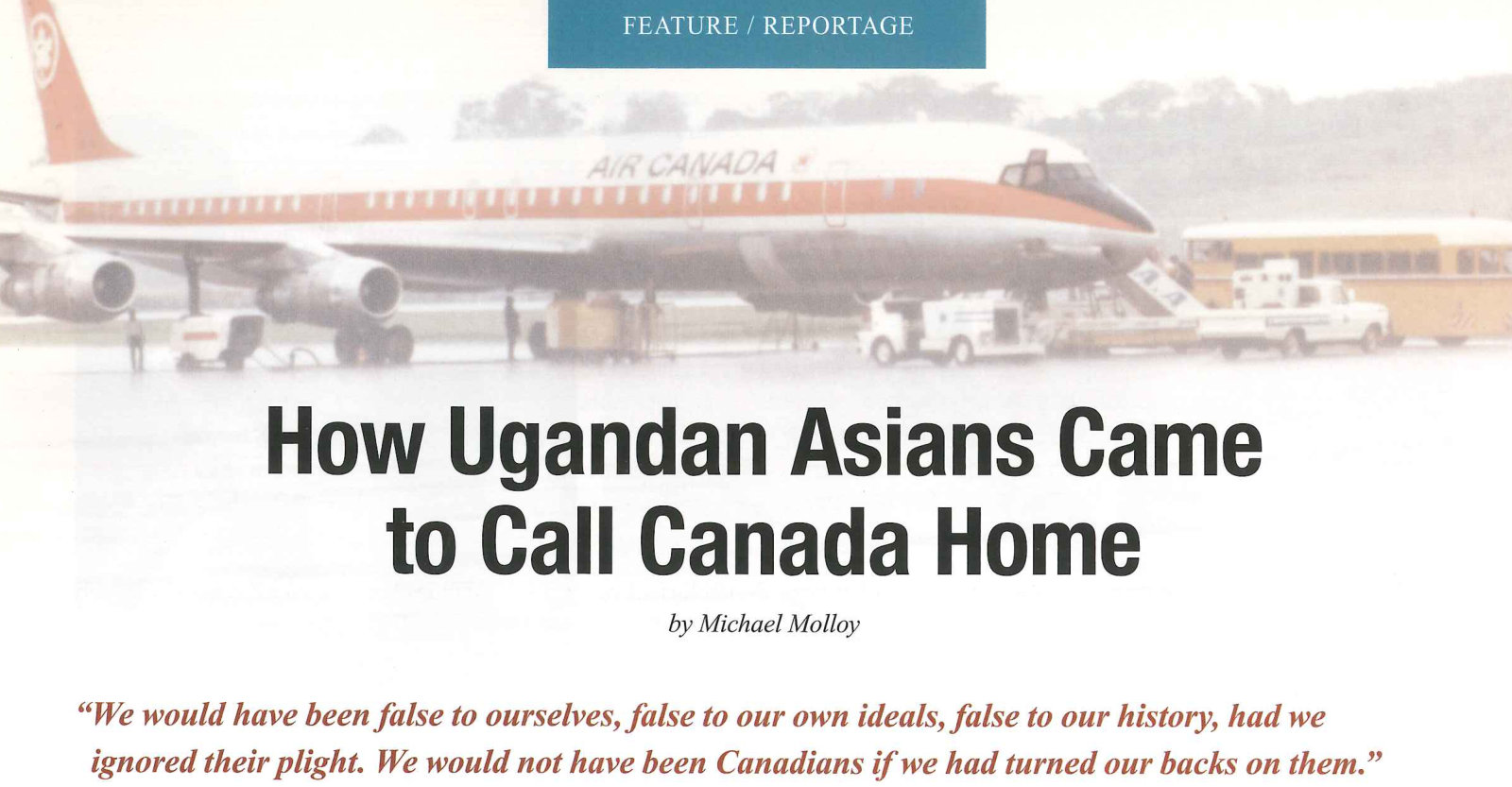
Roger Saint-Vincent, Attaché, Manpower and Immigration (M&I) at the Canadian Embassy in Beirut, oversaw Canadian immigration activities from Iran to East Africa, and Zambia to Mauritius. On 24 August 1972, he received a Mission Impossible directive from Immigration HQ in Ottawa.
You are not unaware of General Amin’s decree to expel 80,000 Asians from Uganda…Your mission is to proceed to Kampala and by whatever means undertake to process without numerical limitation those Asians who meet the immigration selection criteria bearing in mind their particular plight and facilitate their departure for Canada. Your mission must be accomplished
by November 8…
Indians went to East Africa in the 19th century to build railroads (thousands died in the process); 7,000 stayed on and grew into British East Africa’s merchant class. They began to arrive in Uganda after World War I, where, prohibited from farming, they established cotton ginning and coffee processing industries. By the 1970s they numbered 80,000: Gujarati Hindus (50%), Ismaili Muslims (30%) and smaller communities of Sikhs, Goans and Punjabi Hindus. There was little intermarriage
Asians owned 80% of Uganda’s businesses, 50% of its industries and comprised 50% of its professionals. Many had British travel documents but no right of abode in the UK. Most Ismailis had Ugandan nationality, acquired on direction from the Agha Khan.
The Asian communities, prosperous and aloof, were a natural target for post-independence African regimes. Kenyan pressure in 1968 caused 15,000 to depart. When Tanzania nationalized the import-export and wholesale sectors, 20,000 Asians left.
Ugandan President Milton Obote had carried out a long campaign against the Asian community. When he was overthrown by General Idi Amin Dada on 24 January 1971, the Asians hoped things would improve.
On August 5, 1972 Amin announced that 60,000 British Asians must leave within 90 days. Why the decision and why then? Idi Amin waged a war of nerves with the “British Empire”, expelled Israeli military and aid missions, cozied up to radical Arab governments and alienated his African neighbours. He revelled in notoriety. Still, the announcement took his Cabinet by surprise and he himself claimed that his words had come from God. Some put the blame on his failed attempt to acquire an Asian wife.
The UK, facing a dismal economy and racial unrest, acknowledged its responsibilities to Asian UK travel document holders and appealed for assistance.
On 24 August 1972 the Trudeau Cabinet considered the British appeal. Cabinet walked a fine line between responding internationally and reassuring Canadians beset by high unemployment on the eve of an election. It decided to accept 3,000 expellees who met normal Immigration requirements and authorized Immigration Minister Bryce Mackasey to invoke the Oppressed Minority Policy if 3,000 qualified immigrants could not be found. Trudeau set the tone:
…We are prepared to offer an honourable place in Canadian life to those Ugandan Asians who come to Canada…| am sure that [they] will, by their abilities and industry, make an…important contribution to Canadian society.
Arriving in Nairobi on 28 August, Saint-Vincent met newly arrived Canadian High Commissioner William Olivier who dispatched two officers — Reg Smith (Political) and Phil Boyce (CIDA) to liaise with the Ugandans and a competent young clerk, John McNeish, to handle administration and pay the bills. In his memoir of the Ugandan Asian refugee operation Seven Crested Cranes, Saint-Vincent described disembarking at Uganda’s Entebbe Airport:
…a tourist pointed to a bevy of birds flying low. There were seven graceful crested cranes. ..flying in a perfect “V” formation. As they flew past and over the
control tower thought “this could be a lucky omen”.
A fighter pilot veteran of World War II and among the first immigration officers sent to Europe after the war, Saint-Vincent always kept a journal. I seldom saw him without one of those black, hard covered note books so beloved of Canadian civil servants, tucked under his arm the two months we were in Kampala. The memoir he composed based on that Journal is the most intimate and comprehensive account of a Canadian resettlement operation ever written and I have drawn heavily on it for this article.
In Kampala Saint-Vincent rented ground floor space with a shady portico in the IPS Building. He acquired telephone and telex lines, typewriters and minibuses, and persuaded a Sikh carpenter to produce 45 chairs and 10 tables in 48 hours.
The team assembled by 6 September. Jerry Campbell, one month into his first posting, arrived from London. Three young visa typists (Mary-Ellen Hemple, Ginette Leroux and Jolène Carrier) from M&I’s Central Processing Office (CPO) arrived from Ottawa with Jim McMaster, a clerk to manage the files, and Minister Mackasey’s political assistant, Zavie Levine. The initial medical team, Dr. Marcel Piche (Head) and Dr. Duncan arrived from NHW; Visa Officers Floyd Tufts and Jacques Drapeau, from M&I Rome and Athens. The furniture (solid teak) and I arrived on 5 September. A stunning Edmonton model visiting Kampala offered to help, our first volunteer.
With 60 days to move thousands of people we could not rely on the mail. McMaster produced a number stamping machine (packed on a whim) and suggested a number be stamped on the applications and on a slip to be given to the applicants. They would be told to come for interview when they saw their number in the newspaper. This became the backbone of a simple, secure, communications system.
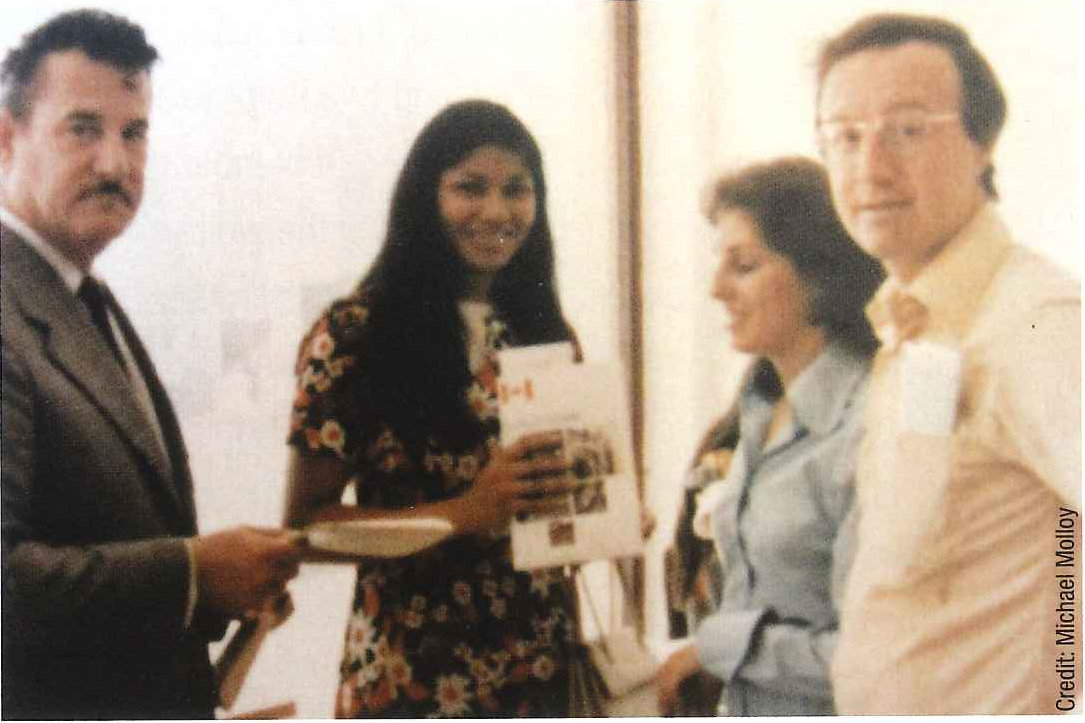
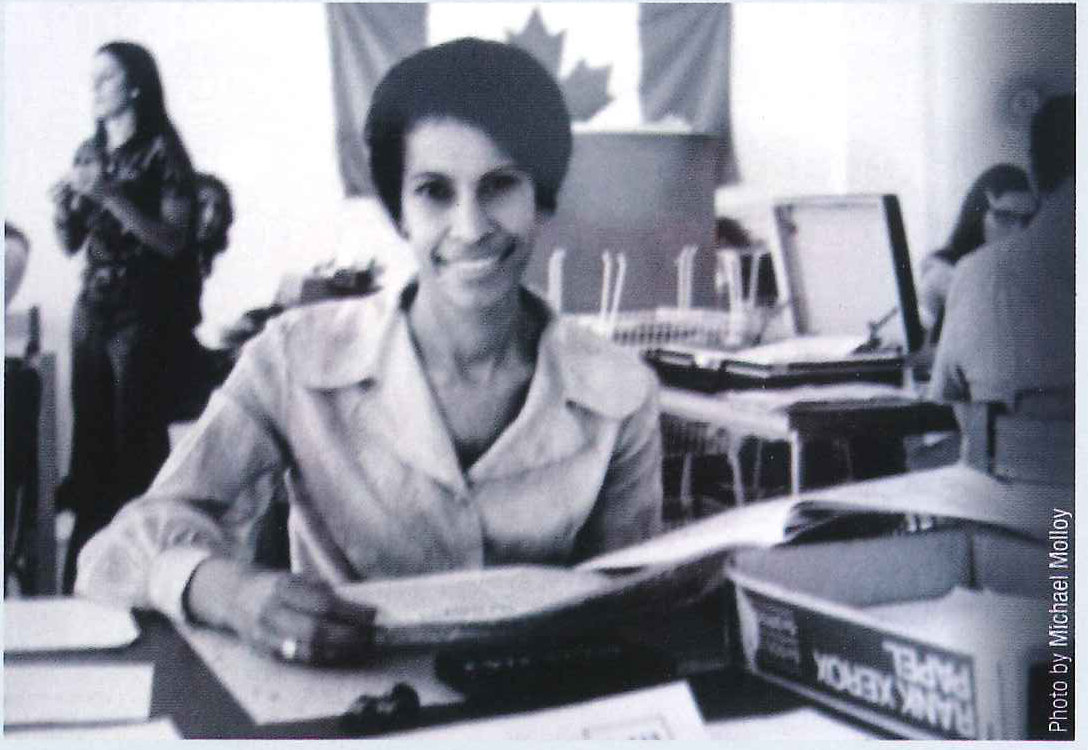
September 6 was Opening Day. A ten block queue ended at our front door. The three CPO secretaries and the model staffed the reception counter dispensing blank applications and stamping in the completed forms. These smiling young women established the Canadian brand, handing out 2,588 applications for 7,764 people that day.
The Selection Unit (Campbell, Tufts, Drapeau and myself) spent every spare minute screening the incoming applications. The file numbers for interview were sent off to the Uganda Argus.
On Day 4 the Agha Khan Gents Volunteer Corps installed 300 chairs so our clients could sit in shady comfort. Ottawa indicated an airlift would commence 19 or 20 September.
Statistics (3,736 applications/11,208 people by 12 September) were relayed to Ottawa nightly.
By 13 September Mackasey was back in Cabinet: the original decision to accept 3,000 had been overtaken by events. It seemed that 7,500 might meet normal criteria. We could not arbitrarily refuse people who qualified. The British press alleged that Canada was “creaming off” the best. The 3,000 target left no room for humanitarian cases. Mackasey wanted the limit on qualified applicants removed and for Canada to admit another 1,000 who did not meet the normal criteria.
He encountered resistance. Some Ministers argued that the government should treat the Ugandan Asians as a refugee movement (like the Hungarians and Czechs) so a clear limit could be set. Mackasey was reluctant to impose a quota. He thought the government should aim at taking 8,000 but would settle for less. Finally Cabinet instructed Mackasey to report if the number would exceed 6,000.
It is worth noting that Canada had just emerged from an era of race and ethnicity based immigration and we believed strongly in the new point system that was based on objective criteria. In Uganda we had a twofold mandate. First we were to take those who qualified under the point system and, second, we were to identify and accept people with no place to go. We took people from all the communities including, for example, 500 Goan families. Uganda’s Ismailis often fit our criteria best on both counts: they had good leadership, were well organized, tended to be better educated, and the Agha Khan had created a fund in Canada to help with business start ups. These factors impacted directly or indirectly on the point system. At the same time they were also very much at risk: many had taken out Ugandan citizenship which was revoked by Uganda’s capricious dictator.
By now we had accepted nearly 1,000 people but none had been visaed: no visa without medical clearance, no medical clearance without physical examination and no physical without X-ray and medical lab tests.
Happily, on the 13th, the Canadian Forces Mobile Unit arrived — seven medical technicians, eight tons of equipment! The techs set up in a tent which the Ugandan sun heated to over 100 degrees: you can’t do blood tests (or much else) in that temperature. McNeish was dispatched for fans, air conditioners and an additional X-Ray dryer. The unit was highly skilled and motivated but it was late: the consequences reverberated through the next weeks. The first charter had to be cancelled.
Then followers of deposed President Milton Obote invaded from Tanzania: life became dangerous. We closed on 21 September when soldiers in armoured vehicles trained their guns on us, laughed at our reaction and roared off. The Ugandan Army crushed the insurgents in a week but rampaging Ugandan soldiers remained a menace.
Additional doctors and immigration officers arrived. We set up the Visa Transportation Unit (VTU) to produce visas, book people on charters and transport them to Entebbe airport. This critical operation was entrusted to Gerry Campbell, who, counting his month in London, now had six weeks’ operational experience. The CPO secretaries shifted from the counter to the VTU and pounded out visas bearing program identifier UGX.
The Ugandan government tried to extort a 20% kickback on the Asians’ transportation loans; Trudeau announced (26 September) that Canada, not the Asians, would pay for the airlift.
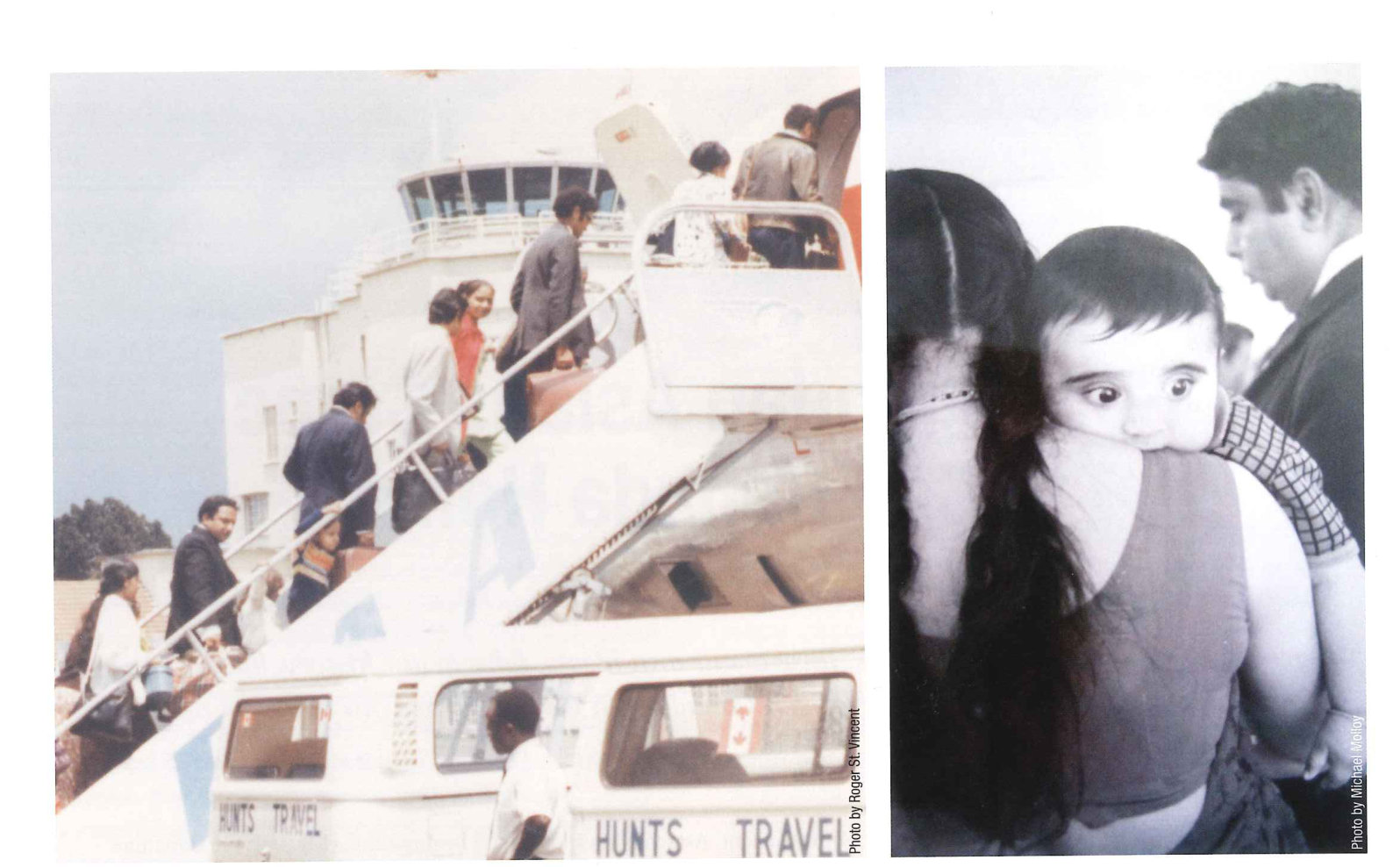
AC Charter #1 left on 27 September with 138 of 145 seats filled. Passengers assembled in our hotel parking lot. High Commissioner Olivier led the convoy to Entebbe Airport. Getting the passengers through the chaotic airport and onto the DC8 took steady nerves and determination, making Swahili-speaking John McNeish a key member of the airport team.
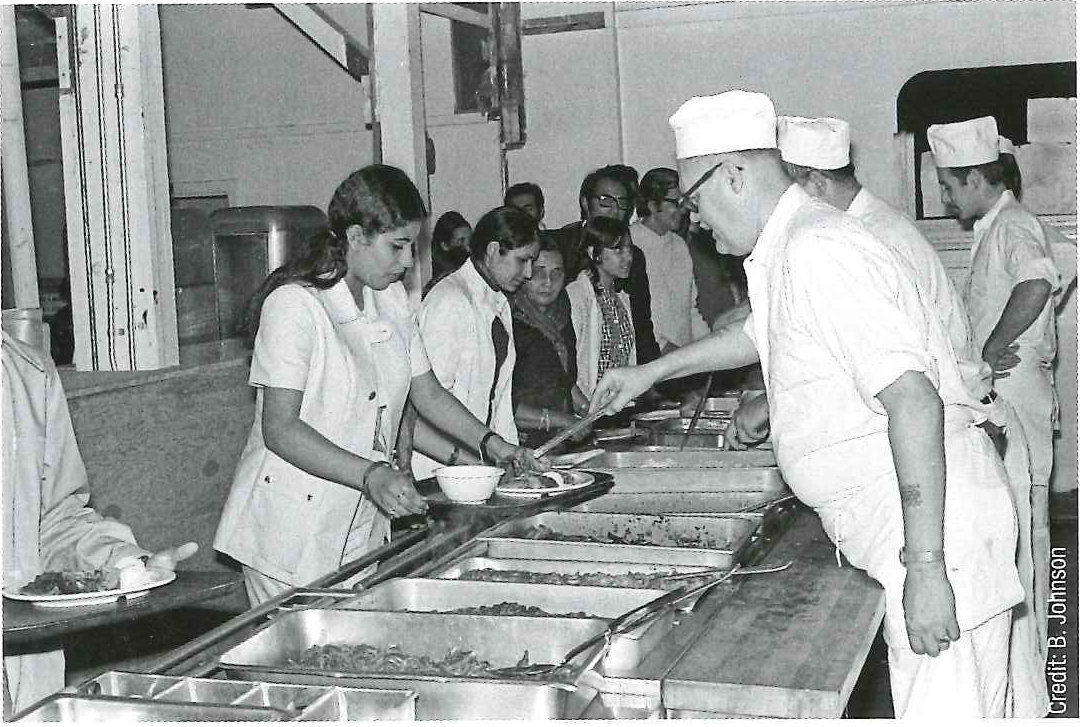
Charter #1 arrived at Dorval at 6:20 a.m. 28 September. The media was impressed by the Asians’ fluent English and dapper dress. The tired but “cheery” passengers were welcomed by Minister Mackasey (distributing plastic Mounties and Ookpiks to the 43 children) before being bused to CFB Longue Pointe for cupcakes, tea and bed. That afternoon army cooks served up Indian food while M&I counsellors and NGO reps provided warm clothing and information on destinations and jobs.
Charter #1’s arrival coincided with the final game of the historic Canada-Russia Summit Series. The Saujani family of Hamilton recounts:
_..we were going through the immigration process. There were nine Black and White and two Color televisions, showing ice hockey. There were a number of army and civilian personnel. Suddenly all the white personnel started dancing, hugging and kissing each other and some to us Ugandans. We were like zombies. “He shoots, He Scores”. After many years, for the first
time, Canadians beat Russians at our own game.
The lag in medical processing still bedevilled our productivity: charters #2 and #3 departed with just 60 and 48 souls respectively. Our Ottawa masters were apoplectic. But the situation improved rapidly: the medical team steadily expanded the inventory of people ready to travel. The expulsion deadline was fast approaching. Word spread of how well people were treated by the Canadian Forces at Longue Pointe. Offers of assistance from Canada poured in.
In late September the Ugandan government ordered Asians with Ugandan citizenship to have their status verified: the army confiscated the documents. One of our Asian volunteers, Nancy Di Grigorio, an Olympic athlete, was shattered to find she was no longer a Ugandan citizen. Ottawa immediately instructed us to screen-in the now stateless Asian Ugandan citizens.
The 6 October Charter #5 with 145 passengers demonstrated we were on target. The plane had arrived with three more crack CPO secretaries and the legendary Moe Benoit to work the reception counter as traffic at the counter was increasingly complex.
Over the Ugandan National Day weekend (7-9 October) we reviewed the 6,000 files initially screened-out and decided to interview 2,000, 145 interviews a day, taking us to 31 October.
The final weeks were exhilarating: seven charters in six days the week of the 22nd; ten charters the week of the 29th. Most of the team, including the hardworking medical techs and CPO team left on November 3rd.
Roger Saint-Vincent describes the final departure on 8 November in Seven Crested Cranes.
There were close to 1,000 Asians waiting to depart with charter aircraft from Sabena, BOAC, Alitalia, British Caledonian, and Air India. Bar none, the most impressive sight on the Tarmac was the Air Canada stretch DC8 with its maple leaf logo.
Saint-Vincent left for Beirut that day. Moe Benoit and I departed the next, him to Ottawa, me to Nairobi to process Ugandans stranded there.
In sixty days we screened 8,065 applications representing 23,392 people. Of these 4,172 applications were screened out because they did not meet the point criteria AND, more importantly, they had somewhere else to go. We conducted 3,893 interviews. Visas were issued to 6,262 people of whom 4,420 departed on the chartered airlift.
Coming a decade after Canada’s immigration racial barriers came down, the Uganda Asians were our first significant humanitarian movement from a non-European source. They set a stellar example. Trudeau’s prediction: “those from Uganda, will, by their abilities and industry, make an…important contribution to Canadian society” was remarkably apt.
The impact on Canadian refugee policy was subtle but profound. The refugee resettlement system defined in the 1976 Immigration Act including selection criteria, definitions and the sponsorship programs bore the stamp of the Uganda experience. Lessons learned in Kampala shaped our response to the challenge of 60,000 boat people eight years later.
But that’s another story.
A Little Theatre, a Lot of Good
One morning in the middle of October when we were going flat out, Moe Benoit, who ran the reception counter, interrupted an interview and said, “Mike there is someone you need to see right now!” noticed his usually ruddy face was rather pale and agreed he could bring whoever it was. passed the man just accepted to a colleague to finish the formalities and there Moe was again accompanied by a very large, smartly turned out Ugandan police sergeant with a Sten gun in one hand and a chain in the other.
Attached to the chain was a slight, scruffy, unshaven and malodorous Asian man. The man croaked “You called my number” and handed me a battered piece of grey official British stationery with our four digit case number stamped neatly on the right corner. The sergeant was polite but refused to take the cuffs off so I got them to sit down — Asian in front, policeman behind.
The man then told me that his wife held Kenyan citizenship and a week before they had decided she would join her family in Nairobi given the deteriorating situation. At the border the Ugandan authorities had seized her jewelry and let her leave, but arrested him for smuggling and sent him to the notorious Kampala prison. His family had been unable to get him out until his number appeared in the Uganda Argus newspaper that morning. His relatives rushed to the jail newspaper in hand. They had convinced the Warden to produce the man and when the number in the newspaper and the number on the tax clearance form he had somehow managed to retain were found to match, the Warden agreed that he would be taken to our office.
There was no way this guy was going to be refused but certain forms had to be observed. Education 10 points; auto mechanic 15 and skill 7; under 45 years 10 points; English, not bad 4, an aunty in BC 5 (plus 4 for going to the Vancouver area) and as for personal assessment he’d taken a big risk to get his wife out of harm’s way — 10 points. 61 points! He’d have made it without the policeman.
Our normally noisy facility was very quiet, though there was an uneasy stir each time the policeman shifted that awkward machine gun around. I explained about the need for a medical and the three of us strolled nonchalantly over to see Dr. Piche who happened to be free and agreed do the examination himself. No, the chains could not come off, so the Doctor and the man ducked behind the curtain while the sergeant and I chatted about his war service in Burma.
Piche, a stickler for the rules, re-appeared and announced the man had passed his medical. He did not mention, and I didn’t ask, about the X-ray and Lab tests. At that juncture, Roger Staint- Vincent, in his habitual rather military cut safari suit and with the nonchalant authority of an RCAF fighter pilot, strode up. The sergeant imperceptibly came to attention. In an officer-like voice Roger instructed the sergeant that the man was to be at Entebbe for the flight to Canada at 7:00 a.m. sharp the next day. The sergeant actually saluted and in the awkward pause that followed (as Roger turned on his heel and strode away) Dr. Piche won my eternal gratitude by offering the sergeant and his family a free medical exam if all went well. We parted as friends.
The following morning as Roger stood by the door of the DC8 a couple of police cars rolled up and the sergeant, the chain and the man got out. Roger intercepted them at the top of the stairs and ordered the handcuff removed. The man slipped into the plane and when the sergeant moved to follow (he just wanted to look), Roger told him that this was Canadian territory and politely escorted him down the stairs and back to the car.
The next morning at 9:30 the sergeant, in mufti, arrived with his tall fine looking wife and six neatly dressed children. They were ushered to the medical section with some ceremony, divided among the doctors, thoroughly examined, fed tea and biscuits, given some basic medicaments and an elaborate certificate of good health signed by Dr. Marcel Piche, Chief Medical Service, Canadian Team, Kampala.
Michael Molloy is a retired Foreign Service officer (CIC and DFAIT). Much of his career involved refugee policy and operations: in the 1972 Ugandan Asian crisis he served as 2-i-c and Head of the Selection Unit and in 1979-80 he coordinated the resettlement of 60,000 Indochinese refugees. Ambassador to Jordan (1996-2000) and Peace Process Coordinator until 2003. He is Sr. Fellow at the University of Ottawa’s Graduate School of Public and International Affairs. He is also President of the Canadian Immigration Historical Society which has launched a new website: www.cihs-shic.ca.
View the original scanned pages →
Originally published in bout de papier, Vol. 26, No. 4 (2012) — Summer 2012 // Été 2012, pp. 5–9. Read the rest of this issue →



