
bout de papier, Vol. 28, No. 2 (2014) — Summer 2014 // Été 2014, p. 27
SO MUCH FOR DEMOCRACY,
Orca Book Publishers, Victoria BC,
Canada, and Custer, WA, U.S.A, 2014,
184 pp., $9.95.
In Kari Jones’ latest book for young adults she draws on the experience of a foreign service posting in Ghana with her family at the end of the 1970s, a period which coincided with the first coup by J.J. Rawlings. This should be an unusual but absorbing narrative for young people who have spent most of their lives in Canada and a subject of particular interest to foreign service families.
The book is set in what, for contemporary young adults, is the remote past — before the internet and social media when the Bee Gees and Blondie were popular bands! Many of the issues are universal ones, played out against a dramatic backdrop. The father of the family at the centre of this book is in Ghana for the purpose of observing a scheduled election, rather than for a diplomatic assignment. From the first chapter Jones introduces the principal characters as well as setting the scene. While the themes are particular to that location and period, they have common elements with many overseas assignments.
An adult reader will be aware early on that the family is dealing, in different ways and to different degrees, with culture shock.
The mother of the protagonist, 12-year-old Astrid, is anxious about health and security issues. She imposes unfamiliar restrictions on Astrid and her younger siblings. Other anxieties are provoked by armed soldiers and road blocks throughout the city and potentially dangerous creatures in the garden. As well, the family’s three children have to deal with the high degree of visibility entailed in being blond in an African city. The story is also driven by the more universal themes of adaptation to a new environment, making new friends, and learning to deal with a heightened awareness of the opposite sex.
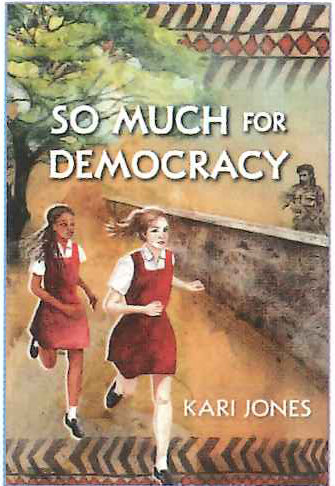
An adult reader will be aware early on that the family is dealing, in different ways and to different degrees, with culture shock. What at first is a sulky refusal to understand this by Astrid develops over the course of the book to a more nuanced and more mature understanding of the lives of the people around her, including those of the adults, and it is interesting to get an adolescent’s perspective on the issue. The themes are handled delicately and sensitively. In particular, Astrid’s relationship with Thomas, the gardener, is beautifully drawn and leads her to understanding the much greater constraints to freedom of action on the part of the Ghanaian characters than are imposed on her family.
The book evokes Accra very vividly: the Harmattan winds from the Sahara, the colour of the earth in the schoolyard, the greater formality of relations between pupils and teachers, the diversity of a typical classroom, the sights and sounds of the market. It also evokes the unpredictable atmosphere of danger surrounding an armed coup. The tension in which the adults attempt to make sense of what is happening transmits itself to the children and is highlighted in a frightening confrontation. How the adult and child characters handle this provides the dramatic climax of the book.
The book is highly recommended for young adult readers and, in the case of foreign service families, for the parents as well. It will be a useful corrective to adults who think they can successfully conceal their own adaptation issues from their children!
Kate Preston accompanied her husband and two young children to a posting in Accra in 1980-82, an assignment which coincided with the second Rawlings coup. The family also had assignments in Indonesia, Australia, Bangladesh and Poland.
View the original scanned pages →
Originally published in bout de papier, Vol. 28, No. 2 (2014) — Summer 2014 // Été 2014, p. 27. Read the rest of this issue →


