
bout de papier, Vol. 30, No. 3 (2018), pp. 18–21
\ity knocked to help shape this fledgling Northern organtzation nped at it. I leveraged my FS skills and experience.
business of diplomacy enabled me to tap into the network of ; to help the organization establish international partnerships. rking at Canada’s embassies abroad also allowed me to derstand and handle sensitivities around relocation, housing an isolated location that presented significant cultural and 2S.
First Impressions
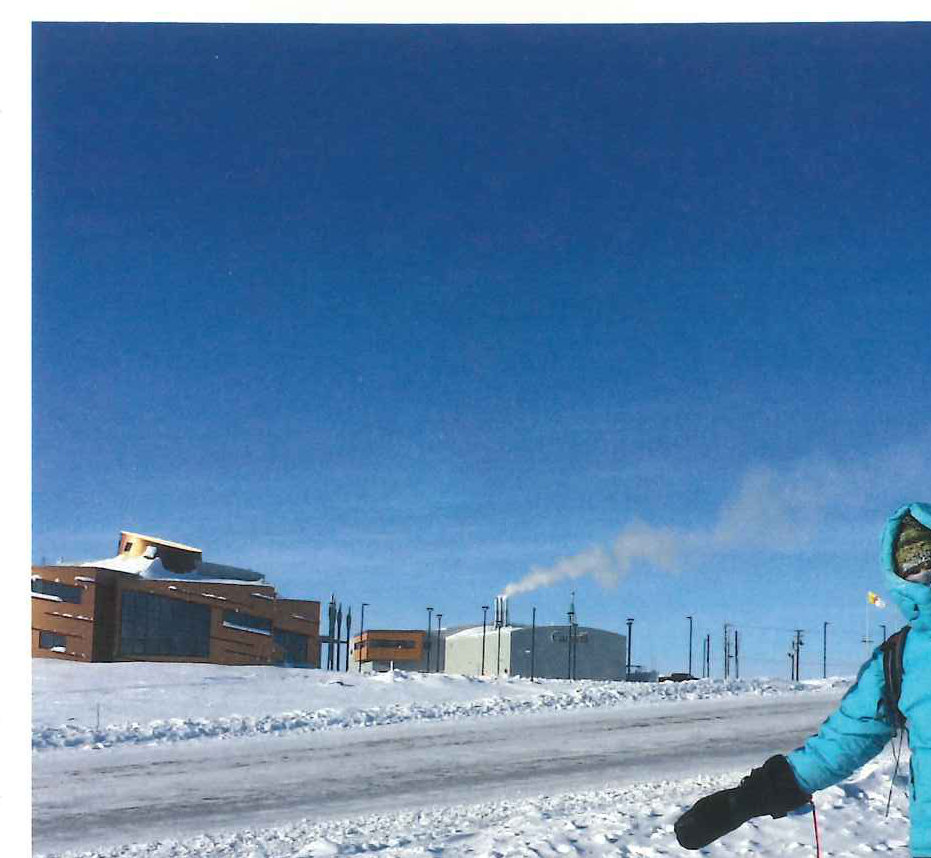
DURING MY FIRST VISIT TO CAMBRIDGE BAY in February 2015, I was immediately struck by the discomfort of -53° Celsius and the intensity of the wind when there are no trees to shield you. I was also intrigued by some uniquely Northern practices. These include a daily lunch bell that signals to EVERYONE in the community of 1700 that it is time to go home for lunch; a nightly siren that goes off at 10 p.m. to remind young people to go home; and a deeply instilled “sock culture”, that sees socks worn without shoes in all places of work, always.
The cost of groceries is also striking: $24.99 for four litres of Sunny D juice and $7.49 for a head of not-so-crisp lettuce. With food coming in by air or sea lift, prices are high and options can be sparse. That said, the North offers culinary delights not found in the rest of Canada — local delicacies such as Arctic char candy, Arctic char chowder, and the most delightful bannock I have ever tasted.
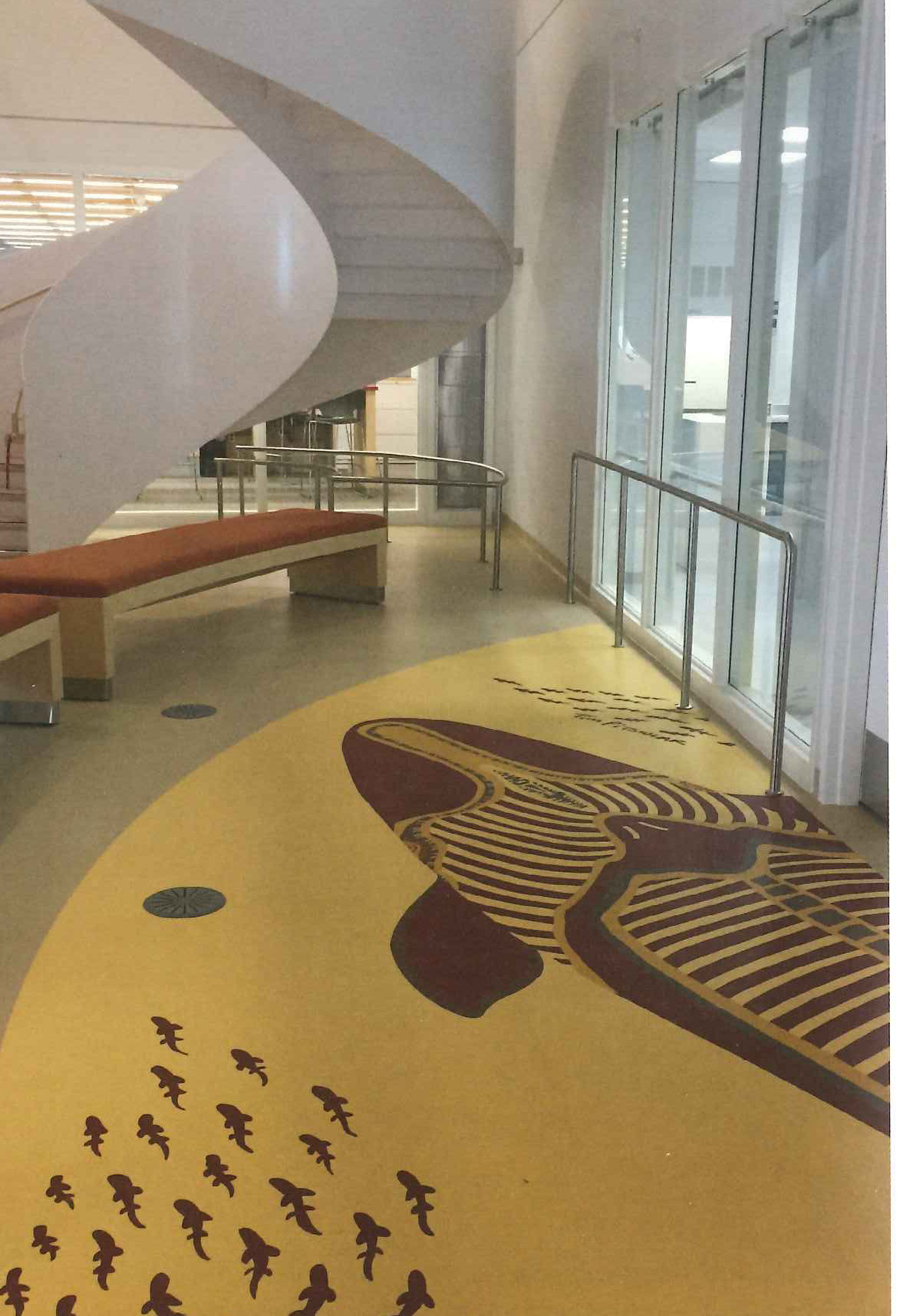
Construction of the CHARS began in 2014 and all involved in the project have worked hard to ensure that Indigenous knowledge is central to all activities. This includes everything from ensuring that projects and partnerships support science that addresses local concerns, to hiring qualified Indigenous staff and incorporating Indigenous knowledge into the art and design of the station.
A Striking Campus
Cambridge Bay, Nunavut, is a fly-in community of approximately 1700 people and the administrative centre of the Kitikmeot region. The specific site of the facility was selected for several reasons, including the potential for community integration in activities. It is near a range of largely undisturbed tundra, wetland and freshwater ecosystems, which offer significant potential for monitoring and research demonstration projects.
The main research building, the largest of the campus, measures approximately half the size of the exhibition space at the National Gallery of Canada in Ottawa. The stereotypical image of an igloo inspired the Canadian architectural designers at ECOQ Architecture and NFOE et associés, who applied a symbolic spiral shape to the structure’s cladding as well as the interior dome.
Copper-toned accents, integrated into the design throughout the building, pay tribute to the Copper Inuit, who are the ancestors of current Inuit in Cambridge Bay. They were known for mastering copper to make tools such as ulus and harpoons.
The main building includes large spaces accessible to the public, such as the Knowledge Sharing Centre. Sitting in the heart of the station and bathed in natural light, this space is intended to bridge different forms of knowledge, by inviting the meeting of Inuit and scientists, as well as community members, young and old, to discuss ideas of local, regional and global significance.
Beyond the public areas, there are various lab spaces (including a necropsy lab, where large animal corpses can be examined and dissected) and a mechanical workshop.
Outside the building stands an iconic structure, reminiscent of a set of organ pipes erected in the shape of a maple leaf. From above, LED lights shine through, reminding that one is in Canada’s Arctic territory.
Science Diplomacy
Science is an underutilized tool of international diplomacy.
Science, technology and innovation are natural areas for state-to-state collaboration to address global challenges. These can be used to build confidence among established and emerging players.
Canada is a medium-sized power in many multilateral fora, but when it comes to the Arctic, we are heavy hitters. On issues such as future transport routes or resource development, many are looking to Canada’s Arctic. The same can be said of countries wanting to conduct research, test new technologies and share data on climate change. Indeed, international scientists are increasingly looking to Canada as a place to conduct research.
Canada shares the Arctic region with the US and Russia, as well as the Nordics (Norway, Finland, Denmark, Sweden and Iceland). Although Canada occupies 25 percent of the Arctic, it does not possess 25 percent of the capacity to study the Arctic. It can therefore benefit from international partnerships.
Non-Arctic states such as Korea and Japan have made Arctic science and research a cornerstone of their Arctic policies, while long-standing European players in the Arctic such as the UK, France, Germany, and the EU continue to ramp up their capabilities and seek enhanced partnerships in the Arctic.
Others, such as India, New Zealand, Australia, Chile and Argentina have significant Antarctic capacity. Lessons can be learned, technologies tested, and exchanges of both personnel and infrastructure can take advantage of the alternating summer field seasons.
A number of countries have already established partnerships with POLAR at the CHARS campus. Japanese and Korean scientists, for example, have visited Cambridge Bay and are working closely with Canadian scientists to collect data, test instruments, and share results with the community.
POLAR is also making efforts to support the next generation of scientists. It recently launched Early Career Researcher Exchange Programs with Iceland, Sweden, Finland and Denmark to bring young international researchers to Canada’s Arctic.
Benefiting from Indigenous Knowledge
A benefit of these partnerships and exchanges is the opportunity for Canada to educate international researchers on the importance of respectfully integrating Indigenous knowledge into science.
The CHARS is uniquely situated within a community rich with information on how Arctic ecosystems are changing, and perspectives on how these changes impact both wildlife and human communities. For example, the Inuit at Cambridge Bay have monitored sea and ice for generations. When combined with remote sensing data, this Inuit knowledge generates better real-time information on sea-ice conditions. The improved data translates into increased safety in the Arctic, particularly as it relates to marine traffic, which is growing.
Being a permanent part of a Northern community provides opportunities to create new conversations that include perspectives of Inuit Elders, youth, and community members, and to exchange ideas with other visitors to the campus. The facility is staffed year-round by professionals who help to build and maintain these local connections. By contrast, most polar research stations of the world are built in remote areas with no local populations (e.g., Svalbard in Norway and Antarctic stations).
POLAR fosters an environment where more Northerners are involved in research at all levels — identifying the priorities, asking the questions, developing and doing research projects, collaborating with scientists from around the world — and finding the answers they need.
Developing Local Capacity Polar Knowledge Canada currently has over 20 employees located permanently in Cambridge Bay: scientists, administrative support, and policy analysts from all parts of Canada.
The vision for the future of this federal agency is that it be staffed predominantly by Northerners. Achieving this requires increased interest among Northern children and youth towards careers in science and technology. POLAR works towards making science accessible through science camps, public talks, school tours through the station and other creative ways to develop skills needed to prepare young people.
Listening to researchers and seeing elders share their knowledge can inspire today’s Indigenous youth and allow them to become tomorrow’s leaders, by demonstrating to them that Indigenous knowledge is valuable. The inclusion of Indigenous knowledge in science can result in international researchers returning home with a new respect for the people who live and make their home in the North.
Few have the opportunity to see Canada’s Arctic or to understand its history and the dynamics of the region today. My visits to the Arctic — first as a diplomat, later with POLAR — have taught me many things about history, Arctic geopolitics, Indigenous relations, sovereignty and relations between Arctic and non-Arctic states. However, most importantly, they have given me a deeper appreciation for the people who live in Canada’s northern communities and for those who will influence and shape its future.
Polar Knowledge Canada is a federal agency that advances knowledge of the polar regions and strengthens Canadian leadership in polar science and technology. Created in 2015, its mission is to generate new knowledge to improve the economic opportunities, environmental stewardship and the quality of lite of Northerners and all Canadians.
POLAR has a Northern science and technology program, a knowledge and engagement function. and the world-class Canadian High Arctic Research Station (CHARS) campus. The CHARS campus centers around a main research building. It can accommodate up to 48 visiting researchers.
Originally published in bout de papier, Vol. 30, No. 3 (2018), pp. 18–21. Read the rest of this issue →



