
bout de papier, Vol. 32, No. 1 (2022), pp. 41–42
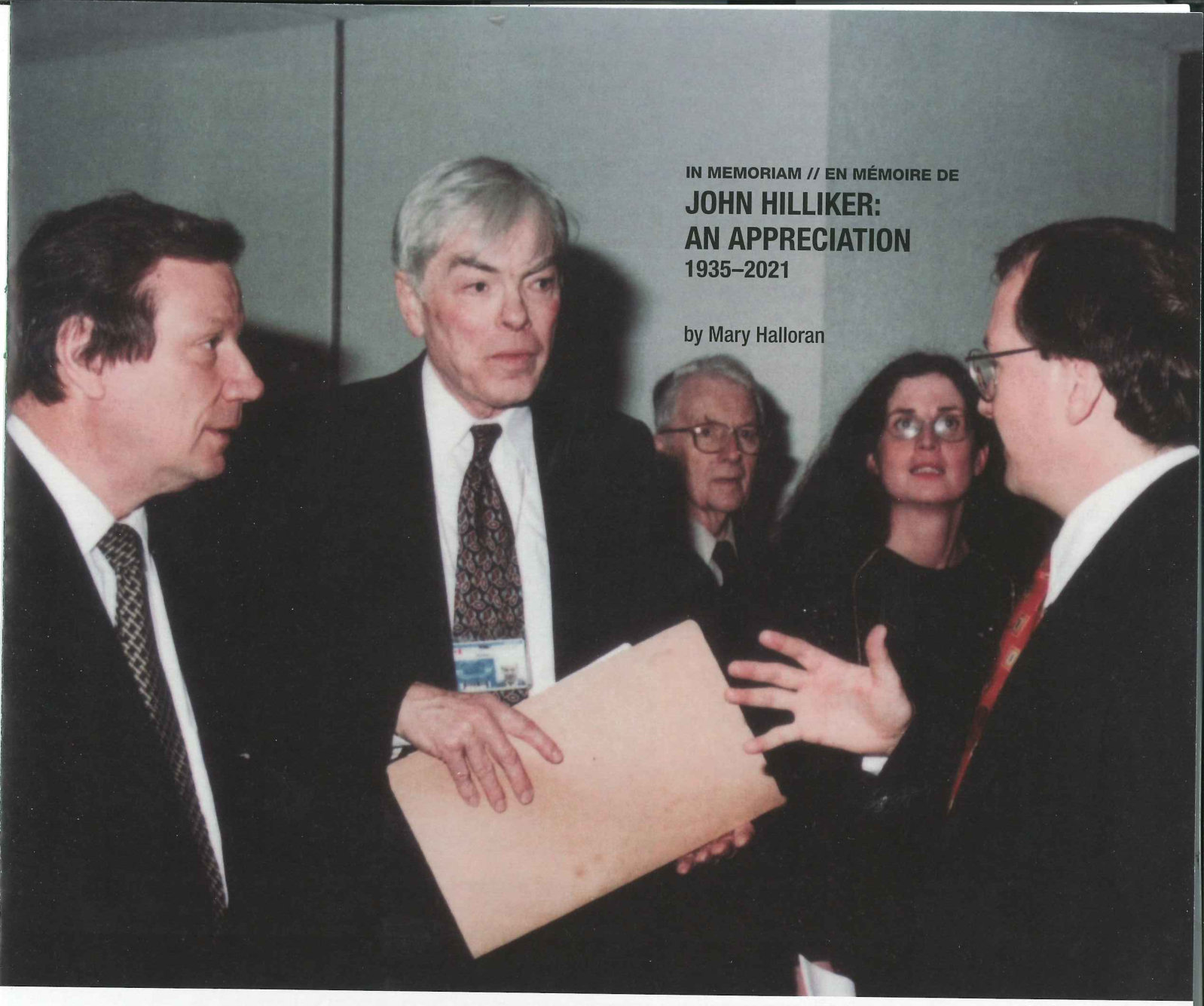
JOHN HILLIKER, WHO LED the Historical Section at Global Affairs Canada from 1986 to 2003, passed away peacefully at his home in Ottawa on September 14, 2021 at the age of 86. Anyone who has studied the history of Canada’s international relations, and the role of the department in shaping it, is well acquainted with his work. John, through his own writings and in the departmental projects he oversaw, was pivotal in making that story known.
Born and raised in Kamloops, BC, John credited his early teachers with instilling in him an abiding interest in history and international relations that would define his later career. He entered, and won, a national competition for a scholarship to Queen’s University in Kingston, Ontario, from which he graduated with a BA in 1958. That same year, he began the first of his two stints at the Department of External Affairs (now Global Affairs Canada) when he joined the foreign service. He interrupted his early training in Ottawa in 1959 to obtain a Master’s degree in British history at Brown University in Providence, Rhode Island, returning to the department in 1960. A year later his yearning for foreign travel was finally satisfied when he was posted as consul to the Canadian Embassy in Jakarta, Indonesia.
Of his first years in the department, John later wrote: “Indonesia was fascinating and work in the foreign service was interesting.” But his academic studies had persuaded him of the importance of scholarship, and he had “a hankering to give it a try.” He left External Affairs in 1964 to begin a PhD in history at the School of Oriental and African Studies, University of London. Doctorate in hand, he joined the faculty of Lakehead University in Thunder Bay, Ontario in 1968. But the department beckoned once more. He seized the chance to pursue scholarship under a different guise and joined the Historical Division as an editor in its series Documents on Canadian External Relations (DCER). The diplomat-turned-historian returned to External Affairs in 1975.
In the years that followed, John became a leading authority on the history of Canada’s foreign relations, and the principal chronicler of the department’s evolution. He edited three volumes of DCER, before becoming general editor of the series. In 1986, he was appointed head of a re-constituted Historical Section. The unit for which he assumed responsibility would be smaller than its predecessor, but under his leadership it would be more productive. John devised a publication schedule for the DCER series to ensure that volumes appeared in a timely manner and saw to it that deadlines were met. He was also the architect of the department’s official history project, a narrative that traced the department’s story from its origins in 1909 and demonstrated its critical role in the conduct of the country’s international relations. John was sole author of the first volume of Canada’s Department of External Affairs, and senior author of two subsequent volumes that followed the history down to 1984.
In addition to his scholarly publications, which included numerous articles and conference papers, John also oversaw the Historical Section’s informal access program. At a time when a large portion of External Affairs’ historical files still resided in the department, awaiting transfer to a permanent home at the National Archives, the Historical Section made them available to academics for consultation, under controlled conditions. The effect was to facilitate the research of doctoral students and more senior historians who otherwise would have been denied entry into the departmental records. The historiography of the period is the richer for it.
To carry out the section’s research and publication program, John recruited a small group of younger scholars. He offered them opportunities for advancement, the chance to work on interesting, substantive historical projects, and a congenial atmosphere in which to do it. He also trained them. There is a knack to carrying out the historian’s work within the context of government bureaucracy. John quickly learned how to fulfill his obligations to his departmental masters without compromising the standards of historical scholarship and was pleased to show the ropes to his colleagues. Greg Donaghy, who so ably succeeded him as head of the Historical Section in 2003 and who, sadly, predeceased him in July 2020, always acknowledged John as his mentor and guide.
In an era of repeated budgetary cuts and competing demands for dwindling resources, much of John’s time was inevitably spent on safeguarding the funding and, on more than one occasion, the existence of the Historical Section. He was a tireless and persuasive defender of the historians’ function and grew adept at illustrating the relevance of their work to the department’s mandate. That aspect of the job, as John ruefully admitted, was thankless and at times demoralizing. Still, he persevered; the section survived; and somehow, he managed to retain his good humour.
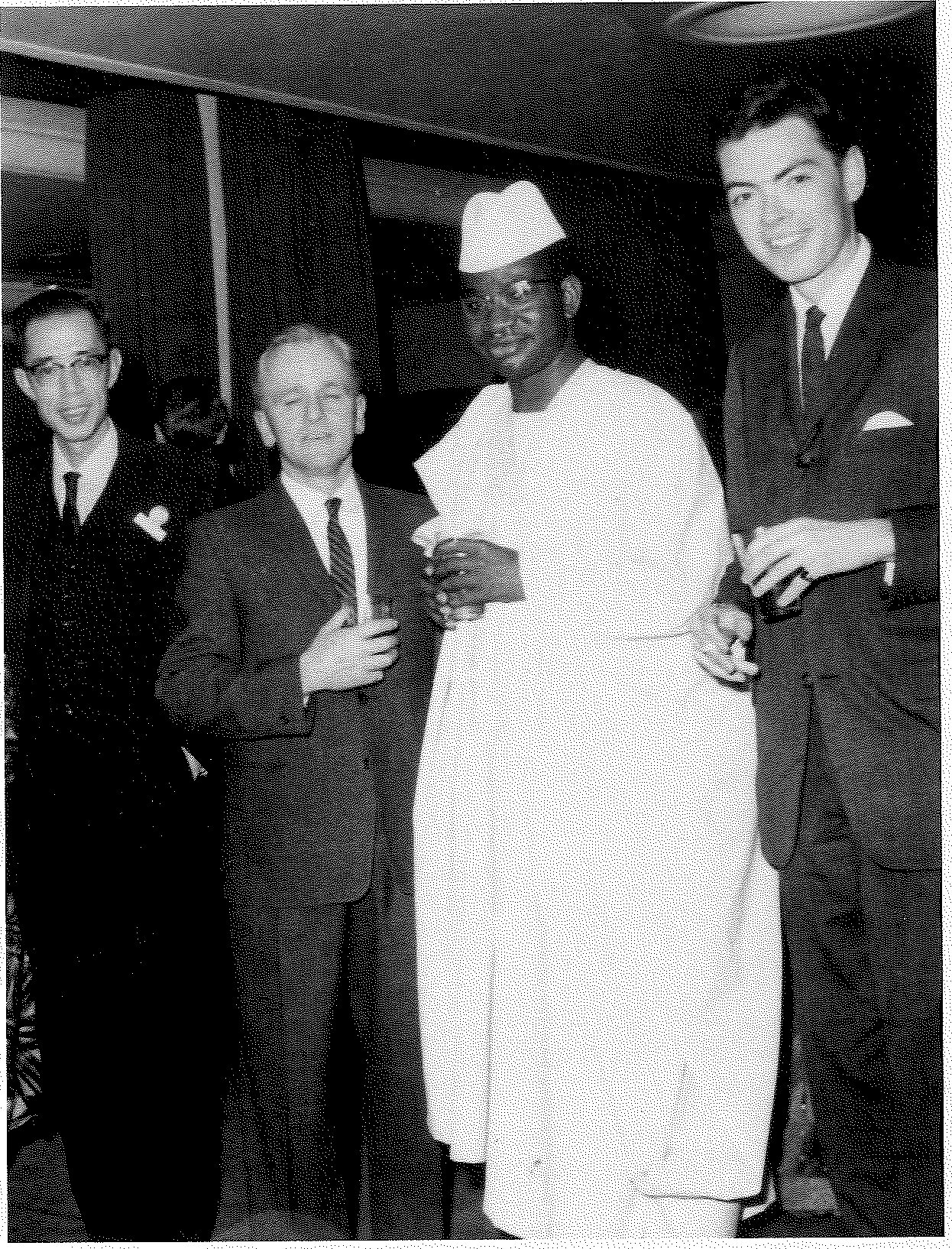
John’s good humour, his innate civility, and his clear-eyed intelligence were in fact a hallmark of his tenure in the department. The long succession of directors and other senior managers to whom he reported, no less than his own staff, sought his counsel, knowing they could rely on his unmatched knowledge of the department’s history and his shrewd assessment of its current operations for guidance. They also knew that his honest advice would be offered with wit and tact. The historian, it seems, knew well how to ply the skills of a true diplomat.
In retirement, John continued to collaborate with his former colleagues on publications and other projects related to the department’s history. He also enjoyed travelling, reading, attending concerts and films, and his yearly visits to his beloved family cottage in Sorrento, BC. All the while, he carefully nurtured his friendships, some of which dated from his childhood. As Parkinson’s disease curtailed his independence in his final years, a small circle of his Ottawa-based friends stepped in to assist. Such was the loyalty and affection John inspired, they considered it their privilege to do so.
John’s friends and former colleagues miss the pleasure of his company. Together with all those who value the history of Canada’s external relations and the department’s unique heritage, they will forever treasure his legacy.
Originally published in bout de papier, Vol. 32, No. 1 (2022), pp. 41–42. Read the rest of this issue →


