
bout de papier, Vol. 9, No. 1 (1992) — Winter 1992 // Hiver 1992, pp. 23–26
Ghardais (Algeria)
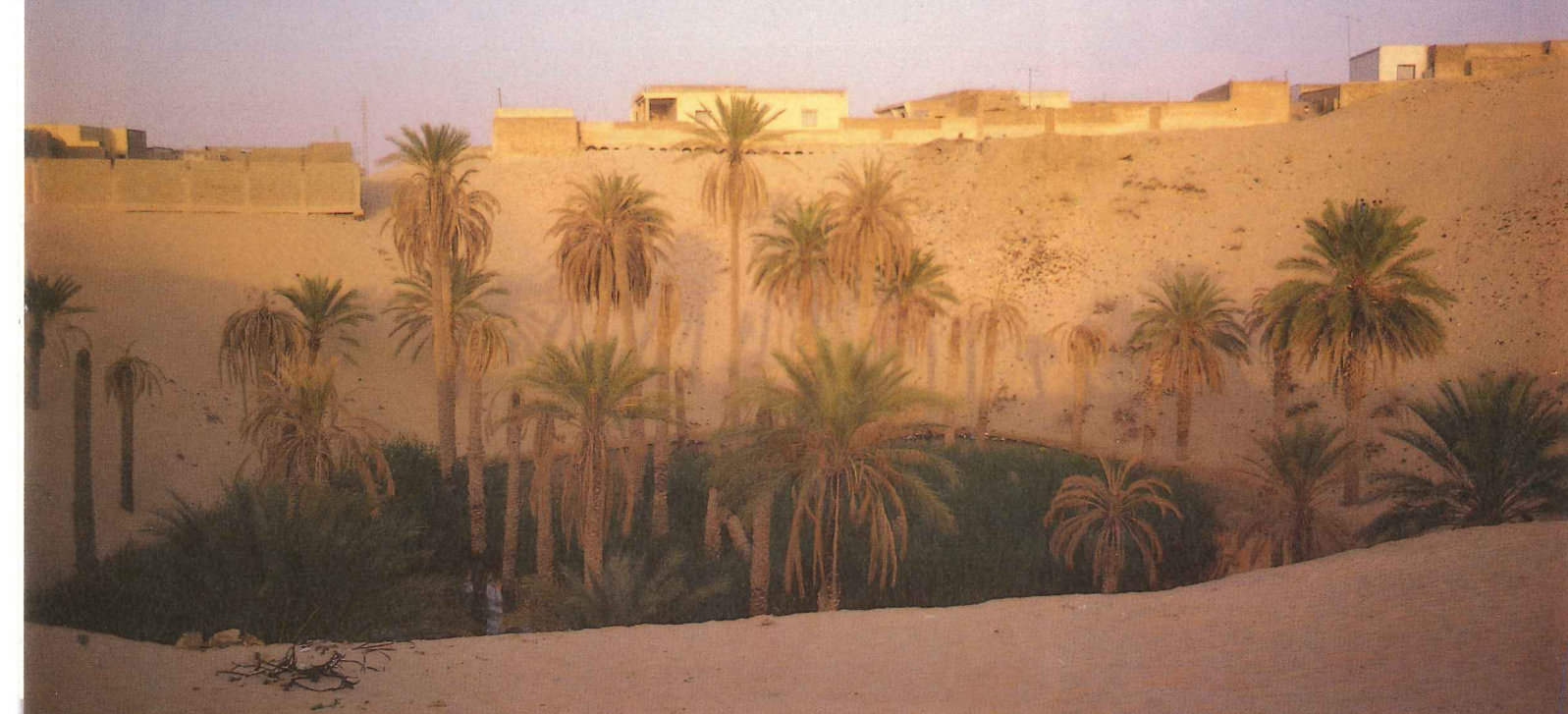
In a cleft in the desert floor, some 600 kilometres beyond the mountains and south of Algiers, lies the group of blue-tinted villages known as Ghardaia.
This oasis town on the crossroads of the north-south trail between Algiers and Tamenrasset and the east-west caravan routes from Morocco to the Mediterranean is the home of a Berber sect of Muslims known as the M’Zab — the Mozabites.
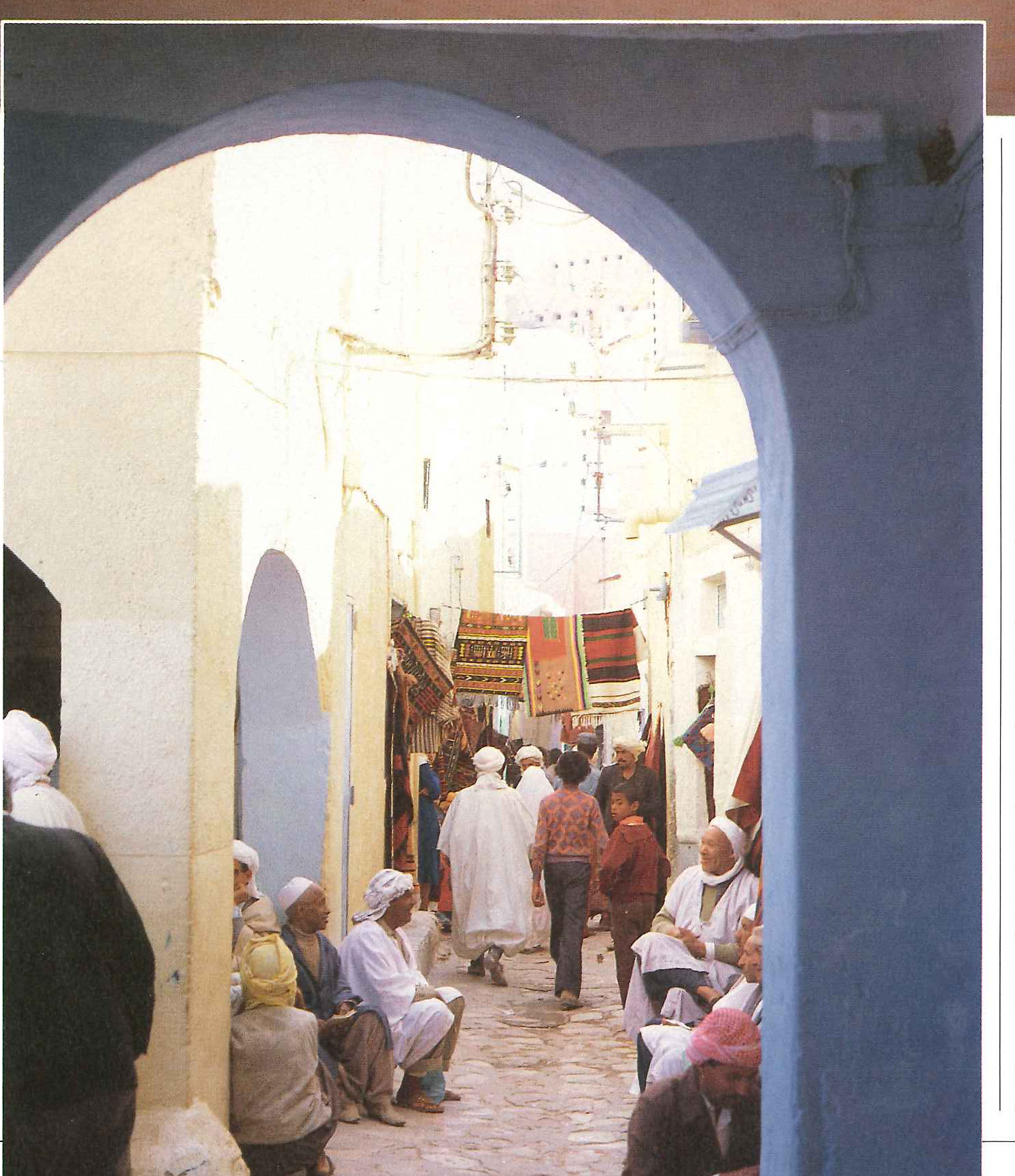
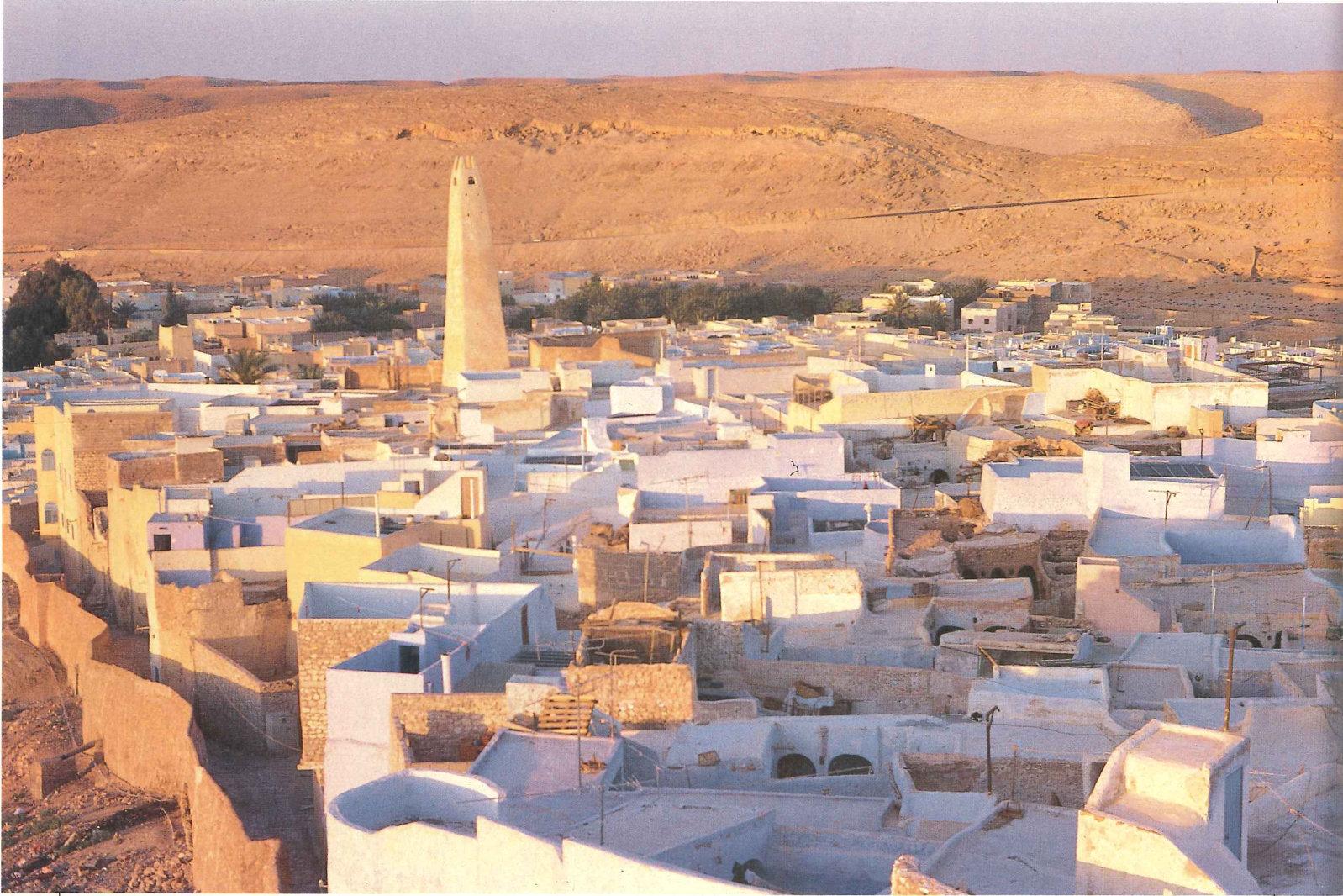
The architecture of this town was adapted to the special conditions of the place and the private life of the M’Zab. The houses cover hills in rising levels, making a sort of collective pyramid topped by the obelisk-shaped minaret of the local mosque. The walls are thick and windowless, preserving the intimacy of life inside and protecting the cool interior from the Sahara sun. Yet, those walls are soft and voluptuous, tinted in varying pastel shades of blue to ward off the rays, and rising sinuously to unopinionated turrets. Just to walk among these village lanes is a sensual pleasure.
It is rare to see women in the street, even women fully covered and veiled in their white haiks. If you were to encounter a woman in the narrow alleys, coming from the market, she would quickly slip out of the way, into a doorstep or down a side way. Yet, the Mozabites are hospitable, and the guide easily contacted a family that welcomed us into their home for tea — where the women were charming, chatty (or giggly according to age) and, even, unveiled.
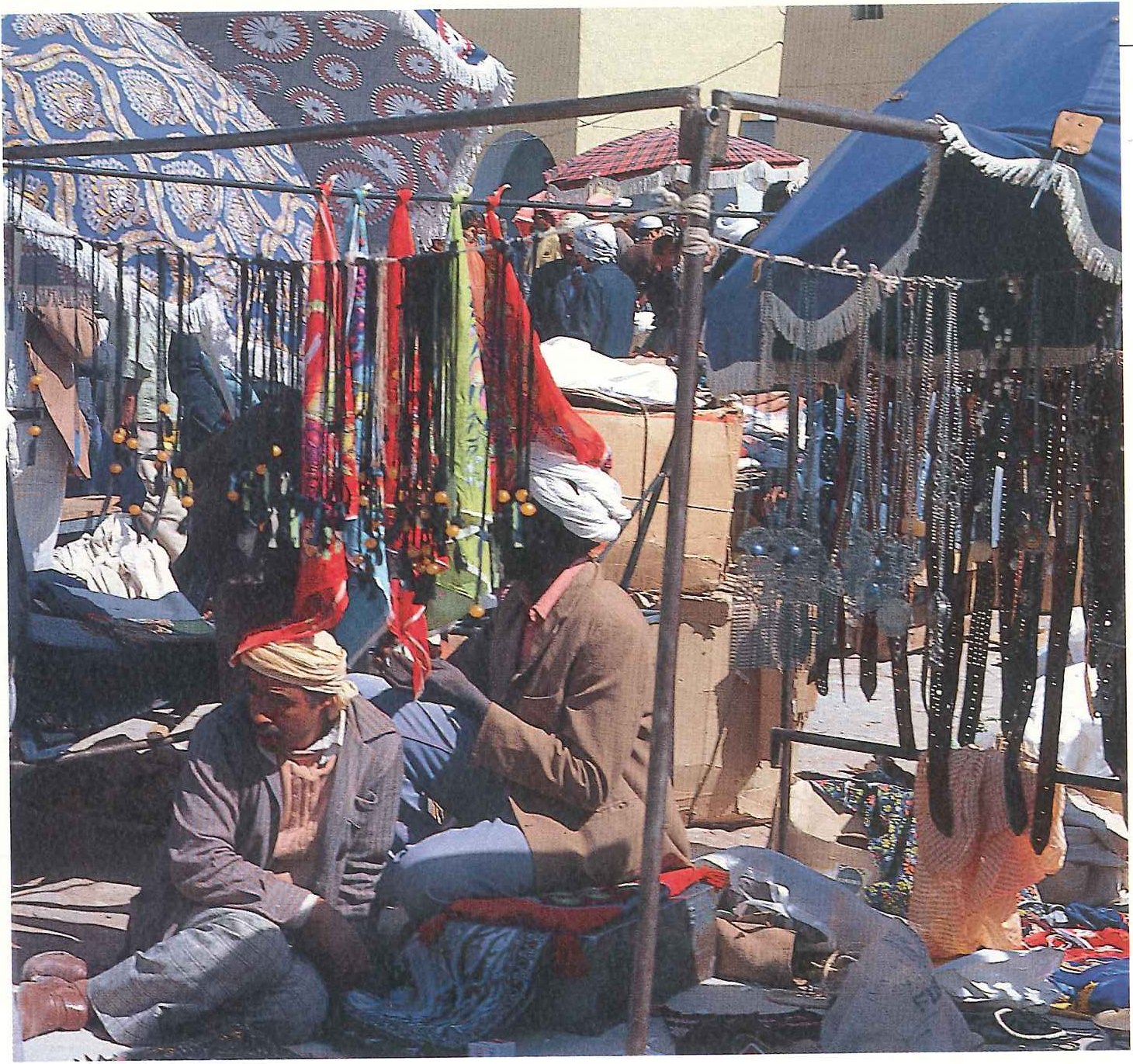
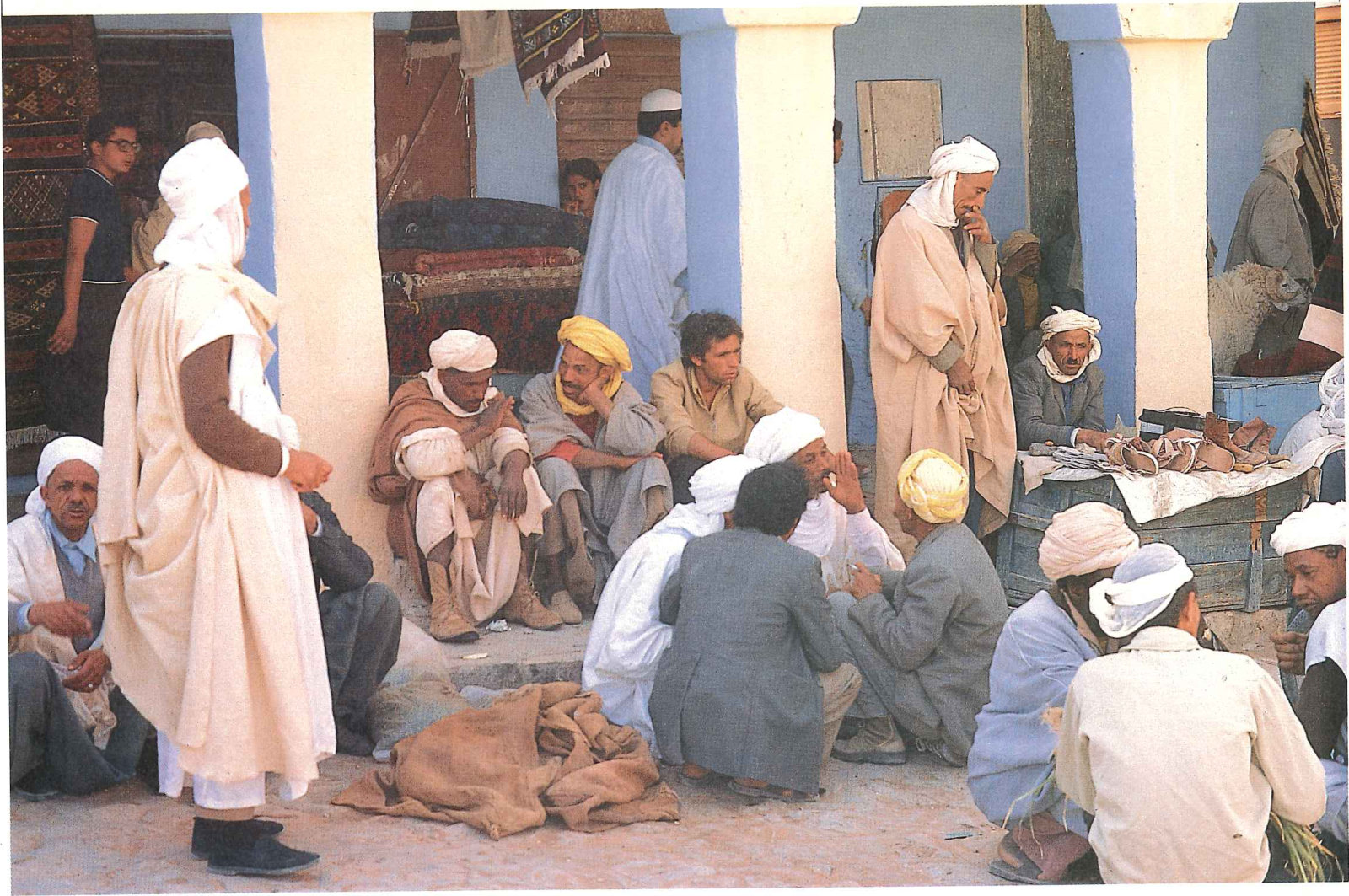
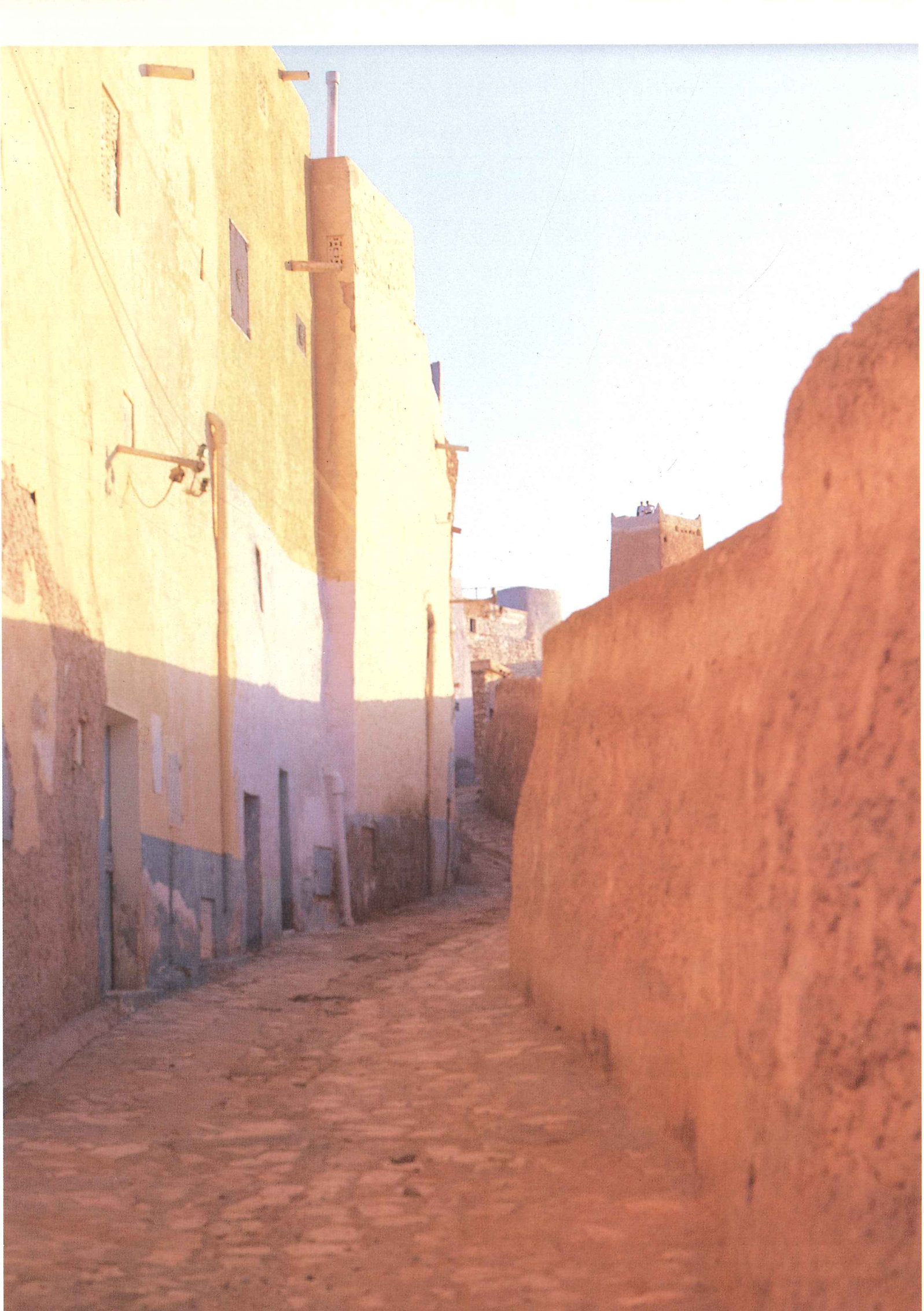
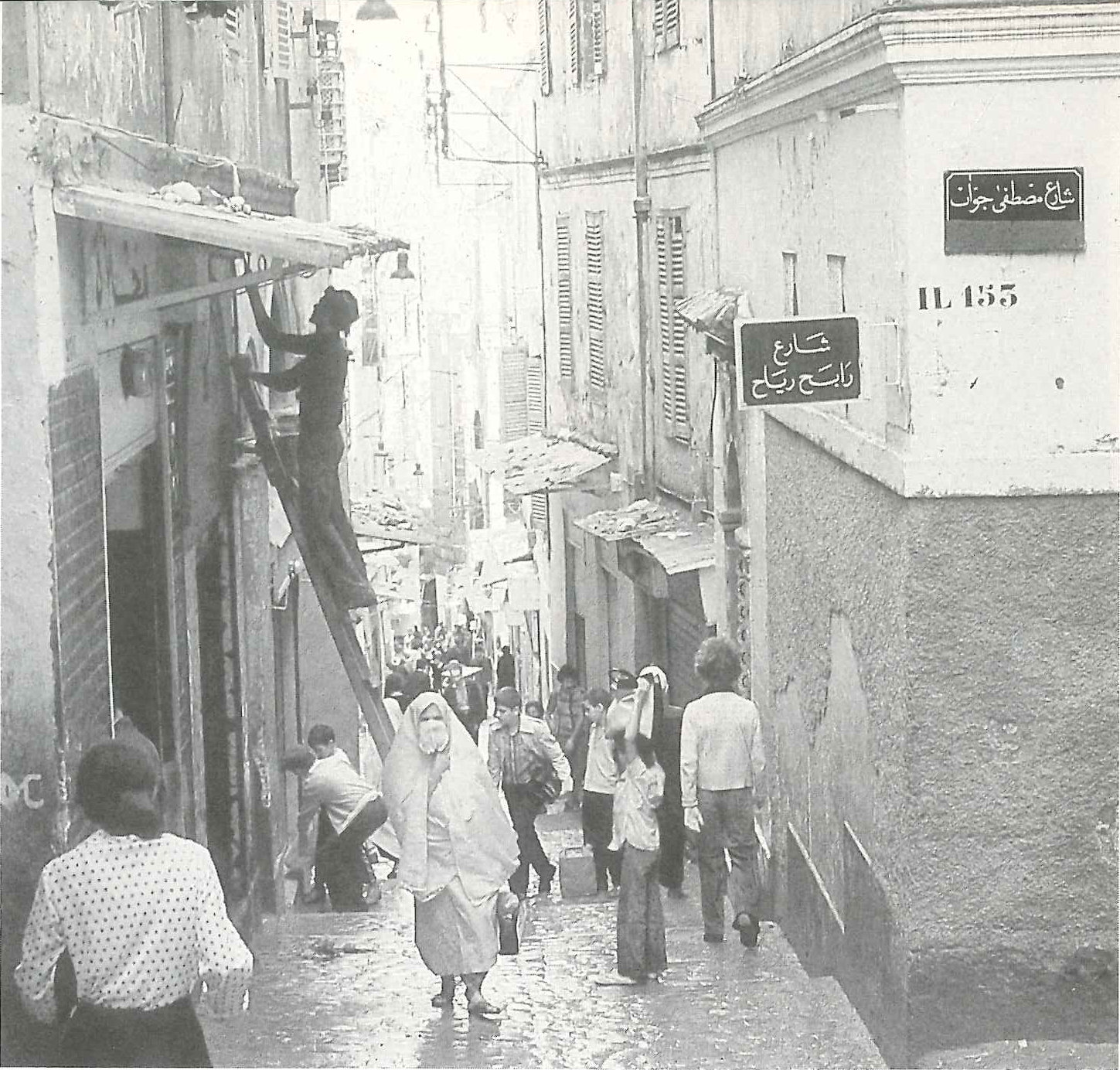
The narrow streets all lead into the main square and the main market, something of a surprise after pushing past the tiny little shops with carpets, copper and leatherwork. The market is the man’s domain. It is ablaze with sunlight and colour — the fruits and vegetables that have been brought in from surrounding oases, the polychromatic textiles and carpets on display, and, surprisingly, the range of skin tone — from the darkest-skinned African and Tuareg desert dwellers, to the light-skinned, almost blond-haired Berbers.
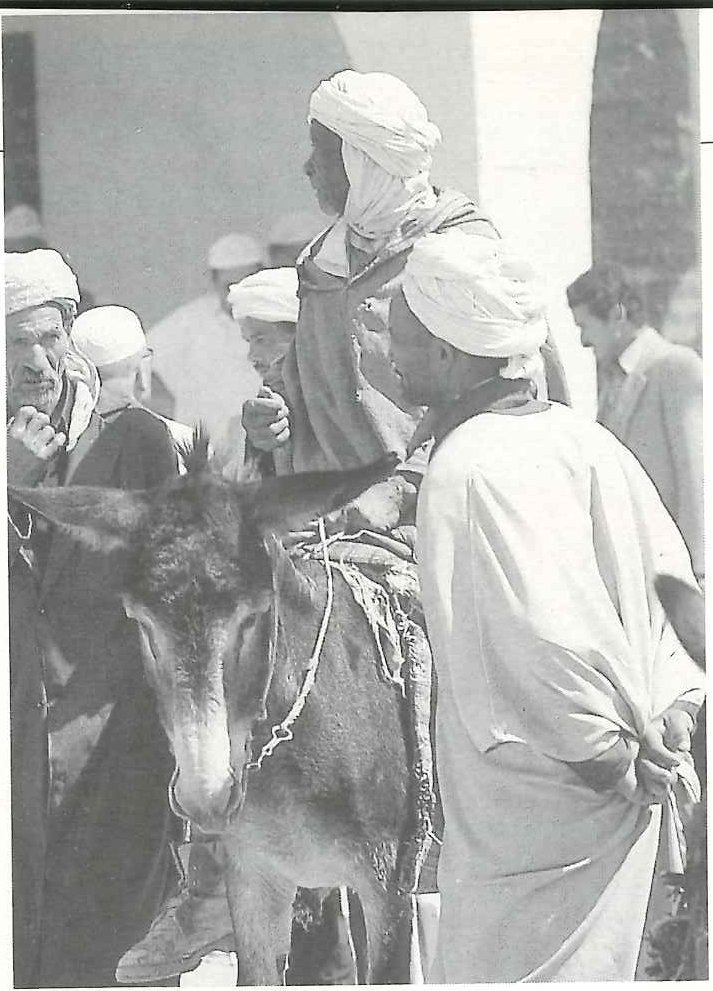
The picture of the turbaned fellow on the donkey only proved the accuracy of the guidebook which said, “il n’est pas rare également de rencontrer ceux-ci assis sur un âne bâté, seul moyen de transport possible dans la vieille ville ou de la palmeraie.”
View the original scanned pages →
Originally published in bout de papier, Vol. 9, No. 1 (1992) — Winter 1992 // Hiver 1992, pp. 23–26. Read the rest of this issue →



