
bout de papier, Vol. 8, No. 4 (1991) — Fall 1991 // Automne 1991, p. 12
(Editor’s Note: This article is a chapter from Sidney Freifeld’s book Undiplomatic Notes: Tales from the Canadian Foreign Service, with illustrations by Susan Macartney, published by Hounslow Press, Toronto which has gone into a second printing.)
External Affairs’ wives and husbands come from all walks of Canadian life and their performance abroad reflects their varied backgrounds. Some — and these are likely to be of an older generation — are happy to share with their spouses the burdens of official entertainment, showing the flag, assisting the local Canadian colony’s charitable and social endeavours, and winning friends and influencing people for Canada. Others might shun such duties in favour of pursuing their own interests or career to the extent that is possible in the country where they are stationed. There is one complaint that all share in common — the lack of recognition by headquarters for jobs well done and services rendered for Canada.
And sometimes a foreign service spouse succeeds in accomplishing something with the local authorities in which the “Externalite” and the embassy staff have gotten nowhere. Take, for example, the case of the redoubtable Teresa Ford, whose husband was Canada’s outstanding ambassador to the Soviet Union during sixteen rugged years.
Teresa was not one to suffer the vicissitudes of life in the Communist paradise with reticence — especially in the matter of the nocturnal howling of Moscow’s hordes of stray cats which, colleagues who have served there assert, was particularly obnoxious in the vicinity of the Canadian Embassy.
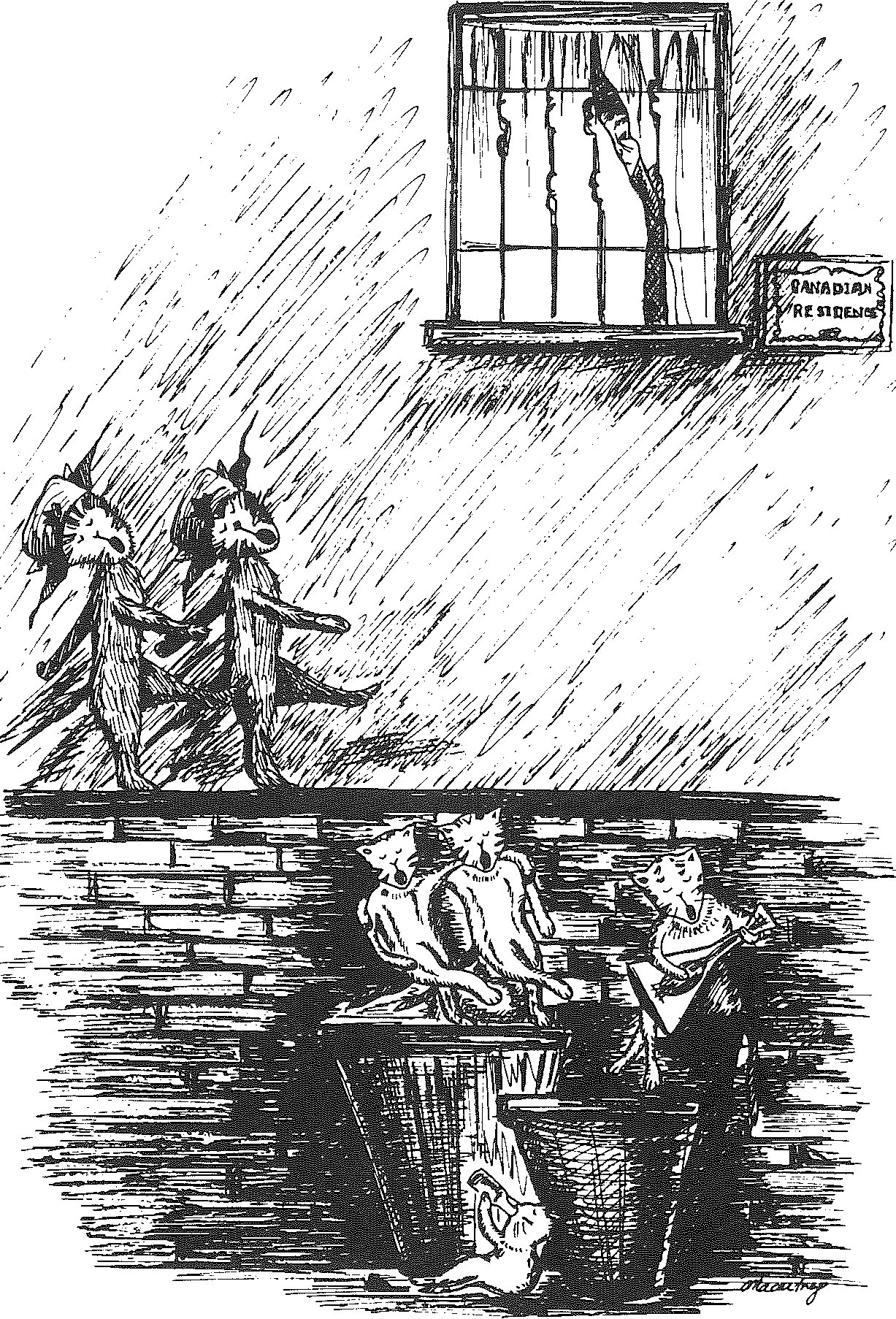
For years the Canadian Embassy had urged Moscow’s local authorities and the USSR Ministry of Foreign Affairs to do something — anything — to alleviate this plague. The Canadian entreaties and complaints had accomplished precisely nothing. If anything, as the months rolled by, the cats were multiplying at an alarming rate and their howling was becoming more dreadful than ever.
Teresa was worried not so much about the disturbance to her own sleep as the effect it would have on her hard-working husband. At three o’clock one morning Teresa was wakened by feline howling of unprecedented intensity and, in exasperation, she determined to try a new approach with the Russians, the hour notwithstanding.
She dialed the telephone number of George Costakis, a locally-engaged clerk at the embassy (who was subsequently to achieve world renown in art circles for the magnificent collection of Russian early avant-garde paintings that he had quietly acquired through the years).
When George sleepily answered the phone, Teresa said to him: “George, I want you to call protocol immediately, immediately. And I want you to tell protocol that if the Soviet Union can put astronaut Yuri Gagarin into outer space, it can surely do something about these damned cats that are driving us crazy at the Embassy.”
George Costakis wearily hung up the phone with the promise to make still another plea to authorities. He did not call protocol at three o’clock in the morning, but he did call as soon as the USSR Ministry of Foreign Affairs opened. He told the most senior functionary he could get on the phone: “The Ambassadress of Canada has instructed me to tell you that if the Soviet Union can succeed in putting Yuri Gagarin into orbit, can it not do something about the cats around the Canadian Embassy that are driving us all crazy?”
Whether it was because the Russian amour propre was piqued or whether the Ministry was astonished at this novel Canadian approach, it did do something. That same day a small army of dvorniks showed up around the Canadian Embassy with brooms and long staves and soon cleared the area of its feline bestiary. That night — for the first time in weeks — the Fords and their staff enjoyed an uninterrupted night’s slumber
View the original scanned pages →
Originally published in bout de papier, Vol. 8, No. 4 (1991) — Fall 1991 // Automne 1991, p. 12. Read the rest of this issue →



