
bout de papier, Vol. 6, No. 3 (1988), pp. 3–4
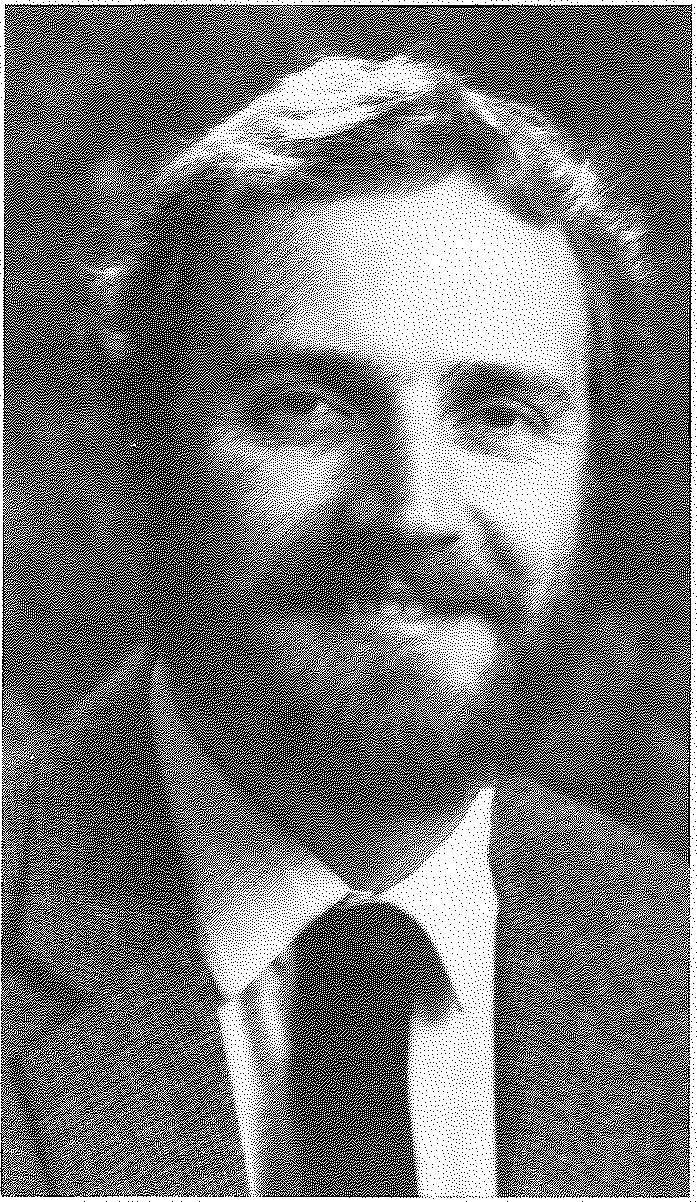
Democracy is alive and well at PAFSO. At the fall Annual General Meeting over fifty percent of the membership elected 11 new members to the Executive out of a slate of 20 candidates. I believe that we now have a very strong Executive in place to carry us through for the next year.
At the first meeting of the Executive, it was agreed to alleviate the absence of Aid Stream representation by inviting Micheline Beaudry-Somcynsky, who garnered the most votes of those Aid Stream officers who is clearly important to have an Aid Stream voice on the Committee. We almost had a similar problem with representation from the Social Affairs Stream. No officers from the Social Affairs Stream ran for office this year. Fortunately, Sue Lopez, remains on the Committee.
I was pleased to be confirmed as President shortly after the AGM (I had been serving in an interim capacity since June, following the departure of John Lobsinger to Dar- Es-Salaam). I look forward to the challenge and responsibility of serving as President of PAFSO until I depart for Hong Kong next year on the second year of Chinese language training. Peter Morrison will continue as Vice-President, Economic/Commercial stream; Carol Markham becomes the Vice- President, Political/Economic stream; and Sue Lopez was elected by acclaimation as the Vice-President, Social Affairs stream.
What has PAFSO accomplished in the past year and what are the challenges we face in the coming year? The question of political appointments remains a very delicate and sensitive issue. I believe that our policy of going public has been fully vindicated. This year the Government has made very few political appointments (Fortier to the Permanent Mission to UN in New York and McDonald to London) and three Posts (Canberra, Lisbon and Paris) have been returned to career foreign service officers. PAFSO has nonetheless used the opportunity presented by media enquiries from CBC National Television, Maclean’s magazine and the Financial Post to register our deep concern over the high number of political appointments by the current government. Just because it has been quiet on the political front this posting season, there is no reason to believe the problem of political appointees is behind us.
Political appointments is a high profile question, but in the past year, PAFSO has also been grinding it out in the trenches to secure victories in two equally important areas. All members will be well served by two grievances which PAFSO has won in the past year. Beginning in 1989, members will receive their performance pay as of April I regardless of the status of the Collective Agreement. You will recall last year that performance pay was not received by members until November because the Collective Agreement was not signed until late October. Also PAFSO won an adjudication on the annual percentage increase for allowances paid under the Foreign Service Directives. The employer deemed that we only deserved 3.21% even though the methodology indicated we should receive 7.3%. Consequently all members will see a retroactive increase on their allowances of 4.1%.
PAFSO has devoted considerable effort to establishing a more regular consultative process with External Affairs management in the past year. We hope that this regular contact will ensure that PAFSO’s views on various questions will be taken into account before decisions are made. Too often in the past we have only seen decisions after they have been made and there was too much bureaucratic inertia to change them. In this respect, I would like to say that PAFSO had an excellent relationship with the outgoing Associate Deputy Minister, Joe Stanford. PAFSO wishes him well in his new job in the Solicitor General’s Department and we look forward to working with his successor, Raymond Chrétien.
PAESO has accomplished a lot in the past year, but I have only had the space to note a few examples. What about the coming year? It is going to be an important one. Most members, I know, are concerned about their pocketbooks and rightly so. We are underpaid and overworked, especially at the lower levels. We put up with this in large part because of our sense of professionalism, but also because of our somewhat misguided beliefs that if you stand up for your rights you will ruin your career. The most important document pertaining to those rights, is the Foreign Service Collective Agreement which expires on April 30. It is our sincere hope to be able to begin negotiations early in 1989 with a view to signing a new Agreement prior to April 30. However, we are certainly not willing to settle at any price and you should be forewarned that the prospects are not bright. We understand that various Public Service groups currently at the bargaining table are looking at an offer of a mere 3% from the employer, Treasury Board. In view of an anticipated inflation rate of 4.5% we would find an offer of 3% completely unacceptable.
The other major issue that PAFSO faces right now is CIDA de-centralization. We have already been involved in a number of consultations on the matter. For those of you not aware of the implications of this move
(they bring their person year with them), over the coming years. The infusion will represent a 20% increase in our membership and increase the number of Aid Stream officers to a level much closer to the trade and political streams. The whole issue, however, raises a number of critical questions as to how the process is going to be carried out in a manner equitable to the current members of the Foreign Service. We all remember the CO conversion! A special Committee of the Executive has been struck to follow this question and we intend to be closely involved in the consultations on this matter with both CIDA and External Affairs.
There are an infinite variety of issues that PAFSO must act and react to in the coming year. There is the Department’s new housing policy, which we are in the process of challenging; maternity leave; daycare; spousal employment; AIDS; streaming; appraisal and promotion policy; and self-funded leave. Suffice to say, there is more than enough for the new Executive to sink its teeth into and I hope that they will do so with relish.
As we carry on our on-going task of defending the interests of Foreign Service Officers, we plan to keep in close touch with members through PAFSO Update. I hope by the time you have received this issue of bout de papier you will have received the first two issues of Update. The idea is to inform members about what we are attempting to do. Any feedback you might have on subjects for future Updates would be greatly appreciated
The months ahead are going to be both challenging and exciting. Please remember we are primarily a volunteer organization which means we can only be as effective as the sum total of the efforts of our members. We always need help, so give us a call sometime.
View the original scanned pages →
Originally published in bout de papier, Vol. 6, No. 3 (1988), pp. 3–4. Read the rest of this issue →



