
bout de papier, Vol. 6, No. 1 (1988) — Spring 1988 // Printemps 1988, pp. 18–20
Publication of the White Paper on Defence on June 5, 1987 signalled a welcome end to a period of neglect and decay in our Armed Forces spanning more than two decades. Although in the last ten years there have been occasional procurements of various defence systems — mainly frigates, fighter aircraft and tanks — it has been a patchwork affair where impending collapse of a given type of equipment rather than an orderly plan of capital renewal has been the driving force. In the Minister’s phrase, “rust out” is not a very sound basis for equipment replacement. Every Canadian will derive some satisfaction from the knowledge that our armed forces will, for the first time in the post-Korean War period, be progressively re-equipped to meet an up-dated evaluation of the threat, of the tasks the threat imposes and of advances in military hardware technology. It will be particularly gratifying to most that the ambitious and expensive plan to modernize all three elements of our forces has been accomplished without involving dramatic departures in Canada’s international alignments. Our collective security arrangements under NATO and NORAD are re-affirmed, as is Canadian continued support for UN peacekeeping operations and for arms control proposals. This situation contrasts strongly with the prelude to the 1971 White Paper, where every option from unarmed neutrality to continued participation in alliance arrangements was studied — with none ruled out ab initio — resulting in an undermining of confidence in us on the part of our NATO partners. The subsequent decision to cut our forces in Europe in half and to reduce the overall strength of our armed forces — all carried out in the immediate aftermath of the Warsaw Pact invasion and suppression of Dubcek’s Czechoslavakia — convinced the other members of the NATO Alliance that Canada was only marginally interested in the security of Western Europe, and certainly not sufficiently so to maintain its commitments to collective security, despite the palpable threat to Europe posed by the militant philosopy of the Soviet-led forces. Nothing short of this June 5, 1987 declaration to increase our contributions to our forces stationed in Europe would have sufficed to obliterate the negative impact of Canada’s 1970 force-cutting exercise.
It may well be asked — will the decision to cancel he CAST brigade commitment to Norway undermine the otherwise pro- NATO message of the White Paper? For anyone who knows the origin of the CAST commitment – and that includes all of our NATO allies — the answer will be “no” The Norwegians will certainly regret the withdrawal of this demonstration of support, particularly from a fellow “northern” NATO member state with whom particularly close political ties exist. Indeed the Norwegian Government is asking that, before Canada drops the CAST commitment, some other means be found of filling the gap thereby created. However, it is no secret that the CAST commitment was born, not out of response to a perceived military need, but out of political expediency — the need, in 1970, to take the curse off our much resented reduction in forces to NATO by inventing a not very onerous obligation to come to Norway’s aid in times of rising tension. It was a political obligation almost impossible to fulfil, since it is inconceivable that Canada would ever exacerbate a situation of rising tension by the despatch of such a force —and of course Norway has obligated itself not to allow foreign forces on its soil in peacetime. In addition, last year’s exercise “Brave Lion” proved (after more than 15 years of not testing the concept that Canada could airlift the CAST Brigade to Norway only over several weeks and then could not sustain it for combat duty. No one need therefore mourn (except possibly the Norwegians) the dropping of a commitment that was politically motivated in the first place and not militarily sustainable in practice — and some pains have been taken to maintain a support obligation to Norway will involve an increase in specially trained personnel from approximately 350 for four conventional boats to 2500 for 10 nuclear boats. Nor can we now, by the device of a White Paper devoid of cost figures, pretend that we can go for this expensive nuclear submarine option without sacrifice of other parts of our Maritime defences — or in fact without distorting the entire procurement picture of all three services. Indeed, the remarkable, if not incredible feature of the White Paper is that it could sketch out a 15-year blueprint for our Armed Forces while devoting only one short paragraph to funding. Virtually all the so-called data on costs have been embodied in various leaks from National Defence or its Minister; there is nothing of substance in the White Paper by being ready to consider deployment of our Allied Command Europe (Land) contribution to a Northern Region role.
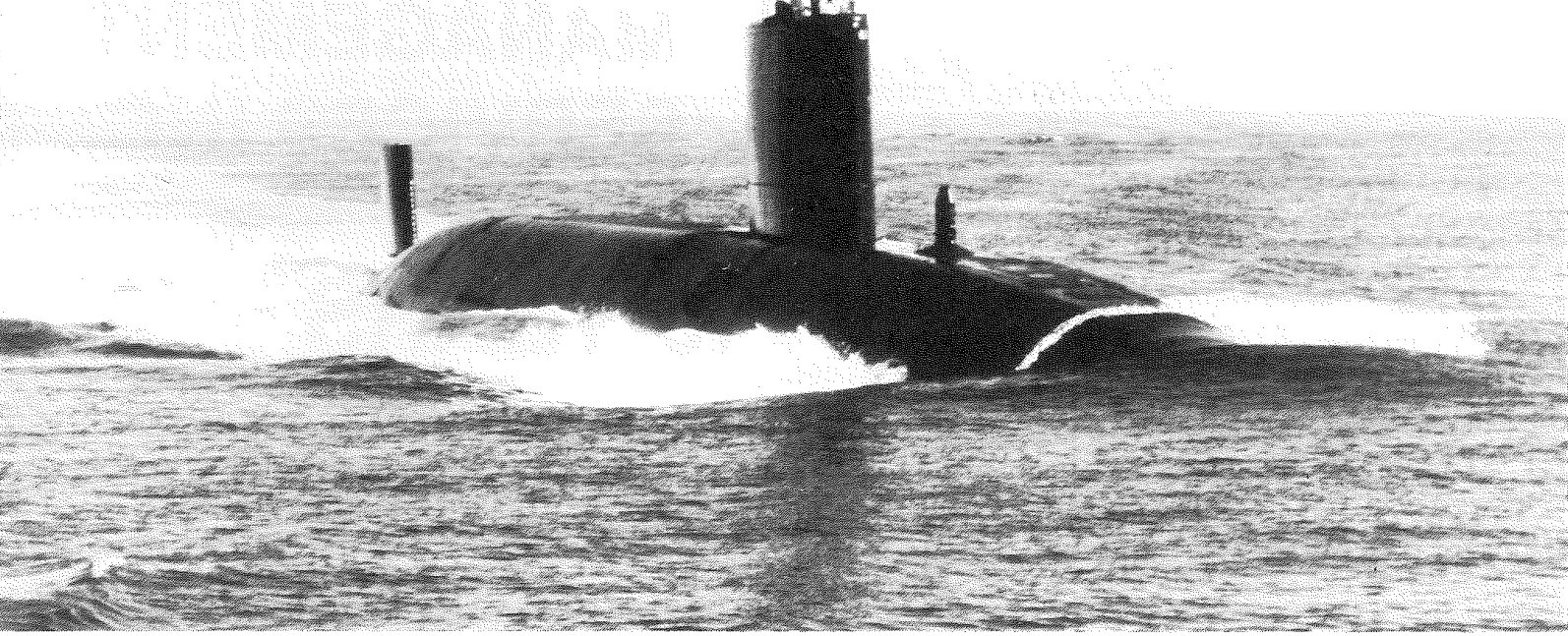
Does this mean that, on the assumption that our withdrawal of the CAST commitment can be rationalized to the satisfaction of our allies, there will be no international implications to the changes in force composition outlined in the White Paper? With one exception — and it is a major one— the. answer is probably “yes”. On the whole, the long rage posture for Canada sketched in the White Paper should give neither Canadians nor Allies much cause for criticism. The exception is the time on which all interest appears to be currently focused — namely, the proposal to acquire 10 to 12 nuclear powered submarines for deployment around our coasts in a 3-ocean strategy.
If we enjoyed an economy in which cost was no consideration, there might be something to be said for a maritime force structure that incorporated a large component of the latest technology — available, according to its proponents, only in nuclear powered submarines. But we do not live in such an economy. National Defence has just completed a conventional submarine acquisition “source qualification” competition in which the entire emphasis was on cost-cutting, including staffing. It defies logic that six months later there should be a Government decision to choose a submarine option that itself other that a vague undertaking to raise the national defence spending by 2% per annum in real terms over a 15-year planning period. This figure says little enough, since it represents a level of spending and inflation-proof increases well below what had been earlier promised.
Our Allies will reason that the costly nuclear submarine proposal, which will almost certainly turn out to be at least twice and probably three times as expensive as forecast in the White Paper when special shore-side facilities and specially-trained personnel are taken into account, can happen only at the expense of other forces committed to the integrated NATO forces or NORAD. Our NATO partners are almost certain to conclude that the decision is a step away from collective defence towards a “fortress America” concept — or at least a “fortress Canada” concept — because of the ambivalence surrounding our desire to assert sovereignty in our Arctic waters no less against Americans than Russians. It must be apparent to all of our Allies that the addition of 10-12 Canadian nuclear submarines spread across the Atlantic, Arctic and Pacific theatres is not likely to alter substantially the Allied deterrent power in any of these areas and that the real reason must lie in either a desire to play in a big-league naval scenario or to serve some almost undeclared Canadian national purpose. The thrust seems more political than military.
In another sense, too, the decision may well be seen by Allies as a strategic departure — and by Canadians as well, once they reflect on the problem. Canada’s strategic aim in the Atlantic, re-iterated in the latest White Paper, is to be able to supply Europe in the event of war by keeping the sea lanes from North America open. The greatest threat today to surface shipping is from sea-skimming, anti-shipping missiles that can be fired from air, sea or sub-sea delivery systems. The threat can be countered by automatic systems deployable on naval surface vessels, and these today provide the greatest protection for convoys that modern technology can provide. Canada’s latest frigates and updated destroyers will be partially equipped for this protective role. If, however, we abandon the procurement of the third batch of 8 “NATO” anti-missile frigates in favour of nuclear powered submarines, we shall have fundamentally altered the thrust of Canadian naval strategy from countering the missile threat to destroying the platform from which the missiles would be launched. It is ironic that we should choose to abandon the one defensive system specifically designed to counter the threat now accorded the highest priority in Alliance strategy. In short, we would move to a hunter-killer submarine role from our traditional surface role. Fair enough, if we could deploy substantial numbers of hunter-killer submarines in addition to augmenting our surface ship complement. To consider such a strategy with the limited number of such boats that we could afford is quite another matter.
Most puzzling of all is the argument that somehow we need nuclear powered submarines to protect our sovereignty in the Arctic, allegedly because only such submarines can give us the under-ice capability to be able to hunt down and identify alien intruders in the Arctic waters we consider sovereign territory. In the first place, it is not at all clear why nuclear powered submarines are needed to do a surveillance job equally well done by a combination of fixed sensors and conventional submarines. One can only conclude that the hunter-killer role in the Atlantic and Pacific is the real aim of the policy. Secondly, and this is the key question — why would the Canadian Government advocate acquisition of offshore nuclear-powered submarines when there is a perfectly adequate “hybrid” system, entirely of Canadian manufacture available from at least two technologies — both the product of Atomic Energy of Canada Ltd.? The first is a nuclear battery which can be incorporated in a diesel-electric driven submarine to give the submarine indefinite under-ice capability at low to moderate speeds; the second is an adaptation of AECL’s Slowpoke reactor, widely used as a teaching tool throughout Canada, to give approximately the same under-ice capability. Not only is there thus available a “made in Canada” solution, but one with major offshore sales potential, since nearly all of the world’s non-nuclear submarine fleets would be eager to buy an “add on” system which would give them unlimited underwater capability without the give-away need to snort for battery recharging.
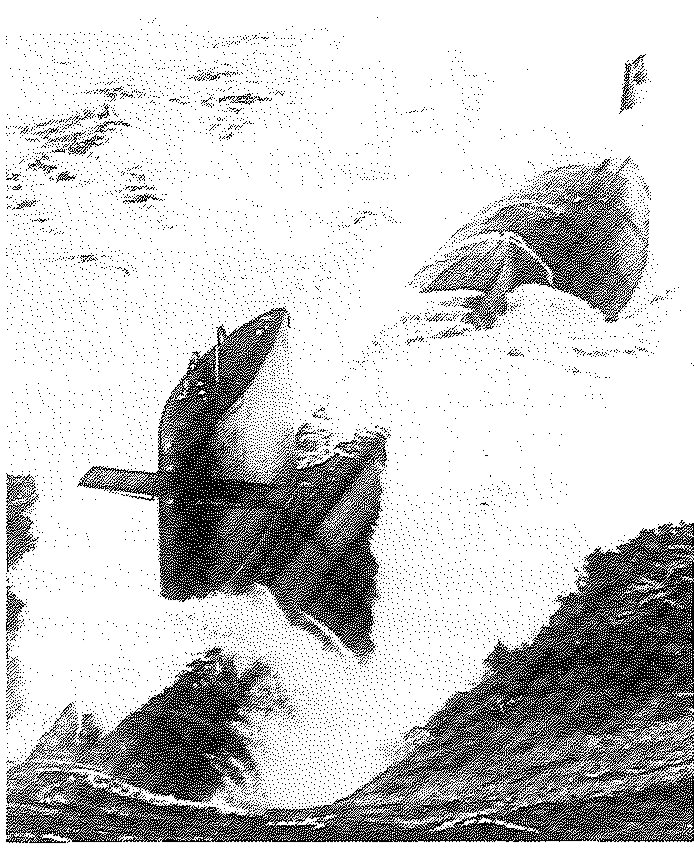
It has been said that the “hybrid” has been rejected because it cannot give enough speed or sustained under-ice operations to stem the allegedly strong currents of the Arctic. With respect, this is not a valid conclusion since the Canadian hybrid technology will permit speeds of 16-18 knots for up to several hours — sufficient to pass through any high current narrows and the fact is that, with rare exceptions, Arctic tides are not strong. In any event, sustained high underwater (and under-ice) speeds are simply not feasible for either hunter or hunted in the confined and often narrow waters of the Northwest Passage.
Fortunately, this Canadian solution to a peculiarly Canadian problem is not excluded simply because the White Paper proclaims the intention to acquire offshore full nuclear propelled submarines. A careful reading of the document shows that there will be no contract award for submarines before a thorough costing of the full nuclear option has been undertaken and in any event not before 1990. In other words, the White Paper is the beginning of a process, not the end, and in no sense amounts to a decision to proceed with procurement of any of the items described in it. It is to be hoped that the bold tri-service procurement plan outlined in it will not be opposed or seriously delayed simply because the Government has been fit to include in it one proposal that lacks the logic and good sense of the rest.
A commanding officer of motor torpedo boats during World War II, Ross Campbell was Ambassordor to NATO and Chairman
View the original scanned pages →
Originally published in bout de papier, Vol. 6, No. 1 (1988) — Spring 1988 // Printemps 1988, pp. 18–20. Read the rest of this issue →



