
bout de papier, Vol. 5, No. 2 (1987) — Summer 1987 // Été 1987, pp. 49–51
The Man from Halifax Sir John
Thompson, Prime Minister, by Peter
Waite, University of Toronto Press, 1985,
$39.85 ($17.95 paper 1986).
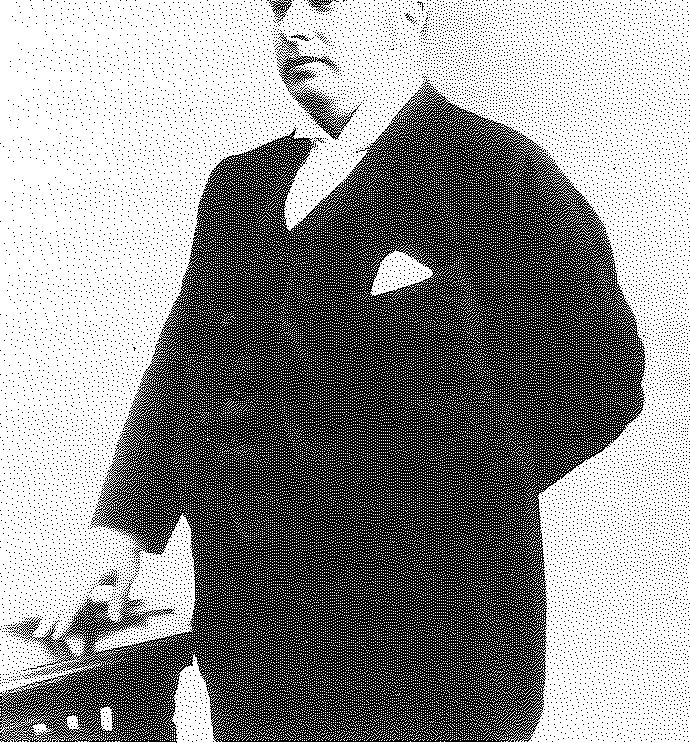
At 2 p.m. on the twelfth of December 1894, at Windsor Castle, shortly after being sworn in as a member of Queen Victoria’s Privy Council, Sir John Thompson collapsed and died. He was forty-nine years old. Thus ended the career of “The Man from Halifax” Canada’s fourth Prime Minister and the subject of a revealing and well-written biography under that title by Professor Peter Waite of Dalhouse University.
Professor Waite leads us with a sure hand to the heart of a complex and subtle character, a man largely unknown to Canadians, yet one whose parliamentary skills, penetrating legal mind and diplomatic astuteness have left an imprint on his country. This book does more than bring to our attention a political figure whose careers spanned the passage from colony to quasi-nationhood. It also paints the picture of a man whose talents led him from the austerity, the integrity and the warmth of an Irish Methodist family in Halifax to the adoption of Catholicism, through the rough and tumble of provincial politics in Nova Scotia to become the right hand man and real successor to Sir John A. Macdonald
Professor Waite’s clear and uncluttered style, his interweaving of the intensely personal correspondence between Sir John and his wife Annie with the development of Sir John’s public personality and the historian’s eye for the choice of significant material have created for the reader an enjoyable and instructive book.
There is a bonus for those interested in Canada’s external relations. Professor Waite deals at some length with Sir John Thompson’s role in Canada-United States relations. Waite highlights the 1877 fisheries arbitration in Halifax, the fisheries treaty negotiations in Washington in 1887 and the Bering Sea tribunal in Paris in 1893. These three problems show that even 100 years ago, on fisheries issues Canada was at odds with the United States. Professor Waite records the sentiment of the press of the day: “In the (New York Tribune’s) view, Americans ever since Independence have been outdone by the diabolical cleverness of Anglo-Canadian diplomacy; it was ’a lottery in which the Canadians have always drawn the prizes and the Americans the blanks.’ “
The public record of Sir John Thompson’s achievements is open to anyone willing to take the time to study it. What Professor Waite has done is to combine this with the massive private correspondence between Thompson, his family and friends. Throughout his married life Thompson wrote every day to his wife Annie when they were apart, and she to him. Like many 19th century figures Thompson wrote much of his correspondence in shorthand, both to keep prying eyes from his reflections and to permit him greater liberty of expression. It was from this material that Professor Waite extracted the elements to put a human face on a person who is little known to Canadians.
“The Man from Halifax” covers first, Thompson’s youth and early political and judicial career in Nova Scotia, second, his period as Minister of Justice in Ottawa and finally, the brief but promising time as Prime Minister. One theme runs through all three periods — the growth and maturity of a personality attuned to the public good, courageous once engaged in a dispute or issue yet curiously lacking in ambition for public office. That ambition was provided by his wife Annie who, as the correspondence shows, never stopped pushing her husband fully to realize the potential she saw in him. Waite draws on the judgements of Thompson’s peers to support the argument that Thompson had one of the finest judicial minds of his time, and was a first rate political strategist.
Professor Waite paints a striking picture of Thompson’s youth and the influence wielded by his father, an Irish Methodist immigrant whose passion for fearless integrity and belief in the value of reasoned discourse marked his youngest son. Thompson grew up in happy but very modest circumstances, never very far from political life in Halifax, breathing in the atmosphere of a growing garrison city. Indeed this atmosphere was not always the finest. As Professor Waite points out, “Halifax..lived and ate and drank and sinned and died amid conditions we would find primitive, if not offensive.” However young John Thompson survived and throve. Articled clerk at 16, called to the bar of Nova Scotia in 1865 at the age of 19, he is portrayed as a young man of courage, integrity and sincerity. This showed in his conversion to Roman Catholicism, which linked him intellectually and emotionally to the church in Nova Scotia, a choice which had a profound influence throughout his political life. It also showed in his decision to marry Annie Affleck, a lively and strong-willed girl who provided him a strength or purpose that Thompson himself admitted lacking.
Thompson’s abilities were recognized early, particularly his ability to express himself with clarity and lucidity. Indeed, Professor Waite argues that Thompson was a great lawyer. Waite notes “…though he assimilated detail with awesome ease, the bent of his mind was not towards detail but towards the clarity that emerged on the other side, engendered by the ancient inductive process so characteristic of English law, when the particulars had been absorbed and intellectually systemized.”
The lines of force of Thompson’s later career were already evident: the clarity and thoroughness already noted, a strong sense of justice, the promotion of tolerance among protestant and catholic, and an interest in “Canadian” diplomacy which reflected a strong sense of what we would now call Canadian Nationalism.
During his years in provincial life, from 1878-86, Thompson is portrayed as a star in a cluster of nonentities: first as provincial attorney general where he was instrumental in modernizing the administration of the province, later as Justice of the Provincial Supreme Court where he drafted the Nova Scotia Judiciature Act which stood practically without amendment from 1884 until 1950. Although Thompson himself might have been satisfied to continue as a judge, his reputation among Nova Scotia conservatives made him a candidate to succeed Sir Charles Tupper and he agreed to accept Sir John A. Macdonald’s offer of the portfolio of Minister of Justice.
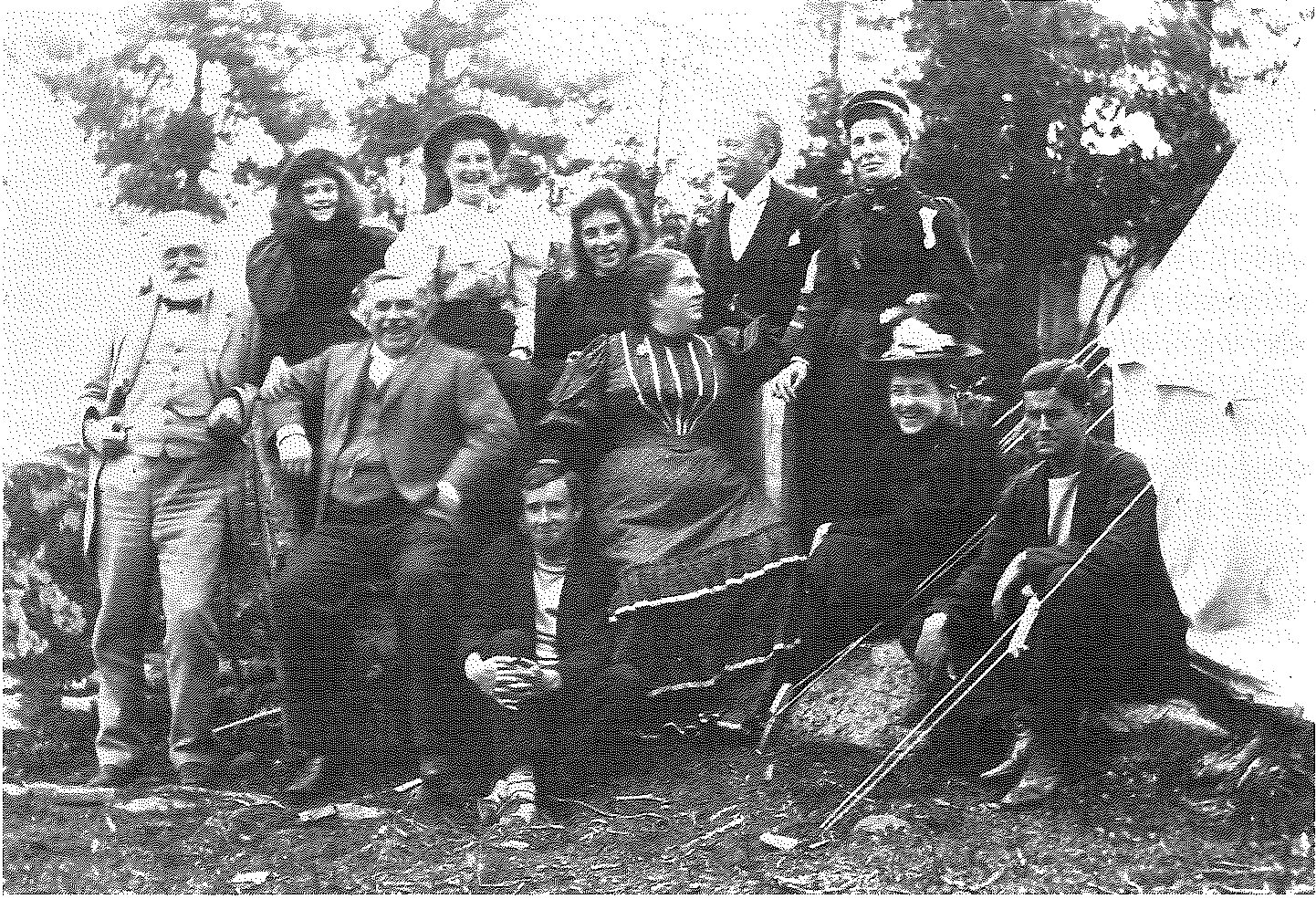
One of the most entertaining aspects of “The Man from Halifax” is the description of the electoral process at work in Nova Scotia in the late 19th Century. Professor Waite is honest and amusing as he shows the rough hewn and patronage ridden underside of elections in Antigonish – Thompson’s riding – as the future Prime Minister struggles for a seat. The press was vigorous, the Catholic Church played an important role.
Professor Waite follows in detail the parliamentary and personal career of Thompson in Ottawa. What strikes one immediately is how intensely Sir John worked and how so few people accomplished so much. The Department of Justice fit into a corner of the East Block, and consisted of the Minister and nineteen other staff. Yet with this corporal’s guard the Minister was to ensure that the “administration of public business was in accordance with the law”. Despite this daunting task, Thompson found on hs arrival in Ottawa that the first four offices of his department “were “as deserted as the enchanted palace’ in Sleeping Beauty.”
Thompson’s arrival in Ottawa coincided with the final curtain on the Riel rebellion which led to such outbursts of anger that the lives of the Prime Minister and the Quebec members of the Cabinet were threatened. Waite notes that: “Thompson opined privately that politicians found their life so unpleasant that the threat of death was the last thing to terrify them.” Nonetheless, Thompson as Minister of Justice, was called upon to defend the Macdonald Government’s decisions on Riel. This was the occasion of his first major speech in the House of Commons. This was described by a Liberal correspondent of the Toronto Globe: “When he sat down after his first (major) speech in the House of Commons it was realized that a great figure had emerged from a curious obscurity.” This first success was to be followed by others, as Thompson mastered his responsibilities as minister and the intricacies of the House.
Waite shows us a politician growing with his office and facing the challenges of administering the Justice portfolio in a country moving from colony to nation. Canada-United States relations then, as today, were of primary concern to federal politicians. The issues on which Professor Waite focusses our attention are also remarkably familiar, fisheries and reciprocity. Both also have a Newfoundland dimension which casts some light on the historical bases for the current tensions between Ottawa, St. John’s and Paris on the Newfoundland fishery. Professor Waite highlights the fisheries negotiations of 1887-8 between Canada and the United States and also the dispute arising from an American offer of reciprocity in the fisheries trade with Newfoundland He highlights Thompson’s key role in these issues as well as during the Bering Sea Arbitral Tribunal in Paris in 1893. Through all these negotiations Thompson appears as not only a man of legal acumen but increasingly more Canadian in his outlook.
Professor Waite also shows Thompson facing the other major issues of his time in office: the Manitoba School debate which Thompson tried to resolve through the application of reason and moderation in the framework of the law, the fierce battle with Britain over Copyright by which Thompson sought to provide support for the Canadian publishing industry, Thompson’s careful and sensitive approach to the concept of disallowance of Provincial statutes which he brought to a state where disallowance disappeared as a serious cause of friction with the provinces, the introduction of the new Criminal Code for Canada, a monumental work which broke new ground in the field of criminal justice.
Professor Waite has accomplished three aims in this presentation of Sir John Thompson. He has reminded us of the importance of a careful reading of Canadian history for a better understanding of the problems and issues of today. He has demonstrated that the nature of our nation and its relations with the United States are rooted in our history and our geography and that the intensity of the discussion of problems was as lively one hundred years ago as it is today. Finally, Waite has written a good story, remarkably readable, balancing the account of John Thompson’s personal life with a detailed yet compelling presentation of his public career.
View the original scanned pages →
Originally published in bout de papier, Vol. 5, No. 2 (1987) — Summer 1987 // Été 1987, pp. 49–51. Read the rest of this issue →



