
bout de papier, Vol. 5, No. 1 (1987) — Spring 1987 // Printemps 1987, pp. 38–39
Legacy of Valour: The Canadians at
Passchendaele, by Daniel G. Dancocks,
Hurtig Publishers, Edmonton, 1986, 289 pp.,
$24.95.
In the Great War, Flanders in southwest Belgium was a fulcrum of battle. The focal point was the Ypres Salient, a semicircle around the old cloth town from the north to the south. Running east from Ypres, the flat Flanders Plain rises slightly to a series of low ridges. From 1914, the Germans were solidly entrenched on these ridges with ideal observation and artillery points to bombard the whole of Allied positions in the Salient. Throughout the war, the fighting in the Salient was relentless, remorseless, murderous. The village of Passchendacle stood at the apex of the ridges and the British offensive to capture it was the last great battle fought in Flanders in the Great War.
Legacy of Valour is a first class account of the capture of Passchendaele by the Canadian Corps. The narrative is crisp, the interweaving of individual soldiers’ accounts with the dynamics of the battle effortlessly accomplished and the maps, a model of clarity. There is a good selection of photographs of the battleground.
The opening chapters trace the origins of the offensive. The object was to clear the Germans off the ridges, the northern anchor of German Western front positions and capture the German submarine bases at Ostend and Zeebrugge on the Belgian coast. Haig, the British Commander-in-Chief believed that success would win the war. The Admiralty warned that unless the submarine bases were captured, the war would be lost.
The offensive began in August and continued until late October when the Canadian Corps under Sir Arthur Currie was transferred into the Ypres Salient and ordered to capture Passchendaele.
Dancocks records Currie’s vehement protests. Estimating that capturing Passchendaele would cost 16,000 casualties he shouted to his staff, “Passchendaele…Let the Germans have it -keep it rot in it rot in the mud.It isn’t worth a drop of blood!”
The Corps knew the Salient well. In its days of innocence in 1915, the Canadians faced the horror of poison gas on ground close to where they would fight to take Passchendaele. In 1916, the Corps fought bloody engagements all around the Salient gaining and losing small bits of muddy trench. By 1917, having grown in just over two years from one division of amateur soldiers to a confident and brash force of four divisions of 100,000 men, the Corps
38 bout de papier Vol. had earned a well-deserved reputation as an efficient, even ruthless elite force.
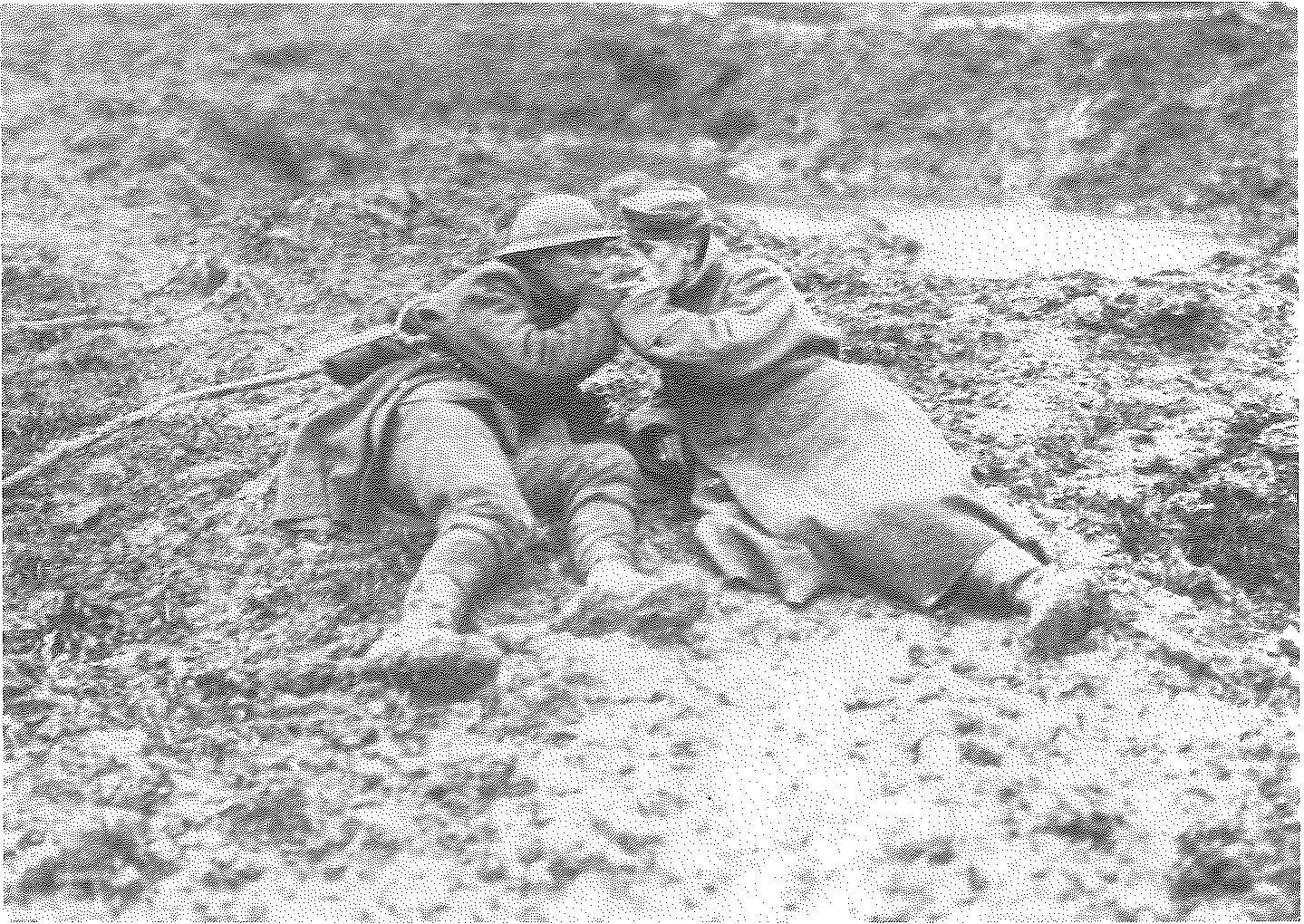
Dancocks sympathizes with Currie’s reluctance. The battlefield had become a quagmire, a swamp of cratered bog and mud and flooded low ground. Unburied dead littered the ground; corpses from past battles rose up from mud. The weather was the worst in living memory. Many attacks began and petered out in driving rain. Men drowned in the shell holes and water-filled trenches. At staggering cost, in appalling conditions, British, Australian and New Zealand divisions had carried the line to within a mile and a half of Passchendaele where the Canadians would jump off.
Currie demanded massive artillery support. He was to receive 360 field guns, of which only 200 could be found, the rest were destroyed or sunk in the mud. When he asked for replacements and was told to indent [account for] for the missing guns, he raged “Goddamit, I cannot fight the battle with indents.” He got his guns.
Passchendaele was taken after four carefully planned assaults between October 26 and November 10. Eight Victoria Crosses were won in the battle by the Corps, only one less than the 9 won by the Canadians in the whole of the next war. Private Tommy Holmes of the Canadian Mounted Rifles was one recipient. With his battalion’s attack foundering in the rain and bog and murderous fire, Holmes slithered across shell holes and knocked out two machine guns. He then worked behind a pillbox, lobbing a grenade in the rear entrance and capturing 19 enemy soldiers.
Canadian casualties were 15,654, one quarter again as large as Vimy with the brunt borne by the Infantry. Half of the men going over the top became casualties. The troops laden with 80 pounds of equipment struggled against the mud, barbed wire, concrete pillboxes and German artillery fire. Some battalions, like the South Saskatchewans and the Edmontons suffered losses of 75%. The Corps left Passchendaele shortly after the final engagement never to return to the Salient.
Passchendaele haunts the modern memory of the Great War. No battle fought by the British and Dominion Armies is more controversial. All save 9 of 60 British and Dominion divisions on the Western front in 1917 fought at Passchendaele. For 250,000 casualties, four and a half miles of flooded, cratered, devastated ground was won in 3 months of battle. Was the battle worth the cost?
The critics considered it the ultimate in futility conceived by stupid, stubborn Generals wantonly expending the manhood of the Empire in mud and swamp. Why fight the Germans and waste thousands of lives in a place where they were strongly entrenched. Far better to shift troops to Italy and beat the Austrians. Even Marshall Foch, Chief of the French General Staff in 1917 had his doubts: “Boue is bad, Boche is bad, but Boue and Boche together — ah!” Churchill called the Passchendaele Offensive, “a forlorn expenditure of valour and life without equal in futility.”
Dancocks enters lustily into the fray showing that even at 70 years distance, it is hard to have a dispassionate view of the battle. Much of the opening and concluding chapters are given over to a spirited defence of the battle and savage criticism of the politicians who carped at the strategy, and wailed at the casualties. Dancocks is unabashedly on the side of the Generals. He faithfully records the view of Haig and even Currie in retrospect that it was essential to fight the German army where it was prepared to make a stand and to capture the German bases on the Belgian coast. The French army had been gravely weakened by mutiny and the Germans had to be diverted. It was important to shore up the morale of the tottering Italians, and the Russians who were almost out of the war.
The other great engagements on the Western Front, the Ypres gas attacks, the Somme, Verdun, Vimy Ridge, all have impressive monuments mounted in their memory and honour. The monuments to Passchendaele are mean in comparison as if the battle itself exhausted the effort to remember it. In contrast to the massive marble memorial and the vast park at Vimy Ridge, the Canadian Passchendaele Memorial is a stubby stone badly weathered pillar hidden down a side street in the rebuilt village. The most som-bering and wrenching remembrance is the Commonwealth cemetery of Tyne Cot, two kilometres west of the village where 12,000 British and Dominion graves share space with three massive German pillboxes.
To the named and unnamed dead buried there, the controversy is interesting, although I suppose, unimportant.
I visited Ypres in February and stood to attention to the playing of the Last Post under the new Menin Gate on whose walls are inscribed the names of 55,000 British and Dominion soldiers who died in the Salient and have no known grave. At Tyne Cot, “I stood with the dead so forsaken and still: When dawn was grey, I stood with the dead.”
View the original scanned pages →
Originally published in bout de papier, Vol. 5, No. 1 (1987) — Spring 1987 // Printemps 1987, pp. 38–39. Read the rest of this issue →



